

Freeze-dried Jolly Ranchers offer a unique melt-in-mouth crunch with intensified fruity flavor that traditional hard candies can’t match. Yet many Canadian bulk candy retailers struggle with moisture damage, poor storage, and inconsistent sourcing that erode product quality and disappoint customers. This guide equips you with proven methods to source, store, package, and sell freeze-dried Jolly Ranchers successfully, maximizing shelf life and repeat purchase rates.
Table of Contents
- Introduction To Freeze-Dried Jolly Ranchers
- Prerequisites: What You Need Before Starting
- Step 1: Sourcing Bulk Freeze-Dried Jolly Ranchers
- Step 2: Storage And Shelf-Life Management
- Step 3: Packaging And Labeling
- Step 4: Common Mistakes And How To Avoid Them
- Step 5: Expected Results And Success Metrics
- Boost Your Bulk Freeze-Dried Candy Success With Spaceman
- Frequently Asked Questions About Bulk Freeze-Dried Jolly Ranchers
Key takeaways
| Point | Details |
|---|---|
| Proper storage | Freeze-dried Jolly Ranchers require moisture-proof packaging and stable temperatures to maintain texture and flavor. |
| Canadian sourcing | Buying from Canadian distributors reduces lead times to 7-14 days and ensures freshness. |
| Private labeling | Custom branding boosts differentiation and customer engagement in competitive markets. |
| Avoid moisture exposure | Humidity cuts shelf life by 30% and causes stickiness, making candy unsellable. |
| Higher repeat rates | Proper stocking drives 20-30% higher repeat purchases compared to regular hard candies. |
Introduction to freeze-dried Jolly Ranchers
Freeze-dried Jolly Ranchers transform traditional hard candies into crunchy, airy puffs that melt in your mouth while delivering concentrated fruity flavor. The freeze-drying process removes moisture under vacuum, creating a unique texture that sets these treats apart from conventional hard candies. This innovation appeals to customers seeking novel candy experiences with intensified taste.
These candies are shelf stable for 12-24 months when stored correctly, making them practical for bulk retail. They contain no gluten or preservatives, aligning with health-conscious consumer preferences. The combination of unique texture, concentrated flavor, and clean ingredients creates strong retail differentiation.
Canadian retailers can capitalize on this novelty by stocking freeze-dried Jolly Ranchers alongside traditional candy offerings. The product’s visual appeal and texture surprise factor encourage impulse purchases and word-of-mouth marketing. Understanding freeze-dried candy benefits helps position your inventory for maximum sales impact.
Key product advantages include:
- Extended shelf life of 12-24 months under proper conditions
- Gluten-free and preservative-free formulation
- Intensified fruity flavor profile
- Lightweight, crunchy texture that dissolves quickly
- Strong visual appeal for retail displays
Pro Tip: Offer taste samples in-store to convert curious shoppers into buyers. The unexpected texture and flavor intensity create memorable experiences that drive repeat purchases.
Prerequisites: What you need before starting
Before sourcing bulk freeze-dried Jolly Ranchers, assess your retail readiness to ensure product quality and regulatory compliance. Proper preparation prevents costly mistakes and protects your inventory investment.
Start by understanding bulk candy storage best practices. Freeze-dried products demand stricter environmental controls than traditional hard candies. Moisture and heat are primary threats to texture and shelf life. Evaluate your storage space for temperature stability and humidity control before placing large orders.
Secure moisture-proof, resealable packaging to maintain freshness from receiving through final sale. Standard candy bags won’t protect freeze-dried products adequately. Invest in quality packaging materials designed for moisture-sensitive goods.
Familiarize yourself with local Canadian regulations for bulk candy retail sales. Requirements vary by province for labeling, handling, and food safety compliance. Contact your provincial health authority to confirm specific rules for your location.
Establish relationships with reliable Canadian or North American suppliers. Shorter supply chains mean fresher products and faster restocking. Verify supplier credentials, product quality standards, and lead times before committing to bulk orders. Research bulk freeze-dried candy sourcing options to compare offerings.
Essential preparation steps:
- Audit storage space for humidity and temperature control
- Purchase commercial-grade moisture-proof packaging
- Review provincial bulk candy retail regulations
- Identify verified Canadian suppliers with proven track records
- Calculate initial order size based on expected sales velocity
Pro Tip: Start with smaller test orders to gauge customer demand before committing to large bulk purchases. This approach minimizes risk while you refine your freeze-dried candy storage and sales processes.
Step 1: Sourcing bulk freeze-dried Jolly Ranchers
Selecting the right supplier is critical for product quality, pricing, and long-term business success. Canadian-based distributors offer significant advantages over international suppliers, including reduced lead times and better freshness guarantees.
Prioritize suppliers offering private labeling or co-packing services if you want to build brand identity. Custom packaging differentiates your products and creates customer loyalty. Evaluate whether suppliers provide design support and minimum order quantities that match your business scale.
Wholesale prices typically range CAD $7-$9 per pound depending on order volume and packaging specifications. Larger orders generally unlock better per-pound pricing, but balance cost savings against inventory turnover to avoid overstocking. Lead times within Canada usually span 7 to 14 business days, enabling predictable inventory planning.
Follow this sourcing process:
- Research Canadian distributors specializing in freeze-dried candy wholesale
- Request samples to assess product quality, texture, and flavor
- Compare pricing structures across multiple suppliers
- Verify lead times and minimum order requirements
- Confirm packaging options and private labeling capabilities
- Place initial orders sized to your sales projections
Supplier comparison factors:
| Factor | What to Evaluate | Impact on Business |
|---|---|---|
| Price per pound | CAD $7-$9 range | Direct cost and margin |
| Lead time | 7-14 business days | Inventory planning |
| Minimum order | Varies by supplier | Cash flow and storage |
| Private labeling | Availability and cost | Brand differentiation |
| Product freshness | Production date guarantee | Shelf life available |
Match order quantities to expected turnover rates. Freeze-dried candy’s novelty drives strong initial sales, but demand may stabilize after the first few months. Monitor sales data closely and adjust reorder quantities accordingly. Understanding sourcing freeze-dried candy fundamentals prevents cash tied up in slow-moving inventory.
Pro Tip: Negotiate volume discounts with suppliers once you establish consistent sales patterns. Long-term partnerships often yield better pricing and priority fulfillment during high-demand periods.
Step 2: Storage and shelf-life management
Proper storage directly determines product quality and profitability. Freeze-dried Jolly Ranchers lose their signature crunch and become sticky when exposed to moisture, rendering them unsellable. Implementing strict storage protocols protects your inventory investment.
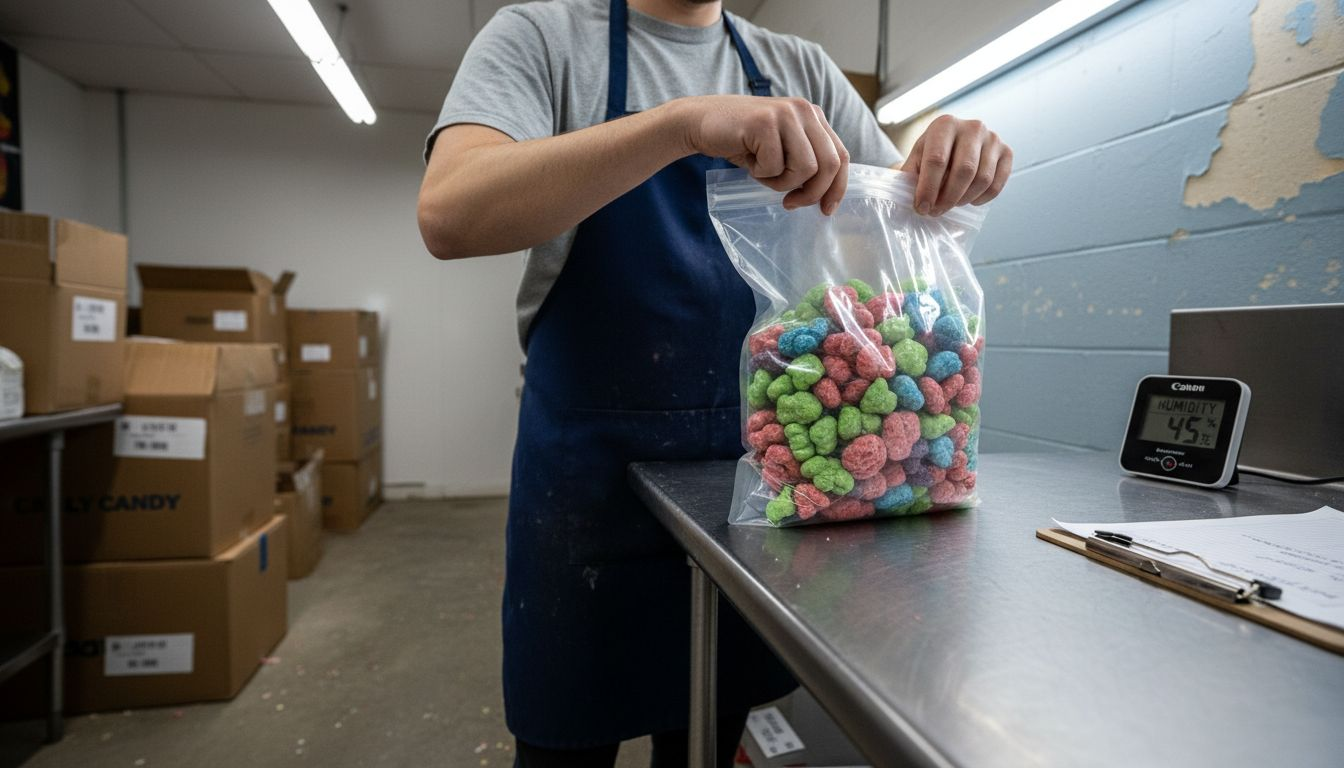
Keep all bulk freeze-dried Jolly Ranchers sealed in moisture-proof packaging until ready for retail display or customer sale. Once opened, transfer candy to airtight containers immediately. Even brief exposure to humid air degrades texture.
Maintain stable, moderate temperatures in storage areas. Avoid locations near heat sources, direct sunlight, or areas with temperature fluctuations. Heat accelerates flavor loss and can cause clumping. Humidity exposure reduces shelf life by up to 30%, transforming crunchy candy into sticky disappointments.
Shelf life ranges from 12 to 24 months under optimal conditions. Track inventory received dates and implement first-in, first-out rotation to ensure freshness. Regularly audit stock to identify products approaching expiration and plan promotions or discounts to move aging inventory.
Storage best practices:
- Store in climate-controlled areas away from humidity sources
- Use commercial dehumidifiers if your location has high ambient moisture
- Keep packaging sealed until the moment of sale or display
- Label containers with received dates for rotation tracking
- Inspect inventory weekly for signs of moisture damage
Monitor environmental conditions with digital hygrometers to maintain humidity below 40%. Higher humidity levels accelerate texture degradation even in sealed packages. Invest in proper climate control to protect product quality and maximize shelf life.
Pro Tip: Create a dedicated storage zone for freeze-dried products separate from traditional candies. This isolation simplifies climate control and prevents cross-contamination from moisture-releasing products. Learn more about freeze-dried candy storage tips to optimize your setup.
Step 3: Packaging and labeling
Packaging choices impact both product preservation and sales appeal. The right containers maintain freshness while creating attractive retail displays that convert browsers into buyers.
Use resealable, moisture-proof bags for all bulk packaging. These specialized bags feature multi-layer construction that blocks moisture and oxygen, preserving texture and flavor. Standard plastic bags lack adequate protection and lead to rapid quality decline.
Many bulk freeze-dried candy packs lack UPC codes, complicating inventory tracking and point-of-sale systems. Custom labeling solves this problem while enhancing brand identity. Work with suppliers offering private label services to create distinctive packaging that reinforces your store’s image.
Private label packaging delivers multiple benefits beyond inventory management. Custom branding differentiates your products from competitors and builds customer recognition. Shoppers often perceive private label products as premium offerings, justifying higher price points and improving margins.
Packaging type comparison:
| Packaging Type | Moisture Protection | Shelf Life | Customer Appeal | Cost per Unit |
|---|---|---|---|---|
| Resealable pouch | Excellent | 18-24 months | High | Moderate |
| Standard plastic bag | Poor | 6-8 months | Low | Low |
| Private label pouch | Excellent | 18-24 months | Very high | Higher |
| Bulk unsealed container | Very poor | 2-4 weeks | Medium | Very low |
Packaging quality directly influences customer perception and willingness to pay premium prices. Professional, well-designed packages signal product quality and care. Cheap or generic packaging undermines perceived value regardless of actual product quality.
Key packaging considerations:
- Choose bags with ziplock or heat-seal closures
- Include clear ingredient and allergen information
- Add best-before dates for customer confidence
- Design labels with strong visual appeal and brand consistency
- Ensure packaging meets provincial labeling requirements
Pro Tip: Test different package sizes to identify what sells best in your market. Smaller bags work well for impulse purchases, while larger sizes appeal to families and bulk buyers. Offering multiple sizes captures broader customer segments.
Step 4: Common mistakes and how to avoid them
Even experienced retailers make errors when stocking freeze-dried products for the first time. Understanding common pitfalls helps you avoid costly mistakes and protect product quality.
The most frequent error is leaving packaging open after initial use. Freeze-dried candy exposed to air loses its crispy texture within two weeks, even in low-humidity environments. Train staff to reseal all containers immediately after serving customers or restocking displays.
Moisture exposure turns freeze-dried Jolly Ranchers sticky and unappetizing. Once compromised, no amount of re-sealing restores original texture. These damaged products must be discarded, directly impacting profits. Moisture is freeze-dried candy’s worst enemy, requiring vigilant protection throughout the supply chain.
Moisture is freeze-dried candy’s worst enemy. Proper sealing is critical to preserve quality.
Ordering excessive quantities beyond sales velocity creates two problems. First, inventory costs tie up capital that could fund faster-moving products. Second, aging stock approaches expiration dates, forcing discounts that erode margins. Match order sizes to realistic sales projections based on actual data, not optimistic assumptions.
Freeze-dried candy is more delicate than traditional hard candy. Rough handling causes breakage and creates unsellable fragments. Implement gentle handling protocols and educate staff on proper techniques. Use padded containers for storage and transport.
Mistakes to avoid:
- Leaving packages unsealed after opening
- Storing near moisture sources like refrigerators or sinks
- Ordering more inventory than you can sell within shelf life
- Handling candy roughly during restocking or customer service
- Neglecting staff training on product-specific care requirements
Understanding freeze-dried candy handling tips and packaging problems prevents these issues from affecting your business.
Pro Tip: Create laminated handling instruction cards for staff reference near storage and display areas. Visual reminders reduce errors during busy periods when attention to detail may slip.
Step 5: Expected results and success metrics
Implementing proper sourcing, storage, and handling practices yields measurable business improvements. Understanding expected outcomes helps you track success and justify inventory investments.
Proper stocking maintains texture and freshness retention for up to 24 months, maximizing saleable inventory life. This extended shelf life provides flexibility in inventory management and reduces waste from expired products. You can confidently stock larger quantities during favorable pricing periods without quality concerns.
Retailers following best practices see 20-30% higher repeat purchase rates compared to regular hard candies. The unique texture and intensified flavor create memorable experiences that drive customer loyalty. First-time buyers frequently return specifically for freeze-dried products, increasing overall store visits and basket sizes.
Inventory waste from moisture damage drops by over 80% when you implement proper storage and handling protocols. This dramatic reduction directly improves profit margins by eliminating losses from unsellable damaged goods. The investment in quality packaging and climate control pays for itself through reduced waste.
Customer feedback consistently highlights unique texture and flavor intensity as primary purchase drivers. These positive experiences translate into word-of-mouth marketing and social media sharing, generating organic promotion for your store. Novelty products naturally attract attention and conversation.
Key Success Metric: Retailers implementing proper freeze-dried candy practices achieve 20-30% higher repeat purchase rates than with conventional hard candies.
Measurable success indicators:
- Texture and freshness maintained for 18-24 months
- Repeat purchase rates increase 20-30% above traditional candy
- Inventory waste from moisture damage below 5%
- Customer satisfaction scores above 4.5/5.0
- Social media mentions and organic sharing increase
Track these metrics monthly to assess performance and identify improvement opportunities. Compare freeze-dried candy performance against traditional candy offerings to quantify business impact. Use data to refine ordering, pricing, and promotional strategies. Discover more about freeze-dried candy sales benefits to maximize your success.
Boost your bulk freeze-dried candy success with Spaceman
Ready to elevate your freeze-dried candy business? Spaceman specializes in Canadian private labeling and co-packing services that help retailers build distinctive brands customers remember. Our bulk freeze-dried candy solutions include everything from sourcing to custom packaging design.
Explore our freeze-dried candy retail display rack featuring 72 pre-packaged bags that simplify merchandising and maximize shelf appeal. Or start smaller with our 10-pack bundle offering variety and value. We handle the complexity so you can focus on sales and customer satisfaction.
Frequently asked questions about bulk freeze-dried Jolly Ranchers
What is the best way to prevent moisture damage in bulk freeze-dried Jolly Ranchers?
Use moisture-proof, resealable packaging and store in low-humidity environments below 40% relative humidity. Always reseal bags immediately after opening to prevent texture loss. Installing commercial dehumidifiers in storage areas provides additional protection in humid climates.
Can I customize packaging with my store’s branding?
Yes, many Canadian suppliers offer private labeling and co-packing to help differentiate your brand. Custom labels improve customer recognition, retail compliance, and perceived value. Minimum order quantities vary by supplier, so discuss requirements during initial negotiations.
How long does freeze-dried Jolly Ranchers stay fresh on the shelf?
Shelf life ranges from 12 to 24 months when stored in sealed, moisture-proof packaging at stable temperatures. Exposure to humidity can reduce shelf life by 30% or more, causing stickiness and texture degradation. Proper storage protocols are essential for maximizing product longevity.
What are common mistakes that reduce freeze-dried candy quality?
Leaving packaging open, exposing candy to moisture, and ordering excessive stock beyond sales velocity are the most frequent errors. Rough handling that causes breakage also reduces sellable inventory. Proper staff training and inventory planning prevent these quality-reducing mistakes.
Where can Canadian retailers find reliable freeze-dried Jolly Rancher suppliers?
Canadian distributors like Spaceman specialize in bulk freeze-dried candy with private label options and 7-14 day lead times. Check bulk candy wholesale directories online for verified suppliers, and always request samples before placing large orders to verify product quality and freshness.
Recommended
- Where to Buy Bulk Freeze-Dried Candy in Canada (For Retail, Wholesale – Spaceman
- Why Retail Stores in Canada Should Be Selling Freeze-Dried Candy – Spaceman
- Wholesale Freeze-Dried Candy in Canada: A Smart Move for Retailers – Spaceman
- Why Every Retail Store Should Be Selling Freeze-Dried Candy – Spaceman