

If you’re picking one packaging move to prioritize, match it to your business goal. Fresh berries and stone fruit need ventilated fiber punnets or clamshells. Shelf-stable dried and freeze-dried fruit needs resealable doypacks. Premium gifting needs a windowed kraft box. Wholesale shipping needs a corrugated tray built for stacking, not looks. Every other decision, from color palette to varnish, comes after you’ve nailed that first fit.
Here’s the quick map before we go deep:
- Fresh retail (berries, stone fruit): fiber-based punnets or PET clamshells with ventilation, prioritizing moisture control over shelf flash.
- Shelf-stable snacks (dried, freeze-dried): doypacks with barrier film and a resealable zipper, prioritizing brand consistency and shelf life.
- Premium gifting: kraft gift boxes with a window or illustrated sleeve, prioritizing perceived value over unit cost.
- Wholesale and shipping: corrugated trays sized for stacking and freight, prioritizing durability over shelf appeal.
The trade-off underneath all four: sustainability and cost pull in one direction, shelf life and visual polish pull in another. The rest of this guide shows you how to balance both without guessing.
Key Takeaways
Sustainable, shelf-ready fruit packaging succeeds when material choice, moisture protection, and visual consistency all get tested before a full production commitment.
| Point | Details |
|---|---|
| Match format to goal | Use fiber punnets or clamshells for fresh fruit, doypacks for shelf-stable, gift boxes for premium. |
| Test materials under real conditions | Check moisture and stacking loads at actual cold-chain and pallet conditions, not lab specs. |
| Build a consistent color system | Assign one color per flavor and repeat it across every SKU for shelf recognition. |
| Start small before scaling | Run 500 to 1,000 units and a shelf trial before committing to a full production order. |
| Partner for production support | Space-man’s private-label and co-packing services help brands move from prototype to retail-ready runs. |
Table of Contents
- Fruit Packaging Ideas Organized by Business Goal
- Choosing Materials That Actually Perform on the Shelf
- Design Rules That Make Fruit Packaging Look Premium
- Which Packaging Fits Your Fruit
- Getting From Idea to Production Without Wasting Money
- Packaging Safety and Food Contact Rules You Can’t Skip
- Smart Packaging and Other Emerging Fruit Packaging Tech
- Easy-Open and Resealable Features Shoppers Actually Notice
- Sources
Fruit Packaging Ideas Organized by Business Goal
Here’s the thing about packaging inspiration sites: they’re great for eye candy, thin on production reality. You’ll find a hundred gorgeous mockups and zero mentions of MOQ or moisture testing. This section fixes that. Every idea below comes with a note on what it actually communicates to a shopper, roughly what it costs to scale, a material suggestion, and one production tip worth knowing before you commit to a print run.
Fresh retail formats
1. Fiber-based punnets. These communicate “this brand cares about the planet” before a shopper reads a single word. Cost sits mid-range once you hit volume, and molded fiber trays now handle moisture far better than the flimsy cardboard versions from a decade ago. Material suggestion: look for punnets built with over 90% recycled content that can be recycled up to 25 times, which checks the sustainability box retailers increasingly demand. Production tip: order a small batch and run it through your actual cold chain before locking in a full order. Fiber behaves differently in a refrigerated truck than it does in a design studio.
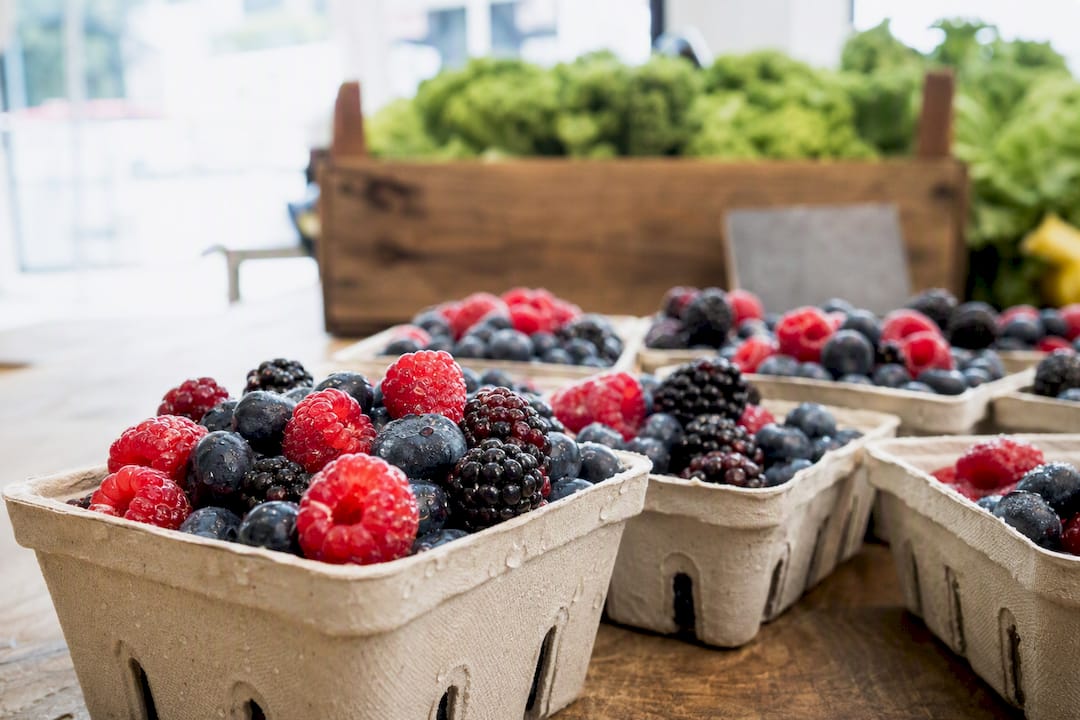
2. PET clamshells. These communicate freshness and let shoppers see exactly what they’re buying, which still matters for impulse produce purchases. Cost is lower than fiber alternatives at small volumes but recyclability varies a lot by region. Material suggestion: recycled PET (rPET) if your retailer partners will accept it. Production tip: clamshells crack under rough handling, so test your hinge design with a drop test before a full production run.
3. Printed sleeves over clamshells. A cardboard sleeve wrapped around a clear clamshell gives you branding real estate without hiding the fruit. Cost is low since sleeves print cheaply even in small runs. Material suggestion: FSC-certified paperboard with a matte finish. Production tip: leave a die-cut window so the sleeve doesn’t fully obscure the product; shoppers still want to see what’s inside.
Grab-and-go formats
4. Fruit cups with tamper-evident lids. These say “convenience” loud and clear and work well for cut fruit at retail counters or vending. Cost runs moderate due to the film-sealing equipment required. Material suggestion: PP cups with a peelable foil-laminate lid. Production tip: confirm your co-packer has a heat-sealer calibrated for your exact cup rim, since mismatched equipment causes seal failures.
5. Snack tubs for dried fruit mixes. These read as “portable pantry staple” and work well in office vending or gym retail. Cost is moderate. Material suggestion: PET or rPET tub with a snap lid. Production tip: tubs stack poorly on standard shelving, so measure your retailer’s shelf depth before finalizing dimensions.
6. Single-serve pouches. Small stand-up pouches communicate “grab this and go” better than any other format on this list. Cost is low per unit but print setup costs add up if you run multiple flavors. Material suggestion: a metallized film laminate for freeze-dried products that need a strong moisture barrier. Production tip: single-serve formats often need a smaller nozzle on your filling line, so confirm compatibility with your co-packer before ordering film.
Shelf-stable snack formats
7. Doypacks with resealable zippers. This is the workhorse of the shelf-stable fruit snack world, and for good reason. A consistent doypack structure paired with an expressive color palette per flavor measurably boosts shelf impact and brand recall for freeze-dried fruit lines. Cost runs moderate, and it scales well once you’re past a few thousand units. Material suggestion: a three-layer laminate (PET/foil/PE) for maximum barrier protection. Production tip: standard pouch sizes cut both tooling costs and lead times, so resist the urge to custom-size unless volume justifies it. Space-man’s own packaging breakdown for freeze-dried candy walks through how this format performs at retail scale.
8. Resealable jars. Glass or PET jars communicate “premium pantry item” and photograph beautifully for e-commerce. Cost is higher due to weight and breakage risk in shipping. Material suggestion: wide-mouth PET for a lighter, shatter-resistant alternative to glass. Production tip: jars need secondary packaging for shipping, which adds cost most founders forget to budget for.
9. Flow-wrap bags for single-flavor snacks. These are the cheapest way to get a shelf-stable product to market fast. Cost is low. Material suggestion: laminated film with a hot-seal center. Production tip: flow-wrap works best for high-volume runs; it gets expensive per unit at small batch sizes.
Premium and gift formats
10. Kraft gift boxes with a window. These signal “give this as a present,” not “grab this for a snack.” Cost runs higher due to structural cardboard and window film, but perceived value climbs fast. Material suggestion: recycled kraft board with a compostable window film rather than plain PVC. Production tip: check your box supplier’s minimum order for die-cut windows; some require far higher MOQs than flat boxes.
11. Illustrated sleeves for gift sets. A wraparound illustrated sleeve turns a plain box into a story. Cost is low relative to the lift in perceived value. Material suggestion: uncoated recycled paper stock, which takes ink well and reads as artisanal. Production tip: keep text off the sleeve seams, since folding lines distort small type.
12. Partial UV varnish on matte gift boxes. A gloss highlight over a matte base, used only on the logo or one flavor badge, creates a tactile contrast that reads as premium without the cost of full-coverage varnish. This finish is a specific technique freeze-dried fruit brands have used successfully on doypack packaging to lift perceived value, and it translates directly to gift box lids. Production tip: apply it sparingly to control print costs; full-coverage UV eats into margin fast.
13. Biodegradable liners inside gift boxes. Instead of plastic tissue paper or bubble cushioning, use a compostable pulp liner or shredded kraft filler. This communicates sustainability at the exact moment a customer opens the box, which is a high-attention moment worth the small extra cost. A detailed guide to eco-friendly gift box construction covers liner options and sourcing in more depth.
Wholesale and shipping formats
14. Corrugated shipping trays. These aren’t meant to be pretty; they’re meant to survive freight. Cost is low relative to the protection they offer. Material suggestion: double-wall corrugated for anything stacked more than three high. Production tip: test stacking loads at your actual pallet height, not a hypothetical one.
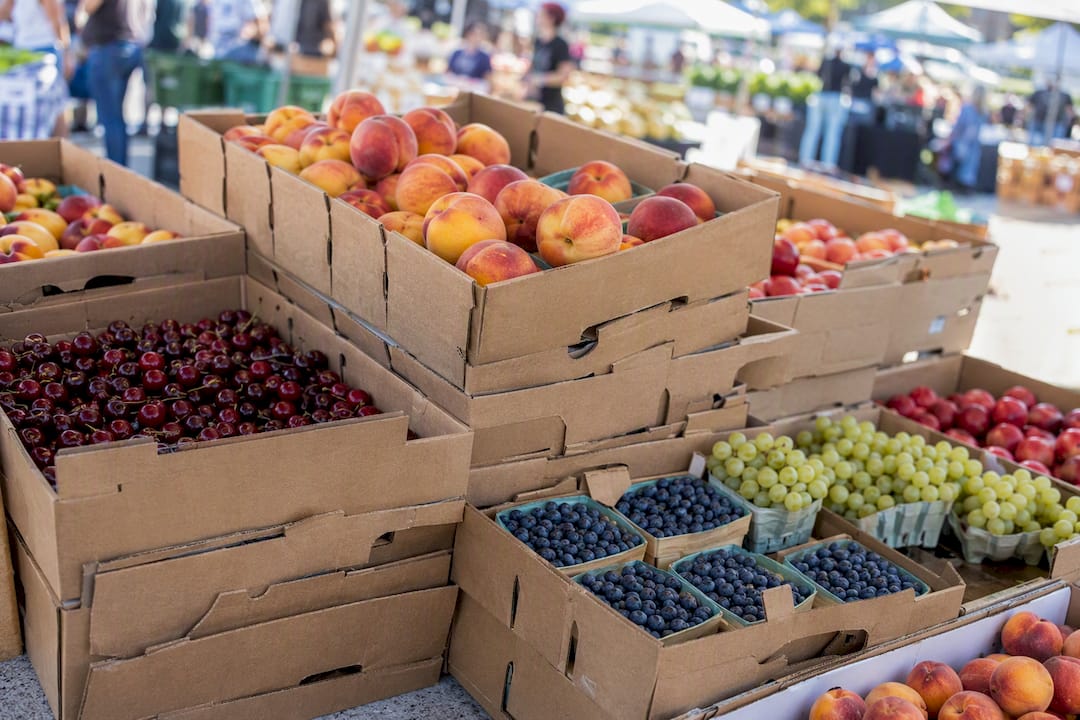
15. Nested trays for stone fruit. These cradle individual pieces so fruit doesn’t bruise in transit. Cost is moderate. Material suggestion: molded pulp fiber, same family as fresh-retail punnets. Production tip: order a sample tray sized to your exact fruit variety; a nest built for peaches won’t fit plums well.
Display and merchandising formats
16. Case stackers. A pre-built case that doubles as a store display saves retail staff time and gets your branding in front of shoppers before they even reach the shelf. Cost depends on print complexity. Production tip: confirm your case dimensions match standard retail shelf depth before ordering a large run.
17. Retail display kits. A branded countertop or floor display loaded with multiple SKUs works well for launches and in-store demos. Space-man’s own retail display rack is one working example of how this format gets used at scale for shelf-stable snacks.
Choosing Materials That Actually Perform on the Shelf
The sustainability conversation in fruit packaging isn’t a marketing add-on anymore. It’s become a baseline expectation, and brands that move early on circular materials tend to pick up a real shelf advantage over the ones still debating whether it’s worth the switch. But “eco-friendly” and “performs well in a grocery cooler” aren’t automatically the same thing, and that gap is where a lot of good intentions fall apart.
Fiber-based punnets are the clearest example. Industry-grade versions now use over 90% recycled content and can be recycled as many as 25 times, which is a genuinely strong circular story. But fiber only holds up structurally with the right coating or film treatment. Skip that step and you get soggy corners, collapsed edges, and a punnet that looks fine in a warehouse and falls apart in a produce cooler.
Barrier films work differently. For fresh produce like berries or stone fruit, you generally want breathable packaging that lets moisture escape rather than trapping it. For dried or freeze-dried fruit, you want the opposite: a strong multi-layer film that blocks moisture and oxygen entirely, since rehydration is what ruins a freeze-dried product’s texture. Confusing the two is one of the most common mistakes new brands make. A pouch built for chips will not protect freeze-dried strawberries the same way. Space-man’s breakdown of plastic packaging barrier types covers the film differences in more detail if you’re sourcing for a dried product line.
Before you commit to a full production run, run this checklist:
- Test the exact SKU under real humidity, not lab conditions. What passes a spec sheet doesn’t always survive a store cooler.
- Check condensation buildup after 24 hours in cold storage, especially for clamshells and fiber trays alike.
- Stack-test loaded units at your actual pallet height to confirm the material holds shape under real weight.
- Confirm any food-safe coating or UV varnish doesn’t compromise recyclability, since some coatings make fiber packaging harder to process.
Pro Tip: Test fiber-based punnets against the specific humidity profile of your exact fruit, not a generic produce benchmark. Lab specs frequently overstate real-world moisture performance, and the gap only shows up once your product has spent a week in a retail cooler.
Design Rules That Make Fruit Packaging Look Premium
You don’t need a full branding agency to make your packaging look like it belongs on a premium shelf. You need a handful of disciplined design choices, applied consistently.
Start with color. Assign each flavor or variety its own color, then lock that mapping across every SKU in your line. Freeze-dried fruit brands that pair a consistent doypack structure with an expressive color-per-flavor system build shelf recognition faster than brands that redesign every new flavor from scratch. Once a shopper learns “orange label means mango,” you’ve bought yourself free advertising every time they glance at the shelf.
Next, decide between a window, photography, or illustration, because each does a different job:
- Windows work best for impulse fresh purchases, letting the fruit sell itself.
- Photography works well for premium positioning where you want the fruit to look styled and appetizing rather than raw.
- Illustration works for shelf-stable snacks and gifting, where you’re selling a feeling more than a literal product view.
Finishes matter more than most founders expect. A partial UV gloss varnish applied over a matte base, used only on a logo or flavor badge, creates a tactile moment that reads as premium the second someone picks up the bag.
Don’t neglect the back of the pack. It’s prime real estate for a short origin story, nutrition information, and a repeated flavor badge that reinforces your color system. Pro Tip: Treat your back panel like a mini landing page: one sentence of story, the nutrition facts, and a visual anchor that matches the front. Skip it and you waste the one moment a curious shopper is already holding your product.
Which Packaging Fits Your Fruit
Berries. Ventilation is non-negotiable here; trapped moisture means mold within days. Fiber punnets with vented lids offer the strongest sustainability story, while PET clamshells still edge out on visibility and low unit cost for smaller operations. Either way, moisture-resistant coatings are what separate a punnet that survives shipping from one that arrives soggy.
Stone fruit. Peaches, plums, and nectarines bruise easily, so protective cartons or nested trays matter more than flash. Clear bags remain effective for appetite appeal since shoppers want to see ripeness and color before buying. Design portfolios for stone fruit brands consistently use clear-view packaging paired with color palettes pulled from the fruit’s own interior and exterior tones, a technique that works because it lets the product’s natural color do the branding work.
Whole fruit (apples, citrus, etc.). Branded sleeves or mesh bags with a printed header card give you shelf presence without hiding the product. This is also where PLU-inspired branding shines. Extending a small sticker into a fuller graphic language, complete with flavor or variety badges, has helped produce brands reposition commodity fruit as a branded product with room for premium pricing.
Dried and freeze-dried fruit. Resealable doypacks with a strong barrier film are close to mandatory here since rehydration ruins texture fast. Keep your visual identity consistent by flavor across the whole line, the same color-coding principle covered above. Space-man’s strawberry retail guide walks through how this plays out for a specific freeze-dried SKU.
Getting From Idea to Production Without Wasting Money
A packaging idea is worthless until it survives contact with a real supply chain. Here’s the realistic path from sketch to shelf:
- Sketch the concept. Rough it out on paper or in design software; don’t overinvest here.
- Build a dieline. This is the flat technical template your printer needs, showing exact fold lines and dimensions.
- Order a structural sample. A blank or lightly printed mockup to confirm the physical format works before spending on full color printing.
- Run a material and moisture test. Simulate your actual cold chain or shelf conditions, not a lab bench.
- Commit to a small production run. 500 to 1,000 units is enough to test real retail response without betting the farm.
- Run a shelf trial. Get it into a handful of stores or a limited online batch before scaling further.
When you’re talking to suppliers, ask direct questions: Do they have food-contact approval documentation on file? What’s their minimum order quantity? How many print colors or varnish types can they run without a cost jump? What are typical lead times, and will they provide a sample run before the full order?
Cost drivers are predictable once you know where to look. Standard pouch sizes save on tooling. Sleeves and labels over custom-shaped containers cut mold costs dramatically. Shared display kits across multiple SKUs spread fixed costs further.
Before any retail trial, confirm your UPC or PLU labeling is correct, your barcode sits in a scannable position, and your case dimensions match standard display-ready sizing.
Pro Tip: Ask every potential supplier for their sample policy before you sign anything. A supplier that won’t send a small test run for a reasonable fee usually isn’t set up for the kind of iterative testing a new fruit SKU actually needs.
Packaging Safety and Food Contact Rules You Can’t Skip
Every material touching fruit, whether fresh or dried, needs to meet food-contact safety standards in the market where you’re selling. This covers the substrate itself, any coating or laminate layer, and the inks used on the outside of the pack if they’re close enough to migrate.
Requirements vary by country and by material category, so treat any packaging supplier’s safety claim as a starting point, not a final answer. Ask for documentation specific to your exact packaging structure, not a generic compliance statement covering their whole product catalog. This matters most with recycled-content materials, since recycled fiber and recycled plastics sometimes carry different contact-safety requirements than virgin material, depending on your region’s rules.
Coatings deserve the same scrutiny. A moisture-resistant coating that keeps a fiber punnet structurally sound needs to be food-safe at the exact thickness and formulation your supplier is using, not just “food-safe” as a category claim. The same goes for any adhesive used in laminated pouch structures.
Build this into your supplier vetting from day one, not as an afterthought once a design is finalized. Ask for current food-contact certification documents for your specific market before committing to a production run, and keep those documents on file. Retailers increasingly ask for them directly, and having them ready speeds up onboarding with new distribution partners considerably.
Smart Packaging and Other Emerging Fruit Packaging Tech
Smart packaging is starting to show up in fruit and produce supply chains, mostly in three forms: freshness indicators, RFID tracking, and QR-code-driven traceability.
Freshness indicator labels change color based on temperature exposure or gas buildup inside the package, giving retailers and shoppers a visual cue about ripeness or spoilage risk without opening the pack. These remain a niche, higher-cost option right now, best suited to premium or export-focused fruit lines where the added cost is easier to justify.
RFID tags are more established in wholesale and distribution than at the consumer shelf level. They let distributors track inventory, monitor cold-chain conditions during transit, and reduce manual scanning at receiving docks. For a small or mid-size fruit brand, RFID usually makes more sense as something your co-packer or distributor implements at the pallet level rather than something you build into individual retail units.
QR codes are the most accessible entry point for most brands. A code on the back panel can link to sourcing information, a recipe, or a sustainability story, turning your packaging into a doorway to more content without adding real unit cost. It’s a low-lift way to extend your back-of-pack storytelling into digital space.
None of these technologies are mandatory for a new fruit packaging line. But QR-based traceability is cheap enough that skipping it is mostly a missed opportunity rather than a smart cost-saving move.
Easy-Open and Resealable Features Shoppers Actually Notice
Convenience features seem like small details until you watch a real shopper struggle with a package in a store aisle. Then they become the whole story.
Resealable zippers on doypacks are close to expected now for any shelf-stable dried or freeze-dried fruit product. Shoppers want to open a bag, eat some, and reseal it without a clip or a rubber band. Skipping this feature on a shelf-stable snack line puts you at a real disadvantage next to competitors who include it as standard.
Easy-open features matter just as much on rigid packaging. A clamshell with a tab that tears cleanly beats one that requires scissors, and a jar with a lid that doesn’t require a struggle wins repeat purchases from anyone who’s ever fought with a stuck jar lid at 7 a.m. Test your closures with people who aren’t you, ideally someone without much hand strength, since packaging engineers tend to underestimate how hard their own designs are to open.
Portion control also counts as a convenience feature. Single-serve pouches inside a larger multi-pack format let shoppers grab exactly what they need without leaving an open bag exposed to air. For dried and freeze-dried fruit especially, that inner-pouch structure protects freshness for the rest of the pack even after the outer bag is opened.
Why packaging investment pays off for fruit brands
Design trends in this category move fast, and sustainability has gone from a bonus to a baseline expectation in just a few years. What hasn’t changed is the math: a small test run costs far less than a wrong full-scale bet. I’d rather see a fruit brand ship an imperfect doypack to 20 stores and learn from real shelf behavior than spend six months perfecting a concept that never leaves the design file. Prototype fast, test honestly, and let the shelf tell you what to fix next.
Ready to Move From Idea to Production?
You’ve got the ideas. Turning them into an actual product on an actual shelf is where most founders get stuck, usually somewhere between “great concept” and “who actually prints this at a reasonable minimum order.” Space-man handles exactly that gap. We run private label and co-packing services alongside our own freeze-dried candy and fruit lines, which means we’ve already solved the moisture-testing, barrier-film, and stacking problems this article just walked you through.
Our services cover private labeling, full co-packing, and bagging and packaging for consumer goods brands that don’t want to build a production line from scratch. If you’re ready to test a real sample before committing to a full run, start with our private label and co-packing services page and request a quote for your specific format, whether that’s a doypack, a display kit, or a custom retail run.
Sources
- Solidus – The all-in-one fresh fruit packaging: fibre-based punnets and trays PPWR-ready
- MAISON D’IDÉE – LyoFru doypack design for lyophilized fruit snacks
- The Dieline – The Apple rebrand that proves produce also deserves great design
- Juggernaut Design – Stone fruit packaging design (Sweetums)