

Finding trustworthy partners for frozen food production can feel daunting when you want your brand to stand out in the Canadian market. As private labeling becomes more competitive, candy shop owners and food distributors need efficient solutions that save time and money. Discover how frozen food contract manufacturing delivers specialized manufacturing, packaging, and product development services so you can offer new treats and maintain quality without heavy investment.
Table of Contents
- What Is Frozen Food Contract Manufacturing?
- Key Types and Services Offered Globally
- How the Manufacturing Process Works
- Regulatory, Safety, and Quality Standards
- Common Risks, Costs, and Selection Criteria
Key Takeaways
| Point | Details |
|---|---|
| Frozen Food Contract Manufacturing | Companies can outsource production to specialized manufacturers, allowing them to focus on marketing and distribution without heavy investment in facilities. |
| Comprehensive Services | Contract manufacturers offer extensive services including R&D, packaging, quality control, and regulatory compliance that streamline product development. |
| Regulatory Compliance | Adherence to strict regulatory frameworks like HACCP and ISO 22000 is essential for ensuring food safety and quality throughout the manufacturing process. |
| Selecting a Manufacturer | Evaluating potential partners on technological capabilities, regulatory compliance, and quality assurance helps mitigate risks associated with production and costs. |
What Is Frozen Food Contract Manufacturing?
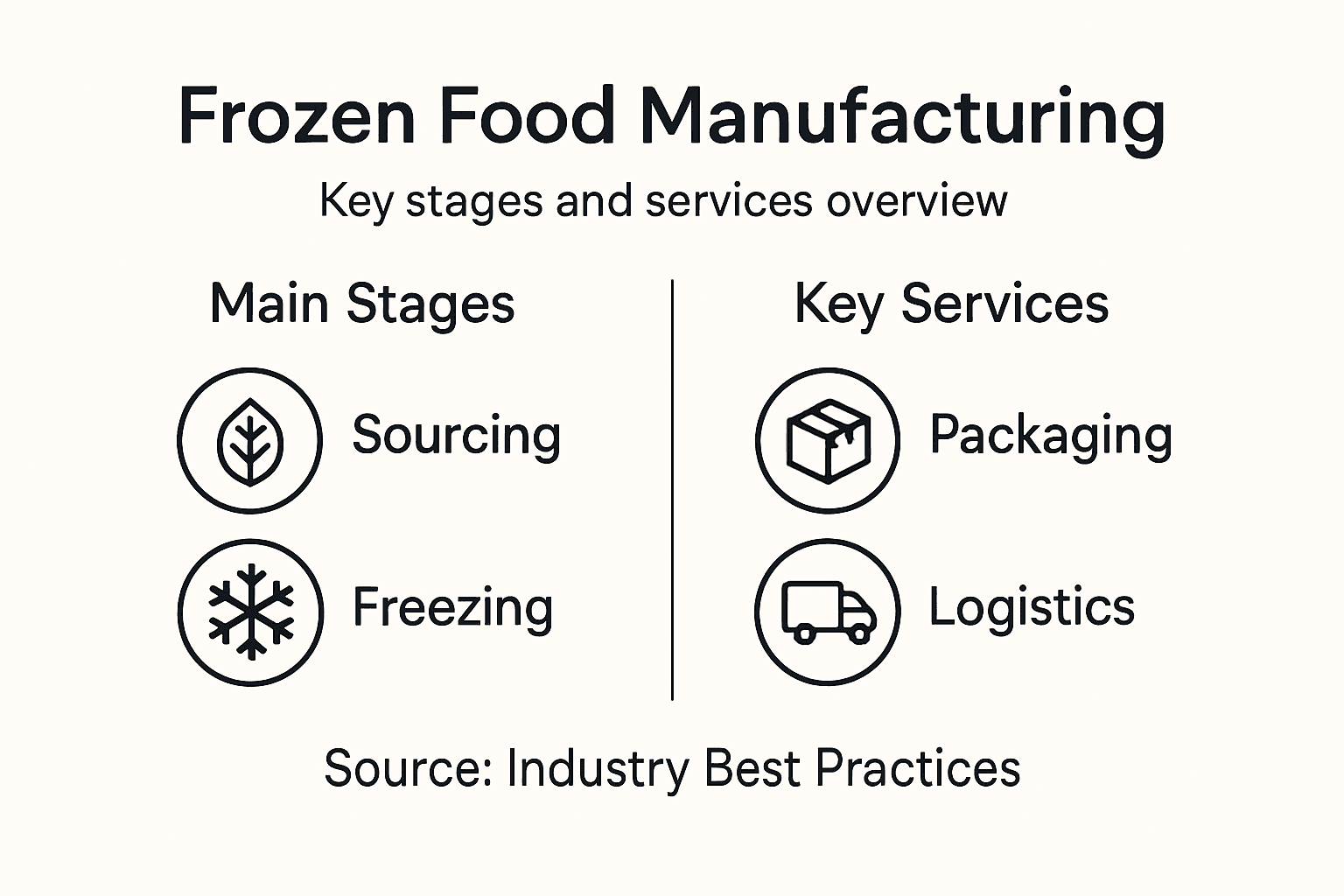
Frozen food contract manufacturing represents a strategic outsourcing approach where companies partner with specialized manufacturers to produce frozen food products without maintaining their own extensive production facilities. This business model allows food brands to leverage external expertise while focusing on core competencies like marketing and distribution.
Under this arrangement, contract manufacturers provide comprehensive services that go far beyond simple production. These services typically include comprehensive manufacturing and packaging solutions spanning research and development, product formulation, quality control, and specialized frozen food processing. The goal is to help brands efficiently bring their product concepts to market without significant upfront capital investments in manufacturing infrastructure.
The contract manufacturing process involves several key steps:
- Initial product concept and recipe development
- Prototype creation and testing
- Scalable manufacturing planning
- Packaging design and implementation
- Quality assurance and regulatory compliance
- Distribution preparation
By partnering with experienced contract manufacturers, Canadian food distributors can access advanced production technologies, achieve greater flexibility in product development, and respond more quickly to market demands. Specialized firms support diverse food segments including frozen foods, snacks, beverages, and bakery products, offering brands unprecedented opportunities for innovation and growth.
Pro tip: When selecting a frozen food contract manufacturer, prioritize partners with proven food safety certifications and demonstrated expertise in your specific product category.
Key Types and Services Offered Globally
Frozen food contract manufacturing encompasses a wide range of specialized services designed to meet the diverse needs of food brands and distributors. Global manufacturers offer comprehensive production solutions that extend far beyond basic product creation, providing end-to-end support for food product development and distribution.
The key services typically include:
-
Manufacturing Services
- Production of frozen food products
- Specialized processing for different food categories
- Advanced equipment and technology deployment
-
Packaging Solutions
- Custom packaging design
- Labeling and branding support
- Packaging material selection
-
Research and Development
- Product formulation
- Recipe optimization
- Flavor and texture development
-
Regulatory Compliance
- Food safety certification
- Quality assurance testing
- Regulatory documentation management
Product Segment Specializations play a crucial role in contract manufacturing. Manufacturers support diverse food categories including ready meals, frozen desserts, snacks, and specialized dietary products. This segmentation allows brands to work with manufacturers who have deep expertise in specific frozen food niches, ensuring high-quality and targeted product development.
Pro tip: Request comprehensive service portfolios from potential contract manufacturers and evaluate their expertise across multiple product development stages before making a partnership commitment.
How the Manufacturing Process Works
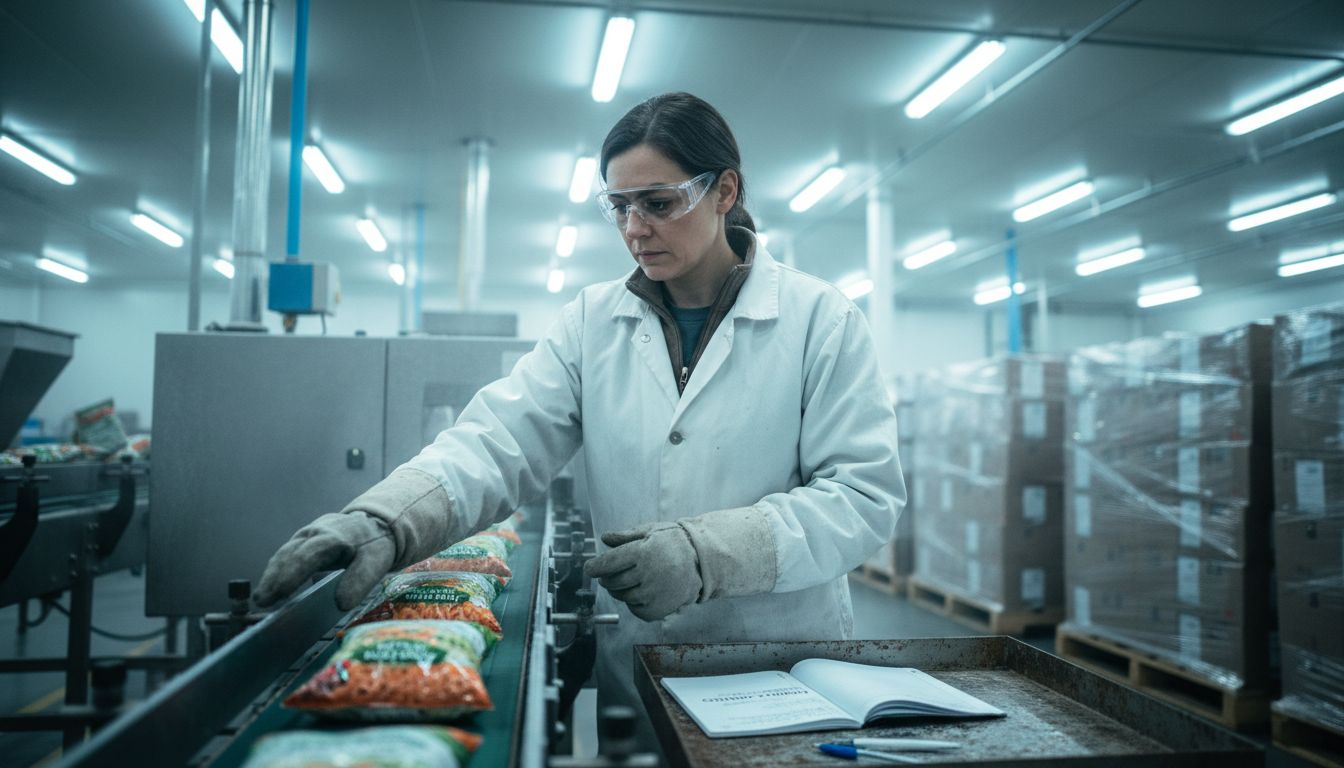
Frozen food manufacturing transforms raw ingredients into carefully preserved food products through a meticulous, scientifically controlled process. Advanced freezing technologies maintain food quality by preserving nutritional value, texture, and flavor throughout production.
The manufacturing process typically follows these critical stages:
-
Raw Material Selection
- Sourcing high-quality ingredients
- Rigorous ingredient screening
- Quality and safety verification
-
Preparation
- Washing and cleaning ingredients
- Cutting and portioning
- Preliminary cooking or blanching
-
Freezing Process
- Individual Quick Freezing (IQF)
- Blast freezing techniques
- Rapid temperature reduction
-
Packaging
- Specialized packaging materials
- Contamination prevention
- Preservation of frozen state
Manufacturers employ specialized freezing methods to ensure product integrity across various food categories including fruits, vegetables, meats, seafood, and prepared meals. The goal is to lock in freshness and prevent ice crystal formation that could compromise food quality.
Pro tip: Always request detailed documentation about a contract manufacturer’s freezing technologies and quality control processes to ensure optimal product preservation and safety.
Regulatory, Safety, and Quality Standards
Frozen food contract manufacturing operates within a complex framework of stringent regulatory requirements designed to protect consumer health and ensure product integrity. Comprehensive food safety standards govern manufacturing processes across global markets, mandating rigorous protocols for hygiene, traceability, and quality control.
Key regulatory frameworks and quality standards include:
-
Hazard Analysis Critical Control Point (HACCP)
- Systematic preventive approach to food safety
- Identifies potential biological, chemical, and physical hazards
- Establishes critical control points in manufacturing
-
International Standards
- ISO 22000 Food Safety Management
- FDA Regulations
- European Food Safety Authority (EFSA) Guidelines
-
Compliance Requirements
- Allergen control documentation
- Traceability protocols
- Sanitation management systems
Advanced monitoring technologies support quality assurance by enabling continuous assessment of product safety throughout the manufacturing process. These systems help manufacturers reduce microbial contamination risks, preserve nutritional quality, and extend product shelf life while maintaining strict adherence to international regulatory standards.
The following table summarizes differences among core regulatory frameworks for frozen food manufacturing:
| Standard | Focus Area | Geographic Scope |
|---|---|---|
| HACCP | Hazard prevention | Global |
| ISO 22000 | Food safety systems | International (ISO countries) |
| FDA Regulations | U.S. compliance | United States |
| EFSA Guidelines | European compliance | European Union |
Pro tip: Request comprehensive documentation of a manufacturer’s quality management system, including third-party audit reports and certification details, to validate their regulatory compliance.
Common Risks, Costs, and Selection Criteria
Frozen food contract manufacturing involves complex decision making that requires careful evaluation of potential risks, financial implications, and strategic selection criteria. Critical selection factors help mitigate manufacturing challenges by ensuring comprehensive due diligence before establishing a partnership.
Key Risks in Frozen Food Contract Manufacturing:
-
Production Risks
- Contamination potential
- Equipment failure
- Supply chain disruptions
-
Financial Risks
- Unexpected cost overruns
- Quality inconsistencies
- Potential product recalls
-
Compliance Risks
- Regulatory non-compliance
- Inadequate quality control
- Documentation gaps
Comprehensive evaluation criteria guide manufacturer selection with strategic considerations including technological capabilities, production capacity, regulatory adherence, and cost efficiency. Distributors must assess potential partners through a multifaceted lens that examines not just current performance but future scalability and adaptability.
Here’s a quick overview of the main contract manufacturer selection criteria:
| Selection Factor | Why It Matters | Typical Evaluation Approach |
|---|---|---|
| Technological Capabilities | Enables advanced food processing | Review equipment and process details |
| Regulatory Compliance | Ensures legal market access | Check certifications and audit reports |
| Production Capacity | Supports volume needs and scalability | Assess historical output and capacity |
| Quality Assurance | Reduces product recall risks | Request quality system documentation |
| Cost Efficiency | Enables healthy margins | Analyze pricing structure and terms |
Pro tip: Request detailed performance metrics, third-party audit reports, and references from potential contract manufacturers to comprehensively validate their operational reliability.
Elevate Your Frozen Food Offering with Expert Contract Manufacturing Solutions
Navigating the complexities of frozen food contract manufacturing requires trusted partners who understand the importance of advanced freezing technologies, rigorous quality assurance, and strict regulatory compliance. At Space-Man, we specialize in delivering tailored frozen and freeze dried candy manufacturing and packaging services that help Canadian distributors overcome production challenges while maintaining exceptional product integrity. Whether your goal is to enhance product innovation, ensure food safety, or streamline packaging, our private labeling and co-packing expertise offer flexible solutions designed specifically for your needs.
Discover how partnering with a seasoned manufacturer can transform your frozen food product line today. Visit Space-Man to explore our comprehensive manufacturing and packaging services and take the next step toward faster market readiness, consistent quality, and cost-effective operations. Act now to secure a reliable manufacturing partner committed to your growth and success in the competitive frozen food market. Learn more at Space-Man and start your journey toward better frozen food solutions.
Frequently Asked Questions
What are the main benefits of frozen food contract manufacturing for distributors?
Partnering with a frozen food contract manufacturer allows distributors to leverage external expertise in product development, minimize upfront capital investments, scale production efficiently, and respond quickly to market demands.
What key services do frozen food contract manufacturers typically provide?
Frozen food contract manufacturers offer a range of services including manufacturing, packaging solutions, research and development, and regulatory compliance to support the entire product lifecycle from concept to market.
How does the frozen food manufacturing process work?
The manufacturing process involves several stages including raw material selection, preparation, specialized freezing methods, and packaging to ensure food quality and safety while preserving nutritional value and flavor.
What should I look for when selecting a frozen food contract manufacturer?
When choosing a contract manufacturer, prioritize their technological capabilities, regulatory compliance, production capacity, quality assurance practices, and cost efficiency to mitigate risks and ensure product integrity.