

TL;DR:
- Freeze drying removes 90% to 98% of moisture from food through sublimation, preserving texture, flavor, and nutrients. The process involves freezing, primary sublimation, and secondary drying, with safety requiring proper handling and packaging since bacteria survive dormantly. It offers superior quality and shelf life compared to dehydration but demands more time, energy, and meticulous safety practices.
Freeze drying, known formally as lyophilization, is a preservation method that removes moisture from food by freezing it solid and then converting that ice directly into vapor under vacuum, skipping the liquid phase entirely. The result is a shelf-stable product that retains its original texture, flavor, and nutritional profile better than any other drying technique available today. Utah State University Extension and researchers at MDPI both recognize lyophilization as the gold standard for premium food preservation. Whether you’re curious about how your favorite freeze-dried strawberries stay so intensely flavorful or you’re considering the process for culinary experimentation, understanding the science behind it changes how you think about food entirely.
What is the freeze drying definition, exactly?
Freeze drying is defined as a dehydration process that removes moisture by sublimation under vacuum, meaning ice transitions directly from a solid to a vapor without ever becoming liquid water. The technical term, lyophilization, comes from Greek roots meaning “to make solvent-loving,” which is a slightly poetic way of describing a process that makes dried food incredibly eager to reabsorb water when you want it to. This sublimation mechanism is what separates freeze drying from every other preservation method on the market.
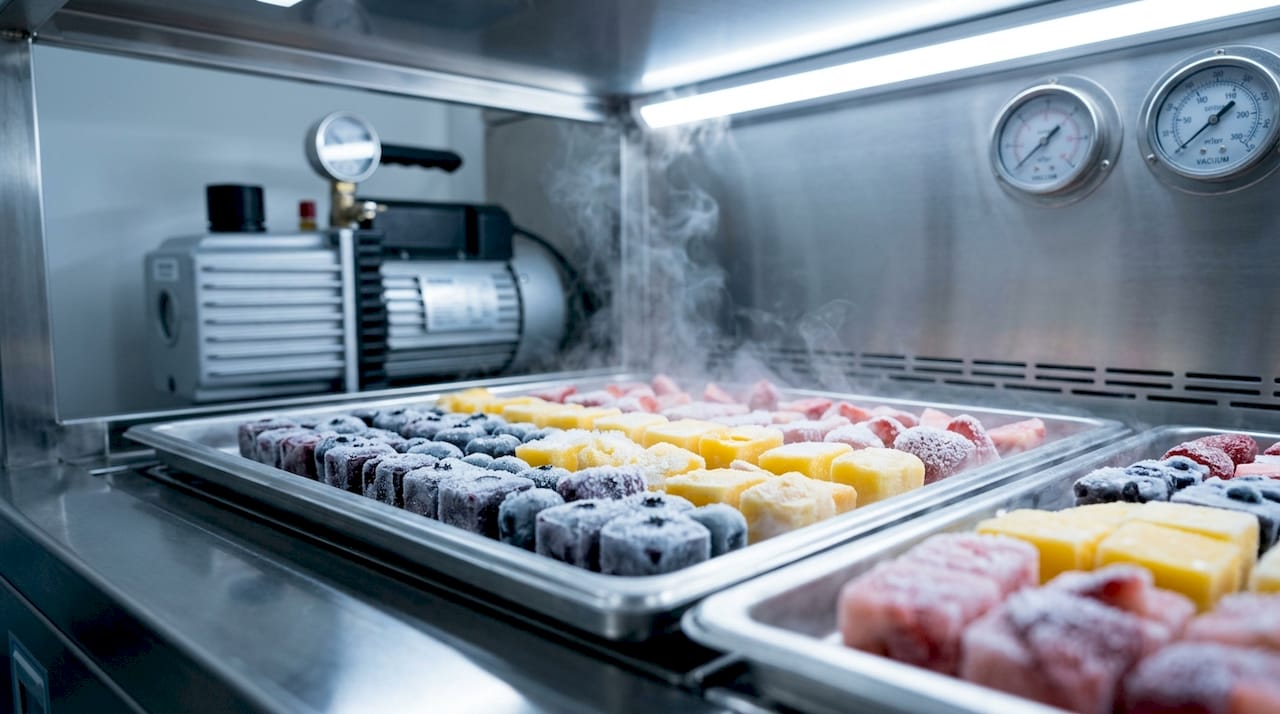
The practical implication is significant. Because the food never passes through a liquid water phase, the cellular structure stays intact. Strawberries come out looking like strawberries. Coffee retains its aromatic compounds. Meat holds its protein structure. For a deeper look at what this means for everyday food choices, Space-man’s breakdown of freeze dry meaning covers the concept from a consumer-friendly angle worth reading.
How does the freeze drying process work, step by step?
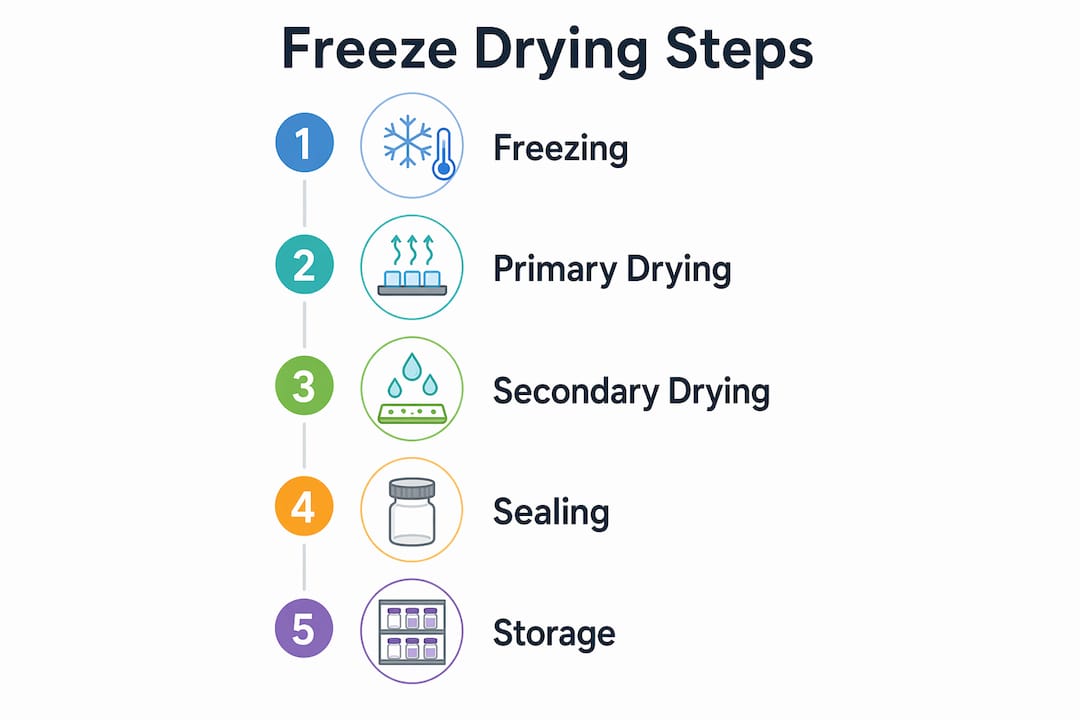
The freeze drying process follows three distinct stages, each critical to the final product quality. Understanding each step helps you appreciate why the process takes hours to days rather than minutes.
-
Initial freezing. The food is cooled well below 0°F, typically to between -40°F and -50°F. This freezes all the free water inside the product into a solid crystalline structure. The speed and depth of freezing matter here because larger ice crystals can damage cell walls, which affects texture after rehydration.
-
Primary drying (sublimation). The frozen product is placed in a vacuum chamber where pressure drops dramatically. At this low pressure, the ice converts directly into water vapor without melting first. The vapor is then captured by a condenser. This stage removes roughly 90% to 98% of water content, leaving behind a porous, lightweight structure that looks almost identical to the original food.
-
Secondary drying (desorption). A small amount of bound moisture remains after sublimation. Gentle heat is applied to drive off this residual water. The goal is to bring total moisture content down to around 1% to 4%, which is the range needed for long-term shelf stability.
The entire cycle can run anywhere from 20 hours to several days depending on the food’s density, water content, and the specific machine being used. Industrial systems from companies like Millrock Technology can process hundreds of kilograms per batch, while home units handle a few trays at a time.
Pro Tip: Temperature management during primary drying is the most common failure point. If shelf temperature rises too fast before sublimation is complete, the ice melts instead of vaporizing. This causes product collapse, a soggy, shrunken result that no amount of rehydration can fix. Cycle design must be tuned to each specific product.
Freeze drying vs dehydration: which method wins?
The comparison between freeze drying and conventional dehydration comes down to one core difference: how water is removed. Dehydration uses heat and airflow to evaporate liquid water. Freeze drying uses vacuum to sublimate frozen water. That single distinction drives every other difference in quality, cost, and shelf life.
Low-temperature sublimation preserves heat-sensitive nutrients, volatile flavor compounds, and physical structure in ways that hot-air drying simply cannot match. Vitamin C, for example, degrades rapidly under heat. Freeze-dried foods retain significantly more of it than conventionally dehydrated equivalents.
Here is a direct comparison of the two methods:
| Factor | Freeze drying | Conventional dehydration |
|---|---|---|
| Water removal method | Sublimation (ice to vapor) | Evaporation (liquid to vapor) |
| Nutrient retention | High | Moderate to low |
| Flavor and color retention | Excellent | Fair to good |
| Shelf life | 25+ years (sealed) | 1 to 5 years |
| Rehydration quality | Near-original texture | Often chewy or tough |
| Energy and cost | High | Low to moderate |
| Processing time | Hours to days | Hours |
The trade-off is real. Freeze drying requires more energy and significantly more time than conventional drying. For home users, that means higher electricity costs and longer wait times. For commercial producers, it means higher per-unit costs that justify premium pricing. The question is always whether the quality difference justifies the investment, and for high-value foods like specialty fruits, gourmet coffee, or culinary ingredients, it almost always does.
Key advantages of freeze drying over dehydration at a glance:
- Retains original shape, color, and aroma
- Produces a lighter, more portable product
- Rehydrates in minutes with cold or warm water
- Extends shelf life by decades when properly sealed
- Preserves probiotics and delicate bioactive compounds
What are the best freeze drying uses in food and culinary innovation?
Freeze drying applications span everything from emergency preparedness to Michelin-star kitchens, and the range keeps expanding. The freeze drying benefits that matter most to food enthusiasts are shelf stability without refrigeration, intense flavor concentration, and the ability to use ingredients year-round regardless of season.
Common foods that freeze dry exceptionally well include:
- Fruits: Strawberries, blueberries, mango, and raspberries become crunchy, intensely sweet snacks that dissolve on the tongue.
- Vegetables: Peas, corn, and spinach retain color and nutrients for long-term pantry storage.
- Meats and eggs: Cooked chicken, beef, and scrambled eggs rehydrate into meals that taste genuinely fresh.
- Coffee: Instant coffee is almost universally freeze dried, which is why premium instant products taste far better than older spray-dried versions.
- Dairy: Yogurt bites, cheese powder, and ice cream novelties all rely on lyophilization for their texture.
The culinary world has embraced freeze drying as a creative tool, not just a preservation one. Chefs use freeze-dried powders to add concentrated flavor without moisture, freeze-dried herbs to garnish dishes with vivid color, and freeze-dried proteins to create textural contrasts in plated courses. The candy industry has found a particularly enthusiastic audience: freeze-dried gummy candies and chocolates develop an airy, crunchy texture that is completely unlike the original product, which is exactly what makes them so addictive.
Home freeze dryers from brands like Harvest Right have made this technology accessible to serious home cooks and preppers, though the upfront investment runs several thousand dollars. For most consumers, buying finished freeze-dried products remains the more practical entry point.
Pro Tip: When cooking with freeze-dried ingredients, add them directly to dishes with moisture (soups, sauces, batters) and they rehydrate seamlessly. For snacking or garnishing, keep them dry and sealed until the last possible moment. Exposure to humidity for even 20 minutes can turn a perfectly crunchy freeze-dried strawberry into a sticky, soft disappointment.
What safety practices matter most when freeze drying food at home?
Freeze drying does not sterilize food. Bacteria survive dormant through the entire process and can reactivate the moment moisture returns. This is the most misunderstood aspect of home freeze drying, and it has real consequences for food safety.
Safe home freeze drying requires attention to four areas:
- Pre-processing high-risk foods. Meats, poultry, eggs, and seafood should be fully cooked before freeze drying. Raw proteins carry pathogen loads that dormant survival makes dangerous. For detailed guidance on meat specifically, Space-man’s guide on freeze drying meat at home covers the safe handling steps clearly.
- Sanitation throughout. All equipment, trays, and surfaces must be sanitized before and after each run. Cross-contamination during loading or unloading is a common and avoidable risk.
- Airtight packaging immediately after drying. Moisture reabsorption is the primary threat to shelf life and safety. Mylar bags with oxygen absorbers, or vacuum-sealed glass jars, are the standard choices. Transfer product quickly and seal before humidity has a chance to enter.
- Proper storage conditions. Cool, dark, and dry storage extends shelf life dramatically. Heat and light degrade both nutrients and packaging integrity over time. Space-man’s resource on storing freeze-dried foods covers the specifics of long-term storage in detail.
The safety logic is straightforward: freeze drying removes water, and water is what microbes need to grow. Remove moisture, seal out new moisture, and the product stays safe. Let moisture back in, and dormant bacteria wake up fast.
Key takeaways
Freeze drying, or lyophilization, preserves food quality better than any other drying method by removing 90% to 98% of moisture through sublimation, but safe results depend equally on proper handling, packaging, and storage.
| Point | Details |
|---|---|
| Core definition | Freeze drying removes moisture via sublimation under vacuum, preserving texture, flavor, and nutrients. |
| Three-stage process | Initial freezing, primary sublimation drying, and secondary desorption drying each serve a distinct role. |
| Freeze drying vs dehydration | Freeze drying yields superior quality and shelf life but requires more energy and time than hot-air drying. |
| Safety reality | Freeze drying does not kill bacteria; proper cooking, sanitation, and airtight packaging are non-negotiable. |
| Culinary applications | From emergency food storage to gourmet candy, freeze drying unlocks flavor intensity and year-round ingredient access. |
Why freeze drying is more nuanced than most people realize
I’ve spent a lot of time around freeze-dried products, and the single biggest misconception I encounter is the idea that freeze drying is a set-it-and-forget-it process. People assume you freeze something, run a cycle, and out comes a perfect product. The reality is that cycle parameters are product-specific, and a cycle designed for strawberries will produce mediocre results with dense meat or high-sugar candy.
The second misconception is about safety. I’ve heard people say freeze-dried food is “sterile” or “bacteria-free.” It is not. The process preserves microorganisms in dormant form. That’s actually useful in applications like probiotic preservation, but it means you cannot skip food safety steps just because the product looks and feels shelf-stable.
What I find genuinely exciting about freeze drying in 2026 is the culinary creativity it unlocks. Freeze-dried candy, for example, is not just a novelty. The transformation of texture and flavor concentration that happens during lyophilization creates an eating experience that is fundamentally different from the original product. That’s not preservation. That’s innovation. If you’re a food enthusiast who hasn’t experimented with freeze-dried ingredients in cooking, you’re leaving a serious flavor tool on the table.
— Chadi
Explore Space-man’s freeze-dried products and services

Space-man brings professional-grade lyophilization to Canadian consumers and entrepreneurs through a product line built on quality and creativity. The freeze-dried candy collection delivers the crunchy, intensely flavored experience that has made the category one of the fastest-growing snack segments in North America. For businesses and entrepreneurs ready to enter the market, Space-man’s private label and co-packing services handle everything from production to packaging under your brand. Whether you’re stocking up with a 10-pack candy bundle or exploring a full private label partnership, Space-man has the infrastructure and expertise to support you at any scale.
FAQ
What is the freeze drying definition in simple terms?
Freeze drying, or lyophilization, is a preservation process that freezes food and removes moisture by converting ice directly into vapor under vacuum. The result is a lightweight, shelf-stable product that retains its original flavor, color, and nutritional content.
How does freeze drying differ from regular dehydration?
Freeze drying uses sublimation to remove moisture without heat, while conventional dehydration uses hot air to evaporate liquid water. Freeze drying produces superior nutrient retention, better texture after rehydration, and a shelf life that can exceed 25 years in sealed packaging.
Does freeze drying kill bacteria?
No. Bacteria survive dormant through the freeze drying process and can reactivate when moisture returns. High-risk foods like meat and eggs should be fully cooked before freeze drying to reduce pathogen risk.
How long does freeze-dried food last?
Properly sealed freeze-dried food stored in cool, dark conditions can last 25 years or more. The key variables are packaging quality, oxygen exposure, and storage temperature. Mylar bags with oxygen absorbers are the standard for maximum shelf life.
What foods work best for freeze drying?
Fruits, vegetables, cooked meats, eggs, dairy, and coffee all freeze dry well. High-sugar foods like candy undergo a dramatic texture transformation during lyophilization, producing the crunchy, airy result that has made freeze-dried candy a breakout snack category.