

TL;DR:
- Freeze drying preserves over 90% of nutrients and extends food shelf life up to 25 years without refrigeration. The process involves sublimation, which maintains food structure, flavor, and nutritional value far better than heat-based dehydration. It is ideal for home preppers and food businesses seeking high-quality, long-lasting, and versatile preservation options.
Freeze dryer machine benefits are defined by one core capability: preserving up to 99% of a food’s nutrients while extending shelf life to 25 years without refrigeration. The process, known industrially as lyophilization, removes 95–99% of moisture through sublimation, leaving food structurally intact in a way that heat-based methods simply cannot match. Where conventional dehydration shrinks cells and degrades flavor, freeze drying locks in original texture, aroma, and nutritional value. For home preppers, small food businesses, and commercial snack producers alike, that combination is the reason freeze drying has moved from pharmaceutical labs into kitchens and production floors.
What are the freeze dryer machine benefits compared to other methods?
Freeze drying outperforms every common food preservation method on three measurable dimensions: nutrient retention, shelf life, and sensory quality. Heat drying retains only 40–70% of nutrients, while freeze drying consistently retains over 90%. That gap is not a minor technical footnote. It means the strawberry you freeze dry from your garden is nutritionally closer to a fresh strawberry than anything a conventional dehydrator produces.
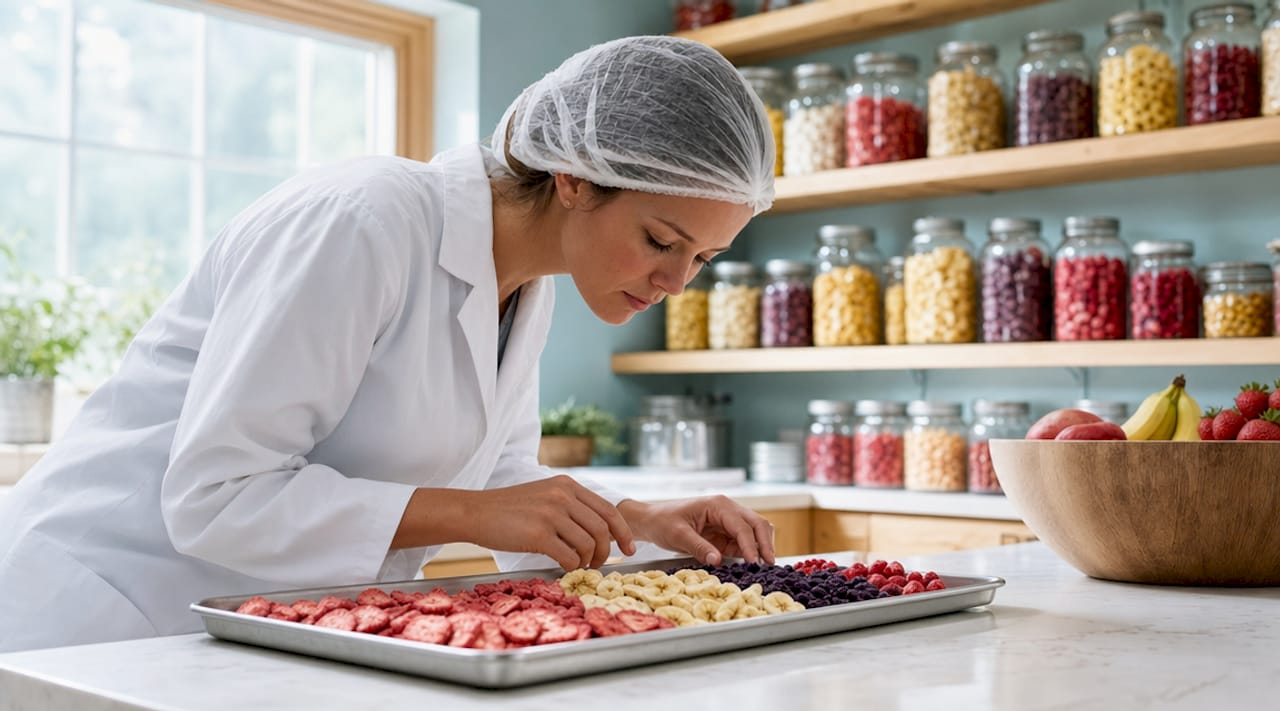
Canning introduces heat that degrades vitamins and alters texture. Freezing preserves quality reasonably well but requires continuous cold chain management and consumes electricity indefinitely. Freeze drying, by contrast, produces a shelf-stable product that needs no refrigeration and rehydrates in minutes. For long-term food storage, emergency preparedness, or building a snack product line, the advantages of freeze drying over alternatives are concrete and measurable.
How does freeze drying work and why does it preserve food quality better?
Freeze drying operates through a three-stage process called lyophilization. First, food is pre-frozen to temperatures typically between -40°F and -50°F. Then the machine creates a deep vacuum, dropping pressure low enough that ice converts directly to vapor without passing through a liquid phase. That conversion is sublimation, and it is the reason cellular structure stays intact.
Heat drying forces moisture out through evaporation, which collapses cell walls and causes the shrinkage and toughness familiar in standard dried fruit. Sublimation sidesteps that damage entirely. The cellular structure is preserved, which is why freeze dried strawberries rehydrate into something that looks and tastes like a real strawberry rather than a leathery chip.
Typical home freeze drying cycles run 20–40 hours depending on food density, moisture content, and batch size. That is longer than a dehydrator run, but the total active labor per batch is only 30–60 minutes. The machine does the work. You load it, set parameters, and come back when the cycle finishes.
- Pre-freezing: Drops food to cryogenic temperatures to solidify all moisture
- Primary drying: Vacuum sublimation removes roughly 95% of moisture
- Secondary drying: Removes residual bound water, bringing water activity below 0.2 for microbial stability
- Post-processing: Immediate packaging in oxygen-barrier materials to lock in shelf life
Pro Tip: For a deeper look at each stage of the lyophilization cycle and how to control it for better results, the freeze drying process guide from Space-man breaks it down step by step.
What are the key benefits for home users versus businesses?
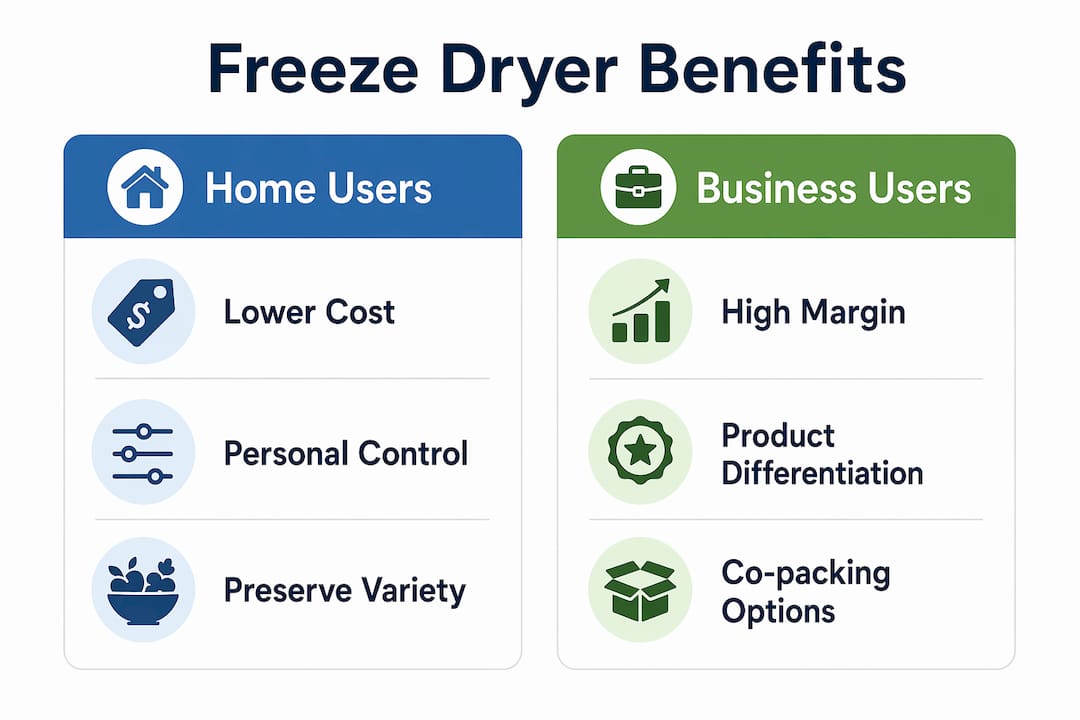
The freeze dryer machine benefits look different depending on whether you are preserving your backyard harvest or running a commercial snack operation. The economics, scale, and use cases diverge significantly, and understanding that split saves you from buying the wrong solution.
Home user benefits
Home freeze dryers from brands like Harvest Right cost between $2,500 and $8,000, with running costs landing around $4–$9 per finished pound. Commercial freeze dried food retails at $15–$40 per pound. The payback period with consistent use and low-cost inputs runs 8–18 months. That math works if you have access to surplus garden produce, bulk purchases, or seasonal gluts. It does not work as well if you are buying grocery store produce at retail prices specifically to freeze dry it.
For home users, the real wins are control and variety. You decide what goes in, with no additives, no preservatives, and no compromises on ingredient quality. You can freeze dry full meals, dairy, eggs, and herbs, which are categories that conventional preservation methods handle poorly or not at all.
Business user benefits
For food businesses, the calculus shifts toward product differentiation and margin. Freeze dried snacks command premium pricing because consumers increasingly demand clean-label, preservative-free products with long shelf life. A business producing freeze dried candy, fruit, or complete meal kits can charge prices that make the capital investment in commercial equipment recover quickly at volume.
| Factor | Home user | Business user |
|---|---|---|
| Machine cost | $2,500–$8,000 | $10,000–$100,000+ |
| Cost per finished pound | $4–$9 | Varies by volume and inputs |
| Primary use case | Long-term food storage, garden surplus | Snack production, product lines, co-packing |
| Shelf life achieved | Up to 25 years | Up to 25 years |
| Labor per batch | 30–60 minutes active | Scaled with staff and automation |
| Best ROI condition | Low-cost bulk or surplus food | High-margin product with consistent volume |
Businesses also gain access to private label and co-packing services, which removes the need to own equipment at all. Space-man, for example, offers co-packing and packaging services for brands that want freeze dried products without the capital outlay of owning a machine.
Which foods benefit most from freeze drying?
Freeze drying is genuinely versatile, but some food categories benefit more than others. Fruits and vegetables are the most common candidates because their high moisture content and delicate nutrient profiles respond well to sublimation. Berries, corn, peas, and leafy greens come out of the process with color, flavor, and nutritional value close to fresh.
Dairy, eggs, and complete cooked meals are where freeze drying separates itself from every other method. These are foods that canning ruins and dehydration cannot handle safely. Freeze dried cheese, yogurt, scrambled eggs, and soups rehydrate cleanly and taste like the original. Meats work well too, particularly cooked proteins that would otherwise require refrigeration.
Freeze dried snacks represent a growing product category on their own. The lightweight, shelf-stable format makes them ideal for hiking, emergency kits, and everyday snacking. Candy is a particularly interesting application. The sublimation process transforms the texture of gummy and chewy candies into airy, crunchy versions with intensified flavor. Space-man built its entire product line around this effect.
Foods that do not freeze dry well include those with very high fat or sugar content in liquid form, like honey, pure chocolate, or jam. High-fat foods can go rancid even after drying because lipid oxidation continues without moisture. Whole nuts and oily foods fall into the same category.
Foods that freeze dry exceptionally well:
- Berries, sliced fruits, and citrus segments
- Corn, peas, green beans, and most vegetables
- Cooked meats and poultry
- Dairy products including cheese, yogurt, and milk
- Eggs (raw or cooked)
- Complete meals like soups, stews, and casseroles
- Candy and confections (with dramatic texture transformation)
What practical considerations must you know before buying a freeze dryer?
Owning a freeze dryer is not passive. The machine runs long cycles, generates heat and noise, and requires thoughtful placement and post-process handling to deliver the shelf life it promises.
-
Placement and environment. Freeze dryers emit significant heat and run at around 60–65 dB, roughly equivalent to a normal conversation. They need a ventilated space with ambient temperature between 45°F and 80°F. A garage, utility room, or dedicated pantry works. A bedroom closet does not.
-
Energy consumption. Freeze dryers use more electricity per cycle than dehydrators, but cycle times for many foods are shorter in total. Budget for the electricity cost as part of your per-pound calculation, especially if you are running the machine multiple times per week.
-
Batch cycle time. Cycles run 20–40 hours. You will not be doing same-day turnaround. Plan your food prep and batch scheduling around this reality, particularly for businesses managing production timelines.
-
Packaging immediately after drying. This step is non-negotiable. Freeze dried food is hygroscopic, meaning it absorbs ambient moisture the moment it is exposed to air. Packaging in thick Mylar bags with oxygen absorbers, without clear windows that allow light penetration, is the standard for maximizing shelf life. Delay this step and you lose the shelf life advantage you just spent 30 hours earning.
-
Cost-effectiveness depends on your inputs. The true cost of home freeze drying includes labor, electricity, machine amortization, and the cost of the raw food. If you are buying produce at grocery store prices to freeze dry, you may spend more per pound than buying commercial freeze dried food. The economics work best with garden surplus, bulk purchases, or wholesale sourcing.
Pro Tip: If you are evaluating whether to invest in your own machine or partner with a co-packer, the freeze drying for business breakdown from Space-man walks through the real numbers on both paths.
Key takeaways
Freeze dryer machines deliver their most significant value when the food input is low-cost, the output is high-margin, and packaging is handled correctly immediately after each cycle.
| Point | Details |
|---|---|
| Nutrient retention advantage | Freeze drying retains over 90% of nutrients versus 40–70% for heat drying. |
| Shelf life without refrigeration | Properly packaged freeze dried food lasts up to 25 years at stable ambient temperatures. |
| Cost math depends on inputs | Home freeze drying pays off only with low-cost bulk or surplus food, not grocery store produce. |
| Packaging is non-negotiable | Mylar bags with oxygen absorbers must be sealed immediately after each cycle to preserve shelf life. |
| Business opportunity is real | Clean-label, preservative-free freeze dried products command premium prices in a growing consumer market. |
Why the “set it and forget it” myth about freeze dryers costs people money
I have seen a lot of people buy a home freeze dryer expecting it to run like a slow cooker. Load it, walk away, profit. That expectation leads to real disappointment, and sometimes real financial loss.
The machine itself is not complicated. But the discipline around it is. You need consistent, low-cost food inputs to make the economics work. You need to be ready to package immediately when the cycle ends, not the next morning. And you need to be honest about whether you will actually use what you produce, because a shelf full of freeze dried food you never rotate is just expensive dust.
Where I see freeze drying genuinely shine is in two scenarios. The first is the serious home prepper or homesteader with garden surplus or access to bulk food at harvest prices. The second is the small food business that has identified a specific product, like freeze dried candy or fruit snacks, and is building a real production system around it. In both cases, the technology delivers exactly what it promises. The people who get burned are usually somewhere in the middle, running occasional batches of grocery store produce and wondering why the numbers do not add up.
The creative potential is also underrated. Freeze dried candy, for example, is not just preserved candy. The sublimation process creates a completely different texture and intensifies flavor in ways that genuinely surprise people. That is a product, not just a preservation method. If you are thinking about freeze drying from a business angle, start there.
— Chadi
Explore freeze dried products and services from Space-man
Space-man produces freeze dried candy and snacks from its Canadian facility, with a product line built specifically around the texture and flavor transformation that lyophilization creates. If you are curious about what the finished product looks and tastes like before committing to equipment or a production partnership, the 10-pack candy bundle is a direct way to experience it.

For businesses exploring freeze dried product development without the capital cost of owning equipment, Space-man offers private label and co-packing services across candy, snacks, and consumer goods. Whether you need bagging, packaging, or a full white-label product ready for retail, the team handles production so you can focus on your brand and distribution.
FAQ
What is the main benefit of a freeze dryer machine?
The primary benefit is nutrient retention combined with extreme shelf life. Freeze drying preserves over 90% of a food’s nutrients while extending shelf life to 25 years without refrigeration or preservatives.
How does freeze drying differ from dehydration?
Freeze drying uses sublimation to remove moisture without heat, preserving cellular structure, flavor, and nutrients. Dehydration uses heat, which retains only 40–70% of nutrients and causes texture degradation.
Is a home freeze dryer worth the cost?
A home freeze dryer costs $2,500–$8,000 and pays back in 8–18 months with consistent use and low-cost food inputs. The investment makes financial sense primarily for users with access to bulk or surplus produce, not those buying at retail grocery prices.
What foods cannot be freeze dried?
High-fat liquid foods like honey, pure chocolate, and jam do not freeze dry well. Whole nuts and oily foods are also poor candidates because lipid oxidation continues after drying, leading to rancidity.
How long does a freeze drying cycle take?
A typical home freeze drying cycle runs 20–40 hours depending on food density, moisture content, and batch size. Active labor per batch is only 30–60 minutes since the machine operates automatically through most of the cycle.