

TL;DR:
- Freeze drying removes almost all moisture, preserving nutrients and texture for long-term storage. Dehydration loses more nutrients and moisture, making foods last shorter and developing different textures and flavors. The choice depends on priorities like cost, shelf life, nutritional preservation, and intended food use.
Freeze drying and dehydration are both food preservation methods, but the difference between freeze dried and dehydrated foods goes far deeper than most people realize. Freeze drying removes 98–99% of moisture via sublimation, a process that converts ice directly to vapor without heat. Dehydration removes 80–95% of moisture using sustained heat and airflow. That gap in moisture removal is not a minor technical detail. It determines shelf life, nutrient retention, texture, and cost. Freeze dried foods can last 25–30 years; dehydrated foods typically last 1–15 years.
What is the difference between freeze dried and dehydrated foods?
The core difference comes down to how each method removes water from food. Freeze drying freezes food solid first, then places it inside a vacuum chamber. The vacuum lowers pressure so dramatically that ice converts directly to vapor, skipping the liquid stage entirely. This process is called sublimation, and it is the reason freeze dried foods keep their original shape, color, and nutritional profile so well.
Dehydration works differently. A food dehydrator or oven applies sustained heat, typically between 125°F and 165°F, combined with airflow to evaporate water from the food’s surface. The process is simpler and faster, but heat is the key variable that changes everything about the final product.
How each process affects the food
Freeze drying preserves the food’s cell structure because no heat is applied and no liquid water passes through the tissue. The result is a porous, lightweight product that rehydrates quickly and retains its original shape. Dehydration collapses cell walls as heat drives moisture out, which is why dehydrated foods shrink, become denser, and develop that characteristic chewy texture.
Freeze drying cycles run 20–45 hours. Dehydration takes 6–16 hours. Freeze drying is also more energy intensive, which explains a big part of the cost difference between the two methods.
Pro Tip: Pre-freezing food before starting a freeze drying cycle reduces total cycle time by allowing the vacuum drying stage to begin more efficiently. This is especially useful for high-water-content foods like strawberries or peaches.
What are the nutritional differences between freeze dried and dehydrated foods?
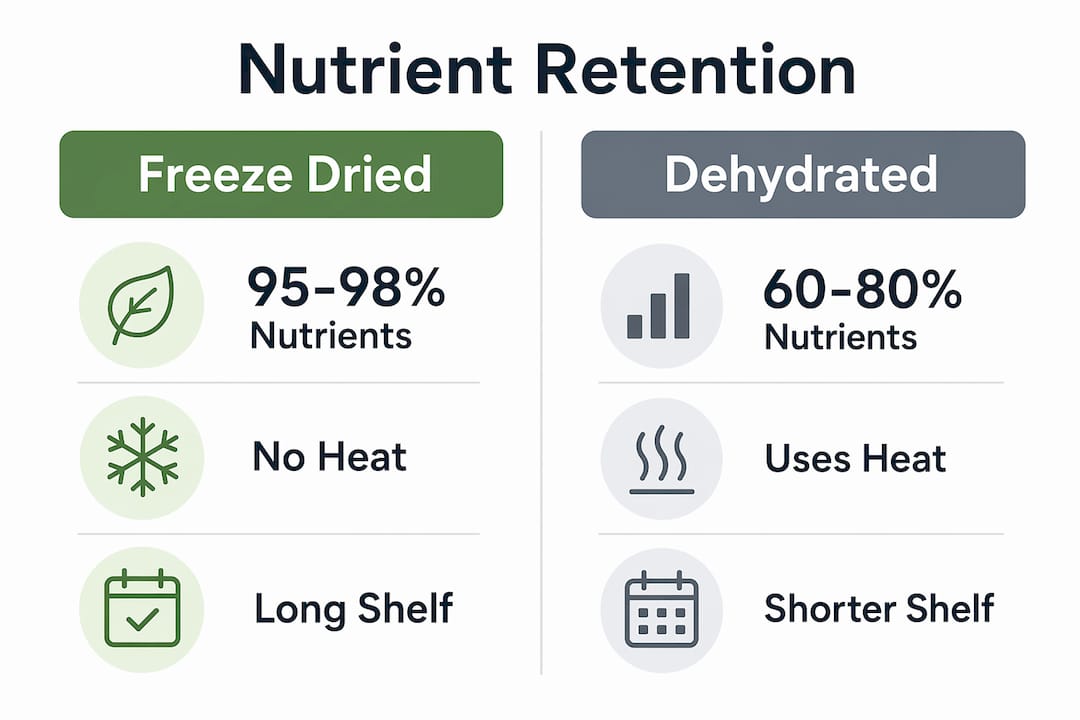
Freeze drying preserves 95–98% of original nutrients because the entire process avoids high heat. Vitamins, minerals, fiber, and proteins all survive sublimation in near-complete form. That is a meaningful advantage for anyone using preserved food as a regular part of their diet.
Dehydration retains 60–80% of nutrients. The losses are concentrated in heat-sensitive compounds, particularly Vitamin C and certain B vitamins. The longer the food sits at high temperature, the greater the degradation. This does not make dehydrated food nutritionally worthless, but the gap is real and worth understanding.
| Nutrient category | Freeze dried retention | Dehydrated retention |
|---|---|---|
| Overall nutrients | 95–98% | 60–80% |
| Vitamin C | Near complete | Significant loss |
| Fiber | Fully preserved | Mostly preserved |
| Proteins | Fully preserved | Mostly preserved |
| Minerals | Fully preserved | Mostly preserved |
Fat content is a separate issue worth knowing. Fats block sublimation during freeze drying and cause rancidity over time, which dramatically shortens shelf life. Trimming visible fat from meats before freeze drying is not optional. It is the single most important prep step for meat-based foods.
Pro Tip: If you are freeze drying for long-term nutrition, prioritize low-fat fruits, vegetables, and lean proteins. High-fat foods like avocado or fatty cuts of meat are poor candidates for either method if extended shelf life is the goal.
How do texture, flavor, and shelf life compare?
Freeze dried foods come out of the process with a porous, crispy texture. That porosity is what makes rehydration so fast and uniform. Add water, and the food returns to something very close to its original state. Many people skip rehydration entirely. Freeze dried foods eaten dry as snacks have become their own culinary category, with the light crunch being a feature rather than a workaround. Freeze dried candy is a perfect example of this.
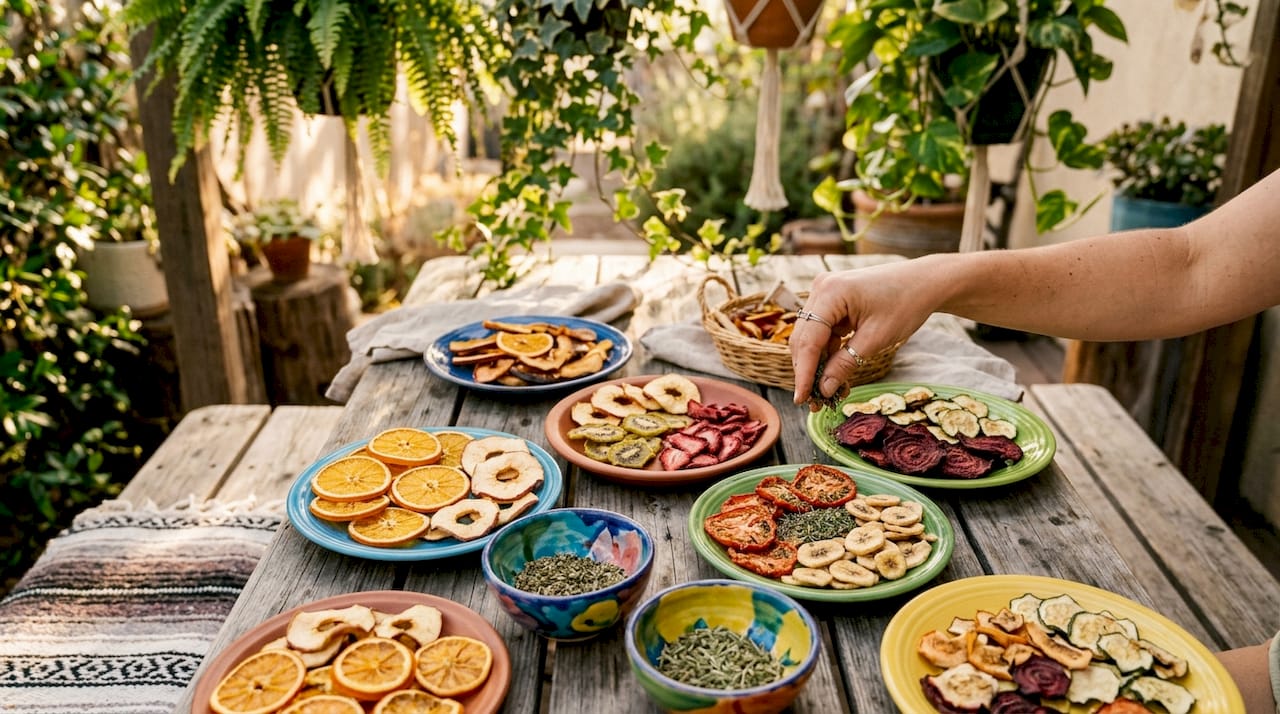
Dehydrated foods tell a different story. Heat causes caramelization and concentrates flavors as water leaves the food. The result is a denser, chewier product with a more intense taste. Think beef jerky, dried mango slices, or sun-dried tomatoes. That concentrated flavor is not a flaw. For many applications, it is exactly what you want.
Shelf life and packaging
Shelf life is where the two methods diverge most dramatically. Freeze dried foods last 25–30 years when stored in airtight, oxygen-free packaging. Dehydrated foods typically last 1–15 years, depending on the food type, packaging quality, and storage conditions. The difference comes down to residual moisture. Freeze drying leaves almost none. Dehydration leaves more, and that residual moisture is what allows microbial activity and oxidation over time.
Packaging matters enormously for freeze dried products. Mylar bags with oxygen absorbers are the standard for long-term storage. Without proper food bag storage, even well-processed freeze dried food will degrade faster than expected. Dehydrated foods are more forgiving in this regard but still benefit from airtight containers kept away from heat and light.
What should consumers consider when choosing between the two?
Cost is the first practical filter. Home freeze dryers cost between $2,000 and $5,000. Food dehydrators start under $50 and top out around a few hundred dollars for quality units. That price gap makes dehydration the obvious starting point for most home food enthusiasts. Freeze drying at home makes sense when long-term food storage or nutritional preservation is a serious priority.
Here is a practical breakdown of the best use cases for each method:
- Freeze drying is the right choice for emergency food supplies, long-term pantry storage, backpacking meals, and any situation where maximum nutrition and shelf life matter.
- Dehydration works best for everyday snacks like jerky and dried fruit, budget-conscious preservation, and foods where a chewy texture and concentrated flavor are desirable.
- Freeze drying suits foods with high water content: strawberries, corn, peas, and cooked meals that need to rehydrate fully.
- Dehydration suits foods that benefit from texture change: meats, herbs, mushrooms, and citrus slices.
- Both methods require proper storage after processing. The best preservation technique fails if the packaging is poor.
One common mistake with home freeze drying is trusting the machine’s completion signal without checking the food manually. False dryness is a real risk. A piece of food can feel dry on the outside while the core is still soft or cool. That residual moisture will cause spoilage in storage. Always break a piece open and check the center before sealing your batch.
Pro Tip: When freeze drying for the first time, start with a single food type rather than a mixed batch. Different foods have different moisture levels and drying times. A uniform batch makes it much easier to judge when the cycle is truly complete.
Key Takeaways
Freeze drying outperforms dehydration in shelf life, nutrient retention, and texture quality, but dehydration wins on cost, speed, and flavor concentration for specific food types.
| Point | Details |
|---|---|
| Moisture removal gap | Freeze drying removes 98–99% moisture; dehydration removes 80–95%. |
| Nutrient retention | Freeze drying preserves 95–98% of nutrients; dehydration retains 60–80%. |
| Shelf life difference | Freeze dried foods last 25–30 years; dehydrated foods last 1–15 years. |
| Cost and equipment | Home freeze dryers cost $2,000–$5,000; dehydrators are far more affordable. |
| Best use cases | Freeze drying suits long-term storage; dehydration suits everyday snacks and budget preservation. |
Why I think most people pick the wrong method for the wrong reasons
Most people default to dehydration because the equipment is cheap and the process is familiar. That is a reasonable starting point. But the mistake I see repeatedly is people dehydrating foods they actually want to store for years, then wondering why quality degrades faster than expected. Dehydration is not a long-term storage solution for most foods. It is a short-to-medium-term method with real limits.
The freeze drying vs dehydrated debate also gets muddied by texture expectations. People assume freeze dried food is just a worse version of fresh food. It is not. A freeze dried strawberry eaten dry is genuinely delicious in its own right. The crunch, the concentrated sweetness, the way it dissolves. That is a different eating experience, not an inferior one. Space-man built an entire product line around this idea with freeze dried candy, and the response from consumers confirms that the texture is a feature people actively seek out.
My honest recommendation: if you are preserving food for emergencies or long-term nutrition, invest in freeze drying. If you are making snacks for the next few months, a dehydrator is all you need. The method should match the goal, not the other way around.
— Chadi
Space-man’s freeze dried packaging and co-packing services
Space-man specializes in freeze dried food production and knows firsthand how much packaging quality affects the final product. Whether you are a retailer looking to carry freeze dried goods under your own brand or a producer who needs reliable co-packing support, Space-man offers private label and co-packing services built specifically for shelf-stable freeze dried products.

The team handles bagging, packaging, and labeling for consumer goods with the quality standards that freeze dried products demand. If you are ready to bring a freeze dried product to market or scale an existing line, Space-man is the Canadian partner built for exactly that.
FAQ
What is the main difference between freeze dried and dehydrated food?
Freeze drying removes moisture through sublimation under vacuum pressure without heat, while dehydration uses sustained heat and airflow. This difference determines shelf life, nutrient retention, and texture.
How long do freeze dried foods last compared to dehydrated foods?
Freeze dried foods last 25–30 years in proper airtight packaging. Dehydrated foods typically last 1–15 years depending on the food type and storage conditions.
Do freeze dried foods retain more nutrients than dehydrated foods?
Freeze drying preserves 95–98% of original nutrients. Dehydration retains 60–80%, with the largest losses in heat-sensitive vitamins like Vitamin C.
Can you eat freeze dried food without rehydrating it?
Yes. Many freeze dried foods are eaten dry as snacks. The porous, crispy texture is a distinct eating experience, and products like freeze dried candy are designed specifically to be eaten without adding water.
Is freeze drying worth the cost for home use?
Freeze drying equipment costs $2,000–$5,000, which is a significant investment. It is worth it for serious long-term food storage or nutritional preservation. For everyday snacks and short-term preservation, a dehydrator is the more practical and affordable choice.