

TL;DR:
- Freeze-drying uses vacuum and low temperatures to remove moisture, preserving nutrients and texture. Dehydration employs heat and airflow, resulting in chewier foods with lower nutrient retention and shorter shelf life. Both methods serve different needs, with freeze-dried foods ideal for long-term storage and quick rehydration.
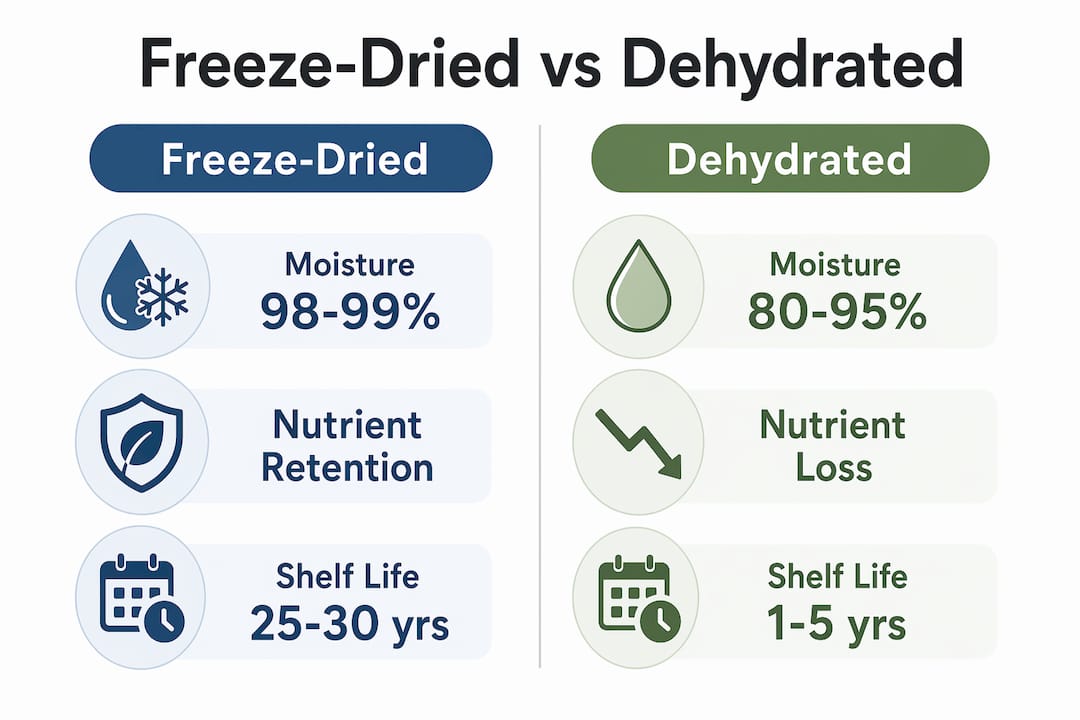
Freeze-dried food is defined as food from which moisture has been removed through sublimation, a process that converts ice directly into vapor under vacuum at temperatures well below freezing. The core difference between freeze dried and dehydrated food comes down to how water leaves the food: freeze-drying uses cold vacuum technology, while dehydration uses heat and airflow. That single distinction drives every downstream difference you care about, including nutrient retention, texture, shelf life, and price. If you’ve ever wondered why freeze-dried strawberries snap like a chip while dried ones chew like leather, this is exactly why.
What is the difference between freeze dried and dehydrated food?
The two methods share one goal but take opposite routes to get there. Freeze-drying removes 98–99% of moisture, while dehydration typically leaves 5–10% moisture behind. That gap matters more than it sounds. Higher residual moisture means faster spoilage, shorter shelf life, and a chewier final product.
Freeze-drying preserves the food’s original cell structure because no heat is applied during the process. Dehydration collapses that structure through heat exposure, which is why a dehydrated apple slice shrinks dramatically while a freeze-dried one looks almost fresh. Both methods are legitimate food preservation techniques, but they serve different needs and budgets.
The industry term for freeze-drying is lyophilization, a word borrowed from pharmaceutical manufacturing. You’ll see it on lab equipment and industrial machinery. For everyday food conversations, “freeze-dried” is the standard shorthand, and both terms refer to the same process.
How are freeze-dried and dehydrated foods produced?
The freeze-drying process
Freeze-drying works in three stages: freezing, primary drying, and secondary drying. Food is first frozen solid, then placed in a vacuum chamber where pressure drops low enough that ice converts directly to vapor without passing through a liquid phase. This is sublimation, and it’s the reason freeze-dried food retains its shape and porous structure after processing.
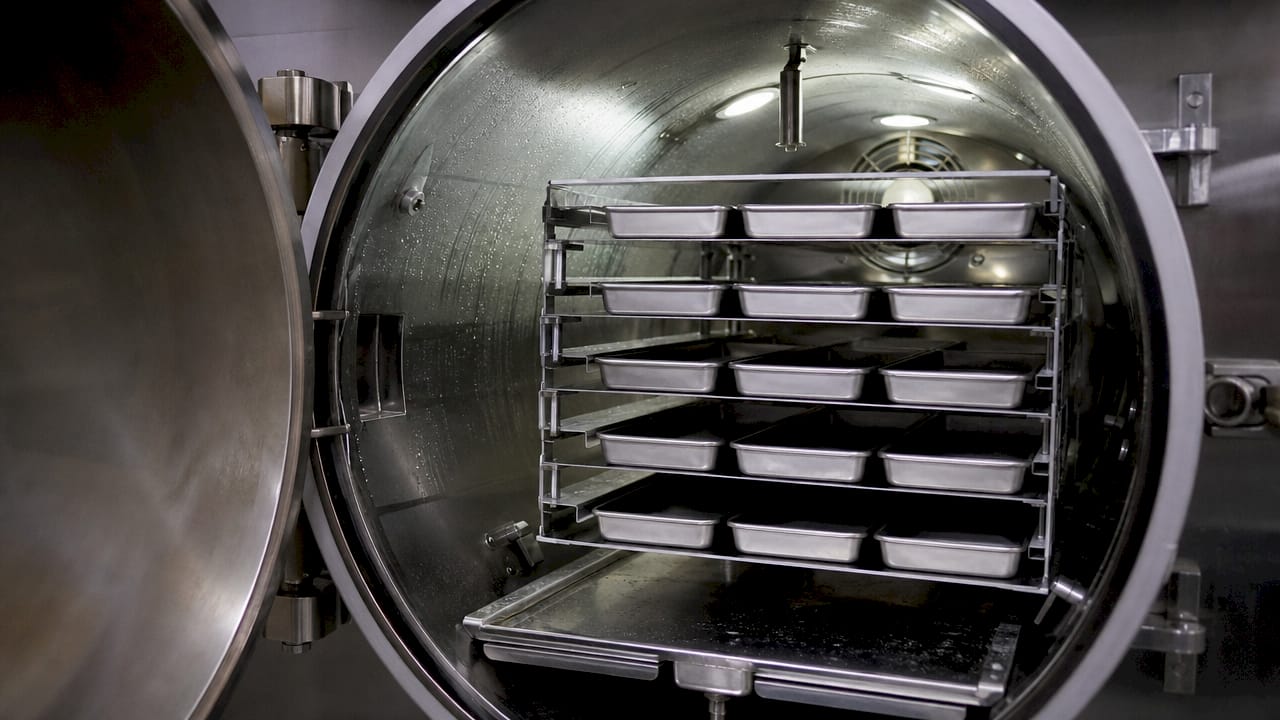
The freezing phase is more critical than most people realize. Slower freezing creates larger ice crystals, which produce a more porous structure in the finished product. That porousness speeds up drying and makes rehydration faster later. Temperature control during primary drying is equally important. Applying too much heat collapses the frozen structure, ruining texture and slowing the entire drying cycle. This is why industrial freeze-dryers cost significantly more than home units and why the quality gap between them is real.
The dehydration process
Dehydration uses heat between 95°F and 165°F combined with airflow to evaporate moisture from food surfaces. The process is straightforward and accessible. Most home dehydrators run on a simple timer and thermostat, with no vacuum chamber required.
Key differences in how each method works:
- Freeze-drying operates at temperatures often below -40°F during the freezing phase, then uses vacuum pressure to remove ice as vapor.
- Dehydration applies direct heat, which causes shrinkage, color change, and some nutrient loss in heat-sensitive compounds.
- Home freeze-dryers cost $2,000–$4,500, making them a serious investment for most households.
- Home dehydrators run $60–$350, putting them within reach of most food enthusiasts.
Pro Tip: If you own a home dehydrator, set it to the lowest effective temperature for the food type. Lower heat preserves more vitamins, especially Vitamin C, which degrades quickly above 140°F.
What are the nutritional and shelf life differences?
Nutrition is where freeze-drying earns its premium price tag. Freeze-dried foods retain 90–97% of original nutrients, including vitamins, minerals, and antioxidants. Dehydrated foods retain 80–95%, but heat-sensitive vitamins take a harder hit.
Vitamin C is the clearest example. Dehydration degrades Vitamin C by 40–60%, while freeze-drying loses only 5–10%. B vitamins follow a similar pattern. If you’re relying on preserved food for nutritional completeness, that difference is significant, especially over months of storage.
| Category | Freeze-dried | Dehydrated |
|---|---|---|
| Nutrient retention | 90–97% | 80–95% |
| Vitamin C loss | 5–10% | 40–60% |
| Moisture removed | 98–99% | 90–95% |
| Shelf life (sealed) | 25–30 years | 1–5 years (up to 15 for grains) |
| Cost per serving | $8–$18 | $1–$5 |
Freeze-dried foods last 25–30 years sealed, making them the clear choice for long-term emergency storage. Dehydrated foods typically last 1–5 years, though grains and beans can reach 8–15 years under ideal conditions. That shelf life gap exists because residual moisture in dehydrated food creates conditions where bacteria and mold can eventually take hold.
Storage conditions matter for both methods. Oxygen absorbers, mylar bags, and cool dark environments extend shelf life across the board. Humidity is the enemy of dehydrated food in particular, since its higher moisture content makes it more vulnerable to reabsorption from the air.
Pro Tip: Store both freeze-dried and dehydrated foods in airtight containers with oxygen absorbers. Even a small amount of oxygen accelerates nutrient degradation and shortens shelf life. For more on maximizing longevity, the shelf life guide from Space-man covers what retailers and home storers both need to know.
How do freeze-dried and dehydrated foods differ in texture and taste?
Texture is the most immediately noticeable difference when you open a bag. Freeze-dried food rehydrates in 1–5 minutes in cold or hot water and returns to near-original texture. Dehydrated food requires 5–60 minutes of soaking and still comes out firmer and chewier than fresh.
Heat exposure during dehydration also changes flavor. The Maillard reaction, the same browning process that happens when you toast bread, occurs at dehydration temperatures and creates slightly caramelized, concentrated flavors. That’s not always bad. Dehydrated mango, for example, develops a richer sweetness than its fresh counterpart. But for foods where fresh flavor matters, like herbs, berries, or dairy, freeze-drying wins clearly.
Foods that suit each method:
- Freeze-drying works best for: fruits, vegetables, dairy, eggs, cooked meats, full meals, and anything where texture and nutrition are priorities.
- Dehydration works best for: jerky, fruit leather, herbs, mushrooms, and foods where a chewy or concentrated texture is desirable.
- Freeze-dried candy is a great example of texture transformation done right. The process creates a light, crunchy, airy texture that’s completely different from the original candy, which is exactly what makes it fun to eat.
If you’re planning meals for camping or travel, eating healthy on the go is easier when you understand which preserved foods will actually taste good after rehydration. Freeze-dried options give you more flexibility with meal variety and nutrition.
What are the cost considerations and practical applications?
Freeze-drying is energy intensive and time-consuming, but it produces premium quality and a long shelf life. Dehydration is cost-effective and faster, with trade-offs in nutrition and texture. That summary captures the practical reality for most consumers.
At the commercial level, freeze-dried products cost $8–$18 per serving compared to $1–$5 per serving for dehydrated options. That price gap reflects the equipment cost, energy use, and processing time involved in freeze-drying. A single freeze-drying cycle can take 20–40 hours, while dehydration runs 4–12 hours for most foods.
Best applications by method:
- Freeze-dried: long-term emergency food storage, backpacking meals, space-efficient nutrition, premium snacks, and situations where rehydration speed matters.
- Dehydrated: everyday snacking, bulk food prep on a budget, trail mix, jerky, and situations where shelf life of 1–3 years is sufficient.
- Home production: dehydrators make sense for most households. Home freeze-dryers are worth the investment only if you plan to process large volumes regularly.
The energy cost of running a home freeze-dryer adds up quickly. Most units draw 1,000–1,500 watts over a 24-hour cycle, which translates to real electricity costs per batch. Dehydrators use far less power and finish faster, making them the practical choice for casual home food preservation.
How to choose between freeze-dried and dehydrated food for your needs
The right choice depends on four factors: budget, storage goals, nutritional priorities, and texture preference. Work through them in order.
- Set your budget first. If cost per serving is a hard constraint, dehydrated food delivers solid nutrition at a fraction of the price. If you’re building a long-term food supply and quality matters, freeze-dried is worth the premium.
- Define your storage timeline. For anything beyond five years, freeze-dried is the only practical option. For 1–3 year storage, quality dehydrated products stored properly perform well.
- Consider your nutritional goals. If you’re relying on stored food for complete nutrition, especially Vitamin C and B vitamins, freeze-dried retention rates are meaningfully better. For supplemental snacking, dehydrated is fine.
- Think about how you’ll eat it. If you need food that rehydrates quickly and tastes close to fresh, freeze-dried wins. If you enjoy chewy textures or concentrated flavors, dehydrated products like jerky or dried fruit are genuinely satisfying.
- Factor in sustainability. Dehydration uses less energy per batch. If environmental impact matters to your purchasing decisions, that’s a real consideration alongside cost and nutrition.
One common mistake is treating the two methods as interchangeable. They’re not. The key differences between freeze-dried and dehydrated go beyond marketing language. Understanding the process helps you make a choice you won’t regret six months into a storage plan.
Key Takeaways
Freeze-drying preserves more nutrients, lasts longer, and costs more than dehydration, making each method best suited to different budgets, storage timelines, and eating preferences.
| Point | Details |
|---|---|
| Nutrient retention | Freeze-dried retains 90–97% of nutrients; dehydrated retains 80–95%, with greater vitamin C loss. |
| Shelf life gap | Freeze-dried lasts 25–30 years sealed; dehydrated lasts 1–5 years under typical conditions. |
| Texture after rehydration | Freeze-dried returns to near-original texture in 1–5 minutes; dehydrated stays chewier after 5–60 minutes. |
| Cost difference | Freeze-dried costs $8–$18 per serving; dehydrated costs $1–$5 per serving. |
| Best use case | Choose freeze-dried for long-term storage and nutrition; choose dehydrated for budget-friendly everyday use. |
Why I think most people overcomplicate this choice
People tend to treat freeze-dried versus dehydrated as a debate with a winner. It’s not. After spending years working with freeze-dried products at Space-man, I’ve seen both methods serve their purpose well when matched to the right situation.
The thing that surprises most people is how much texture matters in practice. Nutrition numbers are easy to compare on paper, but texture is what determines whether you actually enjoy eating the food. Freeze-dried strawberries are a completely different experience from dried ones, and neither is objectively better. They’re just different products.
Where I think conventional wisdom gets it wrong is on cost. People see the $8–$18 per serving price for freeze-dried and assume it’s overpriced. But when you factor in a 25–30 year shelf life and near-complete nutrient retention, the cost per year of storage is often lower than it looks. Dehydrated food at $1–$5 per serving that needs replacing every 2–3 years adds up faster than people expect.
My honest recommendation: use both. Keep freeze-dried products for your long-term storage and high-nutrition needs. Use dehydrated foods for everyday snacking and short-term prep. You don’t have to pick a side.
— Chadi
Space-man’s freeze-dried products and packaging services
Space-man specializes in freeze-dried candy manufacturing and distribution across Canada, with a product line built around the texture and flavor transformation that makes freeze-dried snacks genuinely fun to eat.

Beyond consumer products, Space-man offers private label, co-packing, and packaging services for businesses looking to bring freeze-dried or dehydrated food products to market under their own brand. Whether you need custom bagging, shelf-ready packaging, or full co-packing support, the team handles production from processing through final packaging. If you’re building a food product line and want a Canadian manufacturing partner with real freeze-drying expertise, Space-man is worth a conversation.
FAQ
What is the main difference between freeze-dried and dehydrated food?
Freeze-drying removes moisture through sublimation under vacuum at very low temperatures, preserving up to 97% of nutrients and original texture. Dehydration uses heat to evaporate moisture, which causes more nutrient loss and a chewier texture.
Is freeze-dried food healthier than dehydrated food?
Freeze-dried food retains more heat-sensitive vitamins, particularly Vitamin C and B vitamins, losing only 5–10% compared to 40–60% lost through dehydration. For nutritional completeness, freeze-dried is the better option.
How long does freeze-dried food last compared to dehydrated food?
Freeze-dried food lasts 25–30 years when sealed properly, while dehydrated food typically lasts 1–5 years, or up to 15 years for grains and beans under ideal storage conditions.
Can you freeze-dry food at home?
Yes, home freeze-dryers are available but cost $2,000–$4,500, making them a significant investment. Home dehydrators cost $60–$350 and are far more accessible for everyday food preservation.
Which preservation method is better for camping and backpacking?
Freeze-dried food is better for camping because it rehydrates in 1–5 minutes with cold or hot water and returns to near-original texture. Dehydrated food requires longer soaking and produces a chewier result, which can be less practical on the trail.