

TL;DR:
- Freeze-dried snacks can last up to 30 years unopened with proper packaging and storage.
- Shelf life varies by product type, fat content, and packaging quality, especially after opening.
- Effective inventory management, batch tracking, and adherence to Canadian labeling laws optimize profitability.
Commercially packaged freeze-dried snacks can last up to 30 years unopened under ideal conditions. That single fact changes how you should think about inventory, ordering cycles, and product selection. Yet most distributors still treat freeze-dried snacks like conventional chips or candy, rotating stock on aggressive timelines that leave money on the table. This guide breaks down exactly what drives shelf life for different freeze-dried products, how Canadian regulations apply, and what practical steps you can take to manage inventory smarter and reduce waste across your distribution operation.
Table of Contents
- Understanding freeze-dried snack shelf life: Myths and facts
- How product type and packaging impact shelf stability
- Real-world shelf life: Opened packs and inventory rotation
- Canadian labeling regulations and shelf life compliance
- The real keys to profitable freeze-dried snack distribution
- Partner with Spaceman for freeze-dried snack solutions
- Frequently asked questions
Key Takeaways
| Point | Details |
|---|---|
| Shelf life varies by snack type | Low-fat freeze-dried snacks stay shelf-stable for decades, while high-fat items last much less. |
| Packaging and storage matter | Oxygen-free, moisture-proof packaging and cool temperatures are essential for maximizing shelf life. |
| Opened snacks expire sooner | Freeze-dried snacks last months, not years, once opened—use airtight containers and rotate inventory. |
| Canadian labeling is quality-based | CFIA requires ‘best before’ dates only for products with a shelf life of 90 days or less. |
| Profit needs inventory turnover | Balancing shelf life with inventory flow and freshness is the key to distributor success. |
Understanding freeze-dried snack shelf life: Myths and facts
Let’s start by clearing up the biggest misconception in this category. Many distributors assume freeze-dried means “lasts forever,” but that’s not accurate. Shelf life varies significantly depending on the product type, packaging, and storage environment. Getting this wrong leads to either over-ordering products that lose quality before they sell, or under-ordering because you think the window is too tight.
The benefits of freeze-dried snacks are real, but they come with conditions. Four main factors control how long a freeze-dried snack stays viable:
- Moisture content: Even trace moisture accelerates microbial growth and texture degradation.
- Oxygen exposure: Oxidation breaks down fats and vitamins, reducing both safety and quality.
- Temperature: Heat speeds up chemical reactions that degrade the product.
- Fat content: High-fat products oxidize faster, regardless of how well they’re sealed.
Low-fat freeze-dried foods last 20-30 years unopened when stored below 70°F in oxygen-free packaging. That’s the gold standard. But it only applies to the right products stored correctly. Freeze-dried fruit, vegetables, and low-fat snacks hit that range. High-fat items like cheese puffs or nut-based snacks do not.
There’s also an important distinction between commercial shelf life and practical shelf life. Commercial shelf life is what’s printed on the label, based on quality benchmarks set by the manufacturer. Practical shelf life is how long the product actually performs well in your warehouse and on retail shelves. These two numbers are often different, and understanding both helps you make smarter stocking decisions.
“The 25-year claim you see on some freeze-dried products applies to a very specific set of conditions. Once those conditions change, so does the timeline.”
For more detail on how these timelines break down by product, the freeze-dried food shelf life breakdown is worth reviewing before you finalize your ordering strategy.
How product type and packaging impact shelf stability
Not all freeze-dried snacks age the same way. The product’s fat content and the packaging method are the two biggest variables you control as a distributor. Here’s how they stack up:
| Product type | Packaging | Estimated shelf life |
|---|---|---|
| Low-fat fruit/veg snacks | Sealed Mylar with O2 absorber | 20-30 years |
| Low-fat candy/sweets | Sealed Mylar with O2 absorber | 15-25 years |
| High-fat snacks (cheese, nuts) | Sealed Mylar with O2 absorber | 5-10 years |
| Any product | Opened, resealed bag | 6-12 months |
| Any product | Opened, no reseal | Days to weeks |
High-fat freeze-dried snacks last only 5-10 years due to fat oxidation, even when sealed. Fat oxidation is a chemical process where oxygen reacts with fat molecules, producing off-flavors and rancidity. It happens even in low-oxygen environments over time. This is why cheese-based or nut-based freeze-dried snacks need faster rotation than fruit or candy products.
Packaging quality matters just as much as the product itself. Mylar bags with oxygen absorbers are the industry standard for a reason. They block light, resist puncture, and create a near-zero oxygen environment inside. Cheap poly bags or thin foil pouches don’t offer the same protection. When storing freeze-dried goods, the container is as critical as the product inside it.
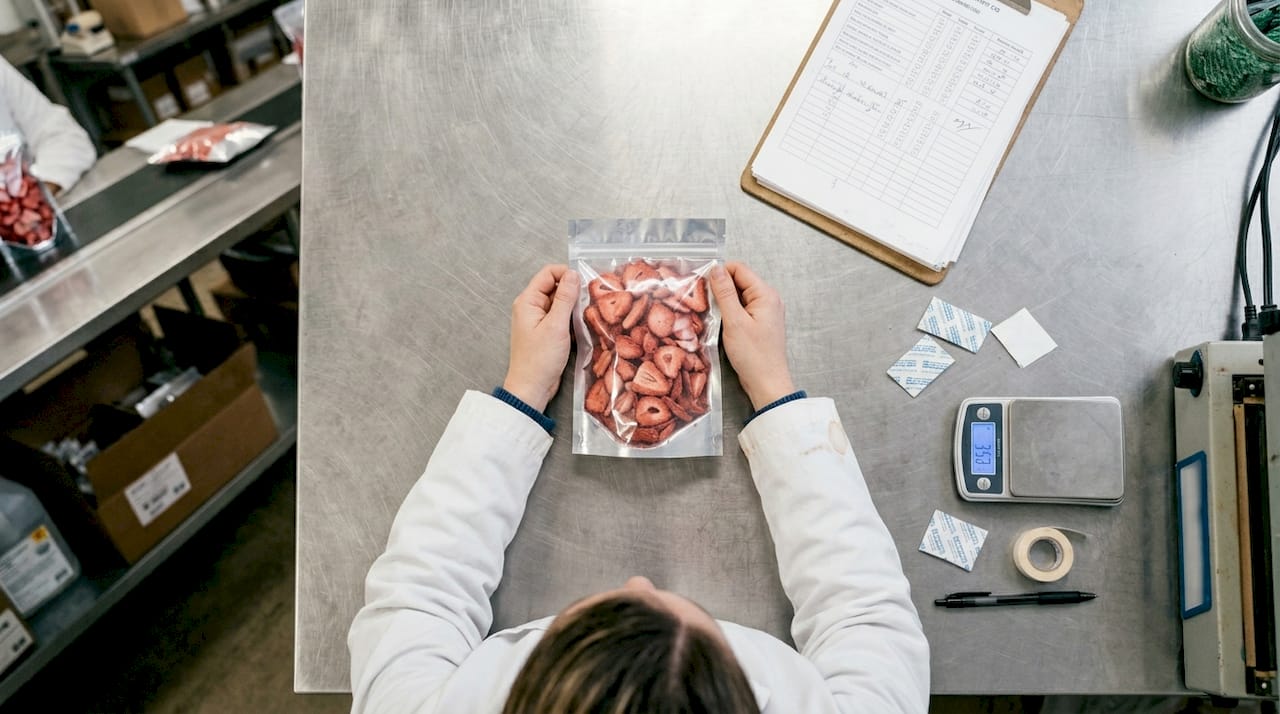
Water activity below 0.6 prevents spoilage, but vitamin and nutrient quality can still decline after 1-3 years. This matters for distributors selling to health-conscious retailers. The product may be safe to eat, but its nutritional profile shifts over time. For freeze-dried fruit shelf life, this is especially relevant when retailers make health claims on signage or packaging.
Key packaging best practices for distributors:
- Source products in Mylar bags with integrated oxygen absorbers.
- Avoid stacking heavy pallets on top of sealed bags, which can compromise seals.
- Store in climate-controlled warehouses, ideally below 70°F and below 15% relative humidity.
- Never accept shipments with visibly damaged or punctured packaging.
Pro Tip: Before committing to a large SKU, request water activity test data from your supplier. A reading above 0.6 is a red flag, regardless of what the label says.
Real-world shelf life: Opened packs and inventory rotation
The 20-30 year headline number is useful for marketing, but it’s not the number that drives your day-to-day operations. What matters more is what happens after a case is opened, a display is restocked, or a retail partner breaks into a bulk pack.
Once opened, freeze-dried snacks last 6-12 months under ideal resealable conditions. For high-fat items, that window shrinks. This is the number your inventory rotation schedule should be built around, not the 25-year claim on the sealed bag.
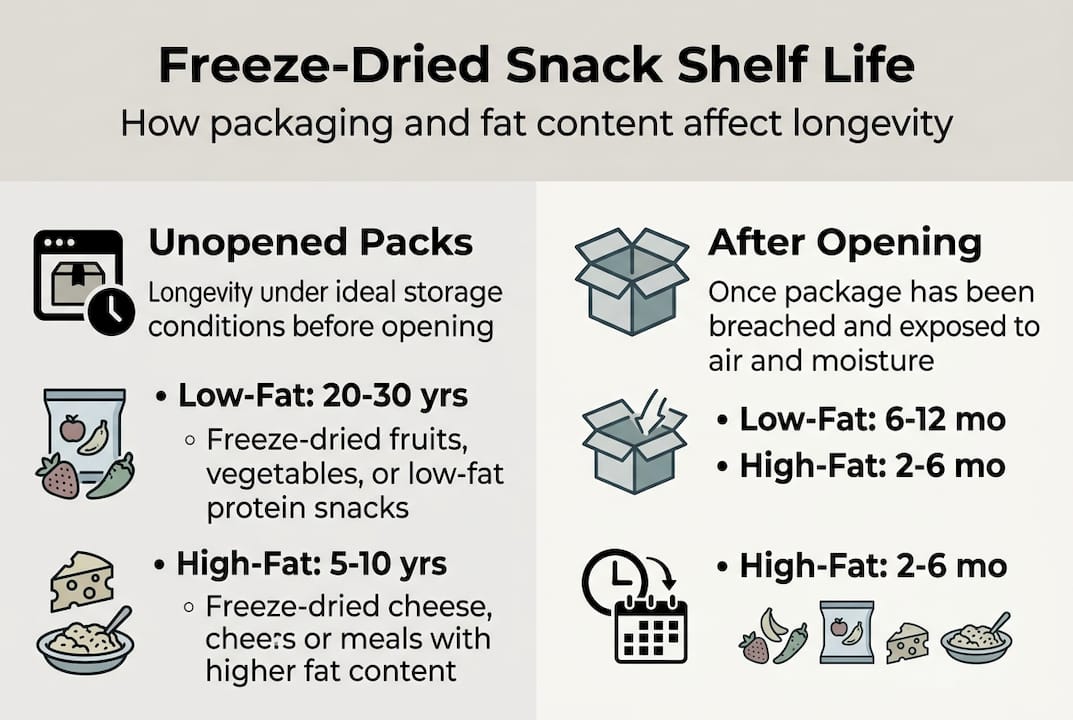
Opened packages in fluctuating warehouse conditions can have even shorter life spans. Canadian warehouses face real seasonal humidity and temperature swings, especially in regions without full climate control. A product that performs well in a sealed Mylar bag can degrade quickly once that seal is broken in a warm, humid environment.
Here’s a practical inventory management checklist for your operation:
- Assign batch codes to every incoming shipment at receiving.
- Log storage temperature and humidity weekly using a simple digital monitor.
- Apply FIFO (first in, first out) across all freeze-dried SKUs, without exception.
- Flag opened cases with the date opened and target sell-by window (6 months for high-fat, 12 months for low-fat).
- Conduct monthly audits of slow-moving SKUs to catch aging stock before it becomes a loss.
- Communicate rotation windows to your retail partners so they manage display stock correctly.
Pro Tip: Use batch coding and temperature/humidity logs together. If a quality complaint comes in, you’ll be able to trace it to a specific lot and storage condition instead of guessing. This protects you legally and helps you identify patterns before they become costly.
For detailed guidance on how to store freeze-dried foods at the warehouse level, and specific tips on how to store freeze-dried candy for retail display, those resources will help you build tighter SOPs.
Canadian labeling regulations and shelf life compliance
Managing shelf life isn’t just an operational issue. It’s a regulatory one. Canadian distributors need to understand what the Canadian Food Inspection Agency (CFIA) actually requires, because the rules are different from what many assume.
No specific shelf life is mandated by CFIA. A “best before” date is only required if the product’s durable life is 90 days or less. Most commercially packaged freeze-dried snacks have durable lives well beyond that threshold, which means the best before date is often optional but still recommended for quality transparency.
Here’s what Canadian distributors need to know about labeling requirements:
- Best before date: Required only for products with a durable life of 90 days or less.
- Durable life date: Must be declared on the label or available to consumers upon request for products with longer shelf lives.
- Storage instructions: Must be included when the durable life depends on specific conditions (e.g., “store in a cool, dry place”).
- Bilingual labeling: All mandatory label information must appear in both English and French.
- Net quantity and ingredient list: Always required, regardless of shelf life category.
“Best before dates indicate peak quality, not safety. A freeze-dried snack past its best before date may still be perfectly safe to consume, though quality may have declined.”
For distributors working with Canadian freeze-drying practices, it’s worth noting that the CFIA can inspect and challenge label claims if they’re misleading. If your supplier prints a 25-year shelf life claim on packaging, they should have documentation to back it up. As the distributor, you share responsibility for the accuracy of the products you carry. Reviewing freeze-dried snack labeling rules before onboarding a new supplier is a smart compliance step.
The real keys to profitable freeze-dried snack distribution
Here’s something most industry guides won’t tell you: chasing the longest possible shelf life is not the same as running a profitable distribution operation. We’ve seen distributors get excited about 25-year shelf life claims and over-invest in SKUs that sit in their warehouse for 18 months because the product didn’t move at retail.
The distributors who consistently do well in this category are not the ones with the best-sealed bags. They’re the ones who understand their retail partners’ actual sales rhythms, match their ordering to real turnover rates, and use FIFO and batch tracking as daily habits rather than occasional audits. The retailer shelf life guide lays out the science, but the real skill is applying it to your specific accounts.
Long shelf life is a safety net, not a strategy. Use it as margin for error in your supply chain, not as a reason to over-order. The most profitable freeze-dried snack distributors prioritize consistent quality and reliable stock turnover over theoretical maximum shelf life. A product that turns every 60 days at full margin beats a product that sits for 18 months, even if the second one technically lasts 25 years sealed.
Pro Tip: Prioritize reliable stock turnover and quality. Sacrificing a few years of theoretical shelf life for a product your retail accounts actually reorder is always the better business decision.
Partner with Spaceman for freeze-dried snack solutions
If you’re ready to put these inventory and shelf life strategies into practice, working with a supplier who understands the Canadian distribution landscape makes a real difference. Spaceman manufactures and distributes freeze-dried snacks across Canada, with packaging expertise and product options built for retail and wholesale accounts.
Our private label and co-packing services let you build your own branded freeze-dried snack line with shelf life documentation included. If you want to test the category first, our starter pack for distributors gives you a low-risk entry point. For retail-ready display solutions, the display kit for distributors comes fully stocked and ready to place. Reach out to discuss how we can support your inventory goals.
Frequently asked questions
How long do freeze-dried snacks really last in Canadian warehouses?
Commercially packaged low-fat snacks last 20-30 years unopened, while opened packs typically hold quality for 6-12 months under proper storage conditions in a climate-controlled warehouse.
Do high-fat freeze-dried snacks go bad faster?
Yes. High-fat freeze-dried snacks last 5-10 years even when sealed, and significantly less after opening, because fat oxidation continues regardless of packaging quality.
Are best before dates on freeze-dried snacks required in Canada?
Canadian law only requires a best before date when a product’s durable life is 90 days or less, so most freeze-dried snacks are technically exempt, though including one is still good practice.
What shortens freeze-dried snack shelf life fastest?
Moisture, oxygen, heat, and light are the main causes of shelf life loss, and their impact accelerates sharply once packaging is opened or compromised.