

TL;DR:
- Optimized candy displays significantly increase impulse sales and revenue.
- Effective placement, target audience, durability, and ease of restocking are crucial criteria.
- Regular testing, maintenance, and seasonal updates keep displays performing at their best.
Choosing the wrong candy display can quietly cost you thousands in missed impulse sales every month. 51% of single-serve candy purchases are impulse buys, and optimized point-of-sale displays boost sales by an average of 32%. That means your display setup is not just a visual choice, it is a revenue decision. This article walks you through the criteria that matter most when selecting displays, compares the top options available, and gives you practical, data-backed strategies to keep your candy section performing at its best season after season.
Table of Contents
- Criteria for choosing effective candy store displays
- Top display types for candy: Pros, cons, and use cases
- Maximizing display performance: Placement, design & data-driven tweaks
- Maintaining & modernizing displays: Cleanliness, tech, and operational discipline
- Why chasing the ‘perfect’ candy display misses the bigger point
- Level up your candy displays with expert support
- Frequently asked questions
Key Takeaways
| Point | Details |
|---|---|
| Strategic placement matters | Locating displays in high-traffic, eye-level spots leads to more impulse candy sales. |
| Mix display types | Using countertop, endcap, and bulk bin displays together can capture different shopper segments. |
| Monitor and adapt | Track sales data and switch up displays regularly for steady growth. |
| Cleanliness and maintenance | Spotless, up-to-date displays draw more attention and maximize profits. |
Criteria for choosing effective candy store displays
Before you invest in any fixture, you need a clear framework for evaluating what will actually work in your store. Not every display type suits every environment, and the wrong fit wastes floor space and budget.
Placement drives everything. Strategic placement at checkout, end caps, and high-traffic areas is the single biggest driver of impulse purchases. Eye level for adults sits between 48 and 66 inches, while children respond best to lower shelving. Getting this wrong means your best-selling products get ignored. Pair smart placement with solid display strategy tips and you immediately improve conversion without adding a single new product.
Audience targeting matters more than most buyers realize. A display loaded with novelty freeze dried candy needs to sit where curious adults and teens will spot it first. A gummy bear bin aimed at kids belongs at a lower height near a family-friendly aisle. Think about who is actually stopping in front of each fixture before you finalize placement.
Material durability affects your total cost of ownership. Metal wire racks hold up well in high-traffic environments and are easy to wipe clean. Plexiglass units look sharp and show off colorful packaging beautifully but can scratch over time. Custom fixtures built for your specific product dimensions reduce wasted space and give your section a polished, branded look. When evaluating eye-catching displays, always factor in how long the material will last under daily retail conditions.
Operational ease is often overlooked. A beautiful display that takes 20 minutes to restock properly will get neglected by staff. Look for units with easy front-facing access, removable trays, and modular shelving that adjusts as your product mix changes.
Here are the key criteria to evaluate before purchasing any candy display:
- Placement flexibility: Can it move to checkout, endcap, or aisle as needed?
- Audience alignment: Does the height and design match your primary shopper?
- Material quality: Will it survive daily restocking and cleaning?
- Restocking speed: Can staff refill it in under five minutes?
- Seasonal adaptability: Can you swap signage or product without replacing the whole unit?
Pro Tip: Rotate your displays seasonally, even just changing the signage and featured products, to create a fresh feel that drives spikes in sales around holidays and local events.
Top display types for candy: Pros, cons, and use cases
With your evaluation criteria set, it is time to match display types to your store’s goals and layout. Each format has a distinct role, and the best candy sections use a mix of two or three types working together.
| Display type | Best for | Pros | Cons |
|---|---|---|---|
| Countertop unit | Checkout impulse buys | Small footprint, high visibility | Limited SKU capacity |
| Floor-standing/endcap | High-traffic visibility | Large capacity, strong visual impact | Requires significant floor space |
| Bulk bin | Volume sales, loose candy | High margins, interactive experience | Shrinkage risk, hygiene management |
| Shelf-ready/POS unit | Quick install, flexible use | Fast setup, low cost | Less customizable appearance |
| Custom fixture | Brand differentiation | Tailored fit, premium look | Higher upfront investment |
POP display types span countertop impulse units, floor-standing endcaps, bulk bins for small candies, and shelf-ready units, with custom fixtures built from durable materials like plexiglass or metal performing best in high-traffic environments.
Countertop displays are your highest-converting tool per square inch. Placed right at the register, they catch shoppers in a moment of low resistance. Keep them stocked with your fastest-moving single-serve items or newest products.
Floor-standing and endcap displays command attention from across the store. Use them to anchor a candy section or highlight a seasonal promotion. They work especially well for freeze dried candy varieties that benefit from visual storytelling and bold packaging.
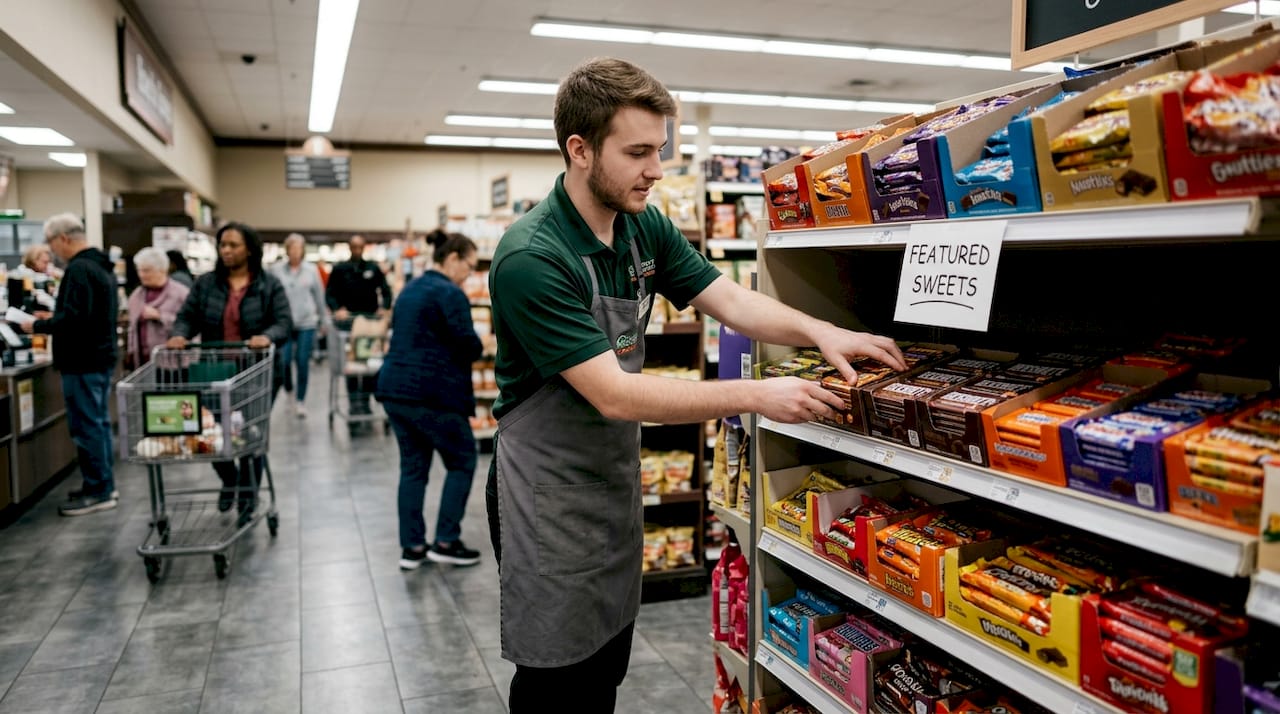
Bulk bins create an interactive, sensory-rich experience that packaged candy cannot replicate. Shoppers love scooping their own mix. The trade-off is that you need disciplined hygiene protocols and regular inventory checks to control shrinkage.
Shelf-ready units are practical for stores that rotate products frequently or test new lines. They drop right onto existing shelving with minimal setup. For creative ideas on smaller-format candy, explore penny candy display ideas that work well within these units.
Maximizing display performance: Placement, design & data-driven tweaks
Choosing the right display type is only half the job. How you place it, design it, and continuously improve it determines whether it consistently drives revenue or fades into the background.
Endcap displays boost sales by 32 to 400%, and a checkout display redesign alone can yield a 15% sales bump. These numbers are not accidental. They come from deliberate placement decisions and ongoing testing.
Follow these steps to monitor and improve display performance over time:
- Baseline your sales data before making any changes so you have a clear comparison point.
- A/B test locations by running the same product in two different spots for two weeks and comparing results.
- Track inventory turnover weekly to identify which products are moving and which are dead weight.
- Refresh signage and featured items monthly to prevent shopper fatigue.
- Review results with your team and act on what the numbers tell you, not just gut instinct.
Design choices also carry real weight. Bold color blocking draws the eye from a distance. Clear, simple signage communicates value instantly. QR codes linking to product stories or flavor guides add a layer of engagement that modern shoppers appreciate. Some forward-thinking retailers are integrating small digital screens into endcap displays to run rotating promotions.
For location-specific guidance, a solid convenience store display strategy can translate directly to candy and snack store environments. Pair that with proven candy display sales tips to build a repeatable optimization routine.
Pro Tip: Cross-merchandise freeze dried candy with related snacks like popcorn or novelty drinks nearby. Shoppers who pick up one item are far more likely to grab a complementary product, increasing your average basket size without any additional marketing spend. Strong storage best practices behind the scenes also keep your displayed products looking fresh and sellable longer.
Maintaining & modernizing displays: Cleanliness, tech, and operational discipline
Effective display use is not a set-and-forget exercise. The stores that consistently outperform competitors treat display maintenance as an ongoing operational priority, not an afterthought.
Using data-driven assortment, sales analysis, and A/B testing alongside seasonal refreshes and frequent refills keeps displays performing at their peak. Cleanliness is not just aesthetic. A dusty, half-empty display signals neglect and erodes shopper trust fast.
Here is what a disciplined display maintenance routine looks like:
- Daily wipe-downs of countertop and bulk bin surfaces to remove fingerprints and residue
- Remove damaged or scuffed packaging immediately, as it signals poor quality to shoppers
- Refill displays before they drop below 70% capacity to maintain visual fullness
- Assign a specific staff member to own display presentation each shift
- Use a daily checklist that covers cleanliness, stock levels, and signage condition
On the modernization side, digital price tags are gaining traction in Canadian retail because they allow instant price updates across multiple displays without reprinting. Sensory elements like open-top bulk bins that let shoppers smell the product add a tactile dimension that drives trial purchases. Social media tie-ins, such as a small sign encouraging shoppers to share their haul with a store hashtag, can extend your display’s reach well beyond the store floor.
“Candy stores maintaining modern, spotless displays see stronger profit margins of 10 to 25%.”
Candy stores average 45 to 60% gross margins, with net profit landing between 10 and 25% for well-run operations. That spread between gross and net is where display discipline pays off. Stores that invest in clean, current, well-stocked fixtures protect more of that gross margin from shrinkage, spoilage, and lost impulse sales. For context on how pricing strategy insights interact with display choices, it is worth reviewing how your product mix and margin targets align before finalizing your fixture investment.
Pro Tip: Update your displays monthly, even if it is just a signage swap or a new featured product, to prevent shopper fatigue and give regulars a reason to look again.
Why chasing the ‘perfect’ candy display misses the bigger point
Here is something most display guides will not tell you: the layout is the least important variable in the long run. We have seen retailers obsess over the exact fixture dimensions and color palette while their staff ignores restocking schedules and nobody is tracking which products are actually selling.
The stores that consistently win are not the ones with the most expensive custom fixtures. They are the ones where the manager has created a culture of curiosity. Staff suggest moving a display because they noticed shoppers walking past it. A buyer tests a new freeze dried candy variety in a small countertop unit before committing to a full floor-standing rollout. Small bets, fast feedback, honest data.
Local demographics change the equation in ways no industry blueprint can predict. A display strategy that crushes it in a suburban family store may completely miss in a downtown snack shop with a different shopper profile. The only way to know what works in your store is to test, measure, and adapt. Treat your displays like a living system, not a finished project. For context on how to position new products within that system, marketing new candy products in Canada requires the same local-first thinking.
Level up your candy displays with expert support
If you are ready to move from theory to action, the right display kit can make the difference between a candy section that blends in and one that consistently drives sales.

At Spaceman, we supply Canadian candy and snack retailers with market-proven retail display kits designed specifically for freeze dried candy, including pre-loaded rack bundles that are ready to sell from day one. Our private label services let you put your own brand on premium freeze dried products, giving your displays a differentiated look that shoppers cannot find anywhere else. Quality materials, local expertise, and products built for Canadian retail conditions mean you spend less time troubleshooting and more time selling.
Frequently asked questions
What are the most effective placements for candy displays in stores?
Checkout counters, end caps, and high-traffic areas consistently drive the most impulse purchases, with items positioned at eye level for adults between 48 and 66 inches, or lower for children.
How often should I refresh or rotate my candy displays?
Refresh displays monthly at minimum, and always adjust for seasonal events or holidays to maintain shopper interest and capture sales spikes.
Do bulk candy displays have higher profit margins than packaged candy?
Bulk displays often yield higher gross margins but carry greater risk of shrinkage and spoilage compared to sealed, packaged candy products.
What tools help track the performance of candy displays?
Sales data tracking, A/B testing of display layouts, and inventory turnover reports are the most reliable tools for gauging and improving display performance over time.