

TL;DR:
- Freeze-dried foods last longer, retain more nutrients, and have a lighter, crisper texture than dehydrated foods. Dehydration is more affordable and simpler, making it suitable for everyday snacks and herbs. The choice depends on budget, intended use, and storage needs.
Dehydrated versus freeze dried foods differ fundamentally in how moisture is removed, and that single difference drives everything else: shelf life, nutrition, texture, and price. Dehydration uses heat between 95–165°F to evaporate moisture, while freeze drying removes moisture through sublimation at temperatures below -40°F. The result is two very different products with very different use cases. Whether you’re stocking a pantry, planning for emergencies, or just curious about that crunchy freeze-dried candy you saw online, understanding the difference between drying methods helps you spend your money wisely.
How do the dehydration and freeze-drying processes differ?
The core difference comes down to heat versus cold vacuum. Dehydration pushes warm air across food at 95–165°F for several hours. The heat evaporates water from the food’s surface and interior, which is effective but hard on nutrients and cell structure.
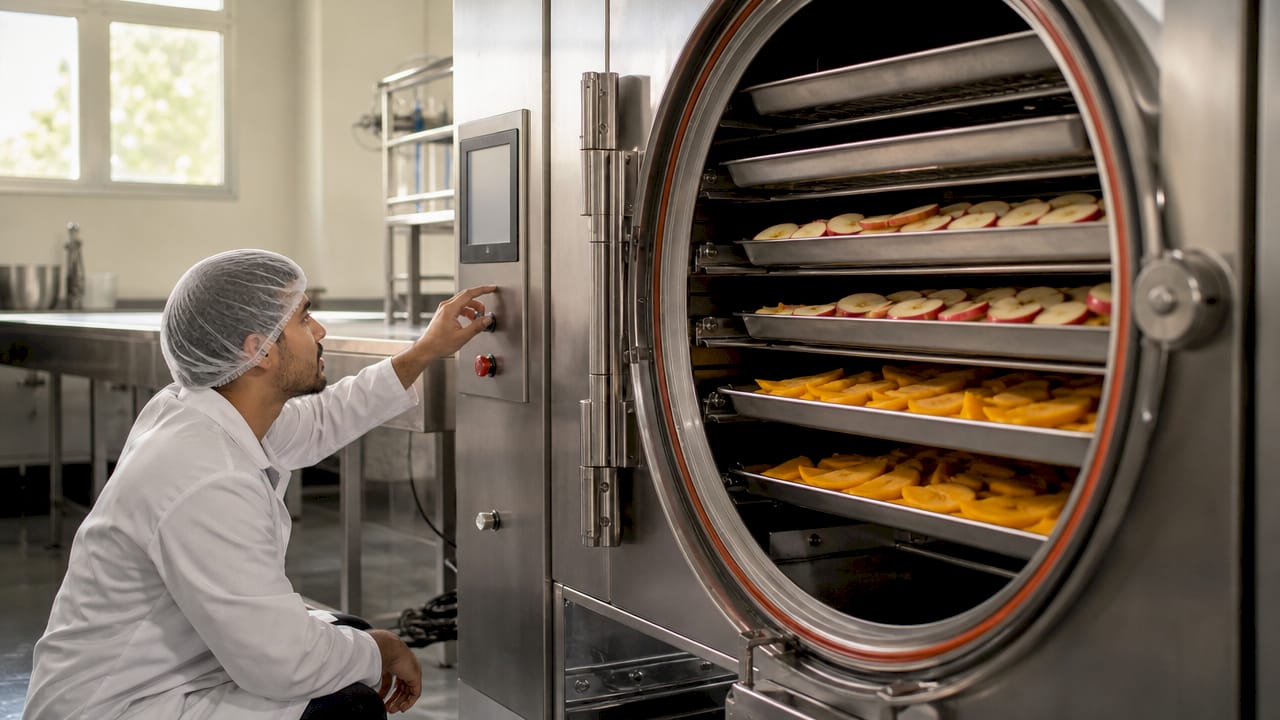
Freeze drying works in three stages. First, the food is frozen solid. Then it goes into a vacuum chamber where pressure drops so low that ice converts directly to vapor without passing through a liquid phase. That process is called sublimation, and it happens at temperatures below -40°F. Home units like Harvest Right freeze dryers replicate this process, though they cost significantly more than a standard food dehydrator.
The impact on cell structure is where things get interesting. Dehydration collapses cell walls as moisture leaves. Freeze drying leaves those walls intact because the ice simply disappears in place. That structural difference is why freeze-dried strawberries snap and dissolve on your tongue while dehydrated ones are chewy and dense.
Processing time also differs sharply. A home dehydrator finishes most fruits and vegetables in 6–12 hours. A freeze dryer typically runs 24–48 hours per batch. More time, more complexity, and more energy use come with the freeze drying process.
Pro Tip: If you’re using a home dehydrator, slice food uniformly to 1/4 inch thickness. Uneven slices dry at different rates, leaving some pieces under-dried and prone to spoilage.
Shelf life, nutrition, and texture: a side-by-side look
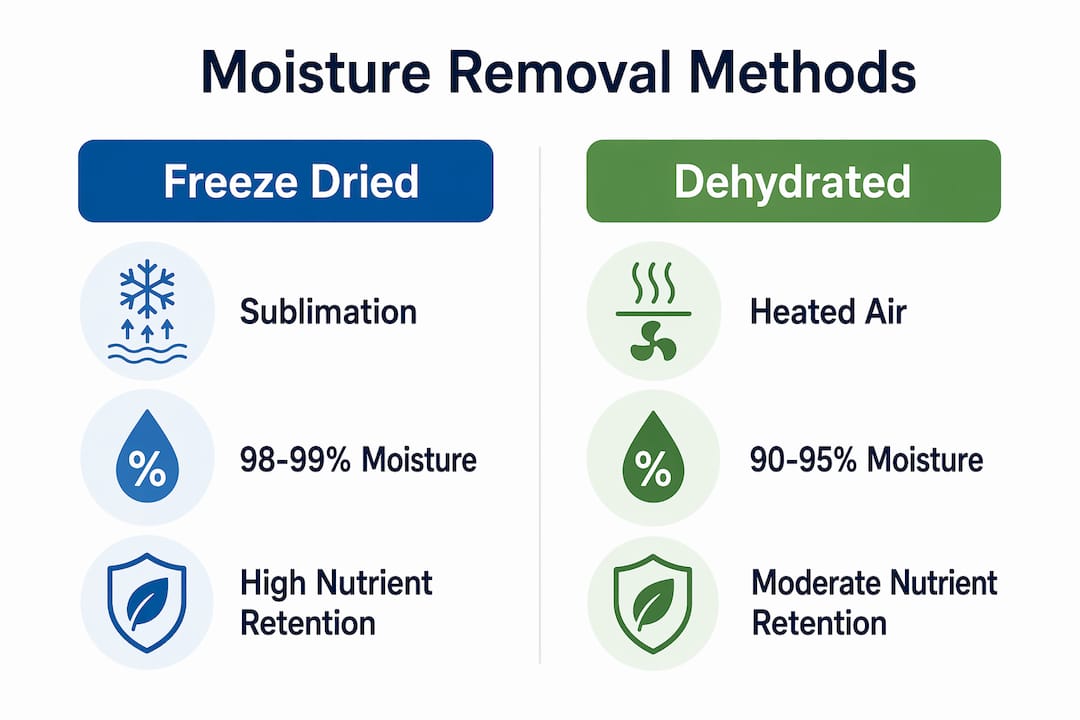
Freeze drying removes 98–99% of moisture, leaving food at 1–3% moisture content. Dehydration removes 90–95% of moisture, leaving 5–10% behind. That extra moisture in dehydrated food is the main reason its shelf life tops out at 2–5 years, compared to 25–30 years for freeze-dried products stored properly.
Nutrient retention
Freeze drying preserves 90–97% of vitamins C and A. Dehydration preserves roughly 50–80% of those same vitamins, with heat and oxidation during drying accounting for the loss. For everyday snacking, that gap may not matter much. For long-term food storage where nutrition is a survival concern, it matters a great deal.
Texture and rehydration
Freeze-dried food rehydrates in 5–15 minutes because its intact cell structure absorbs water quickly. Dehydrated food takes 20–60 minutes and often never fully returns to its original texture. That’s why freeze-dried meals are popular in backpacking and emergency prep kits, while dehydrated fruits and jerky work better as ready-to-eat snacks.
Here’s a quick comparison to put it all in one place:
| Factor | Freeze dried | Dehydrated |
|---|---|---|
| Moisture content | 1–3% | 5–10% |
| Shelf life | 25–30 years | 2–5 years |
| Vitamin C retention | ~90% | ~50–60% |
| Rehydration time | 5–15 minutes | 20–60 minutes |
| Texture | Light, porous, crispy | Dense, chewy, tough |
| Equipment cost (home) | $2,500–$4,500 | $60–$350 |
A few other texture notes worth knowing:
- Freeze-dried dairy products like cheese and yogurt retain their flavor profile almost completely after rehydration.
- Dehydrated herbs and spices hold up well because their cell structure matters less for flavor delivery.
- Freeze-dried candy, a product Space-man specializes in, gets its signature airy crunch from the intact cellular structure left behind after sublimation.
For a deeper look at how each method affects vitamin and nutrient retention, Space-man’s blog breaks it down with practical examples.
How do cost and practicality affect your choice?
Budget is often the deciding factor, and the gap between the two methods is significant. Home dehydrators cost $60–$350, making them accessible for most households. Home freeze dryers from brands like Harvest Right run $2,500–$4,500. That’s a serious investment before you’ve dried a single batch.
Per-serving costs tell a similar story. Commercially produced dehydrated food runs $1–$5 per serving. Freeze-dried products cost $8–$18 per serving. The price premium reflects the longer processing time, higher energy use, and more complex equipment required.
Pro Tip: If freeze drying appeals to you but the equipment cost is a barrier, buying commercially freeze-dried products in bulk is often more economical than purchasing a home unit unless you plan to process very large quantities regularly.
Practical considerations beyond price include:
- Processing time. Dehydrators are set-and-forget for most of the day. Freeze dryers require more monitoring and longer cycles.
- Maintenance. Freeze dryers have vacuum pumps that need regular oil changes. Dehydrators have almost no maintenance requirements.
- Use case fit. Dehydration suits fruits, vegetables, herbs, and jerky. Freeze drying handles complete meals, dairy, eggs, and delicate foods that would lose too much quality through heat drying.
- Space. A home freeze dryer is roughly the size of a small chest freezer. A dehydrator sits on a countertop.
For a full breakdown of equipment differences, the freeze dryer vs. food dehydrator guide from Space-man covers both methods from a manufacturer’s perspective.
What do experts recommend for choosing the right method?
Experts recommend dehydration for budget-conscious consumers focused on snacks, fruits, herbs, and simple preservation. Freeze drying is the better choice for long-term emergency food, complete meals, dairy products, and any food where texture and nutrition matter most after rehydration.
Storage practices matter just as much as the drying method itself. Every 10–18°F rise in storage temperature can cut food shelf life in half, regardless of how it was dried. Keeping both dehydrated and freeze-dried foods below 60°F is the single most effective thing you can do to protect your investment.
A few storage rules that apply to both methods:
- Store in airtight containers away from light, heat, and humidity.
- Use oxygen absorbers in sealed containers to remove residual oxygen that causes degradation. Size them by container volume, not food weight, and remember they are single-use only.
- Mylar bags with oxygen absorbers are the gold standard for long-term freeze-dried storage.
One misconception worth addressing: the 25–30 year shelf life claim for freeze-dried food assumes ideal, climate-controlled storage. That figure is a quality guarantee under perfect conditions, not a guarantee that food stored in a warm garage will last three decades.
Freeze-dried food is also hygroscopic, meaning it absorbs moisture rapidly when exposed to open air. Reseal containers quickly after opening and consider adding a desiccant packet to extend crispness.
“The best preservation method is the one that matches your actual use case. Buying a $4,000 freeze dryer to make trail mix is overkill. Relying on a $100 dehydrator to build a 20-year emergency food supply is wishful thinking.”
For more on freeze-dried food shelf life and what retailers and consumers should realistically expect, Space-man’s shelf life guide is worth a read.
If you’re interested in gourmet dairy-free snacks and how preservation techniques affect delicate ingredients, PopCornaa’s breakdown covers the topic well. For those leaning toward dehydration for everyday snacking, their healthy vegan snack ideas article explains why dehydration suits certain snack formats better.
Key Takeaways
Freeze drying outperforms dehydration in shelf life, nutrient retention, and texture quality, but dehydration wins on cost and simplicity for everyday snack production.
| Point | Details |
|---|---|
| Moisture removal method | Freeze drying uses sublimation below -40°F; dehydration uses heat at 95–165°F. |
| Shelf life gap | Freeze-dried foods last 25–30 years; dehydrated foods last 2–5 years under proper storage. |
| Nutrient retention | Freeze drying preserves 90–97% of vitamins C and A; dehydration preserves 50–80%. |
| Cost difference | Home dehydrators cost $60–$350; home freeze dryers cost $2,500–$4,500. |
| Storage is critical | Temperatures above 60°F can halve shelf life regardless of which drying method was used. |
My honest take after years in freeze-dried food
I’ll be straight with you: the freeze-dried versus dehydrated debate gets oversimplified constantly. People treat it like one method is objectively better, and that’s just not how it works in practice.
Freeze drying produces a genuinely superior product on almost every measurable metric. The nutrition numbers, the shelf life, the texture after rehydration. It’s hard to argue with the science. But I’ve seen plenty of people drop thousands on a Harvest Right unit, use it twice, and let it collect dust. The equipment demands real commitment.
What I find more interesting is how consumer expectations are shifting. People want food that tastes like food, even after years on a shelf. That’s pushing more brands toward freeze drying for premium products. At Space-man, we see this directly in the candy category. Freeze-dried candy has a texture and intensity that dehydrated candy simply cannot replicate. The market has noticed.
Dehydration still has a strong place for herbs, jerky, and simple fruit snacks where the chewy texture is actually the point. Don’t write it off just because freeze drying sounds more impressive. Match the method to the food and the goal, and you’ll make the right call every time.
— Chadi
Space-man’s packaging and co-packing services for food producers
Whether you’re working with freeze-dried or dehydrated products, packaging quality directly affects shelf life and customer experience. Space-man offers private label, co-packing, and packaging services designed for consumer food brands across Canada.

Space-man works with producers who need reliable, professional packaging for both preservation formats. From Mylar-compatible bagging to branded retail packaging, the team handles the details so you can focus on your product. If you’re scaling a freeze-dried or dehydrated food line and need a packaging partner with real category experience, Space-man is worth a conversation.
FAQ
What is the main difference between dehydrated and freeze-dried food?
Dehydration uses heat to remove moisture, while freeze drying uses sublimation in a vacuum at very low temperatures. Freeze drying removes more moisture, preserves more nutrients, and produces a longer shelf life.
Is freeze drying worth the cost for home use?
Freeze drying is worth the investment if you process large quantities regularly or need 25–30 year shelf life for emergency food. For casual snack making, a dehydrator at $60–$350 is far more practical.
How long does freeze-dried food actually last?
Freeze-dried food lasts 25–30 years under ideal storage conditions, meaning temperatures below 60°F in sealed, airtight containers. Heat fluctuations can cut that shelf life significantly.
Can you store freeze-dried food after opening?
Freeze-dried food absorbs moisture rapidly once opened. Reseal containers immediately, add a desiccant packet, and store away from heat and humidity to maintain quality.
Which method preserves more vitamins?
Freeze drying preserves 90–97% of vitamins C and A. Dehydration preserves 50–80% of those same vitamins due to heat exposure and oxidation during the drying process.