

TL;DR:
- Running a pharmacy involves carefully selecting bulk candy options that meet health regulations, customer preferences, and operational needs. Prioritizing shelf-ready packaging and health-conscious choices can significantly boost sales, especially during seasonal peaks, with strategic placement enhancing impulse purchases. Private label programs and seasonal planning are effective ways to increase margins and maximize revenue from candy sections.
Running a pharmacy means thinking about more than just prescriptions. Bulk candy for pharmacies is one of those product categories that looks simple on the surface but gets complicated fast once you factor in health regulations, customer preferences, shelf space, and supplier minimums. Pick the wrong assortment and you are sitting on stale stock. Pick the right one and your checkout counter becomes a reliable revenue bump. This article breaks down exactly what to look for, which products perform best, and how to turn your candy section from an afterthought into an actual sales driver.
Key takeaways
| Point | Details |
|---|---|
| Prioritize shelf-ready packaging | Individually wrapped, counter-ready candy reduces staff handling and keeps restocking fast. |
| Stock health-conscious options | Sugar-free and dental-friendly picks attract customers who might otherwise skip the candy aisle. |
| Plan seasonal orders early | Visibility and timing drive impulse buys around Valentine’s Day, Halloween, and holidays. |
| Eye-level placement pays off | Strategic display positioning can meaningfully lift candy sales over lower or higher shelf alternatives. |
| Private label builds margins | Custom-branded candy gives pharmacies a branding edge and stronger per-unit margins. |
1. Key criteria for buying bulk candy for pharmacies
Not all bulk sweets are created equal, and what works in a grocery store may not work in your pharmacy environment. Before placing any wholesale order, you need to think through several factors that are specific to drug store retail.
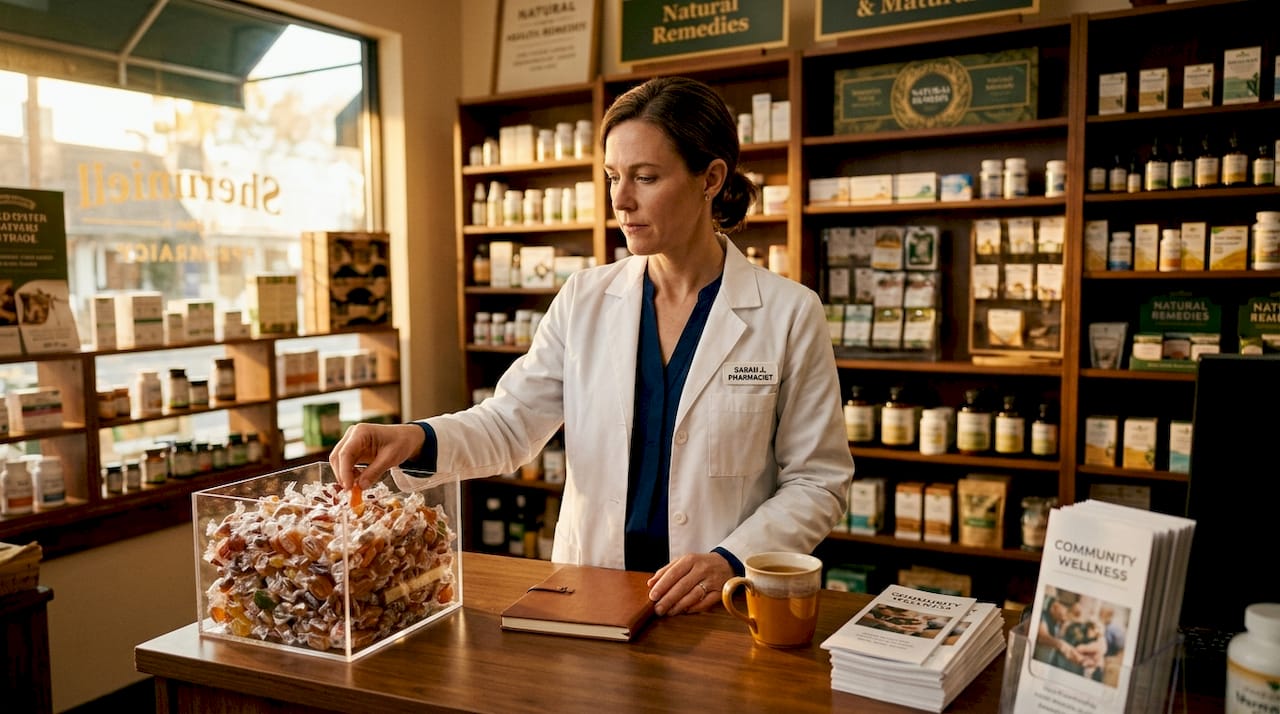
Packaging format matters most. Counter-ready packaging that is individually portioned ensures hygiene, compliance, and operational ease at pharmacy checkout. Open bins might feel nostalgic, but they create sanitation concerns and require more staff attention. Individually wrapped candies in counter displays are the standard for a reason.
Health positioning is not optional anymore. Pharmacy candy assortments benefit from including health-positioned options like sugar-free and dental-friendly candies alongside traditional sweets. Your customers are already in a health-focused mindset when they walk through your door. Offering xylitol gum or sugar-free hard candy alongside classic options signals that you understand that.
Here are the other criteria worth weighing before you order:
- Shelf life: Pharmacy retail moves at a steadier pace than convenience stores. Prioritize candy with a shelf life of six months or more to avoid markdowns.
- Compliance: Check for FDA nutrition labeling compliance and, where relevant, kosher or halal certification. These details matter to a meaningful portion of your customer base.
- Price per unit: Compare cost per ounce, not just per bag. A 50-oz bag at $11.98 tells a very different story per unit than a smaller multi-pack at the same sticker price.
- Minimum order quantity (MOQ): Some suppliers require large case orders upfront. Look for suppliers that offer lower MOQs, especially if you are testing a new product line.
- Replenishment speed: Fast-moving items like gum and mints need reliable restock timelines. Build supplier reliability into your selection process, not just product quality.
Pro Tip: Order a small test batch of any new candy SKU before committing to a full case. A two-week sales window at the checkout counter gives you honest data before you invest in a bulk quantity.
2. Hard candies for high-margin checkout sales
Hard candies are the workhorse of the pharmacy candy category. They have long shelf lives, low per-unit costs, and universal appeal. Jolly Rancher and Life Savers are the two names that show up most consistently in drug store candy sections, and for good reason.
Jolly Rancher bags in large formats are a proven seller. Customers recognize the brand instantly, and the variety of flavors means broad appeal without requiring multiple SKUs. Life Savers, on the other hand, offers counter display formats that sit right at the checkout point, which is exactly where impulse decisions get made.
If you want to branch out from the major brands, consider mint Italian candy as a premium alternative. It carries a health-adjacent perception (mint, breath freshening) that aligns well with pharmacy positioning, and it offers a point of differentiation from the mainstream brands your competitors are stocking.
Pro Tip: Sugar-free versions of hard candies belong on the same display as their regular counterparts, not hidden on a separate shelf. Co-location doubles the conversion opportunity.
3. Chewy candy assortments for broader appeal
Chewy candies bring in a different customer segment, particularly younger shoppers and parents picking up prescriptions with kids in tow. Products like Skittles bulk packs and Sour Patch Kids in larger formats are crowd favorites that move quickly when placed correctly.
The key consideration with chewy candy is shelf life. Most gummy and chewy formats have a shorter freshness window than hard candies, so turnover rate matters. For high-traffic pharmacies, this is not a concern. For smaller stores with slower foot traffic, you may want to limit your chewy assortment to one or two hero SKUs rather than a broad spread.
Assortment kits are worth exploring for operational efficiency. Suppliers like La-Luna-Bella offer kits with over 2,000 pieces by the case, which suits high-turnover stocking without requiring staff to manage multiple small orders. One SKU, one reorder, high variety for the customer. That is a workflow win.
4. Gum, mints, and sugar-free options for health-conscious shoppers
This category deserves its own section because it is where pharmacy retailers have a genuine competitive advantage over convenience stores and gas stations. Your customers already associate your store with health. Sugar-free gum and mints let you serve that expectation directly.
Xylitol-based gum is the standout here. It is dentist-approved, genuinely functional, and carries a health halo that justifies slightly higher shelf placement and pricing. Brands like Spry and Pur offer pharmacy-friendly packaging and can be sourced in bulk formats. For coffee-flavored novelty that still fits a health-adjacent narrative, Bye Coffee Candy is a unique option that stands out from typical mint-only offerings.
Mints with functional claims (like breath freshening with baking soda or whitening) also perform well at pharmacy counters. They require almost no explanation to sell themselves, which matters for a self-service checkout display.
5. Seasonal candy for your biggest sales spikes
Seasonality drives 30 to 50% of candy category sales during peak periods like Halloween and Christmas for pharmacies. That is not a number to ignore. Valentine’s Day heart candies, Halloween mix bags, and Christmas-themed hard candies can meaningfully shift your monthly candy revenue if you plan your orders ahead of time.
The mistake most pharmacy owners make is ordering seasonal candy at the same time as the season arrives. By then, supplier stock is tight and wholesale prices have moved. Visibility and timing are the top drivers for impulse candy, so plan seasonal orders in advance for best sales impact. Order Valentine’s candy in December. Get Halloween stock in August.
Seasonal displays also give you an easy merchandising refresh without a major investment. Swap out the display header, change the candy assortment, and your checkout area looks current without any significant labor cost.
6. A quick comparison of top pharmacy candy options
Here is a reference table to help you evaluate your pharmacy candy inventory choices side by side.
| Candy type | Packaging format | Shelf life | Health positioning | Best for |
|---|---|---|---|---|
| Hard candy (e.g., Jolly Rancher) | Bulk bag / counter jar | 12+ months | Standard / sugar-free variant | General impulse purchase |
| Gummy / chewy (e.g., Skittles) | Bulk bag / display box | 6 to 9 months | Standard | Younger shoppers, families |
| Sugar-free gum (e.g., Pur, Spry) | Blister packs / display box | 12 to 18 months | High (dental friendly) | Health-conscious customers |
| Mints | Counter tin / bulk bag | 18+ months | Moderate (breath freshening) | Checkout impulse, post-medication |
| Seasonal candy | Seasonal display bags | 3 to 6 months | Varies | Holiday and themed purchases |
| Private label candy | Custom packaging | Varies by product | Customizable | Brand differentiation, margin growth |
7. Merchandising tactics that actually move candy off the shelf
Product selection gets you halfway there. Placement and merchandising close the deal. Eye-level shelving boosts candy sales by about 35% versus lower or higher shelving, so your best-selling and highest-margin items should always sit at eye or counter height.
A few tactics worth implementing right away:
- Counter displays at checkout: This is the single highest-converting placement in any retail pharmacy. Life Savers counter displays, mint tins, and gum blister packs all fit naturally here.
- End-cap placements: If you have gondola shelving, end-caps give seasonal and promotional candy maximum visibility without requiring customers to walk down an aisle.
- Cross-merchandising: Place mints and gum near cold and flu remedies. It is practical for customers and logical for your store flow.
- Point of sale signage: A small “Stock up on your favorites” sign above the checkout candy display outperforms a bare shelf every time. Simple, clean, and effective.
For more specific ideas tailored to pharmacy and retail environments, the candy display ideas guide from Space-man covers creative approaches that work in tighter retail footprints.
Pro Tip: Seasonal displays should go up at least two to three weeks before the holiday, not the day before. Early and visible seasonal displays are a proven impulse sales driver.
8. Candy purchasing recommendations by pharmacy type
Not every pharmacy has the same needs, and a one-size-fits-all candy order rarely performs well. Here is how to think about candy purchasing for pharmacies based on your specific situation.
-
Small suburban pharmacy: Prioritize low MOQ suppliers and focus on three to five hero SKUs. One hard candy option, one sugar-free gum, and one seasonal item covers your bases without overcomplicating inventory management. Health-conscious candy options signal awareness of your customer demographics without alienating traditional candy buyers.
-
High-traffic urban drug store: Volume and variety both matter here. Invest in a broader assortment with multiple chewy, hard, and seasonal options. Novelty items and premium candy have a higher likelihood of finding their buyer in a higher foot-traffic environment.
-
Pharmacies pursuing private label: Private label candy programs enable pharmacies to control branding, pricing, and offer unique products, driving higher margins. This works especially well for stores with a loyal customer base or a wellness-focused brand identity. The supplier side requires low MOQs, consistent quality, and swift replenishment to align with pharmacy supply chain needs. For sourcing guidance, this bulk candy sourcing guide walks through the supplier evaluation process in practical terms.
-
Stores managing seasonal turnover: Keep a running calendar of your top three seasonal peaks. Order at least six to eight weeks ahead. Set a markdown trigger date so seasonal inventory does not linger past its relevance window and eat into your margin.
My honest take on pharmacy candy strategy
I have seen pharmacy owners treat their candy section as an afterthought and then wonder why it generates almost no revenue. Here is what I have learned from working in this space: the stores that do it right make three intentional decisions: they put sugar-free options at eye level, they choose individually wrapped products exclusively, and they treat seasonal planning like a real buying event instead of a last-minute reaction.
Sugar-free and functional candies belong at the front of your display, not tucked in a corner for “dietary needs” customers. When you place them front and center, they drive sales from health-conscious shoppers and from regular customers who pick them up out of curiosity. That co-placement converts better than segregation every time.
The operational piece is underrated too. Shelf-ready packaging is not just about aesthetics. It genuinely reduces the labor time your staff spends on candy management, which matters when your team is already focused on prescriptions and patient consultations.
The pitfall I see most often is overstocking seasonal candy without any sales data to justify the quantity. Buy conservatively your first season, track what sells, and scale from there. Wasted seasonal candy is one of the most avoidable margin losses in retail pharmacy. And on private label: if your store has any kind of brand identity at all, putting your name on a candy product is one of the lowest-effort ways to deepen customer loyalty and improve per-unit margins at the same time.
— Chadi
How Space-man can help you build a better candy program
If private label candy for your pharmacy is on your radar, Space-man makes it straightforward. As a Canadian freeze-dried candy manufacturer and distributor, Space-man offers private label, co-packing, and packaging services designed to help retailers like you put a branded product on the shelf without the complexity of managing your own manufacturing.
Custom branding, shelf-ready packaging, and flexible order quantities are all part of what Space-man brings to pharmacy retail partners. Whether you want to launch a store-branded candy line or need co-packing support for an existing product, the process is built to fit pharmacy supply chain requirements. You can also explore packaging strategies that preserve candy freshness and shelf appeal, which is a real differentiator when your competitors are still stacking generic bags on a counter.
FAQ
What candy sells best at pharmacy checkouts?
Hard candies, mints, and individually wrapped gum consistently perform best at pharmacy checkout counters because of their impulse appeal, familiar branding, and long shelf life. Sugar-free versions of each category also convert well given the health-conscious pharmacy shopping context.
How much does bulk candy for pharmacies typically cost per unit?
Per-unit cost varies significantly by product type, but a benchmark like a Jolly Rancher 50-oz bag at $11.98 shows that hard candy can run well under a dollar per ounce at wholesale. Comparing cost per ounce across suppliers is more reliable than comparing sticker prices on differently sized packages.
Should pharmacies stock sugar-free candy?
Yes. Pharmacies attract health-conscious customers who expect health-positioned options alongside traditional sweets. Stocking sugar-free and dental-friendly candy alongside regular options gives you broader appeal without requiring a major inventory overhaul.
What is private label candy and is it worth it for pharmacies?
Private label candy means candy manufactured and packaged under your pharmacy’s own brand name. It gives you control over pricing and branding, and it typically delivers higher per-unit margins than reselling national brands. It works best for pharmacies with an established customer base and a clear brand identity.
How far in advance should pharmacies order seasonal candy?
Order seasonal candy six to eight weeks before the target holiday. Seasonal timing and visibility are the primary drivers of impulse candy sales, and waiting until the season arrives often means constrained supply and higher wholesale prices.