

Choosing the right candy packaging can feel overwhelming when every Canadian retailer wants to meet growing customer demands for eco-friendly choices. The shift away from conventional plastics is more than a trend—it is becoming a business necessity for those wanting to reduce environmental impact and build trust with eco-conscious shoppers. This guide helps you confidently understand biodegradable candy packaging solutions, how they work, and what separates genuine sustainability from empty promises.
Table of Contents
- Defining Biodegradable Candy Packaging
- Types and Materials Used for Candy Packaging
- How Biodegradable Packaging Functions
- Misconceptions About Biodegradable Solutions
- Legal Requirements and Compliance in Canada
Key Takeaways
| Point | Details |
|---|---|
| Understanding Biodegradable Packaging | Canadian retailers must discern true biodegradable options to meet customer expectations and regulatory requirements. |
| Certification and Standards | Look for certifications like BPI and EN 13432 to ensure product claims are valid and recognized. |
| Material Selection Impacts Sustainability | Choosing the right packaging affects product integrity, customer perception, and environmental impact. |
| Educating Customers on Disposal | Clear communication about how to dispose of biodegradable packaging is essential to maintain trust and compliance. |
Defining Biodegradable Candy Packaging
Biodegradable candy packaging refers to materials that break down naturally through biological processes, reducing environmental impact compared to conventional plastics. These materials decompose in soil, water, or industrial composting facilities without leaving harmful residue.
For Canadian candy retailers, understanding what truly qualifies as biodegradable is crucial. It’s not just about feeling good—it’s about meeting customer expectations and regulations.
What Makes Packaging Biodegradable?
Biodegradable packaging materials can originate from various sources, not just alternatives to plastic. Common options include:
- Paper and cardboard (the most familiar options)
- Plant-based biopolymers (derived from natural sources)
- Composite materials (blended for specific properties)
- Protein and polysaccharide blends (emerging innovations)
These materials perform the same job as traditional packaging—protecting your candy from damage, moisture, and light. The difference is what happens when customers finish their treats.
Your packaging needs to protect the product while still decomposing naturally after use—that’s the balance.
The key distinction: not all “natural” packaging is equally biodegradable. A cardboard box printed with certain inks might not break down completely. Biodegradable candy packaging includes naturally derived biopolymers that actively degrade when exposed to the right conditions.
Standards and Certification Matter
Here’s where it gets technical—but stay with me. Biodegradable packaging requires certification to prove its claims. Producers and importers need to test the entire package: all layers, inks, adhesives, and additives.
Canadian retailers should look for:
- BPI certification (Biodegradable Products Institute)
- EN 13432 standards (European standard widely recognized)
- CSA standards (Canadian Standards Association guidelines)
- Evidence of third-party testing
Without proper certification, you’re essentially guessing. And your eco-conscious customers know it.
Real-World Conditions
Biodegradable doesn’t mean instant. Many materials require industrial composting facilities to break down properly within reasonable timeframes. Home composting? Usually much slower or incomplete.
This matters for your business messaging. You need to understand where and how your packaging actually decomposes so you can inform customers accurately.
Pro tip: Verify certifications and composting requirements before switching suppliers—this protects your brand credibility and ensures you’re making genuine environmental claims to your customers.
Types and Materials Used for Candy Packaging
Candy packaging has evolved far beyond basic plastic wraps. Today, you have options that protect your products while aligning with customer values and environmental responsibility.
The materials you choose directly impact product shelf life, brand perception, and your bottom line. Let’s break down what’s actually available and what works.
Traditional Materials Still Dominate
Most candy businesses start with conventional plastics because they work. Polyethylene (PE), polypropylene (PP), and polyethylene terephthalate (PET) remain industry standards for moisture retention and durability.
They’re reliable, cost-effective, and proven. But they come with a sustainability problem—they persist in landfills for decades.
Traditional plastic strengths:
- Excellent moisture barriers (keeps candy fresh longer)
- Affordable and widely available
- Proven manufacturing processes
- Flexible for custom designs
The catch? Your environmentally conscious customers are watching. These materials don’t align with growing consumer demand for eco-friendly options.
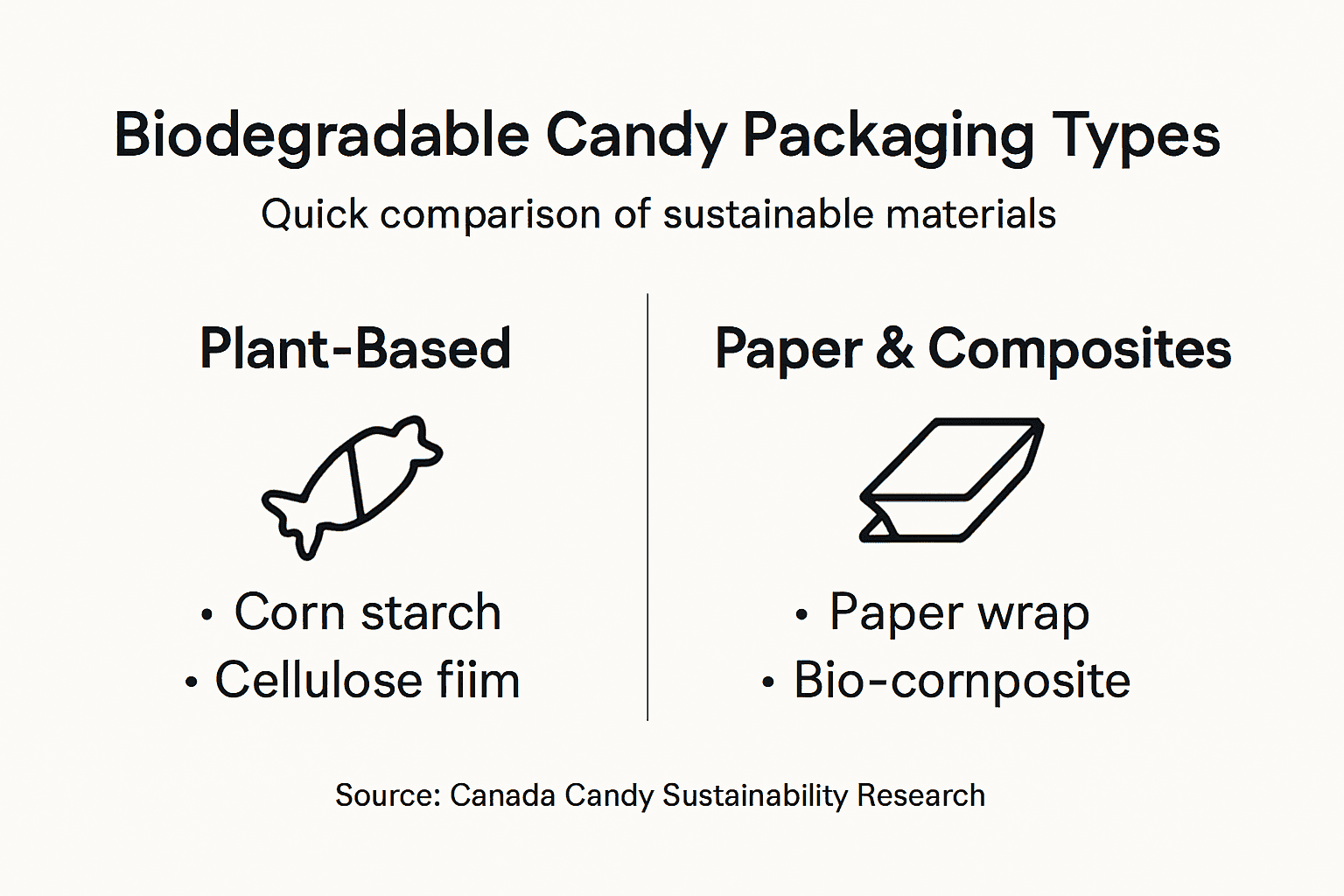
Biodegradable and Plant-Based Alternatives
Biopolymers from natural sources like starch, cellulose, proteins, and lipids now offer legitimate alternatives. These materials break down into non-toxic components—carbon dioxide, water, and biomass.
They’re not just marketing speak. They actually work and are gaining real traction in the market.
Biodegradable packaging materials can maintain product integrity while reducing your environmental footprint—that’s the real win here.
Paper and Cardboard Options
Paper-based packaging is experiencing a renaissance. Recyclable paper and cardboard appeal directly to eco-conscious consumers and align with your brand values.
They work well for:
- Gummy candies and hard candies
- Premium packaging designs
- Smaller batch presentations
- Brands emphasizing sustainability
One reality check: paper alone doesn’t provide the moisture barrier of plastic. Many brands use paper-plastic composites—balancing sustainability with product protection.
Composite Materials and Innovations
Material choices in candy packaging increasingly blend polymers and additives to enhance mechanical strength and barrier properties. These hybrid approaches solve real problems.
Composites combine:
- Biodegradable bases with protective layers
- Plant-based plastics with recycled materials
- Starch-based films with cellulose reinforcement
They’re more expensive than traditional plastics but cheaper than pure alternatives. The trade-off gives you genuine environmental benefits without sacrificing protection.
Here’s how traditional, biodegradable, and composite candy packaging materials compare for your business:
| Packaging Type | Key Benefit | Main Drawback | Typical Use Case |
|---|---|---|---|
| Traditional Plastic | Low cost, strong moisture barrier | Not biodegradable, landfill impact | Mass market, long shelf life |
| Biodegradable Polymer | Reduces landfill waste, certifiable | Requires specific composting setup | Eco-focused candy brands |
| Paper/Cardboard | Consumer-friendly, recyclable | Poor moisture barrier, less durable | Premium candies, small batches |
| Composites/Hybrids | Balanced performance and eco-claims | Higher cost, requires verification | Broad market, evolving brands |
What Your Customers Actually Want
Canadian consumers increasingly prefer brands that use sustainable candy packaging without compromising quality. They’ll pay slightly more for transparency and genuinely eco-friendly options.
Material selection directly affects:
- Product freshness and shelf life
- Brand perception and customer loyalty
- Waste reduction and landfill impact
- Overall business sustainability
Pro tip: Test different material combinations with your top products before switching your entire inventory—this prevents expensive mistakes and lets you confirm performance meets your quality standards.
How Biodegradable Packaging Functions
Biodegradable packaging isn’t magic—it’s science. Understanding how it actually works helps you make informed decisions about what materials will protect your candy and the planet.
The process relies on biological breakdown rather than sitting in landfills indefinitely. Here’s what’s actually happening inside that package.
The Microbial Breakdown Process
Natural decomposition mechanisms convert biopolymer materials through enzyme and microbe activity. Microorganisms consume the packaging material as a food source, breaking it down gradually over time.
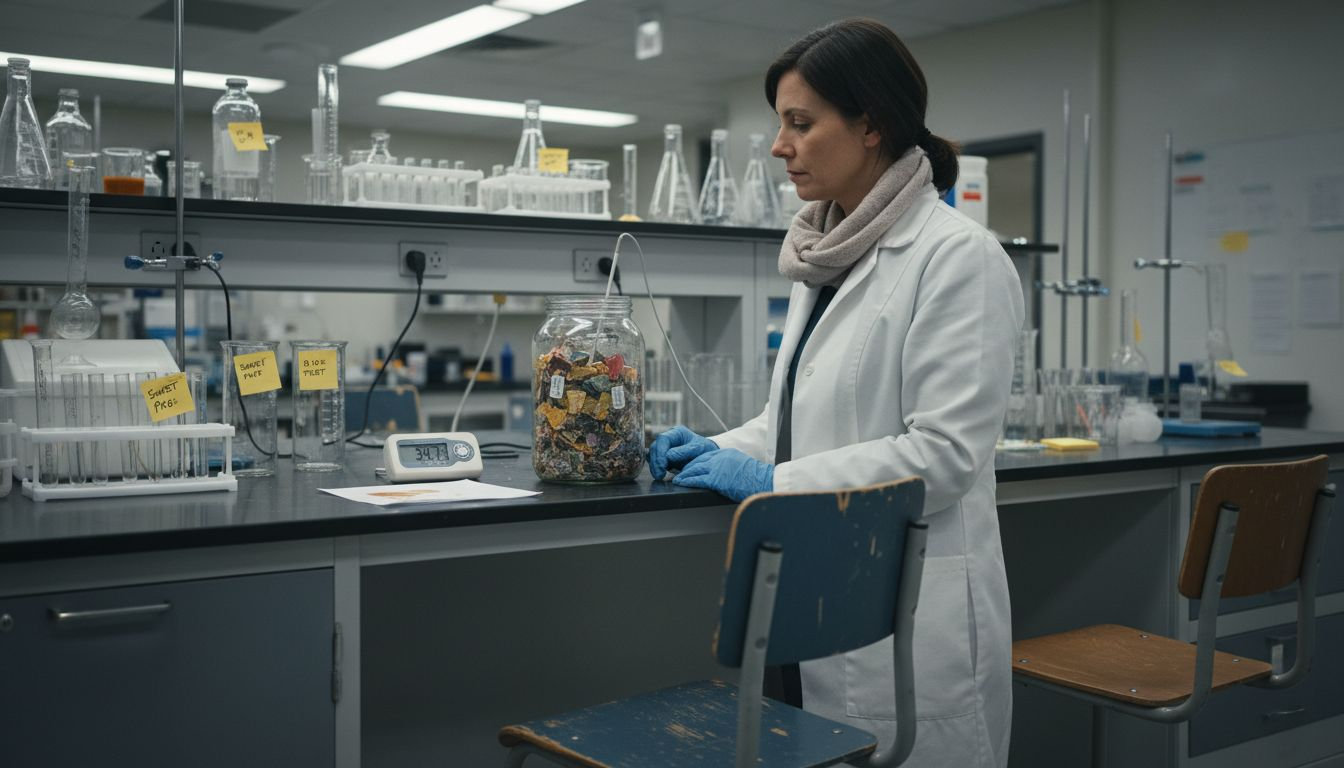
This isn’t passive decay. Living organisms actively work to convert the material into simpler components.
The process produces:
- Water (H₂O)
- Carbon dioxide (CO₂)
- Biomass (nutrient-rich organic matter)
- Zero harmful residue
These breakdown products are completely non-toxic and actually beneficial to soil when composted.
Environmental Conditions Matter Significantly
Biodegradation requires specific humidity and temperature conditions to proceed efficiently. Your packaging won’t degrade in a freezer or desert—it needs the right environment.
Optimal conditions include:
- Industrial composting facilities (55–65°C temperature)
- Moist soil environments (adequate moisture)
- Active microbial populations
- Oxygen availability (for most materials)
Home composting works but takes significantly longer—sometimes 6–12 months instead of 90 days in industrial settings.
The timeline depends entirely on conditions, not just the material itself. You’re not just choosing packaging; you’re choosing a decomposition pathway.
Material Composition Affects Performance
Not all biodegradable materials break down at the same rate. The biopolymer type, additives, and film thickness all influence how quickly degradation occurs.
Common biopolymers degrade at different speeds:
- Starch-based materials: 30–90 days
- Polylactic acid (PLA): 45–180 days
- Polybutylene succinate (PBS): 60–120 days
- Cellulose-based materials: 60–180 days
You’re choosing based on how quickly you want the material gone and where customers will dispose of it.
Enhanced Functionality Through Innovation
Modern biodegradable packaging incorporates natural additives that improve antimicrobial and antioxidant properties. Your candy stays fresher while the packaging still breaks down completely.
These enhancements mean you’re not sacrificing product protection for sustainability. The package still keeps moisture out and oxygen away from your candy during shelf life.
Real-World Application for Your Business
When you switch to biodegradable materials, communicate clearly where packaging should be disposed. Industrial composting facilities accept these materials, but regular recycling programs often cannot.
Your customers need to know the difference. Clear labeling builds trust and ensures materials actually decompose properly.
Pro tip: Contact local composting facilities in your distribution areas to confirm they accept your specific packaging material—this prevents customer confusion and ensures your environmental claims actually deliver results.
Misconceptions About Biodegradable Solutions
Biodegradable packaging gets marketed heavily, and not all claims are accurate. Your customers believe the hype, and so might you. Let’s clear up what’s actually true versus what’s marketing fiction.
These misconceptions cost retailers money and damage credibility when reality doesn’t match promises.
The “Decomposes Anywhere” Myth
Maybe the biggest misconception: biodegradable packaging breaks down everywhere. It doesn’t. Not in your store’s dumpster. Not in landfills. Not in the ocean.
Biodegradable packaging requires industrial composting conditions with specific temperature, moisture, and microbial activity. Standards like EN 13432 and ASTM D6400 define these exact requirements.
Where it actually decomposes:
- Industrial composting facilities (controlled environment)
- Managed soil environments (proper conditions)
- Specialized anaerobic digesters (limited locations)
Where it doesn’t:
- Curbside recycling programs (contamination risk)
- Landfills (no oxygen, wrong conditions)
- Ocean or marine environments (won’t degrade efficiently)
- Your customer’s kitchen composter (usually too cool)
Biodegradable doesn’t mean it decomposes anywhere—it means it decomposes under specific, controlled conditions.
Confusing Biodegradable, Compostable, and Biobased
These terms get used interchangeably, but they’re completely different. That’s a problem.
Biobased means made from renewable resources. It might never biodegrade.
Biodegradable means it breaks down through biological action under right conditions.
Compostable means it biodegrades in composting facilities within a specific timeframe (usually 180 days).
You could have a biobased plastic that’s neither biodegradable nor compostable. Your customers won’t understand the difference, and that’s where your liability starts.
Use this table to clarify often-confused sustainability terms on packaging:
| Term | What It Means | Common Misunderstanding |
|---|---|---|
| Biobased | Made from renewable resources | Not always biodegradable or compostable |
| Biodegradable | Breaks down with biological action | Needs specific conditions, not all areas |
| Compostable | Breaks down in compost within set timeframe | Home compost not always effective |
The Marine Environment Problem
Some biodegradable plastics don’t degrade in marine environments, potentially causing pollution if packaging reaches the ocean. Marketing often implies ocean-friendliness that simply doesn’t exist.
This matters if your supply chain reaches coastal areas or if customers might litter. You’re responsible for accurate claims about where your packaging actually belongs.
Disposal Infrastructure Doesn’t Exist Everywhere
You can switch to certified compostable packaging, but if your distribution area lacks industrial composting facilities, your customers can’t properly dispose of it. The material sits in landfills anyway.
Before committing to biodegradable packaging, research:
- Local composting facility locations
- Collection programs available
- Customer access to proper disposal
- Regional composting capacity
The Certification Problem
Certifications like EN 13432 and ASTM D6400 exist for good reason. But many packages claim biodegradability without proper testing. Imported materials especially may lack legitimate certification.
Always verify third-party testing before making claims to customers.
Pro tip: Request full certification documentation from packaging suppliers and contact local industrial composting facilities to confirm they actually accept your material before marketing it as compostable to customers.
Legal Requirements and Compliance in Canada
Canadian regulations around biodegradable packaging are stricter than you might think. Skip compliance, and you’re risking fines, lawsuits, and damaged reputation. Understanding the legal landscape now saves you from expensive problems later.
Canada’s approach involves multiple agencies and overlapping requirements. Here’s what actually matters for your business.
The Canadian Food Inspection Agency’s Role
The Canadian Food Inspection Agency (CFIA) oversees food packaging safety and materials. They determine whether your packaging can safely contact candy without contaminating the product.
CFIA requirements cover:
- Material composition and safety
- Migration limits (chemicals leaching into food)
- Food contact approval lists
- Compliance documentation
You can’t just import any biodegradable packaging and assume it’s approved. CFIA maintains specific approved materials lists. Your supplier must provide documentation proving compliance.
Federal and Provincial Waste Management Laws
Canada’s legal framework for biodegradable packaging includes federal and provincial regulations governing waste management and compostability standards. Different provinces have different composting infrastructure and requirements.
You’re subject to:
- Federal regulations (baseline requirements)
- Provincial waste management laws (vary by province)
- Municipal bylaw requirements (collection programs)
- Regional composting facility standards
Alberta, British Columbia, and Ontario have different frameworks. What works in Toronto might not work in Calgary.
Your packaging compliance depends on where your customers are located, not just federal rules.
Labeling and Biodegradability Claims
Making environmental claims on packaging is heavily regulated. You can’t just write “biodegradable” and hope it’s true. The Competition Act and Canadian Environmental Protection Act both regulate these claims.
Your labels must:
- Meet ASTM D6400 or equivalent standards
- Specify composting requirements (industrial vs. home)
- Include disposal instructions
- Avoid misleading environmental language
- Be supported by third-party certification
Vague claims like “eco-friendly” or “planet-friendly” without specifics violate regulations.
Certification Standards You Need
ASTM D6400 is the North American standard most Canadian agencies recognize. Some provinces prefer EN 13432 (European standard). You need certification matching your target market.
Certified packaging requires:
- Third-party laboratory testing
- Documented degradation timeframes
- Evidence of non-toxicity
- Validation that materials actually compost
Don’t rely on supplier claims. Request actual certification documents.
Coordination with Composting Infrastructure
Your compliance depends partly on whether composting facilities exist in your distribution areas. If industrial composting isn’t available locally, certifying as “compostable” is misleading to customers.
Before switching packaging:
- Contact regional composting facilities
- Confirm they accept your material
- Document acceptance in writing
- Verify ongoing capacity
Risk Management for Your Business
Misleading biodegradability claims expose you to Competition Bureau investigations, class-action lawsuits from customers, and provincial environmental enforcement. The fines are substantial.
Protect yourself by:
- Maintaining certification documentation
- Keeping supplier compliance records
- Documenting local composting capabilities
- Training staff on accurate claims
- Reviewing labels annually
Pro tip: Contact the Competition Bureau of Canada directly with questions about acceptable claim language before finalizing packaging labels—this prevents costly regulatory violations.
Elevate Your Candy Brand with Truly Sustainable Packaging
Understanding the challenge of authentic biodegradable candy packaging is just the first step. You need packaging that meets strict certification standards and truly decomposes under real-world conditions while protecting your freeze dried candy from moisture and damage. At Space Man, we specialize in offering eco-friendly packaging solutions that align perfectly with your sustainability goals and regulatory compliance.

Explore our private labeling, co-packing, and bagging services tailored for Canadian candy manufacturers and distributors who want to impress environmentally conscious customers without compromising quality. Visit Space Man now to discover how we can help you implement certified biodegradable packaging and ensure your products stand out in the marketplace. Don’t wait—build trust and loyalty by delivering freshness wrapped in sustainability today.
Frequently Asked Questions
What materials can be used for biodegradable candy packaging?
Common materials include paper, cardboard, plant-based biopolymers, composite materials, and protein and polysaccharide blends.
How does biodegradable packaging actually break down?
Biodegradable packaging breaks down through biological processes involving microorganisms that consume the material, converting it into water, carbon dioxide, and biomass in the right conditions.
What certifications should I look for when choosing biodegradable packaging?
Look for certifications such as BPI (Biodegradable Products Institute), EN 13432, CSA standards, and evidence of third-party testing to ensure the packaging meets biodegradable claims.
Is biodegradable candy packaging suitable for home composting?
While some biodegradable materials can decompose in home composting, they often require specific conditions to break down effectively, making industrial composting facilities more suitable for optimal degradation.
Recommended
- Understanding Sustainable Candy Packaging: Key Concepts – Spaceman
- Understanding Eco Friendly Packaging Solutions for Businesses – Spaceman
- 7 Sustainable Packaging Ideas for Your Business – Spaceman
- Green Product Packaging: Boost Your Candy Brand – Spaceman
- 5 Eco-Friendly Packaging Options for Freeze-Dried Dog Food