

Did you know that freeze dried candy can last up to three times longer than regular sweets, while packing a powerful flavor punch? This scientific process has captured the curiosity of snack lovers seeking lighter, crunchier treats that melt in your mouth. As classic sweets are transformed into vibrant, airy bites, more people are discovering the surprising benefits and unique textures that set freeze dried candy apart from anything else in the world of confections.
Key Takeaways
| Point | Details |
|---|---|
| Unique Transformation | Freeze drying intensifies flavors and changes textures, turning candies into crispy, lightweight treats. |
| Extended Shelf Life | The moisture removal during freeze drying enhances preservation, making them ideal for long-term storage. |
| Consumer Appeal | These visually striking, portable snacks attract food enthusiasts and younger consumers, particularly on social media. |
| Cost Considerations | Higher production costs are offset by reduced shipping expenses and increased flavor concentration, appealing to retailers and consumers alike. |
Table of Contents
- What Freeze Dried Candy Really Is
- Types And Popular Varieties Explained
- How Freeze Drying Changes Candy Texture
- Manufacturing Process And Key Ingredients
- Uses, Benefits, And Consumer Appeal
- Cost Factors And Comparison To Alternatives
What Freeze Dried Candy Really Is
Freeze dried candy represents a fascinating culinary transformation that turns ordinary sweets into extraordinary, lightweight treats. According to research from Delish, this process involves a unique method that dramatically changes candy’s texture and experience. Freeze drying is not just another preservation technique - it’s a scientific marvel that completely reimagines how we enjoy confections.
The process begins with completely freezing the candy, then placing it in a high-pressure vacuum chamber where moisture transitions directly from solid ice to vapor - a phenomenon called sublimation. Unlike traditional dehydration methods, freeze drying creates larger air pockets, resulting in an incredibly light, crispy texture that practically melts in your mouth. As La Progressive explains, this technique preserves the candy’s original shape, vibrant color, and intense flavor profile.
Key characteristics of freeze dried candy include:
- Dramatically transformed lightweight texture
- Maintained original flavor intensity
- Preserved original color and shape
- Unique crispy, airy mouthfeel
- Extended shelf life compared to traditional candies
For those curious about the science behind this delightful treat, our comprehensive guide on freeze drying candy offers an in-depth exploration of this fascinating process.
Types And Popular Varieties Explained
Freeze drying transforms an incredible range of candies, turning familiar treats into exciting new textures and flavor experiences. According to VOR News, the process works particularly well with several popular candy types, each responding uniquely to the freeze drying technique.
Chewy Candies are prime candidates for freeze drying. La Progressive highlights that gummies, marshmallows, and saltwater taffy undergo remarkable transformations. Imagine Skittles and Starburst exploding into lightweight, intensely flavored crispy morsels that melt in your mouth. Marshmallows especially become dramatically puffy and crisp, creating an entirely new snacking experience.
Varieties that excel in freeze drying include:
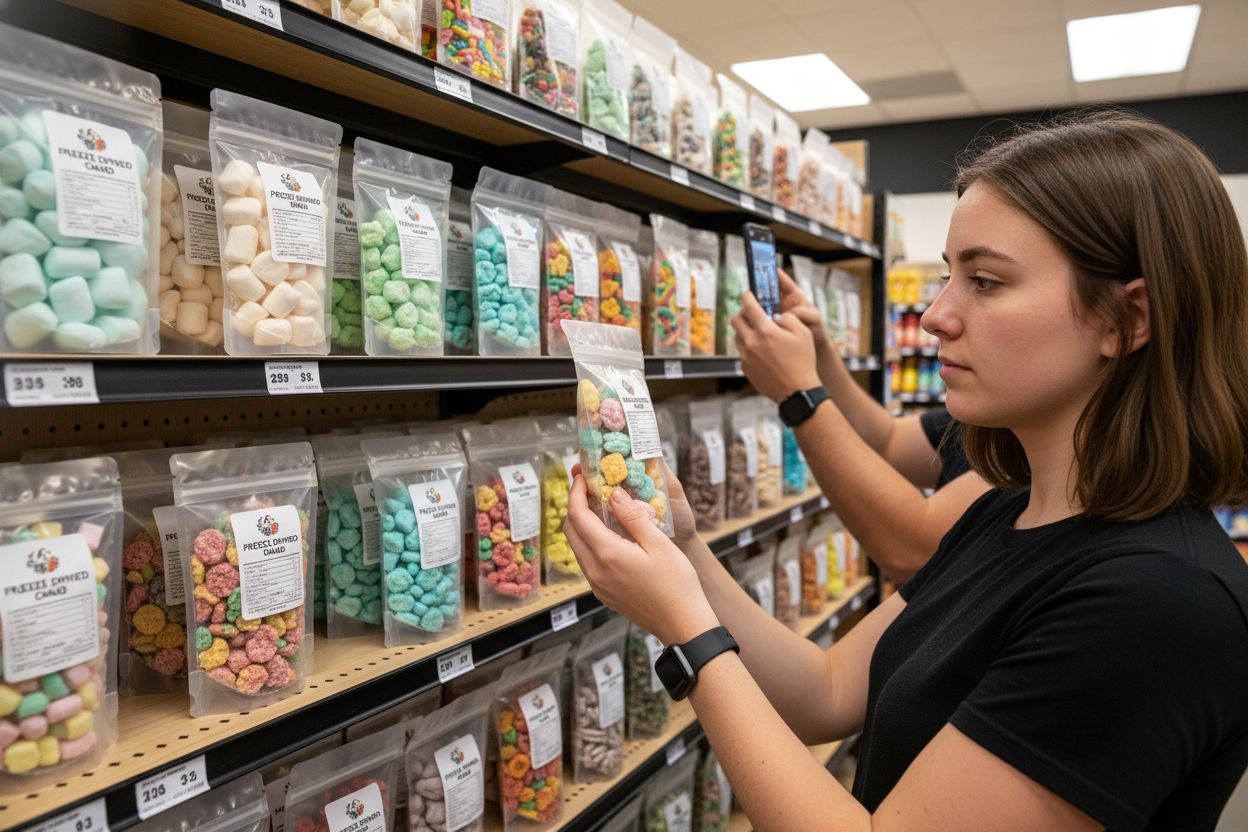
- Gummy candies
- Marshmallows
- Saltwater taffy
- Hard candies like Jolly Ranchers
- Fruit-based candies
Interesting exceptions exist - chocolate, for instance, typically doesn’t freeze dry well due to its high fat content. Each candy type creates a unique texture and flavor profile, making freeze dried candies a playground for taste and sensory exploration. For a deeper understanding of these delightful transformations, check out our comprehensive guide on freeze drying candy.
Here’s a comparison of how freeze drying affects different types of candy:
| Candy Type | Texture Change | Flavor Impact | Visual Appearance |
|---|---|---|---|
| Gummies | Chewy to ultra-crispy | Intensified | Retains color, puffy |
| Marshmallows | Soft to crunchy & airy | Intensified, sweeter | Dramatically puffed |
| Saltwater Taffy | Stretchy to crumbly | More pronounced | Maintains original color |
| Hard Candies | Hard to light crunch | Similar, more aromatic | Retains glossy look |
| Chocolate | Minimal effect, often fails | Texture may degrade | May become spotted |
How Freeze Drying Changes Candy Texture
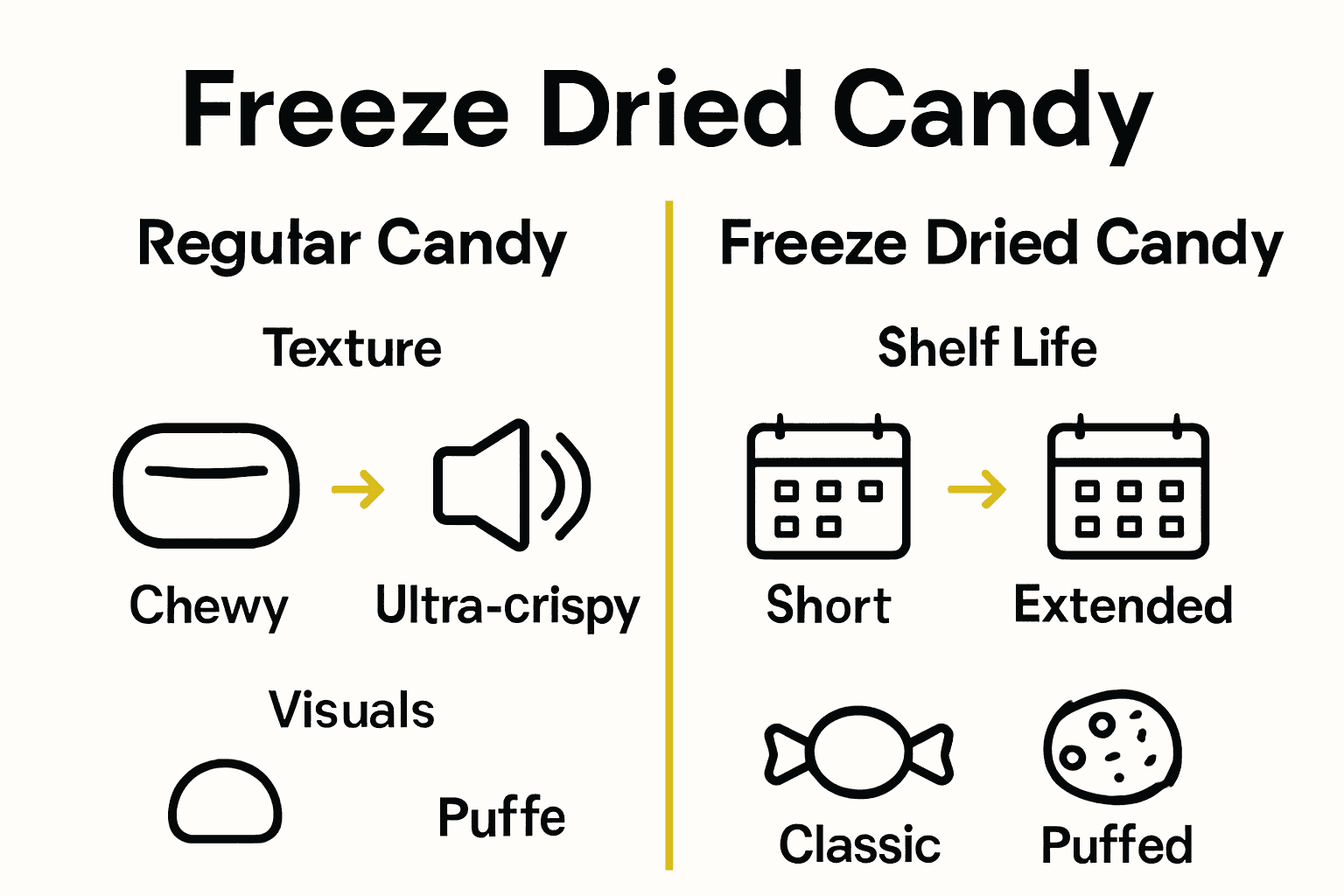
Freeze drying transforms ordinary candy into an extraordinary sensory experience, completely reinventing its texture and flavor profile. According to La Progressive, the process removes moisture through sublimation, converting chewy or soft candies into incredibly light, crumbly treats with an intense flavor burst.
Delish explains the fascinating science behind this transformation: when water freezes and expands, the sublimation process leaves behind intricate air pockets. This creates a remarkable texture that’s dramatically different from traditional dehydration methods - imagine a candy that practically dissolves the moment it touches your tongue, with a satisfying crunch that precedes a flavor explosion.
Key textural changes include:
- From chewy to ultra-crispy
- Intensified flavor concentration
- Lighter, more airy mouthfeel
- Crumbly instead of dense texture
- Rapid melting sensation
For candy lovers seeking to understand the intricate science behind these delightful transformations, our complete guide to freeze dried candies offers an in-depth exploration of this fascinating culinary technique.
Manufacturing Process And Key Ingredients
The manufacturing of freeze dried candy is a precise scientific process that transforms ordinary sweets into extraordinary, crispy treats. According to Enwave, the process involves an intricate sequence of controlled temperature and pressure stages, beginning with ultra-low temperature freezing at temperatures below −40 °C.
The manufacturing journey unfolds through critical stages. As detailed by Spaceman’s internal guide, the process includes controlled freezing, vacuum-induced sublimation for primary drying, and gentle heating for secondary drying. During primary drying, approximately 95% of moisture is removed through sublimation - a fascinating transformation where ice transitions directly from solid to vapor without passing through a liquid state.
Key steps in the freeze drying process include:
- Rapid freezing below −40 °C
- Vacuum chamber primary drying
- Moisture removal through sublimation
- Secondary heating to eliminate residual moisture
- Quality control for texture and flavor preservation
- Moisture-resistant packaging
To explore the fascinating science behind these delightful transformations, our comprehensive guide on freeze drying candy offers an in-depth look at this remarkable culinary technique.
Uses, Benefits, And Consumer Appeal
Freeze dried candy has rapidly evolved from a niche novelty to a mainstream snacking sensation, capturing the imagination of food enthusiasts and retailers alike. According to La Progressive, these unique treats offer remarkable benefits including extended shelf life due to moisture removal, which significantly limits microbial growth and creates a lightweight, crunchy snack perfect for adventurers and novelty seekers.
Spaceman’s internal insights reveal the sensory magic behind freeze dried candy’s consumer appeal. The explosive flavor and Instagram-friendly visual experience make these treats particularly attractive to younger consumers and social media enthusiasts. For retailers, the lightweight nature of these candies presents additional logistical advantages, reducing shipping and storage costs while offering a visually striking product.
Key benefits and consumer attractions include:
- Extended product shelf life
- Concentrated, intense flavor profile
- Lightweight and portable
- Unique crunchy texture
- Visually appealing and shareable
- Reduced shipping and storage expenses
- Novelty factor for food enthusiasts
For retailers and snack lovers looking to understand the full potential of these extraordinary treats, our packaging design ideas guide offers additional insights into creating compelling product experiences.
Cost Factors And Comparison To Alternatives
Freeze dried candy represents a unique value proposition in the snack market, with cost considerations that extend beyond simple price comparisons. According to VOR News, the nutritional density of these treats creates an intriguing economic dynamic, where reduced water weight doesn’t necessarily mean reduced caloric or sugar content.
The manufacturing process for freeze dried candy is more complex and technologically intensive compared to traditional candy production, which typically translates to a higher per-unit cost. However, this premium pricing comes with significant advantages: extended shelf life, reduced shipping weights, and a novel sensory experience that many consumers find worth the additional expense. The lightweight nature means retailers can potentially reduce transportation and storage costs, while consumers enjoy a more concentrated flavor experience.
Key cost and comparative factors include:
- Higher production costs due to specialized equipment
- Reduced shipping and storage expenses
- Similar calorie content to traditional candies
- Potentially smaller portion consumption
- Premium pricing justified by unique texture and experience
- Lower long-term storage waste due to extended shelf life
- Potential transportation cost savings
For businesses looking to understand the nuanced economics of innovative food products, our packaging design ideas guide offers additional insights into optimizing product value and presentation.
Discover the Future of Candy With Spaceman
Craving a new way to enjoy candy that packs bold flavors and unforgettable crunch? You just learned how freeze dried candy delivers intense taste, longer shelf life, and lightweight convenience. But many distributors, retailers, and snack lovers struggle to find a reliable partner for high-quality production, innovative packaging, and trusted supply in Canada. Maybe your current options do not deliver on freshness or flexibility. If you are looking for private labeling, co-packing, or unique bagging solutions, this can feel limiting—especially as freeze dried treats rise in popularity.
Spaceman can help you bring these crispy innovations straight to your audience! As a dedicated freeze dried candy manufacturer and distributor in Canada, we combine expertise with state-of-the-art technology to deliver eye-catching, flavorful snacks your customers will love. Whether you need consumer-ready products, custom packaging, or want to explore our freeze dried candy guide for more details, we are here to help you stand out. Act now and visit Spaceman to discover how easy it is to launch or elevate your own freeze dried candy line with quality you can trust.
Frequently Asked Questions
What is freeze dried candy?
Freeze dried candy is a unique type of confectionery that undergoes a scientific process called freeze drying, transforming ordinary sweets into lightweight, crispy treats with intensified flavors and preserved colors and shapes.
How does the freeze drying process work?
The freeze drying process involves freezing the candy and placing it in a high-pressure vacuum chamber where moisture is removed through sublimation, converting solid ice directly to vapor. This results in a light, airy texture and concentrated flavor.
What types of candies can be freeze dried?
Popular candies suitable for freeze drying include gummy candies, marshmallows, saltwater taffy, hard candies like Jolly Ranchers, and some fruit-based candies. However, chocolate typically does not freeze dry well due to its high fat content.
What are the benefits of freeze dried candy?
Freeze dried candy offers several benefits, including extended shelf life, a lightweight and portable nature, concentrated flavors, and a unique crunchy texture. These characteristics make them appealing for both consumers and retailers, as they also reduce shipping and storage costs.