

Freeze-dried foods look almost identical to their fresh counterparts, a detail that surprises many American shoppers. This technique keeps foods light and colorful while preserving their original structure. The appeal goes beyond convenience—over 80 percent of American households report being curious about long shelf-life products that do not compromise visual quality. Understanding how freeze-dried foods retain appearance and texture can help you recognize genuine quality on store shelves.
Table of Contents
- Defining Freeze Dried Food Appearance
- Differences Between Freeze Dried And Dehydrated Foods
- Visual And Textural Changes After Freeze Drying
- How Packaging Preserves Freeze Dried Look
- Common Misconceptions About Freeze Dried Foods
Key Takeaways
| Point | Details |
|---|---|
| Visual Integrity | Freeze-dried foods maintain their original shape, color, and nutritional content, appearing light and crisp. |
| Preservation Method | The freeze-drying process involves sublimation, preserving food structure better than traditional dehydration methods. |
| Quick Rehydration | Freeze-dried products can be reconstituted swiftly, typically within 10 minutes, making them convenient for various uses. |
| Packaging Importance | Specialized packaging protects freeze-dried foods from moisture and oxidation, ensuring they retain their quality over time. |
Defining Freeze Dried Food Appearance
Freeze-dried food presents a fascinating visual transformation that maintains the core essence of its original form. When subjected to the freeze-drying process, foods undergo a remarkable preservation technique that keeps their fundamental shape and color intact. Unlike traditional dehydration methods, freeze-drying creates a lightweight, porous solid while retaining the food’s original structural characteristics.
The most striking visual markers of freeze-dried foods include their distinctive lightweight texture and preserved external appearance. Structural integrity remains remarkably consistent, meaning a strawberry will look like a strawberry, just significantly lighter and more brittle. The process removes moisture through sublimation, leaving behind a spongelike, airy version of the original food that maintains its color, shape, and most of its nutritional profile.
Visual characteristics of freeze-dried foods are quite unique. They typically appear crisp and almost translucent, with a delicate, crystalline structure that makes them easily crumble when touched. Fruits like strawberries demonstrate this perfectly, maintaining their original shape but developing a crunchy, lightweight texture. The color remains vibrant, though slightly faded compared to the fresh version, giving these foods an almost ethereal, preserved quality.
Pro Tip: Visual Inspection Technique: When examining freeze-dried foods, gently press the item between your fingers. A well-processed freeze-dried food should crumble easily and feel incredibly lightweight, with a consistent, porous structure throughout.
Differences Between Freeze Dried and Dehydrated Foods
Freeze-dried and dehydrated foods represent two distinct preservation methods with dramatically different outcomes. While both techniques remove moisture, the processes and final product characteristics vary significantly. The fundamental difference lies in how moisture is extracted and the impact on the food’s structural and sensory properties.
The visual and textural distinctions are particularly striking. Freeze-dried foods maintain their original shape, size, and color, emerging as light, crispy products that closely resemble their fresh counterparts. In contrast, dehydrated foods typically undergo significant physical transformations. They tend to shrink, darken, and become dense and chewy. Dehydrated items often lose their original form and become more compact and leathery during the drying process.
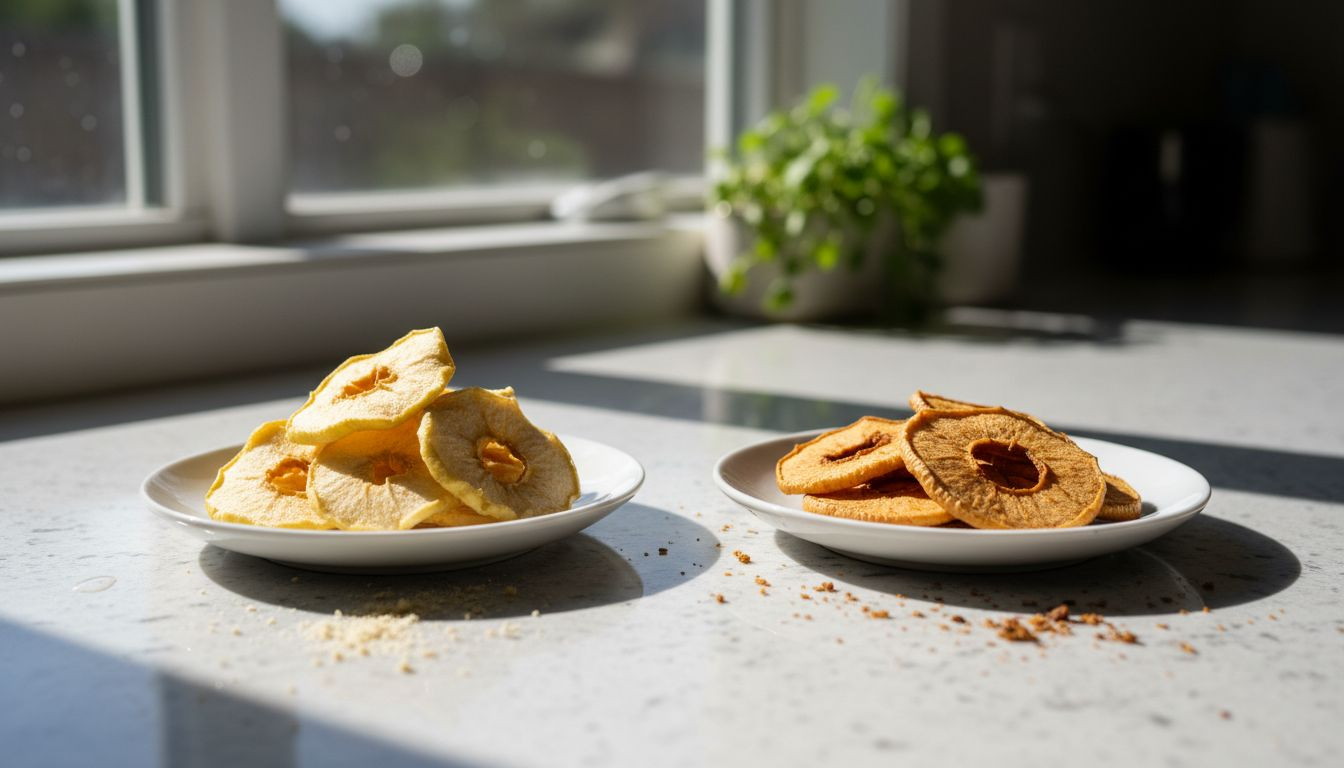
The preservation techniques also differ fundamentally in their approach. Freeze-drying involves freezing the food and then removing moisture through sublimation, which preserves the food’s cellular structure. Dehydration, however, uses heat to slowly evaporate moisture, causing more significant structural changes. This means freeze-dried foods retain more of their original nutritional content, color, and flavor profile, while dehydrated foods experience more substantial nutrient and sensory alterations.
Pro Tip: Texture Test: To quickly distinguish between freeze-dried and dehydrated foods, gently press the item. Freeze-dried foods will typically crumble easily and feel incredibly light, whereas dehydrated foods will feel denser and more resistant to breaking.
Here’s a concise overview comparing freeze-dried and dehydrated foods across several key characteristics:
| Characteristic | Freeze-Dried Foods | Dehydrated Foods |
|---|---|---|
| Color Retention | High, vivid hues | Reduced, often darkened |
| Texture | Crispy, light, porous | Chewy, dense, leathery |
| Nutrient Loss | Minimal | Higher, due to heat |
| Shape Preservation | Maintains original form | Noticeable shrinkage |
| Rehydration Speed | Rapid, often under 10 minutes | Slower, may require soaking |
| Shelf Life | Very long, years | Varies, usually shorter |
Visual and Textural Changes After Freeze Drying
Freeze-drying transforms food through a remarkable metamorphosis that dramatically alters its physical characteristics. The process goes beyond simple moisture removal, creating a unique structural environment where water is extracted directly from the frozen state through sublimation. This technique leaves behind an intricate network of microscopic air pockets, fundamentally changing the food’s texture and appearance.
The resulting product exhibits extraordinary visual and sensory properties. Structural transformation occurs at the cellular level, with foods maintaining their original shape while becoming incredibly light and porous. The sublimation process creates a distinctive crunchy texture with tiny air pockets throughout the food’s structure. Freeze-dried fruits, for instance, retain their original color and form but become crisp and delicate, almost dissolving instantly when they touch the tongue.
Textural changes are most apparent in different food categories. Ice cream transforms into a brittle, melt-in-your-mouth experience, while fruits become light, airy wafers that crumble effortlessly. The preservation method effectively creates a new sensory experience, where foods maintain their nutritional essence but deliver an entirely different tactile and gustatory sensation. Notably, the air pockets created during freeze-drying contribute to an extraordinary lightness that distinguishes these foods from traditionally dried alternatives.
Pro Tip: Crunch Test: To fully appreciate freeze-dried foods, gently crush a piece between your fingers. A perfect freeze-dried item should create a satisfying, delicate crunch and practically disintegrate with minimal pressure.
How Packaging Preserves Freeze Dried Look
Packaging plays a critical role in maintaining the delicate visual and sensory characteristics of freeze-dried foods. The preservation process extends far beyond the initial freeze-drying technique, with specialized packaging techniques designed to protect the food’s unique structural integrity and prevent moisture reabsorption. These advanced packaging strategies are essential for keeping freeze-dried products looking and feeling exactly as they were immediately after processing.
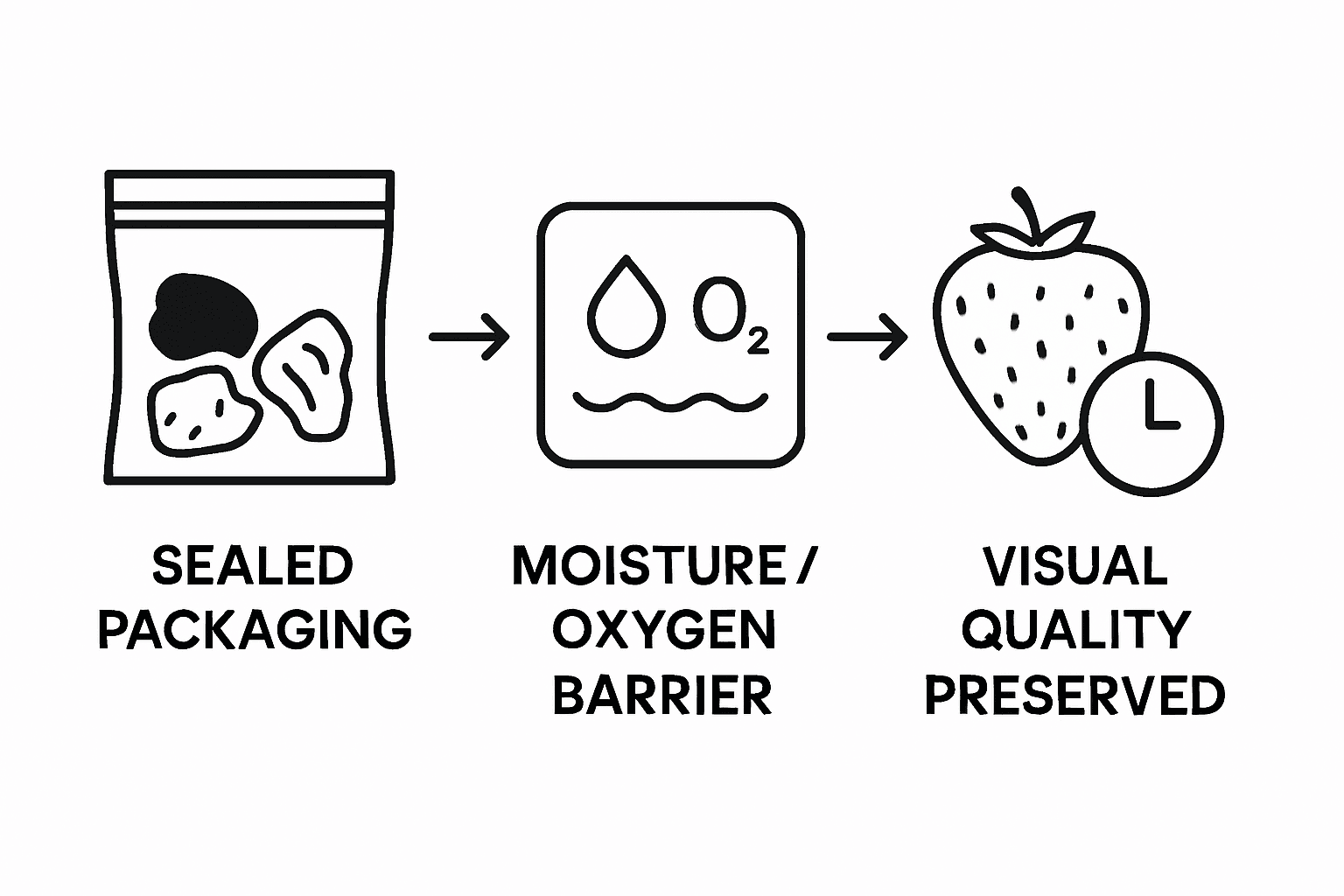
The primary packaging mechanism involves creating an oxygen-free and moisture-proof environment. Protective packaging typically utilizes inert gases like nitrogen to displace oxygen, which can cause oxidation and degradation. Specialized moisture-proof containers serve as the first line of defense in maintaining the food’s original shape, texture, and visual appearance. This approach ensures that the intricate air pockets and delicate structure created during freeze-drying remain intact, preventing compression or moisture absorption that could compromise the product’s distinctive lightweight characteristics.
The packaging materials themselves are carefully selected to provide maximum protection. Multilayer barrier films with high-performance polymers create an impermeable shield against external environmental factors. These sophisticated packaging solutions not only preserve the visual markers of freeze-dried foods but also extend shelf life by protecting against humidity, light, and potential contaminants. The result is a product that maintains its original color, shape, and crisp texture, looking almost identical to the moment it was processed.
Pro Tip: Seal Check: Always inspect packaging for a tight, unbroken seal. A compromised package can quickly introduce moisture that destroys the unique texture and appearance of freeze-dried foods.
This summary highlights how packaging influences the preservation of freeze-dried foods:
| Packaging Feature | Purpose | Impact on Food |
|---|---|---|
| Oxygen Exclusion | Prevents oxidation and spoilage | Preserves color and flavor |
| Moisture Barrier | Blocks external humidity | Prevents texture degradation |
| Inert Gas Fill (e.g., nitrogen) | Displaces oxygen inside packaging | Maintains freshness |
| Multi-layer Barrier Films | Shields against environment and light | Extends shelf life |
Common Misconceptions About Freeze Dried Foods
Many people misunderstand the fundamental nature of freeze-dried foods, believing they lose quality or become unrecognizable during processing. These misconceptions stem from a lack of understanding about the sophisticated preservation technique that actually maintains the food’s essential characteristics. Contrary to popular belief, freeze-drying is a precise scientific method that transforms food while preserving its original integrity.
One prevalent myth is that freeze-dried foods are heavy, difficult to use, and lack flavor. Rehydration capabilities completely challenge this notion. Contrary to expectations, these foods are incredibly lightweight and can be reconstituted quickly, typically within 10 minutes, making them remarkably convenient for various settings. The ability to return to near-original texture and taste makes freeze-dried foods a versatile option for outdoor enthusiasts, emergency preparedness, and everyday cooking.
Another common misconception involves the visual and sensory qualities of freeze-dried foods. Many assume these products will look artificial or drastically different from their original form. In reality, freeze-dried foods retain their original shape, color, and most of their nutritional content. The process removes moisture through sublimation, creating a lightweight version that can be quickly restored to something remarkably close to its fresh state. This preservation technique actually locks in flavor and nutrients more effectively than traditional drying methods, presenting a more authentic culinary experience.
Pro Tip: Taste Test Technique: When trying freeze-dried foods, rehydrate a small portion according to instructions. The result should closely resemble the original food in taste, texture, and appearance, dispelling many common misconceptions about this preservation method.
Discover the Power of Perfect Freeze-Dried Presentation for Your Brand
The article highlights how freeze-dried foods preserve their vibrant color, original shape, and light, crispy texture through advanced sublimation techniques. If you are facing challenges maintaining these key visual markers in your products or want to ensure your freeze-dried candy stands out with extraordinary appearance and shelf life, we understand the importance of flawless packaging and processing. At Space-Man, we specialize in manufacturing and distributing premium freeze-dried candy in Canada with expert private labeling, co-packing, and packaging services designed specifically to maintain that distinctive porous, lightweight look and preserve freshness.
Ready to elevate your freeze-dried product’s visual appeal and guarantee quality consumers can see and trust? Visit Space-Man to explore how our tailored freeze drying and packaging solutions can protect your product’s integrity while enhancing shelf life. Learn how our expertise in moisture-proof, oxygen-free packaging helps maintain your candy’s color, texture, and shape exactly as your customers expect. Don’t wait to transform your consumer goods with the best in Canadian freeze-dried candy manufacturing and packaging. Contact Space-Man today and secure the perfect presentation your products deserve.
Frequently Asked Questions
What distinguishes freeze-dried food from dehydrated food?
Freeze-dried foods retain their original shape, size, and color, emerging as light, crispy products, while dehydrated foods often shrink, darken, and become dense and chewy. The freeze-drying process involves removing moisture through sublimation, preserving more of the food’s nutrients and sensory qualities.
How do freeze-dried foods look visually compared to fresh foods?
Freeze-dried foods generally retain their original shape and vibrant color, giving them a preserved, almost ethereal quality. They may appear crisp and translucent, maintaining their structural integrity while developing a unique, airy texture.
How can I test the texture of freeze-dried foods?
To assess the texture of freeze-dried foods, gently press the item between your fingers. A well-processed freeze-dried food should crumble easily and feel exceptionally lightweight due to its porous structure.
Why is packaging important for preserving the appearance of freeze-dried foods?
Packaging is crucial because it creates an oxygen-free and moisture-proof environment, protecting the food’s unique structural integrity and preventing moisture reabsorption. Specialized packaging solutions help maintain the freeze-dried food’s original color, shape, and crisp texture for an extended shelf life.
Recommended
- What Is Freeze Dried Candy? A Complete Guide for Retailers – Spaceman
- Complete Guide to Benefits of Freeze Dried Fruit – Spaceman
- What Can I Freeze Dry: Complete Guide for 2025 – Spaceman
- Complete Guide to Foods You Can Freeze Dry – Spaceman
- Understanding What are Protein Isolates and Their Benefits – MyGymSupplements