

Launching a private label candy brand on Amazon can feel like charting your own course in a crowded marketplace. For Canadian entrepreneurs and retail managers, the promise goes beyond higher profit margins—it’s about owning the entire brand experience, from packaging to customer relationships. Control over everything from branding to pricing gives you the chance to create a unique identity that stands out against major national brands. This introduction guides you through the essentials of building and positioning your candy line for success on Amazon.
Table of Contents
- Private Label Products Explained For Amazon
- Types And Variations Of Amazon Private Label
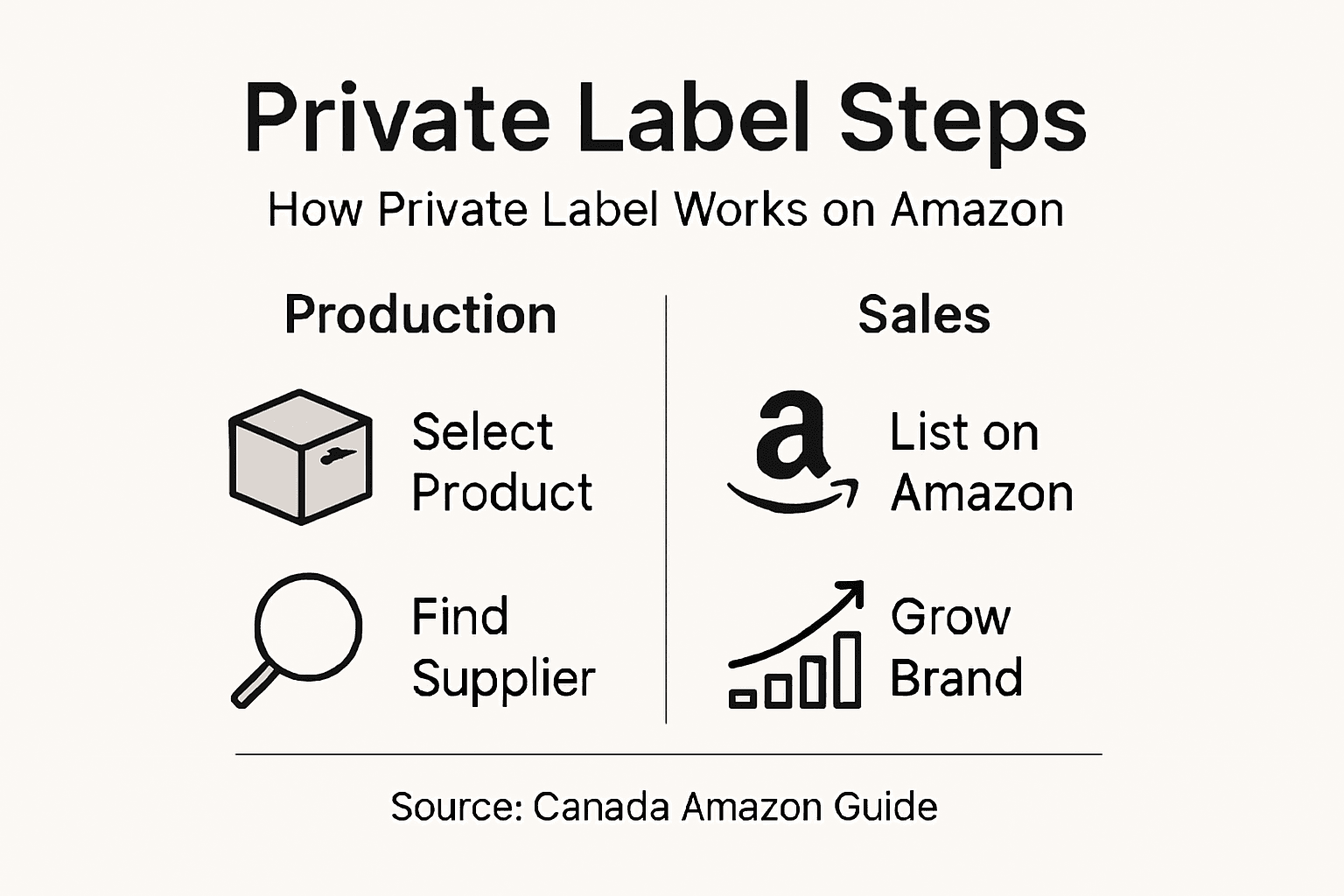
- How Private Label Works: Production To Sale
- Requirements For Launching Private Label Brands
- Risks, Costs, And Common Mistakes On Amazon
Key Takeaways
| Point | Details |
|---|---|
| Private Label Control | Canadian entrepreneurs own the brand and control all aspects from manufacturing to customer relationships, leading to higher profit margins. |
| Regulatory Compliance | Understanding and adhering to compliance standards is crucial to avoid costly mistakes and protect your brand reputation. |
| Market Research Importance | Conduct thorough research to identify gaps in the market and ensure your product stands out among competitors. |
| Financial Planning | Be prepared for significant upfront investment to manage costs effectively and prevent cash flow issues. |
Private label products explained for Amazon
A private label product is one that a company owns the brand for, even though a third party manufactures it. On Amazon, this means you create your own brand and sell products under that name, competing directly with established national brands.
Here’s the core difference: instead of reselling someone else’s product, you control everything from branding to packaging to pricing. Your Canadian business owns the brand identity, which gives you significantly higher profit margins than dropshipping or reselling.
How Private Label Works on Amazon
The basic model is straightforward. You identify a product category, partner with a manufacturer to produce it under your brand, then list it exclusively on Amazon under your own branding. Many Canadian entrepreneurs work with co-packing services to handle production while they focus on marketing and sales.
You maintain complete control over:
- Product design and specifications
- Brand name and logo
- Packaging and labeling
- Pricing strategy
- Customer relationships and reviews
This is different from wholesale, where you’d buy existing products. With private label, you’re essentially creating your own product line.
Regulatory Requirements and Compliance
Before launching, understand that consumer products require clear labeling including product identity, manufacturer details, and net contents. Amazon takes compliance seriously, and violations can result in listing suspension.
Canadian sellers especially need to consider:
- Fair Packaging and Labeling Act compliance
- French and English labeling requirements for certain categories
- Health Canada regulations if applicable to your product type
- Accurate UPC codes and product registration
Your brand reputation depends on regulatory compliance from day one. Non-compliance costs far more to fix than to get right initially.
Why Private Label Matters for Canadian Entrepreneurs
Private label offers genuine competitive advantages. You’re not competing on price alone like resellers do. Instead, you build brand loyalty, control your narrative, and create products that solve real customer problems.
Canadian entrepreneurs benefit because:
- Higher profit margins (typically 40-60% vs. 10-15% for resellers)
- Brand ownership and equity that builds over time
- Access to repeat customers who recognize your brand
- Ability to scale without depending on supplier availability
You’re building an actual business, not just chasing product deals.
The Private Label Advantage
Unlike retail managers restocking shelves, Amazon private label sellers own the entire value chain. When a customer buys your product, they’re buying your brand experience, not just a commodity.
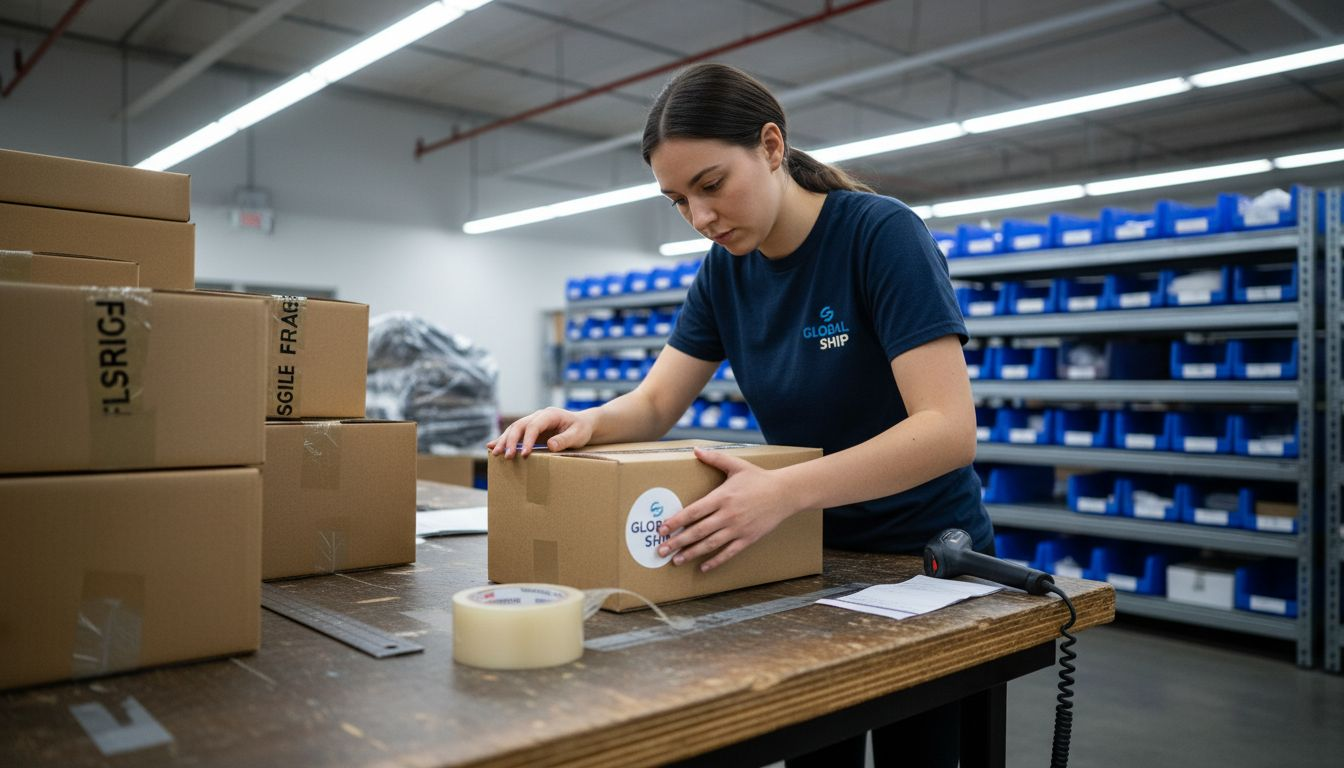
This matters because reviews and ratings are tied to your brand, not the manufacturer. Over time, a well-executed private label product builds authority in its category.
Pro tip: Partner with a manufacturer experienced in your specific product category and ensure they understand Amazon’s packaging and compliance requirements before production begins—mistakes at this stage are expensive to fix.
Types and variations of Amazon private label
Amazon doesn’t just sell one type of private label product. The company operates multiple brand lines, each targeting different customer segments and price points. Understanding these variations helps you position your own private label strategy effectively.
The major Amazon private label brands include AmazonBasics (home goods and electronics), Solimo (kitchen and home products), Mama Bear (baby products), and Wag (pet food). Each serves a distinct market niche, but they all follow the same fundamental model: Amazon owns the brand and controls the entire experience.
Pricing Tiers and Product Categories
Private labels exist across multiple tiers. Budget-conscious shoppers gravitate toward basic, no-frills options. Meanwhile, premium private label products compete directly with established national brands by offering superior quality or unique formulations.
Common pricing structures include:
- Economy tier: Direct competition with budget brands, minimal packaging
- Standard tier: Mid-range pricing with improved quality or features
- Premium tier: Higher-value products with specialty ingredients or advanced design
- Specialty/niche: Unique formulations targeting specific customer needs
Canadian retailers expanding into private label often start with standard or premium tiers, where margins are stronger and differentiation easier.
Generic vs. Differentiated Private Label
Some private labels are essentially copycat versions of popular national brands, stripped down for lower cost. Others take a completely different approach. They innovate with unique packaging designs or formulations that solve genuine customer problems.
The differentiated approach wins more consistently. Customers notice when you’ve genuinely innovated rather than just repackaged an existing product.
The best private label products don’t compete on price alone—they solve problems national brands overlook or charge premium prices to address.
Category-Specific Variations
Different categories require different strategies. Baby products demand safety certifications and premium positioning. Snack foods rely on flavor innovation and trending ingredients. Pet food emphasizes nutrition and ingredient transparency.
For Canadian entrepreneurs, the categories worth considering include:
- Frozen or specialty candies (leveraging co-packing expertise)
- Seasonal or limited-edition flavors
- Health-conscious or functional candy products
- Gift-ready packaging variations
Your choice depends on manufacturing capability and target customer preferences.
Exclusive vs. Multi-Channel Distribution
Some sellers keep their private label exclusively on Amazon. Others distribute across multiple channels—Shopify, their own website, retail stores. Amazon allows both approaches, though exclusive listings sometimes receive better algorithmic support.
Exclusive Amazon distribution offers:
- Stronger brand focus
- Simplified inventory management
- Better Prime integration
- Cleaner customer data
Multi-channel distribution spreads risk but requires more operational complexity.
Here’s a comparison of exclusive and multi-channel distribution approaches for Amazon private label:
| Aspect | Exclusive on Amazon | Multi-Channel Distribution |
|---|---|---|
| Brand Focus | Strong single-platform branding | Split branding across platforms |
| Operational Complexity | Easier to manage inventory and sales | Requires more logistics coordination |
| Prime Integration | Full eligibility and benefits | May lose direct Prime access |
| Customer Data Clarity | Easier to analyze Amazon data | More fragmented data sources |
Pro tip: Start with a single product variation in one price tier to test market demand before expanding into multiple SKUs or premium tier versions—this conserves capital and reveals what your customers actually want.
How private label works: production to sale
The private label process is straightforward in theory but requires careful execution. You identify a product you want to sell, partner with a manufacturer to produce it under your brand, then list it on Amazon. The manufacturer makes the product; you own the brand and the customer relationship.
This model avoids the massive capital investment of building your own factory. You control everything from specifications to pricing while the manufacturer handles production logistics.
Step 1: Product Selection and Sourcing
Start by identifying a product category with real demand. Research competitor pricing, customer reviews, and gaps in the market. Your goal is finding a category where you can differentiate—either through quality, pricing, packaging, or unique features.
Once you’ve identified your category, source manufacturers. For Canadian entrepreneurs in the candy space, this means finding co-packing partners who can produce freeze-dried or specialty products at scale.
Key sourcing considerations:
- Manufacturing capacity and minimum order quantities
- Quality control and food safety certifications
- Production timeline and lead times
- Pricing structure and volume discounts
- Ability to accommodate custom packaging
Step 2: Product Development and Specifications
Work closely with your manufacturer to develop the exact product you want. This includes recipe refinement, ingredient sourcing, shelf-life testing, and packaging design. Your manufacturer produces samples; you approve or request modifications.
This phase is critical. Mistakes here multiply when you scale to thousands of units.
Product development costs money upfront, but fixing problems after production wastes far more cash and destroys your brand reputation.
Step 3: Manufacturing and Quality Control
Once specifications are finalized, the manufacturer produces your products at scale. You should implement labeling requirements including batch identifiers for traceability and safety compliance.
Quality control happens throughout production:
- Batch testing for consistency
- Safety and allergen verification
- Packaging integrity checks
- Documentation for regulatory compliance
Don’t skip this stage. Amazon suspends accounts for quality issues faster than you’d expect.
Step 4: Logistics and Storage
After production, your products need storage before shipping to Amazon. You have two options: ship directly to Amazon’s fulfillment centers or use a third-party logistics provider.
Direct-to-Amazon shipping (Fulfillment by Amazon) handles customer orders automatically. This simplifies operations significantly and improves your Prime eligibility.
Step 5: Amazon Listing and Launch
Create your Amazon listing with compelling copy, professional images, and keyword optimization. Price competitively while maintaining healthy margins. Monitor initial sales closely—your first reviews make or break your product’s visibility.
You’re now officially in the private label business. From here, success depends on marketing, customer service, and continuous product improvement.
Pro tip: Order a test shipment of 500-1,000 units before committing to a large production run—this validates market demand and catches manufacturing issues before you’re stuck with 10,000 units of a product customers don’t want.
Requirements for launching private label brands
Launching a private label brand on Amazon isn’t just about having a good product idea. You need to meet specific legal, regulatory, and operational requirements before your first listing goes live. Skip these, and you’ll face suspensions, recalls, or worse.
The good news? Most requirements are standard across the industry. Understanding them upfront saves months of headaches and prevents costly mistakes.
Regulatory Compliance and Labeling
Every private label product must comply with federal labeling laws. This includes accurate product identity and manufacturer information on every package. You can’t skip this—Amazon enforces it strictly.
For candy and food products specifically, compliance includes:
- Ingredient lists with proper allergen warnings
- Net weight or volume clearly displayed
- Your company name and address as the private labeler
- Barcode or UPC code
- Expiration date or “best by” date where applicable
Canadian sellers also need French labeling for many product categories. Check Health Canada requirements before finalizing your package design.
Tracking Labels and Traceability
Your manufacturer must apply tracking labels with production batch information on products. This enables rapid recalls if safety issues arise. Without proper tracking, Amazon will suspend your seller account immediately.
Tracking labels need:
- Manufacturer or private labeler name
- Production location
- Date of manufacture
- Batch or lot code
- Permanent, legible formatting
Tracking labels feel like bureaucratic overhead until you need to recall 5,000 units. Then they save your business.
UPC Codes and Product Registration
Every SKU requires a unique UPC code. You’ll need these for Amazon listing creation and inventory management. Apply for UPC codes through an authorized agency—don’t use fake or recycled codes.
Amazon also requires that you register your brand in their Brand Registry program. This protects your intellectual property and improves your search visibility. Registration requires proof of trademark ownership.
Business License and Tax Compliance
You need a valid business registration in Canada. Amazon requires seller account information that matches your actual business entity.
Essential documentation:
- Business registration or incorporation documents
- Tax ID or business number
- Bank account for payments
- Proof of address
If selling across provinces, understand provincial sales tax requirements. Some provinces treat freeze-dried candy differently for tax purposes.
Insurance and Liability
Consider product liability insurance before launch. It protects you if a customer claims injury from your product. Amazon doesn’t require it, but it’s smart business—especially for food items.
Quality Control Documentation
Keep detailed records of product testing, ingredient sourcing, and batch production. If issues arise, you’ll need documentation proving you followed safety standards.
Pro tip: Have your manufacturer create a Supplier Letter of Guarantee (SLG) confirming they follow all applicable regulations and safety standards—this document protects you and demonstrates compliance to Amazon.
Risks, costs, and common mistakes on Amazon
Private label on Amazon sounds promising until reality hits. The competition is fierce, the costs add up quickly, and one mistake can suspend your account. Understanding the real risks before you invest saves you from expensive lessons learned the hard way.
Most new sellers underestimate both the financial commitment and the competitive intensity. They launch thinking their product will sell itself—it won’t.
Financial Costs That Catch You Off Guard
Private label requires significant upfront investment. Product development, manufacturing, compliance, and marketing all drain cash before you make your first sale.
Typical cost breakdown:
- Initial inventory: $2,000-$10,000+ depending on product type
- Product photography and listing creation: $500-$2,000
- Compliance testing and labeling: $500-$2,000
- Amazon advertising (monthly): $500-$2,000+ to gain visibility
- Logistics and storage fees: 15-25% of revenue
Many sellers run out of capital before their product gains traction. Budget conservatively and plan for slower growth.
The table below summarizes typical upfront and ongoing costs for starting a private label business on Amazon:
| Cost Category | Example Amount (CAD) | Description |
|---|---|---|
| Initial Inventory | $2,000 – $10,000+ | First product order |
| Photography & Listings | $500 – $2,000 | Professional images and written content |
| Compliance & Testing | $500 – $2,000 | Product safety and labeling certification |
| Monthly Advertising | $500 – $2,000+ | Amazon PPC and promotions |
| Logistics & Storage | 15–25% of revenue | Fulfillment fees and warehouse storage |
Competition From Amazon’s Own Brands
Here’s the uncomfortable truth: Amazon competes directly against you. The platform faces antitrust and regulatory scrutiny for prioritizing its own private label products in search results.
This creates real disadvantages:
- Amazon can see your sales data and launch competing products
- Their products often appear higher in search results
- They have pricing power you don’t
- Algorithm changes can suddenly tank your visibility
Differentiate or die. Generic “me-too” products get crushed.
Amazon’s algorithm doesn’t favor underdog sellers. Your product must be demonstrably better than alternatives, not just slightly different.
Common Mistakes That End Businesses
Failure usually comes from preventable mistakes, not bad luck. The most common ones:
Inadequate market research: Launching without understanding competitor pricing, customer pain points, or market saturation.
Poor supply chain management: Ordering too much inventory too early, then having nowhere to store it or sell it.
Neglecting brand building: Treating your product as a commodity instead of creating brand loyalty.
Compliance failures: Cutting corners on labeling, allergen warnings, or tracking information. Amazon suspends accounts over this instantly.
Insufficient differentiation: Failing to differentiate your product sufficiently from national brands leaves you competing only on price.
Account Suspension and Policy Risks
Amazon can suspend your seller account for violations—sometimes without warning. Reasons include intellectual property complaints, safety issues, or policy breaches.
Once suspended, retrieving funds takes weeks. Your inventory sits in warehouses costing you storage fees. Recovery is difficult and expensive.
Inventory and Cash Flow Problems
Inventory that doesn’t sell becomes dead weight. You pay storage fees monthly while capital sits trapped in unsold products.
Plan conservatively:
- Start with smaller first orders
- Monitor sales velocity weekly
- Only reorder when current stock reaches 40-50%
- Avoid seasonal products unless you have capital reserves
Pro tip: Run a 30-day pilot with a minimal inventory (1,000 units) before committing to a 10,000-unit production run—the learnings from real customer feedback are worth far more than the money you’ll save by ordering in bulk.
Take Control of Your Private Label Success with Expert Canadian Manufacturing
Understanding private label on Amazon reveals the challenges of navigating compliance requirements, product differentiation, and competitive pressures. If you aim to build a strong brand with high profit margins while avoiding costly mistakes like compliance failures or poor supply chain management, partnering with the right manufacturer is essential. Our expertise in freeze dried candy manufacturing combined with comprehensive private labeling, co-packing, and packaging services can help Canadian entrepreneurs transform their product vision into reality while meeting rigorous regulatory standards.
Start your private label journey confidently with Space Man where every product is crafted to meet Amazon’s labeling and quality demands. Benefit from our tailored private label solutions, scalable production capabilities, and marketing-ready packaging designed to set you apart from Amazon’s competitive landscape. Visit our private labeling services today and take the first step to elevate your brand and secure your place in the marketplace.
Frequently Asked Questions
What is a private label product on Amazon?
A private label product on Amazon is one that you create under your own brand name, even though a third-party manufacturer produces it. This allows you to control branding, packaging, and pricing, which can lead to higher profit margins.
How does the private label process work on Amazon?
The private label process involves selecting a product category, partnering with a manufacturer, developing the product to your specifications, and then listing it on Amazon under your brand name. You manage all aspects, from design to customer relationships, while the manufacturer handles production.
What are the benefits of selling private label products?
Selling private label products offers several benefits, including higher profit margins (typically 40-60%), brand ownership, access to repeat customers, and the ability to differentiate your products in the marketplace, resulting in stronger brand loyalty.
What regulatory requirements must I consider for private label products?
You need to comply with labeling requirements, including clear product identity, manufacturer details, and net contents. Additionally, ensure compliance with relevant safety regulations and obtain necessary UPC codes for your products to meet Amazon’s requirements.