

Build loyalty by making customers reliably succeed with your product or service, then reinforce that experience with earned rewards, personalization, and honest measurement. Retail and CPG brands that follow this order (experience first, program second) tend to keep customers longer than those chasing loyalty through discounts alone. The rest of this guide breaks that verdict into seven pillars, plus retail and private-label examples you can actually copy.
TL;DR:
- Customers must quickly experience product quality and ease of use before loyalty programs can effectively reinforce their commitment.
- Loyalty metrics should combine behavioral data like repeat purchases with advocacy signals such as referrals and reviews to get an accurate loyalty picture.
- Fixing fundamental friction points, such as slow shipping or complicated reordering, often yields more loyalty than implementing elaborate rewards.
- Personalization efforts should focus on transparent listening and visible follow-through rather than invasive tracking or broad discount offers.
- A gradual, phased approach over 90 days, targeting product experience, feedback, and operational improvements, ensures sustained loyalty growth.
Table of Contents
- How Do You Build Loyal Customers? 7 Pillars That Actually Work
- Design Loyalty Programs That Amplify Experience (Not Replace It)
- Personalization and Voice of Customer Loops That Build Trust
- Turn Service Failures Into Loyalty Opportunities
- Measure What Matters: Loyalty Metrics and a Quick Audit
- Retail and Private-Label Tactics That Speed Repeat Buying
- Your 30/60/90-Day Plan for Building Customer Loyalty
- What Actually Moves Retention (An Editorial Take)
- Sources
How Do You Build Loyal Customers? 7 Pillars That Actually Work
Retention beats acquisition on cost alone. It typically costs 5 to 25 times more to win a new customer than to keep an existing one, and losing one loyal buyer often takes three new sign-ups just to break even. That math is the whole argument for building loyalty deliberately instead of hoping repeat business happens on its own.
Here’s the framework, in order of what to fix first:
- Define what loyalty actually looks like for your business. A loyal grocery shopper reorders monthly. A loyal wholesale account renews annually and refers other buyers. Pin down the specific behaviors you’re optimizing for before you build anything.
- Nail product quality and get customers to a “win” fast. If the first experience underwhelms, no rewards program saves it.
- Map your moments of truth. Onboarding, first use, delivery, support contact, and renewal are where loyalty is won or lost. Walk through each one as if you were the customer.
- Remove friction from repeat buying. Saved carts, subscribe-and-save options, and one-click reorders matter more than most owners assume.
- Personalize with permission. Lean on zero-party data (what customers tell you directly) and first-party data (what you observe) rather than third-party tracking that feels invasive.
- Build earned rewards, not blanket discounts. Reward referrals, reviews, and milestones, not just spend.
- Measure behavior, attitude, and advocacy together, then iterate. One metric never tells the full story.
This isn’t a one-time checklist. Treat it as a loop you revisit quarterly, because what counts as “frictionless” for your customers this year will shift once competitors catch up.
Design Loyalty Programs That Amplify Experience (Not Replace It)
Loyalty programs fail for a predictable reason: they get bolted onto a shaky experience. A points system can’t fix slow shipping or a confusing checkout. Fix the experience first, or the program just highlights the cracks faster.
Once the fundamentals are solid, build earn rules that go beyond the purchase itself:
- Referral bonuses (people who recommend a brand are showing one of the clearest loyalty signals there is)
- Points for reviews, especially photo or video reviews
- Milestone rewards tied to anniversaries or order counts
- Community actions, like sharing a recipe or tagging the brand on social
Keep tiers to three levels at most. More than that, and customers lose track of where they stand or what’s even worth chasing. Each tier’s benefit should feel tied to your brand, not generic (“early access to limited drops” beats “5% off” for almost any specialty product).
Speed matters more than most program designers admit. Consumers today respond better to recognition and meaningful value than to isolated points programs, and that pattern shows up early. If a customer’s first reward takes three months to earn, they’ve already forgotten why they signed up.
Pro Tip: Give new members a small, unearned welcome bonus the day they join, before they’ve spent a dollar. That single gesture does more for early retention than a 20% discount buried in fine print.
Avoid the trap of treating discounts as loyalty. A coupon rewards price sensitivity, not commitment, and it quietly trains customers to wait for the next markdown instead of buying at full price.
Personalization and Voice of Customer Loops That Build Trust
Personalization only works when customers can feel that you’re actually listening, not just tracking. That means building real Voice of Customer (VoC) loops instead of a one-off survey that disappears into a spreadsheet.
Start with the signals customers give you willingly:
- Zero-party data: preferences stated directly, like flavor picks or dietary needs collected at signup
- First-party data: what you observe, such as browsing history or purchase timing
- Behavioral data: cart abandonment, repeat visit frequency, support contact patterns
Small teams get outsized results from low-friction VoC tactics. A one-question micro-survey at checkout, quick text analysis of support tickets, and mining product reviews for recurring complaints can all be run without a dedicated research team, and small businesses consistently see retention gains from exactly this kind of systematic listening.
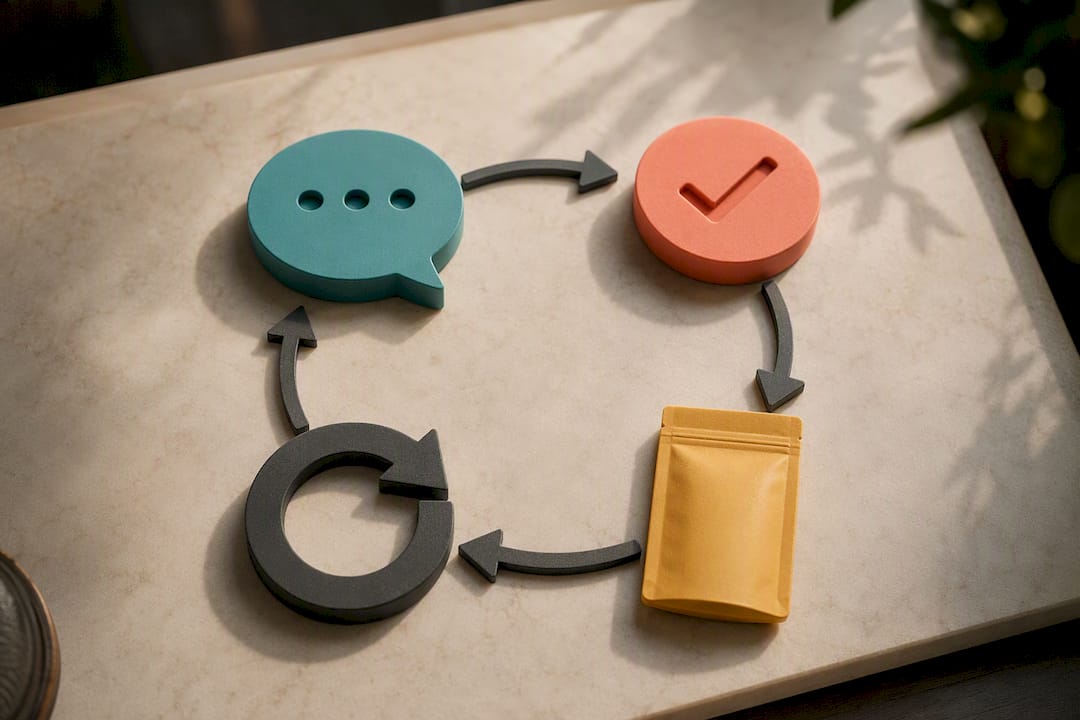
Closing the loop matters as much as gathering the feedback. If customers asked for resealable packaging and you delivered it, say so publicly, showcasing insights from The Role of Customer Reviews in Hospitality – Wild Foodz by Hotel Entree Brugge. That visible follow-through is what turns a survey response into trust. The next wave of loyalty tools leans toward low-friction, privacy-respecting systems rather than aggressive tracking, which is worth keeping in mind before you personalize your way into feeling like surveillance.
Turn Service Failures Into Loyalty Opportunities
Every business messes up an order eventually. What happens in the next ten minutes decides whether that customer becomes a detractor or your most vocal fan.
The moments that matter most, in rough order of impact, are onboarding, first use, any incident or complaint, renewal, and expansion into a new product line. A recovery playbook for the incident stage should follow four steps:
- Acknowledge the problem fast, ideally within hours, not days.
- Own it without deflecting. “Our packaging failed” beats “the carrier must have mishandled it.”
- Fix it quickly, whether that’s a reship, refund, or replacement.
- Add one unexpected gesture, like a handwritten note or a free item, that goes slightly beyond what was owed.
None of this works without operational support: agents need customer context on-screen, real authority to issue fixes without escalating, and a habit of following up a week later to confirm the fix actually landed. Consistent, dependable delivery is the foundation loyalty gets built on, and emotional trust compounds lifetime value once that foundation holds. Track repeat purchase rate after an incident and post-recovery satisfaction scores separately from your general CSAT. They tell you whether recovery is actually working.
Measure What Matters: Loyalty Metrics and a Quick Audit
Net Promoter Score and CSAT tell you how someone feels in a single moment. They don’t tell you whether that person actually came back. Combine behavioral, attitudinal, and advocacy signals, and the picture gets a lot more honest.
Track these together, not in isolation:
- Repeat purchase rate and churn/retention rate (the behavioral core)
- Referral conversion rate (advocacy in action, not just intent)
- Time-to-first-value (how fast a new customer hits their first real win)
- Share of wallet (are they buying more from you over time, or just staying put)
A quick reality check: it typically takes 5 to 25 times more investment to acquire a customer than to retain one. That ratio alone justifies spending a real budget on a customer experience audit before you launch a shiny new program.
Run a short audit focused on the highest-impact touchpoints: checkout speed, first-week email cadence, support response time, and how easy a reorder actually is. Pick one metric to move, set a specific target, run a small test for 30 to 60 days, and check the number again before scaling anything.
Retail and Private-Label Tactics That Speed Repeat Buying
Merchandising and packaging decisions do real work here. A resealable pouch or a clear “best by” window on freeze-dried candy reduces the friction between “I liked it” and “I’m ordering again”, and that gap is exactly where repeat purchases get lost.
For B2B relationships, reliability is the loyalty program. A private-label or co-packing partner that ships on time, batch after batch, earns retained contracts in a way no rewards tier ever will.
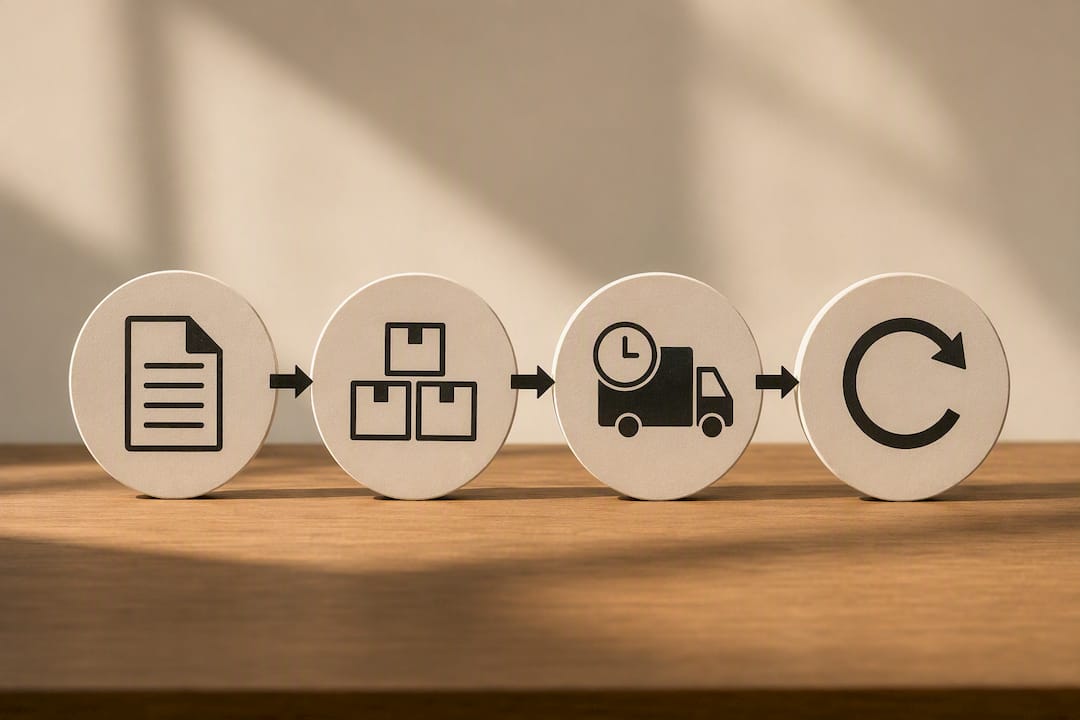
Cheap experiments worth running: a welcome bundle for first-time online orders, a birthday perk tied to email signup, or a limited-edition private-label flavor drop. Watch reorder rate over the following 30 days. That single number tells you fast whether the tactic is worth scaling. Some of these ideas connect directly to broader retail loyalty strategies worth reviewing before you commit budget.
Your 30/60/90-Day Plan for Building Customer Loyalty
Assign an owner to each phase, or this stays a wish list forever.
- Days 1 to 30 (Product and CX): Run the experience audit, fix the worst friction point, and launch a welcome reward.
- Days 31 to 60 (Marketing): Start a lightweight VoC pulse (one checkout question, one support-ticket tag) and build the recovery playbook.
- Days 61 to 90 (Ops): Test earned rewards for referrals and reviews, then measure repeat purchase rate against your baseline.
Pro Tip: Don’t test everything at once. Pick one cohort, one change, one metric. A messy experiment with five variables tells you nothing useful in 90 days.
Three quick wins to start this week: add a small welcome bonus, send one feedback question after the next 50 orders, and write down your recovery steps before the next complaint arrives, not after.
What Actually Moves Retention (An Editorial Take)
Most brands treat loyalty programs as the starting line when they should be the finish. The businesses that keep customers longest usually spend their first real effort fixing something boring, like shipping speed or packaging, before they ever design a rewards tier. Test one small fix this month. Measure it honestly. Then decide if it earned a bigger bet.
— Chadi
If you’re a food or CPG brand weighing whether to build this kind of reliability in-house or lean on a partner, Space-man’s private label and co-packing services are built around exactly the consistency this article argues for: predictable fulfillment, dependable batches, and packaging that holds up to real repeat use. It’s worth a look if reliability is the piece of your loyalty strategy still missing.
Sources
- IBM: customer retention research
- EY: Loyalty has outgrown the loyalty program
- HubSpot: customer retention for small business
- Customer Loyalty: What Actually Builds It (It’s Not Programs)