

TL;DR:
- Regular maintenance of freeze dryer components like vacuum pumps and seals is essential to prevent performance decline and equipment failure. Daily tasks include checking pump oil, cleaning filters, and inspecting seals, while weekly cleaning of condenser coils maintains heat exchange efficiency; quarterly checks monitor leak rates and calibrate sensors. Proper shutdown procedures and diligent alarm management help ensure long-term system integrity and product quality.
Freeze dryer maintenance is the regular servicing of key components, including vacuum pumps, condenser coils, door seals, and cold traps, to preserve drying efficiency and extend equipment life. Without it, even a well-built machine like the Labconco FreeZone will lose vacuum integrity, accumulate ice buildup, and eventually fail mid-batch. The most common culprits behind performance drops are dirty condenser coils, degraded vacuum pump oil, and worn seals. Catching these issues early is far cheaper than replacing a rotary vane vacuum pump or losing an entire production run.
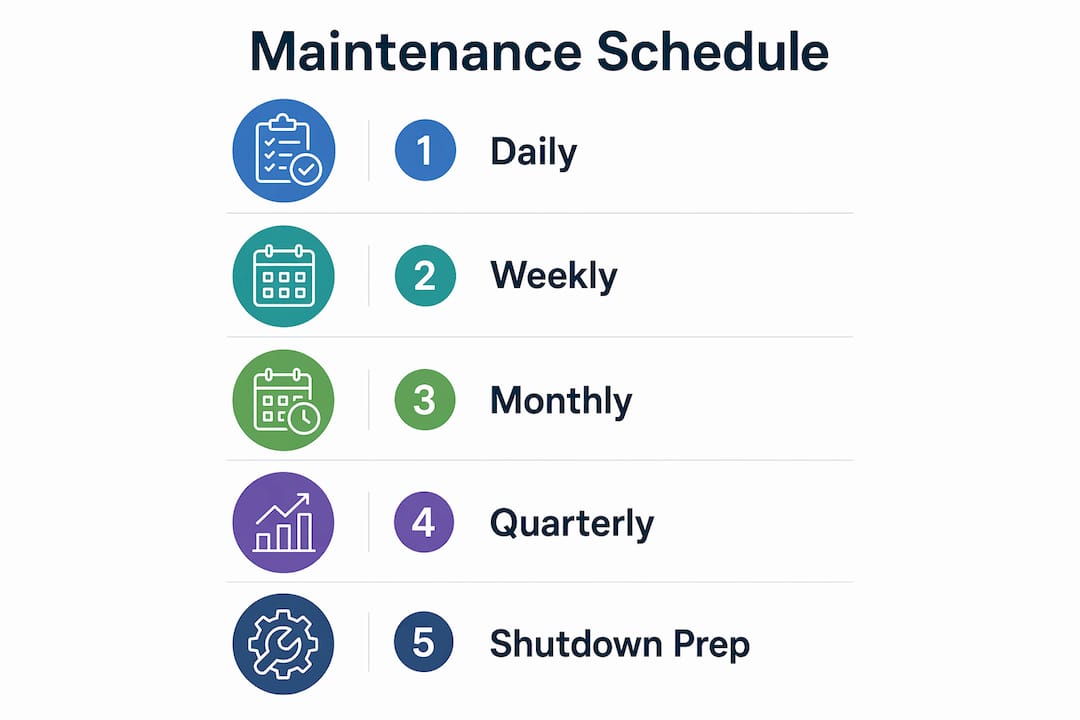
What are the daily and weekly freeze dryer maintenance tasks?
Daily care is the foundation of any freeze dryer maintenance program. Skipping it even occasionally lets small problems compound into expensive repairs.
Daily tasks that protect your machine
Start every shift by checking the vacuum pump oil level and color. Oil that looks milky or dark has absorbed moisture or powder residue and needs changing immediately. Vacuum pump oil must be checked before each shift, and the inlet filter screen cleaned regularly to block vapor and powder from entering the pump. Wipe down the chamber interior with a non-abrasive cloth and mild cleaning agent after each run. Inspect door seals visually for cracks, flattening, or debris that could break the vacuum.
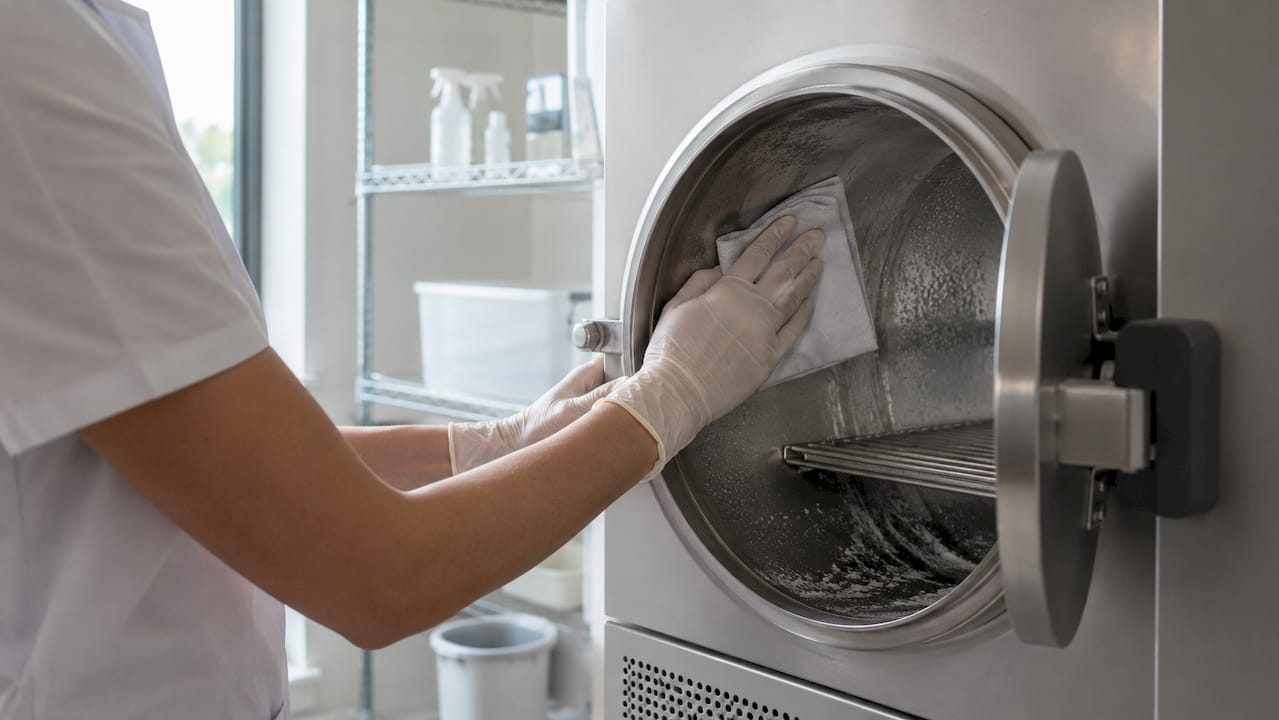
Remove any ice buildup from the cold trap before it accumulates to the point where it restricts airflow or insulates the coil surface. Ice acts as a thermal barrier. A thick layer forces the refrigeration system to work harder, which shortens its lifespan.
Pro Tip: Clean the pump inlet filter every single day if you run continuous or near-continuous cycles. Skipping this step causes invisible contamination: oil foaming, degraded pumping speed, and eventual seal failure, all before you see any visible warning sign.
Weekly tasks that go deeper
Weekly freeze dryer care targets the components daily wiping cannot reach. Condenser coil cleaning and vent vacuuming are the two most impactful weekly tasks for maintaining heat exchange efficiency. Use a soft brush to clear dust and debris from coil surfaces. Vacuum external vents to prevent restricted airflow from overheating the compressor. Do a more thorough cleaning of the inlet filter, not just a quick wipe.
These weekly steps prevent the gradual performance drop that operators often misattribute to aging equipment. In most cases, a machine that “runs slower” is simply dirty.
How to perform monthly and quarterly system checks
Monthly and quarterly inspections go beyond surface cleaning. They assess whether the machine’s core systems are still operating within spec.
Monthly inspection priorities
Every month, pull and inspect all door gaskets and internal seals for compression fatigue. A seal that looks intact can still leak under vacuum. Check refrigeration lines for frost patterns that suggest refrigerant loss. Inspect heating system connections and verify that shelf temperature sensors read accurately. Monthly seal and internal part inspection is the standard cadence for maintaining stable vacuum and heat exchange performance. Change vacuum pump oil if it has not been changed within the past 300–500 hours of operation, or sooner if it shows contamination.
Pro Tip: Keep a written maintenance log. Date every oil change, seal inspection, and filter cleaning. After three to six months, patterns emerge: you will see which components degrade fastest under your specific workload, and you can adjust your schedule before failures happen.
Quarterly system-level checks
Quarterly checks are where you test the machine rather than just clean it. Run a static pressure-holding test with no product loaded. This confirms whether the vacuum system can hold pressure without active pumping. A vacuum leak rate test before every batch is critical, with acceptable leak rates typically ranging from 10 to 30 microns per hour. Trending these numbers over time predicts seal failure weeks before it becomes a crisis.
Calibrate temperature sensors and pressure transducers quarterly. Sensors drift over time. A shelf that reads 20°C but runs at 23°C will produce inconsistent drying results without any obvious mechanical fault.
Maintenance schedule at a glance
| Frequency | Task | Purpose |
|---|---|---|
| Daily | Check pump oil, clean inlet filter, wipe chamber, inspect seals | Prevent contamination and vacuum loss |
| Weekly | Clean condenser coils, vacuum vents, deep-clean inlet filter | Maintain heat exchange and airflow |
| Monthly | Inspect gaskets, change pump oil if needed, check refrigeration lines | Preserve system integrity |
| Quarterly | Leak rate test, static pressure hold, sensor calibration | Detect drift and predict failures early |
What special maintenance does a long-term shutdown require?
Shutting down a freeze dryer for weeks or months without proper preparation causes more damage than running it continuously. Moisture trapped inside the system corrodes components and destabilizes sensors.
Pre-shutdown checklist
Follow these steps before any extended shutdown:
- Run a full defrost cycle on the cold trap and allow the condenser coil to dry completely before powering down.
- Clear all drainage lines to prevent standing water from freezing or growing mold inside the system.
- Drain and replace the vacuum pump oil. Old oil left sitting in the pump absorbs moisture and degrades further during storage.
- Seal all inlet and outlet valves to prevent ambient humidity from entering the vacuum system.
- Clean the chamber interior thoroughly and leave the door slightly ajar if the manufacturer allows it, to prevent seal compression set.
- Inspect all seals and gaskets before storage. Replace any that show wear now, not when you restart.
Defrosting the cold trap and replacing pump oil before storage, combined with a no-load trial after restart, are the two steps most operators skip and most regret. Skipping them leads to cold trap icing, vacuum abnormalities, and sensor errors on the first production run back.
Pre-startup inspection and trial run
Before loading any product after a shutdown, inspect oil quality and levels, check all seals and filters, and verify refrigeration and heating line connections. Run a no-load freeze-drying cycle of 30–60 minutes. This no-load trial run flushes residual moisture and confirms that vacuum pull-down, temperature stability, and sensor readings are all within normal range. Only after passing this trial should you load product.
If you use your freeze dryer seasonally for food production, the Space-man guide on freeze drying food for business covers additional operational considerations worth reviewing alongside your shutdown protocol.
How do vacuum integrity and alarm management affect freeze dryer performance?
Vacuum system health is the single most reliable indicator of overall freeze dryer condition. Everything else, including coil cleanliness and seal condition, shows up in vacuum performance first.
Vacuum pull-down testing explained
The Labconco FreeZone, for example, should reach 0.133 mBar or less within 15 minutes during a vacuum pull-down health check. Failure to hit that target is a red flag that demands investigation before any batch starts. One important distinction: the pull-down test is a diagnostic, not a drying target. Drying vacuum settings are intentionally set higher to optimize heat transfer and drying time. Confusing the two leads operators to run drying cycles at unnecessarily low pressures, which extends drying time without improving product quality.
Managing alarms the right way
- Log every alarm event with a timestamp, the alarm code, and the action taken.
- Never clear an alarm without identifying its root cause. A cleared alarm with no investigation is a future batch loss waiting to happen.
- Alarm logs must be investigated thoroughly; missed or cleared alarms without root cause analysis directly cause equipment failures and batch losses.
- Track alarm frequency over time. An alarm that fires once is an event. The same alarm firing three times in a month is a pattern that signals a failing component.
- In QA and GMP production environments, every alarm event and leak test result must be documented as part of the batch release decision.
Pro Tip: Integrate your maintenance log with your batch records. If a batch fails quality review, your first check should be whether any maintenance events or alarms occurred in the 48 hours before that run. This connection between equipment condition and product quality is what separates reactive operators from reliable ones.
Home use vs. production environments
Home freeze dryer operators using machines like the Harvest Right can follow a simplified version of this protocol: daily oil checks, weekly coil cleaning, and a pull-down test before each session. Production facilities running GMP or food safety programs need the full stack: documented leak rate trending, alarm investigation logs, and calibrated sensors tied to batch release decisions. The underlying principles are identical. The documentation requirements are not.
Key Takeaways
Consistent freeze dryer maintenance targets vacuum integrity, heat exchange efficiency, and seal condition because these three systems drive every measurable performance outcome.
| Point | Details |
|---|---|
| Daily pump care is non-negotiable | Check oil level and color, and clean the inlet filter before every shift to prevent contamination. |
| Condenser coils need weekly attention | Dirty coils reduce heat exchange efficiency and cause the compressor to overwork, shortening its life. |
| Shutdown prep prevents restart failures | Defrost the cold trap, replace pump oil, and seal all valves before any extended downtime. |
| Leak rate trending predicts seal failure | Track vacuum leak rates quarterly; a rising trend signals seal degradation before visible failure occurs. |
| Alarm logs connect maintenance to batch quality | Every alarm must be investigated and documented, especially in food safety and GMP production contexts. |
Why I think most operators underestimate the vacuum pump
Most freeze dryer troubleshooting guides focus on the chamber and the condenser. That is the wrong place to start. In my experience, the vacuum pump is where the majority of preventable failures originate, and it is the component that gets the least attention until something goes visibly wrong.
The inlet filter is the clearest example. Operators see it as a minor accessory. In reality, a clogged or dirty inlet filter is the gateway to oil foaming, degraded pumping speed, and accelerated seal wear. By the time the pump sounds different or pull-down times start creeping up, the damage is already done. The fix at that point costs ten times what a weekly filter cleaning would have.
The other mistake I see constantly is treating alarms as nuisances rather than data. An alarm that gets cleared without investigation is not a solved problem. It is a deferred one. Building a simple log, even a spreadsheet, where every alarm gets a date, a code, and a resolution note, changes how you operate. Patterns become visible. You stop reacting and start predicting.
My recommendation: write a one-page standard operating procedure that combines your manufacturer’s maintenance schedule with your actual usage data. Review it every quarter. Adjust intervals based on what your logs show, not what a generic guide suggests. That document will save you more money than any single piece of equipment ever could.
— Chadi
Space-man’s co-packing services for freeze-dried products
Running a freeze dryer at production scale means maintenance downtime directly affects your output and your customers. For businesses that want reliable freeze-dried product without managing equipment upkeep in-house, Space-man offers a practical alternative.

Space-man provides private label and co-packing services for freeze-dried products across Canada, including bagging, packaging, and quality-controlled production runs. Whether you are scaling up an existing line or launching a new freeze-dried product, Space-man handles the production side so you can focus on your brand. Reach out to learn how Space-man’s co-packing program fits your volume and packaging requirements.
FAQ
How often should vacuum pump oil be changed?
Vacuum pump oil should be changed every 300–500 hours in continuous industrial use, or immediately if it appears milky, dark, or foamy. Check the oil level and color before every shift.
What is an acceptable vacuum leak rate for a freeze dryer?
Acceptable leak rates typically range from 10 to 30 microns per hour. Rates above this range indicate seal degradation and require investigation before running a batch.
What should I do before shutting down a freeze dryer long-term?
Defrost the cold trap, drain and replace the vacuum pump oil, clear all drainage lines, seal all inlet and outlet valves, and clean the chamber interior. Run a 30–60 minute no-load trial after restarting to confirm system readiness.
Why does my freeze dryer take longer to reach target vacuum?
Slow pull-down time usually points to a dirty inlet filter, degraded pump oil, or a failing door seal. The Labconco FreeZone should reach 0.133 mBar within 15 minutes. Missing that target means investigating the vacuum system before loading product.
How do I know if my freeze dryer needs a freeze dryer machine feature upgrade vs. just better maintenance?
If consistent maintenance does not restore pull-down performance, shelf temperature accuracy, or drying times to original specs, the machine may have reached the end of its service life. Upgrading to a unit with better seal design or a more accessible pump configuration often pays for itself in reduced maintenance labor.