

Over 40 percent of American households now rely on freeze dried food for emergency planning or outdoor adventures. This method, once exclusive to astronauts and the military, is gaining real popularity due to its ability to keep meat fresh for years while preserving taste and nutrients. As common myths swirl around its safety and quality, understanding freeze dried meat is crucial for anyone wanting reliable, long-lasting protein that fits a modern American lifestyle.
Table of Contents
- Freeze Dried Meat Explained And Common Myths
- Types Of Freeze Dried Meat Products
- How Freeze Drying Preserves Meat
- Key Benefits For Retailers And Consumers
- Comparing Freeze Dried And Dehydrated Meat
- Packaging, Labeling, And Safety Considerations
Key Takeaways
| Point | Details |
|---|---|
| Freeze Dried Meat Preservation | Freeze dried meat preserves nutritional content and flavor, making it a versatile option with a shelf life of 8 to 9 years at room temperature. |
| Nutritional Integrity | The freeze drying process retains up to 97% of the original nutritional value, contrary to common beliefs about nutrient loss. |
| Economic and Operational Benefits | Retailers benefit from reduced spoilage and lower transportation costs through the extended shelf life of freeze dried meat products. |
| Safety and Packaging | Effective packaging and clear labeling are essential for ensuring the safety and quality of freeze dried meat products. |
Freeze Dried Meat Explained and Common Myths
Freeze dried meat represents a groundbreaking food preservation technique that challenges traditional storage methods. By removing moisture through advanced scientific processes, this innovative approach transforms meat products into lightweight, long-lasting food options that retain remarkable nutritional integrity.
Understanding freeze dried meat begins with its unique production process. Unlike traditional dehydration methods, freeze drying involves freezing meat and then reducing surrounding pressure to allow water to sublimate directly from solid to gas. Scientists have discovered this technique can preserve food for up to 8 to 9 years at room temperature without added preservatives, challenging long-held misconceptions about food preservation.
Several common myths persist about freeze dried meat that require clear explanation. Many consumers believe freeze drying significantly reduces nutritional value - however, research indicates this process actually retains up to 97% of original nutritional content. Another widespread misconception suggests freeze dried meat lacks flavor, when in reality, the process concentrates natural taste profiles, creating an intensely rich culinary experience. The lightweight nature of freeze dried meat also makes it ideal for camping, emergency preparedness, and space-efficient food storage.
Pro Tip for Food Preservation: When storing freeze dried meat, always keep packages in cool, dry environments and use airtight containers to maximize shelf life and maintain optimal quality.
Types of Freeze Dried Meat Products
Freeze drying has revolutionized meat preservation by offering a versatile method for transforming various meat products into lightweight, long-lasting food options. This innovative technique accommodates an impressive range of meat varieties, from traditional proteins to specialty cuts, making it an ideal solution for diverse culinary and nutritional needs.
Military and emergency preparedness sectors have particularly embraced freeze dried meat products. Scientific studies have extensively researched meat preservation techniques, focusing on items like goulash and meat-based egg barley, demonstrating remarkable effectiveness in maintaining food quality under challenging conditions. The types of freeze dried meat products typically include:
- Whole muscle meats (beef, chicken, pork)
- Ground meat varieties
- Specialty game meats
- Organ meats
- Prepared meat dishes
- Meat-based protein snacks
- Survival and emergency ration proteins
Each meat type undergoes a precise freeze drying process that removes moisture while preserving nutritional content, texture, and flavor. The result is a lightweight, compact protein source that can be easily stored, transported, and reconstituted when needed. From backpacking meals to emergency food supplies, freeze dried meat products offer unprecedented convenience and nutritional reliability.
Pro Tip for Meat Selection: When choosing freeze dried meats, prioritize lean cuts with minimal fat content, as these tend to preserve better and maintain superior texture during the freeze drying process.
How Freeze Drying Preserves Meat
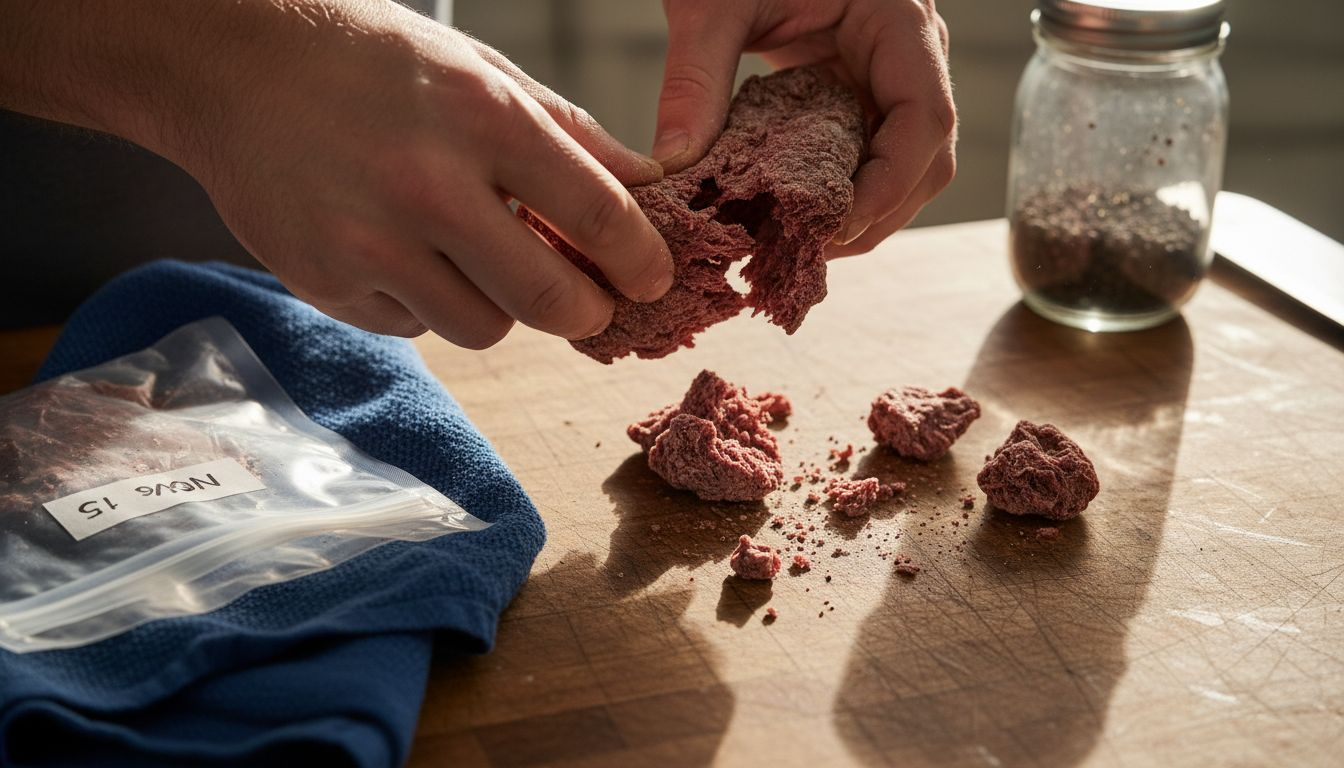
Freeze drying represents a cutting-edge preservation technique that fundamentally transforms how meat products maintain their quality and nutritional integrity. By employing a unique dehydration process that transitions water directly from solid to gaseous state, this method effectively removes moisture without compromising the meat’s essential characteristics.
The scientific mechanism behind meat preservation through freeze drying is remarkably precise. Lowering water activity is critical to extending food safety and shelf life, which occurs through a sophisticated process of molecular water removal. During freeze drying, meat undergoes three primary stages:
- Freezing: Product temperature is lowered below freezing point
- Primary drying (sublimation): Frozen water transitions directly to vapor
- Secondary drying: Removing residual moisture molecules
This meticulous process offers multiple preservation advantages over traditional methods. By eliminating moisture without using high temperatures, freeze drying maintains the meat’s original cellular structure, nutritional profile, and sensory qualities. The result is a lightweight, stable product that can be stored for extended periods without refrigeration, making it ideal for emergency preparedness, outdoor adventures, and long-term food storage solutions.
Pro Tip for Moisture Control: Always monitor the final moisture content during freeze drying, aiming for less than 3% residual moisture to ensure maximum preservation and prevent potential bacterial growth.
Key Benefits for Retailers and Consumers
Freeze dried meat offers transformative advantages for both retailers and consumers, creating a win-win solution in the food preservation landscape. The innovative preservation technique delivers unprecedented value through multiple strategic benefits that address critical needs in food storage, distribution, and consumption.
For retailers, freeze dried meat presents remarkable economic and operational advantages. Scientific research confirms these products can be stored for 8 to 9 years at room temperature without additional preservatives, which translates directly into significant business benefits:
- Dramatically reduced product spoilage
- Lower inventory management costs
- Extended shelf life compared to traditional meat products
- Minimal storage requirements
- Reduced transportation and refrigeration expenses
- Potential for broader market distribution
Consumers equally benefit from freeze dried meat’s unique properties. The lightweight, nutrient-dense product offers exceptional convenience for various lifestyle needs, including camping, emergency preparedness, and quick meal solutions. By retaining approximately 97% of original nutritional content, freeze dried meat provides a high-quality protein source that maintains flavor, texture, and dietary value across extended periods.
Pro Tip for Value Optimization: When purchasing freeze dried meat, calculate the cost per serving and compare reconstitution requirements to maximize both nutritional and economic benefits.
Here’s a concise summary of freeze dried meat’s advantages for key user groups:
| User Group | Primary Benefit | Major Concern Addressed |
|---|---|---|
| Retailers | Extended shelf life | Reduced spoilage and costs |
| Consumers | High nutritional value | Reliable food for emergencies |
| Outdoor Users | Lightweight storage | Easy transport and meal prep |
Comparing Freeze Dried and Dehydrated Meat
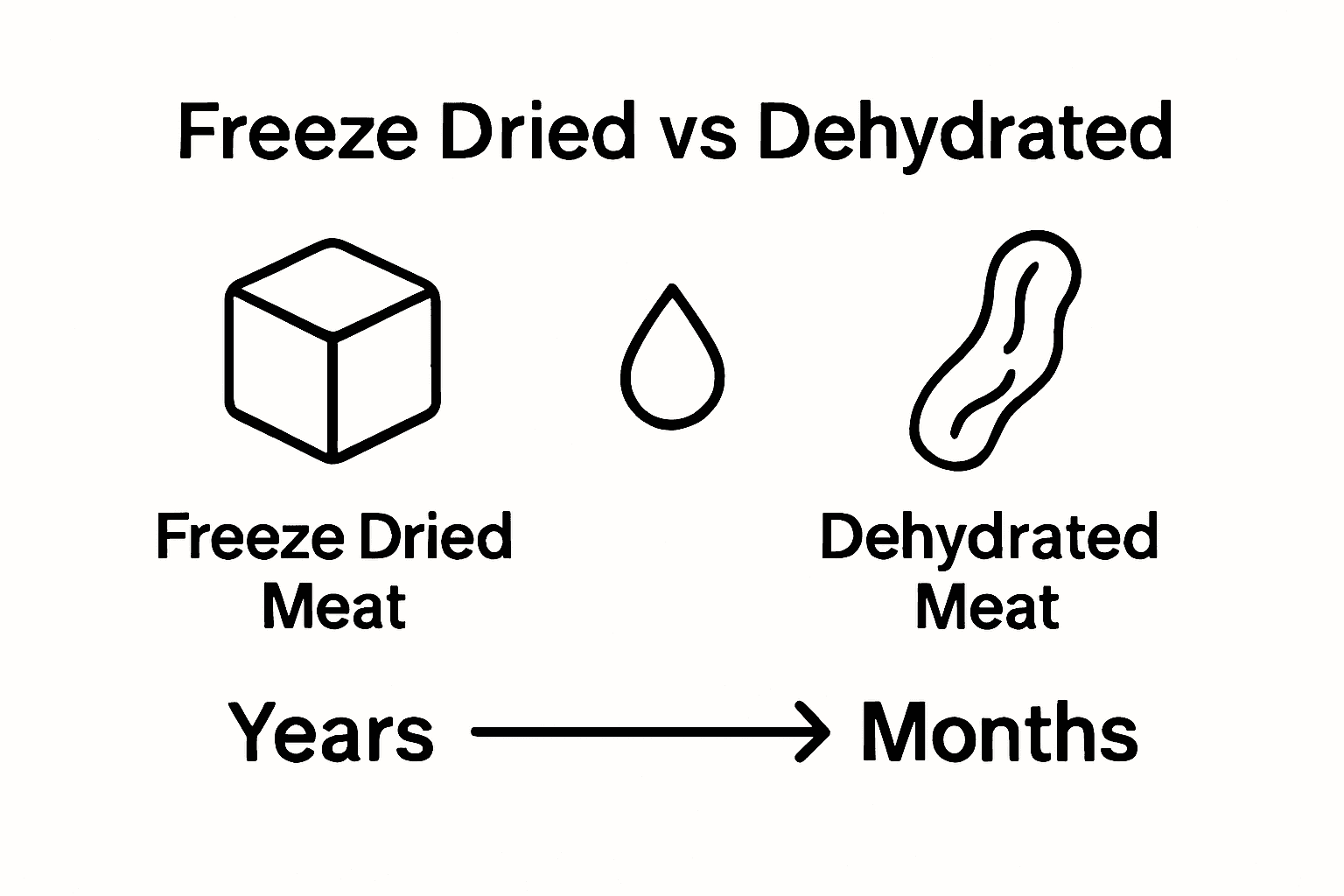
Meat preservation techniques vary significantly in their approach and outcomes, with freeze drying and dehydration representing two fundamentally different methods of food processing. While both techniques aim to remove moisture, their mechanisms, nutritional impacts, and end product characteristics differ dramatically.
Freeze drying represents a more advanced preservation method that maintains meat’s original cellular structure and nutritional profile. Unlike traditional dehydration, which uses high temperatures to remove moisture, freeze drying employs a sophisticated process of freezing and sublimation. The key differences include:
- Nutritional Retention
- Freeze Dried: Preserves up to 97% of original nutrients
- Dehydrated: Loses 30-50% of nutritional content
- Moisture Removal
- Freeze Dried: Molecular water removal through sublimation
- Dehydrated: Water removal through direct heat application
- Texture and Flavor
- Freeze Dried: Maintains original texture and intense flavor
- Dehydrated: Often results in tougher, more compressed texture
- Shelf Life
- Freeze Dried: Up to 25 years when properly stored
- Dehydrated: Typically 1-5 years
The scientific precision of freeze drying makes it superior for preserving meat’s intrinsic qualities. While dehydration remains a cost-effective method, it compromises the meat’s structural integrity and nutritional value through direct heat exposure. Freeze drying, though more expensive, offers unparalleled preservation of the meat’s original characteristics.
Pro Tip for Preservation Choice: Always consider your specific storage needs, budget, and desired nutritional retention when selecting between freeze dried and dehydrated meat products.
Packaging, Labeling, and Safety Considerations
Effective packaging strategies are critical for maintaining the quality and safety of freeze dried meat products, requiring a comprehensive approach that addresses multiple critical factors. The preservation method demands meticulous attention to material selection, environmental protection, and consumer communication to ensure optimal product integrity.
Proper labeling represents a fundamental safety requirement for freeze dried meat, particularly regarding potential microbiological risks. Manufacturers must provide clear, comprehensive information that guides consumers on safe handling and preparation. Essential labeling components include:
- Product origin and type of meat
- Freeze drying processing date
- Recommended storage conditions
- Explicit cooking instructions
- Potential allergen warnings
- Nutritional information
- Shelf life and expiration details
- Reconstitution guidelines
Packaging considerations extend beyond simple containment. Vacuum-sealed bags with moisture-resistant barriers provide the most effective protection, helping prevent sensory deterioration and maintaining product quality. Oxygen absorbers and multi-layer packaging materials can further enhance preservation, creating a stable environment that minimizes degradation risks.
Pro Tip for Safety Compliance: Always include a prominent warning about cooking raw freeze dried meat products thoroughly, and use clear, legible fonts and high-contrast labeling to ensure consumer understanding of preparation requirements.
The following table highlights essential packaging and safety requirements for freeze dried meat:
| Requirement | Purpose | Impact on Safety |
|---|---|---|
| Moisture control | Prevent spoilage and bacteria | Extends freshness |
| Clear labeling | Informs of allergens/preparation | Reduces user risk |
| Oxygen absorbers | Limits oxidation | Preserves quality |
Discover How Freeze Dried Meat Can Elevate Your Food Business
The article highlights key challenges in maintaining nutritional value, flavor, and extended shelf life for freeze dried meat products. If you are looking to overcome these hurdles with expert packaging and private labeling solutions that ensure safety and quality, we can help. At Space-Man, we specialize in high-quality freeze dried candy manufacturing and offer custom co-packing, bagging, and packaging services designed to preserve your products’ integrity while enhancing shelf stability.
Take the next step toward expanding your product line with professional packaging and branding that meets rigorous standards for moisture control and nutrient retention. Visit our website Space-Man Freeze Dry Solutions to learn how our expertise can support your business growth today. Don’t wait—enhance your freeze dried offerings now with trusted services tailored for success. Explore all our solutions at space-man.ca and start transforming your food products with reliable packaging and co-packing options.
Frequently Asked Questions
What is freeze dried meat?
Freeze dried meat is a food preservation technique that removes moisture from meat products, transforming them into lightweight, long-lasting options while retaining their nutritional integrity.
How does the freeze drying process work?
The freeze drying process involves three stages: freezing the meat, removing moisture through sublimation, and then eliminating any residual moisture, preserving the meat’s original structure and nutrients.
What are the benefits of using freeze dried meat?
Freeze dried meat offers numerous benefits, including extended shelf life (up to 8-9 years at room temperature), high nutritional value (retaining up to 97% of original nutrients), and convenience for outdoor or emergency situations.
How does freeze dried meat compare to dehydrated meat?
Freeze dried meat retains more nutrients (up to 97%) and maintains better texture and flavor compared to dehydrated meat, which loses 30-50% of its nutritional content and can have a tougher texture due to higher temperature processing.