

TL;DR:
- Selling food online in Canada requires meeting legal standards through valid food handler certification and certified food-safe materials. Recognized certificates like CIFS are Canada-wide, while provincial options may vary in acceptance and scope. Ongoing compliance depends on timely renewal and using approved, food-grade packaging and supplies.
Selling food online in Canada means more than great products and fast shipping. “Food safe” is the recognized industry term for products, materials, and practices that meet regulatory standards for direct food contact, and food safety compliance is the legal framework that governs how Canadian operators handle, package, and sell edible goods. The Canadian Food Inspection Agency (CFIA) and provincial health departments set those standards, and every operator selling food online must meet them. This guide covers the two pillars of compliance: valid food handler certification and certified food-safe materials, with practical steps for getting both right across Canadian provinces.
What food handler certification is accepted for food safe online Canada operations?
Two main certifications cover most Canadian online food businesses: FOODSAFE Level 1 and the Food Handler Certificate issued by organizations like the Canadian Institute of Food Safety (CIFS). They are not interchangeable, and picking the wrong one for your province can leave you out of compliance.
FOODSAFE Level 1 is primarily provincial, tailored for British Columbia and accepted in some territories. CIFS Food Handler Certificates are nationally recognized, which makes them a better fit for operators selling across multiple provinces. That distinction matters if you ship from one province and operate in another.
Here is how the two compare across key criteria:
- Scope: FOODSAFE Level 1 covers BC and select provinces including Manitoba, Nova Scotia, Saskatchewan, and Yukon. CIFS certificates are accepted Canada-wide by most employers and health authorities.
- Validity: Both certifications last approximately 5 years before renewal is required. Associated WHMIS training, often bundled with food safety programs, typically requires annual renewal.
- Provincial mandates: Some provinces require at least one certified employee per shift for legal operation. The exact requirement varies by jurisdiction, so verifying your local mandate is non-negotiable.
- Online availability: Both certifications are available through online providers, with self-paced coursework and on-demand exam access.
Operators in provinces like Prince Edward Island must verify chosen programs against official provincial approved lists. Not every online course qualifies, even if it looks legitimate.
Pro Tip: If you sell food across more than one province, choose a nationally recognized certificate like CIFS over a provincial-only option. It saves you from re-certifying when you expand.
How to obtain food safe certification online in Canada: step-by-step
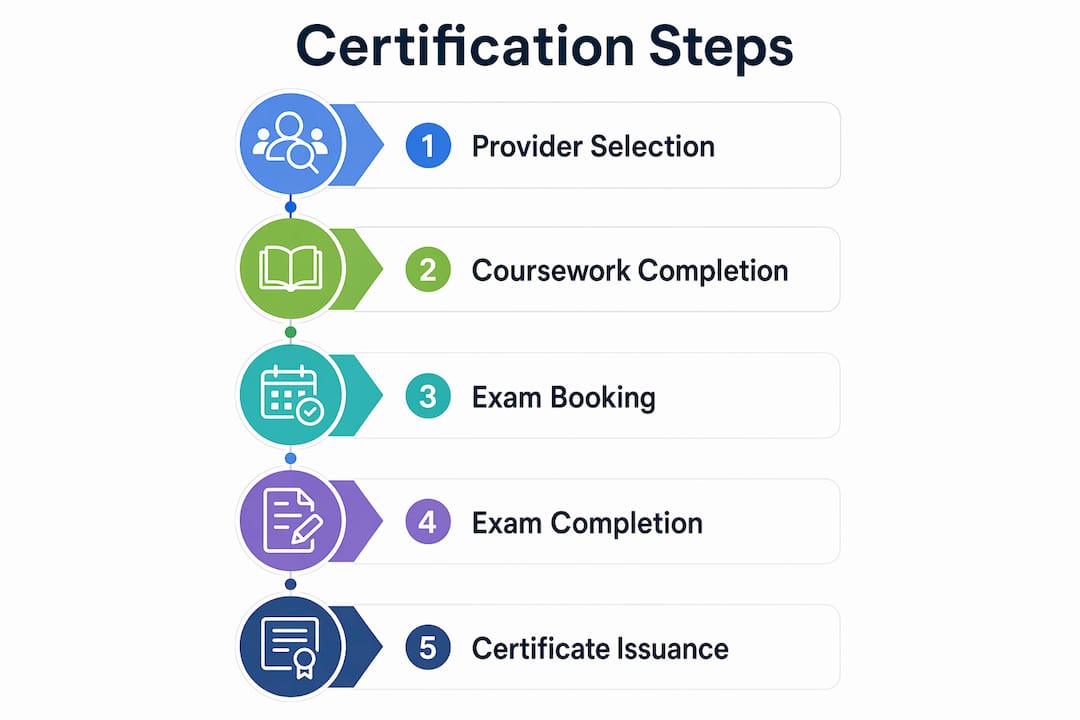
Getting certified online is genuinely straightforward, but a few steps trip people up. Follow this sequence to avoid delays.
- Choose an approved provider. Select a certification provider pre-approved by your local public health authority. Choosing a provider aligned with provincial curriculum standards is more important than picking the fastest or cheapest option.
- Register and pay. Most foundational programs like FOODSAFE Level 1 cost around $49.95 CAD. Payment unlocks immediate course access.
- Complete the coursework. Modules are self-paced and available on any device. Topics typically include food contamination, temperature control, personal hygiene, and cleaning protocols. Take your time here; the exam draws directly from this content.
- Sit the timed exam. The standard online exam includes 50 multiple-choice questions completed within 60 minutes in a single session. You cannot pause and return. A stable internet connection is not optional; a dropout mid-exam forces a retake.
- Receive your certificate. Successful candidates receive a digital certificate within about 60 minutes after passing. Same-day legal compliance is realistic.
| Step | Action | Timeframe |
|---|---|---|
| Provider selection | Verify provincial approval | Before registering |
| Registration | Pay and access course | Same day |
| Coursework | Complete self-paced modules | Hours to days |
| Exam | 50 questions, 60 minutes | Single session |
| Certificate | Digital issuance after passing | Within 60 minutes |
Pro Tip: Complete the full coursework before booking your exam slot. Rushing straight to the test without reviewing the material is the most common reason for retakes, and retakes cost time and sometimes money.
The shift to self-paced online training has genuinely improved compliance rates by removing scheduling barriers. Operators who once had to block off a full day for in-person classes can now fit certification around production schedules. That flexibility does not reduce the legal weight of the certificate.
How to choose food safe products for your Canadian online food business
Certification covers the people. Food-safe materials cover everything those people touch. This is where many operators cut corners, and it is where contamination risks actually live.

Food-safe products used in commercial settings must carry explicit FDA or NSF food-grade certifications. A product labeled “reusable” or “silicone” on a consumer retail shelf does not automatically qualify. Generic consumer-grade materials may leach chemicals under heat or pressure, which creates both a health risk and a regulatory violation.
The key product categories to audit in your operation include:
- Storage and packaging bags: FDA-certified platinum silicone bags with airtight seals are leakproof, microwave-safe, and freezer-safe. They reduce contamination risk across multi-temperature handling, which matters for products like freeze-dried candy that move through cold storage and ambient display.
- Sealants and adhesives: Any sealant used on food processing equipment must be NSF and FDA certified. Food-grade silicone sealants must withstand temperatures up to 450°F to maintain safe food contact and durable bonds on seams and gaskets.
- Packaging materials: Bags, pouches, and wraps that contact food directly must meet food-grade standards. This applies to both primary packaging (touching the product) and secondary packaging if there is any risk of migration.
Proactive sourcing of certified food-safe supplies is as critical as obtaining valid certification. Food operators who neglect equipment and packaging compliance create contamination risks that no certificate can fix. The two pillars of compliance, certified people and certified materials, only work together.
Understanding Canadian food packaging regulations in detail helps operators make smarter sourcing decisions before problems arise.
Common challenges and best practices for maintaining food safety compliance
Compliance is not a one-time event. It requires ongoing attention, and the gaps tend to show up in predictable places.
Certification renewal catches operators off guard more often than it should. Certificates last approximately 5 years, but production schedules make it easy to miss renewal windows. Set a calendar reminder 90 days before expiry. Renewing late can technically put you out of compliance during the gap period.
Exam connectivity issues are a real operational risk. The online exam must be completed in one uninterrupted session. A dropped connection mid-exam means a retake, which delays certification and can delay business operations. Test your internet connection before starting, and use a wired connection if possible.
Best practices that separate compliant operators from reactive ones:
- Keep a record of every employee’s certification status and expiry date in a shared document or HR system.
- Source all food-contact materials from suppliers who provide documentation of FDA or NSF certification. Do not accept verbal assurances.
- Verify your certification provider against your province’s approved list annually, since approved lists do get updated.
- Train new staff before they handle food, not after their first shift. Provincial mandates on certified personnel per shift apply from day one.
- Review Canadian food safety standards periodically, since regulatory updates do happen and staying current is your responsibility.
Pro Tip: Build a simple compliance checklist that covers certification expiry dates, supplier documentation, and equipment inspection intervals. Reviewing it quarterly takes 20 minutes and prevents the kind of violations that take months to resolve.
The quality of your certification depends heavily on provider alignment with provincial standards, not just how fast the certificate arrives. Fast and wrong is worse than slow and right.
Key Takeaways
Food safety compliance for Canadian online food businesses requires valid, provincially recognized certification and verified food-safe materials working together, not separately.
| Point | Details |
|---|---|
| Choose the right certification | CIFS certificates work Canada-wide; FOODSAFE Level 1 suits BC and select provinces. |
| Complete the exam in one session | The 50-question, 60-minute exam cannot be paused; a stable connection is required. |
| Verify your provider | Only use certification providers approved by your local public health authority. |
| Certify your materials too | All food-contact products must carry explicit FDA or NSF food-grade certification. |
| Renew before expiry | Certificates last approximately 5 years; let them lapse and you operate out of compliance. |
What I’ve learned about food safety compliance in the Canadian online food industry
Running a food business online in Canada teaches you quickly that compliance is not bureaucratic box-ticking. It is the foundation that lets you scale without fear.
The most common mistake I see from operators is treating certification as a one-time hurdle rather than an ongoing practice. They get certified, file the certificate, and forget about it until an inspector shows up or a renewal notice lands in their inbox three months late. That reactive approach costs more time and stress than simply building renewal into the annual calendar.
The second mistake is underestimating materials compliance. Operators spend real effort getting their food handler certificates in order, then package their products in bags or containers that have no food-grade documentation. That gap is where contamination risk actually lives, and it is the gap regulators increasingly focus on for online food businesses.
My honest advice: treat certification and materials compliance as equal priorities. Neither one covers for the other. And when choosing a certification provider, prioritize curriculum alignment with your province’s standards over price or speed. A certificate from an unapproved provider is not worth the paper it is printed on, digital or otherwise.
For operators in the freeze-dried food space specifically, the food safety considerations in freeze drying are worth reviewing in detail. The process creates unique packaging and handling requirements that generic food safety training does not always cover.
— Chadi
Space-man’s packaging and co-packing services for Canadian food operators
Canadian food businesses that want compliant packaging without building the infrastructure from scratch have a practical option worth knowing about.

Space-man offers private label, co-packing, and packaging services designed for Canadian food operators who need production-ready, food-safe packaging without the overhead of running their own facility. Every product Space-man handles, including its freeze-dried candy lines, is packaged to meet Canadian food safety standards. For operators who want to move fast and stay compliant, partnering with a co-packer that already has the certifications and materials in place removes a significant layer of operational complexity. Space-man’s freeze-dried candy starter pack is a practical entry point for retailers testing the online food market with a product that is already packaged and ready for sale.
FAQ
What is FOODSAFE Level 1 and who needs it?
FOODSAFE Level 1 is a provincial food handler certification primarily recognized in British Columbia and select Canadian territories. Food operators in BC and those provinces are typically required to hold it or an equivalent nationally recognized certificate.
How long does it take to get certified online in Canada?
Most operators complete the coursework and exam in a single day. Digital certificates are issued within approximately 60 minutes of passing the 50-question online exam.
Are online food safety certificates legally valid across all Canadian provinces?
Nationally recognized certificates like those issued by CIFS are accepted Canada-wide. Provincial certifications like FOODSAFE Level 1 are accepted in specific provinces only, so operators must verify acceptance in each province where they operate.
What makes a product officially food safe for commercial use?
A product is food safe for commercial use when it carries explicit FDA or NSF food-grade certification. Consumer-grade labels like “reusable” or “BPA-free” do not meet the regulatory standard for commercial food contact.
How often do food handler certificates need to be renewed in Canada?
Food handler certificates are valid for approximately 5 years. Operators should track expiry dates actively, since operating with a lapsed certificate puts the business out of compliance with provincial food safety regulations.