

TL;DR:
- Freeze drying removes almost all moisture and preserves food’s texture, flavor, and nutrients better than dehydration.
- Dehydration is faster and more affordable, making it suitable for snacks and short-term storage, while freeze drying suits long-term preservation.
The difference between dehydrated and freeze dried foods comes down to one thing: how moisture leaves the food. Dehydration uses heat to evaporate water, while freeze drying uses freezing and a vacuum to turn ice directly into vapor. That single distinction drives every other difference you care about as a home cook, from how long food lasts on your shelf to how it tastes when you bring it back to life. Freeze drying removes 98–99% of moisture, while dehydration removes 90–95%. That gap is smaller than it sounds, but its effects on shelf life, nutrition, and texture are dramatic.
What is the difference between dehydrated and freeze dried foods?
Dehydration is the older and more familiar method. A food dehydrator or oven circulates warm air between 95°F and 165°F around food until most of the water evaporates. The heat is gentle enough to preserve food but strong enough to change its cellular structure. Proteins denature slightly, textures toughen, and heat-sensitive vitamins start to break down.
Freeze drying, technically called lyophilization, works completely differently. The food is first frozen solid, then placed in a vacuum chamber. At very low temperatures, around negative 40°F under vacuum, the ice crystals skip the liquid phase entirely and convert straight to vapor. This process is called sublimation. Because heat never enters the equation, the food’s cellular structure stays almost perfectly intact.
The practical result is that freeze dried strawberries look and taste like strawberries. Dehydrated strawberries look and taste like very concentrated, chewy strawberries. Both are preserved. They are not the same product.
- Dehydration: Uses heat (95°F–165°F), evaporates liquid water, alters cell structure, faster and cheaper
- Freeze drying: Uses cold and vacuum, sublimates ice to vapor, preserves cell structure, slower and more expensive
- Moisture remaining: 5–10% for dehydrated vs. 1–3% for freeze dried
Pro Tip: If you want to test the difference at home, compare a dehydrated apple chip to a freeze dried one. The freeze dried version will dissolve on your tongue. The dehydrated one will need some chewing. That texture difference tells you everything about how each method treats the food’s structure.
How does moisture content affect shelf life?
Moisture is the enemy of long-term food storage. Bacteria, mold, and yeast all need water to grow. The less moisture remains in a food, the longer it stays safe and stable on the shelf.
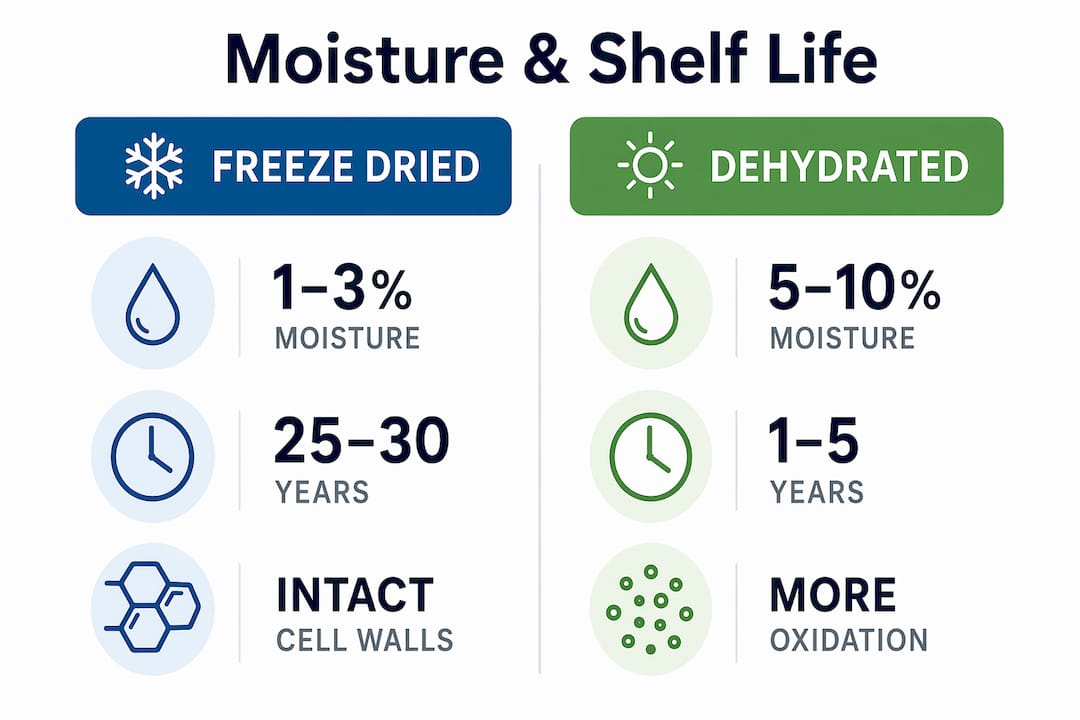
Freeze dried foods reach 1–3% residual moisture, which is low enough to last 25–30 years when sealed properly. Dehydrated foods retain 5–10% moisture and typically last 1–5 years, though low-fat grains and legumes can push toward the longer end of that range. That is a significant gap for anyone thinking about long-term pantry planning.
| Preservation method | Residual moisture | Typical shelf life |
|---|---|---|
| Freeze dried | 1–3% | 25–30 years (sealed) |
| Dehydrated | 5–10% | 1–5 years |
Oxidation is the other factor. Freeze dried foods have intact cell walls, which reduce reactive surface area exposed to oxygen over time. Dehydrated foods, with their collapsed and altered cell structures, oxidize faster. This is why freeze dried meats and dairy stay stable far longer than their dehydrated counterparts. For home cooks building a serious pantry, that difference matters a lot.
How do texture, flavor, and nutrition compare?
This is where freeze drying really separates itself. Freeze dried foods retain up to 97% of their nutrients, including heat-sensitive vitamins that dehydration destroys. Vitamin C retention in freeze dried foods runs around 90%, compared to 50–60% in dehydrated foods. For cooks who care about the nutritional value of what they are preserving, that gap is hard to ignore.
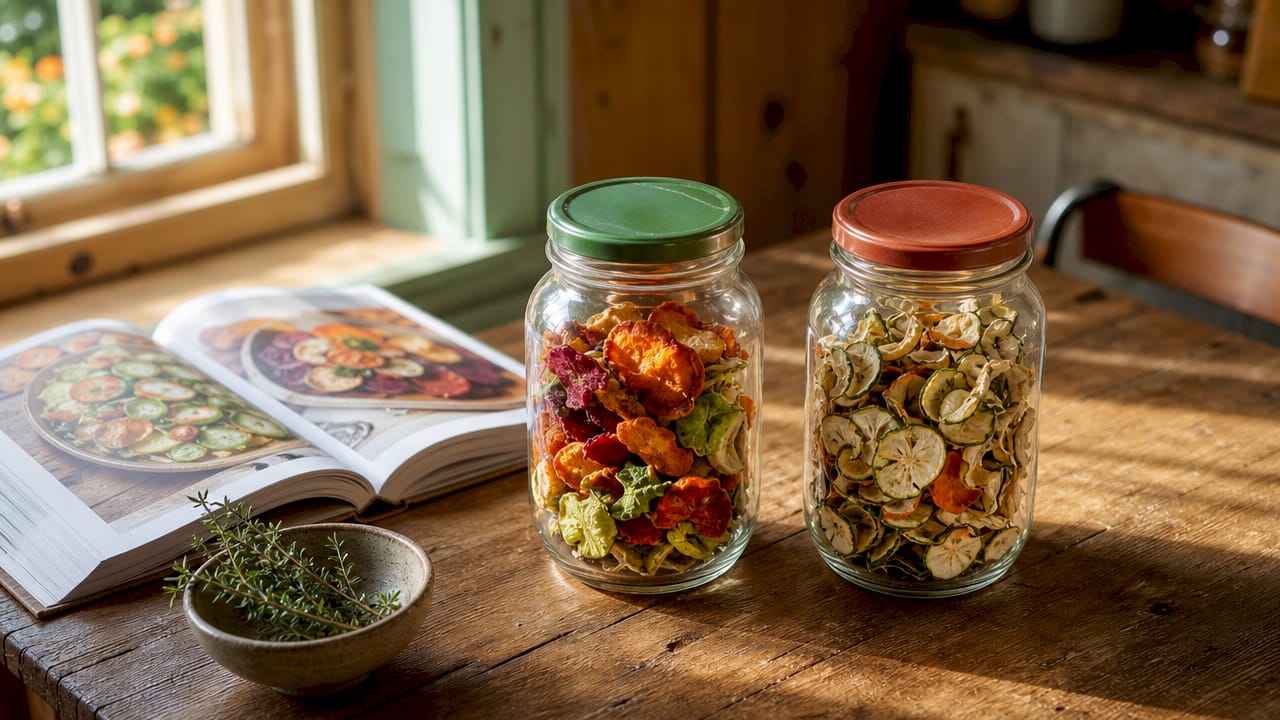
Texture and rehydration tell a similar story. Freeze dried foods rehydrate in 3–15 minutes because the vacuum process leaves tiny pores where the ice crystals were. Water rushes back in quickly and the food returns close to its original form. Dehydrated foods can take 20–60 minutes of simmering to fully rehydrate, and they rarely return to their original texture. A dehydrated carrot will always be a bit tougher than a fresh one.
Flavor is more nuanced. Freeze drying preserves flavor compounds well, but sublimation can strip some volatile aromatics, the compounds responsible for fresh scent. This is why freeze dried coffee smells less intense than fresh ground coffee, even though the flavor is largely preserved. Dehydration concentrates flavors through heat, which works beautifully for herbs and fruit leathers but can make other foods taste flat or slightly cooked.
- Nutrient retention: Freeze dried 97% vs. dehydrated 50–80%
- Vitamin C: ~90% retained freeze dried vs. ~50–60% dehydrated
- Rehydration time: 3–15 minutes freeze dried vs. 20–60 minutes dehydrated
- Texture after rehydration: Near-original for freeze dried, softer and chewier for dehydrated
Pro Tip: For holiday meal prep and quick weeknight cooking, freeze dried vegetables and proteins rehydrate fast enough to use in soups, stews, and sauces without any pre-planning. Check out these holiday meal prep tips for practical ways to use preserved ingredients in real cooking.
What should home cooks know before choosing equipment?
Equipment cost is the biggest practical barrier between these two methods. A home freeze dryer runs between $2,500 and $4,500. A quality food dehydrator costs $60–$350. For most home cooks, that price difference alone makes the decision for them.
Here is a straightforward breakdown of what each method suits best:
- Dehydration is best for: Herbs, jerky, fruit leathers, apple chips, mushrooms, and any snack where a chewy texture is acceptable or desirable. It is fast, affordable, and easy to learn.
- Freeze drying is best for: Full meals, dairy products, eggs, berries, and anything where you want near-original texture and maximum nutrition after rehydration. It is the right choice for serious long-term storage.
- Energy and time: Dehydrators run for 6–12 hours per batch. Freeze dryers run for 20–40 hours per batch and consume significantly more electricity.
- Space requirements: Dehydrators are compact and fit on a countertop. Home freeze dryers are large appliances, roughly the size of a small chest freezer.
- Learning curve: Dehydrators are plug-and-play. Freeze dryers require learning cycle times, vacuum management, and proper loading techniques.
For a deeper look at how these two machines compare side by side, the freeze dryer vs dehydrator guide on Space-man’s blog breaks down the decision by food type and use case.
What are the common misconceptions about freeze drying?
The biggest misconception is that freeze drying works perfectly on any food. It does not. High-sugar and high-fat foods like chocolate, peanut butter, and honey are notoriously difficult to freeze dry at home. They either do not freeze solid enough or leave an oily residue that prevents proper sublimation. This is why Space-man’s freeze dried candy products require specialized processing rather than a standard home freeze dryer.
Maintenance is another overlooked reality. A home freeze dryer is not a set-it-and-forget-it appliance. Vacuum pump oil changes and seal checks are required regularly. Skipping maintenance leads to vacuum leaks, incomplete drying cycles, and food that spoils faster than expected. That ongoing time and cost commitment surprises many first-time buyers.
Dehydration has its own underappreciated limits. It cannot safely preserve high-moisture foods like full meals or dairy without significant risk of spoilage. But for its intended uses, it is reliable, affordable, and genuinely convenient.
Freeze drying is the gold standard for food quality preservation, but it is limited by cost and maintenance demands. Dehydration remains the more accessible and practical choice for everyday home food preservation, especially for snacks, herbs, and short-term storage needs.
Key Takeaways
Freeze drying preserves more nutrients, extends shelf life dramatically, and delivers better texture than dehydration, but it costs significantly more and requires more maintenance.
| Point | Details |
|---|---|
| Moisture removal | Freeze drying reaches 1–3% moisture; dehydration leaves 5–10%, directly affecting shelf life. |
| Shelf life gap | Freeze dried foods last 25–30 years sealed; dehydrated foods last 1–5 years under similar conditions. |
| Nutrition retention | Freeze drying retains up to 97% of nutrients; dehydration retains 50–80% depending on temperature. |
| Equipment cost | Home freeze dryers cost $2,500–$4,500; dehydrators cost $60–$350, making dehydration far more accessible. |
| Best use cases | Use dehydration for herbs, jerky, and snacks; use freeze drying for full meals, dairy, and long-term storage. |
Why I think most home cooks overthink this choice
People spend a lot of time debating freeze drying versus dehydration as if one method is universally better. In practice, the right answer depends entirely on what you are trying to do with the food.
If you are making trail mix, herb blends, or fruit chips to use within a year, a $100 dehydrator does the job beautifully. You do not need a $3,500 machine for that. But if you are preserving a full harvest of strawberries and want them to taste fresh two years from now, freeze drying is worth every penny of the investment.
The texture question is where I think people underestimate freeze drying the most. Rehydrated freeze dried vegetables in a soup are genuinely hard to distinguish from fresh. Dehydrated vegetables in the same soup are noticeably softer and slightly mushier. For everyday cooking, that difference changes the quality of the finished dish.
My honest advice: start with a dehydrator. Learn what preservation feels like, experiment with herbs and snacks, and figure out which foods you actually want to preserve long-term. Then decide if the freeze dryer investment makes sense for your specific goals. Jumping straight to a $4,000 machine before you know your preservation habits is a fast way to have an expensive appliance collecting dust.
— Chadi
Space-man’s freeze dried products and private label services
Space-man specializes in freeze dried candy made in Canada, and the quality difference from dehydrated alternatives is immediately obvious the moment you try one.

For food entrepreneurs, retailers, and culinary professionals who want to offer freeze dried products without investing in their own equipment, Space-man offers private label and co-packing services that cover everything from production to custom packaging. You get the benefits of commercial-grade freeze drying without the $4,000 machine sitting in your garage. Whether you are building a product line or just want to stock freeze dried treats for your customers, Space-man’s team handles the technical side so you can focus on your brand.
FAQ
What is the main difference between dehydrated and freeze dried food?
Dehydration uses heat (95°F–165°F) to evaporate water, while freeze drying uses freezing and vacuum pressure to sublimate ice directly into vapor. Freeze drying removes more moisture and better preserves texture, flavor, and nutrients.
How long does freeze dried food last compared to dehydrated?
Freeze dried foods last 25–30 years when sealed properly, while dehydrated foods typically last 1–5 years. The difference comes from freeze drying’s lower residual moisture content of 1–3% versus 5–10% for dehydrated foods.
Does freeze dried food taste better than dehydrated?
Freeze dried food generally retains closer to its original flavor and texture because no heat is applied during processing. Dehydration concentrates flavors and alters texture, which works well for snacks like jerky and fruit leather but less well for full meals.
Can you freeze dry any food at home?
Not all foods freeze dry well at home. High-fat and high-sugar foods like chocolate, peanut butter, and honey are difficult to freeze dry because they do not freeze solid enough for proper sublimation.
Is a home freeze dryer worth the cost?
A home freeze dryer costs $2,500–$4,500 and requires regular maintenance including vacuum pump oil changes. It is worth the investment for serious long-term food storage, but a dehydrator at $60–$350 is the better starting point for most home cooks.