

TL;DR:
- Bulk candy procurement saves retailers up to 35% by sourcing directly from manufacturers and employing volume discounts. Effective inventory management and reliable supplier relationships are essential to ensure freshness, reduce waste, and meet seasonal demand. Building a long-term supply strategy with clear contracts and diversified sourcing protects against disruptions and optimizes costs.
Bulk candy procurement tips are the practical strategies retailers use to buy candy in large volumes efficiently, cost-effectively, and with minimal risk. Done right, wholesale candy sourcing can cut your purchasing costs by 25–35% compared to buying through distributors. Done wrong, it ties up capital in stale stock and missed seasonal peaks. This guide covers the core methods that experienced candy buyers use to select suppliers, manage inventory, negotiate pricing, and protect their supply chain.
1. How can you optimize supplier selection for bulk candy procurement?
Supplier selection is the single biggest lever in any candy procurement guide. Sourcing directly from manufacturers in Eastern Europe, Asia, or Turkey can reduce costs by 25–35% compared to buying through a domestic distributor. That gap exists because you cut out the middleman’s margin entirely.
Direct factory sourcing comes with real trade-offs, though. Minimum order quantities (MOQs) typically run 1–5 tonnes, and most manufacturers require a 30–50% upfront deposit before production starts. You need to verify a supplier’s production capacity, quality control processes, and track record before committing that kind of capital.
Before signing anything, ask for:
- Documented quality control procedures and certifications
- References from current buyers in your market
- Sample orders before committing to full production runs
- Clear written lead times that distinguish production time from shipping time
Pro Tip: Run a dual-supplier strategy with an 80/20 volume split. Your primary supplier handles 80% of volume for pricing leverage, while your secondary supplier covers 20% as a backup. This protects you from supply disruptions without sacrificing your discount tier.
For a deeper look at how to vet and shortlist suppliers, the candy supplier selection guide on Space-man’s blog walks through the criteria step by step.
2. What inventory management practices keep bulk candy fresh?
Inventory management is where most retailers quietly lose money. The goal is to hold no more than 4–6 weeks of supply at any given time. Holding more than that increases spoilage risk and ties up cash that could fund your next order.
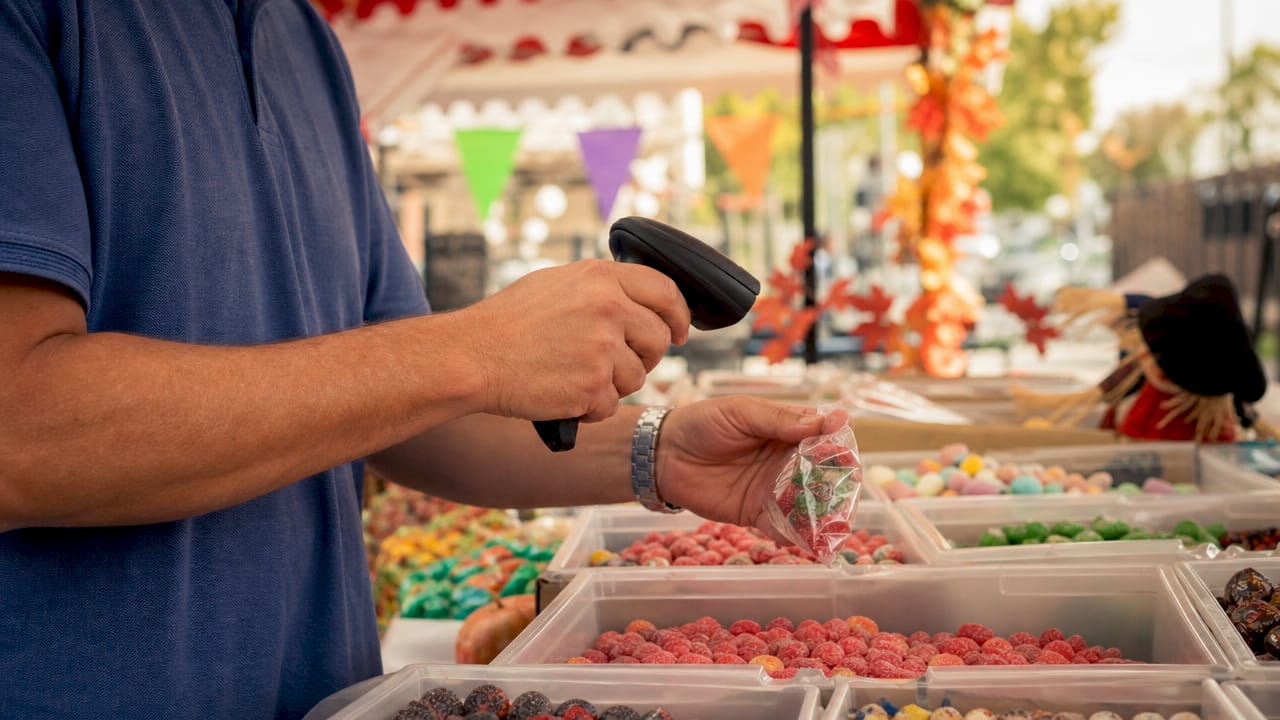
Hard candy and jelly beans typically carry shelf lives of 12–18 months under proper storage conditions. That sounds comfortable until you factor in transit time, warehouse dwell, and shelf time at retail. The freshness clock starts at production, not at your receiving dock.
A practical freshness system looks like this:
- Record the production date on every inbound pallet, not just the best-before date.
- Apply first-in, first-out (FIFO) rotation strictly across all candy categories.
- Set a reorder trigger at 3 weeks of remaining stock, not when shelves look thin.
- Pull POS data weekly to track sales velocity by SKU and adjust reorder quantities.
- Flag any SKU that has not moved in 30 days for a markdown or return negotiation.
Seasonal ordering requires a completely different timeline. Halloween, Valentine’s Day, and Easter all demand that you order 3–4 months in advance to account for production and shipping lead times. Missing that window means paying spot prices or going without.
Pro Tip: Integrate your POS data at the SKU level to adjust reorder timing dynamically. Real-time sales tracking removes the guesswork from seasonal spikes and prevents you from over-ordering slow movers.
3. What pricing tactics help you maximize bulk candy discounts?
Volume discount tiers are the backbone of any candy buying strategy. Standard pricing schedules typically start at 5–20 tonnes with baseline pricing, then step down at 20–50 tonnes (5–8% off), 50–100 tonnes (10–15% off), and 100+ tonnes (20–25% off). Knowing these thresholds before you negotiate tells you exactly how much volume you need to commit to hit the next tier.
Most retailers do not reach those thresholds on a single SKU. The fix is SKU bundling. Combine multiple candy varieties into a single purchase order to hit a higher volume tier across the whole order. Suppliers who offer mixed-SKU pallets make this easy. Those who do not can often be persuaded with an annual volume commitment in writing.
Timing your orders also affects price. Suppliers in manufacturing-heavy regions often have off-season capacity in the first quarter of the year, after the holiday rush. Placing non-urgent orders during that window can unlock better pricing or more favorable payment terms.
Key pricing tactics to apply:
- Bundle SKUs to reach higher volume tiers on a single purchase order
- Negotiate annual contracts with committed volumes in exchange for locked-in pricing
- Ask for extended payment terms (net 30 or net 60) rather than always pushing for a lower unit price
- Track prices over 2–3 months before committing to a large order, since bulk candy procurement is only viable at 40%+ savings over individual packaging costs
For more detail on how to structure your purchasing approach, the wholesale candy purchasing tips guide covers negotiation frameworks retailers use in practice.
4. How does SKU assortment affect procurement success?
SKU bloat is one of the most common and expensive mistakes in bulk candy retail. Stocking too many varieties creates forecasting complexity, increases dead stock, and fragments your purchasing volume across too many suppliers. A core-and-extension strategy fixes this by concentrating 80% of your volume on 3–5 hero SKUs that consistently sell.
Your hero SKUs should be your highest-velocity, most predictable products. Think classic gummies, hard candy mixes, or sour belts. These are the items you buy in volume, negotiate hard on, and never run out of. Extensions are newer or seasonal items you test in small quantities before scaling.
“Focusing 80% of your volume on 3–5 proven SKUs improves forecasting accuracy, reduces dead stock risk, and gives you real negotiating leverage with suppliers. Every SKU you add beyond your core range dilutes that leverage.”
Before adding any new candy variety to your bulk order, test it with a small trial quantity first. If it does not hit your sales velocity target within 60 days, do not scale it. This approach protects your cash flow and keeps your inventory lean.
The how to choose wholesale candy guide on Space-man’s blog covers assortment selection in more depth, including how to evaluate quality versus price across different candy categories.
5. What contract and logistics details protect your bulk candy supply?
A purchase order is only as good as the contract behind it. The most common supply disruption in bulk candy procurement is not a supplier failure. It is a misunderstanding about lead times. Lead time misalignment can delay seasonal inventory by 4–8 weeks, which means missing Halloween or Valentine’s Day entirely.
Your contract must specify whether quoted lead times refer to production time, shipping time, or both combined. These are very different numbers. A supplier quoting “6 weeks” might mean 6 weeks to manufacture, with an additional 4–6 weeks for ocean freight on top.
Critical contract terms to lock down before any bulk order:
- Production lead time vs. shipping lead time: defined separately, in writing
- Order acceptance trigger: the exact event that starts the lead time clock (deposit receipt, written confirmation, or purchase order date)
- Damage rate KPI: a damage rate under 2% is the industry benchmark for supplier reliability
- Container-loading videos: request real-time footage of your order being loaded to verify quantities and packaging condition
- Production dashboard access: real-time visibility into your order’s manufacturing status reduces surprises
Negotiating total landed cost, not just unit price, is the mark of an experienced buyer. Landed cost includes freight, duties, insurance, and any port handling fees. A supplier with a slightly higher unit price but lower freight costs often delivers better value overall.
For guidance on planning seasonal orders well in advance, holiday catering planning timelines offer a useful parallel framework for large-scale seasonal procurement.
6. How to source bulk candy: building a long-term supply strategy
A long-term wholesale candy sourcing strategy goes beyond finding the cheapest price today. It means building supplier relationships that give you priority access during tight supply periods, flexibility on order adjustments, and early notice of price changes.
Retailers who track sales by category and season consistently make better ordering decisions than those who rely on gut feel. Historical POS data tells you which SKUs spike in which months, how far in advance to reorder, and which products to phase out before they become dead stock.
Supplier audits should happen at least once a year. Review your damage rates, on-time delivery performance, and pricing against current market rates. If a supplier’s damage rate creeps above 2%, that is a signal to renegotiate terms or activate your secondary supplier. Keeping that data organized makes the conversation factual rather than adversarial.
The bulk candy supply chain guide covers how Canadian retailers specifically structure their sourcing relationships and manage logistics from overseas manufacturers.
Key Takeaways
Effective bulk candy procurement combines direct factory sourcing, tight inventory control, volume-based pricing, and contract clarity to reduce costs and protect supply.
| Point | Details |
|---|---|
| Source directly from manufacturers | Direct factory sourcing cuts costs by 25–35% but requires higher MOQs and upfront deposits. |
| Hold 4–6 weeks of inventory | Keeping stock lean reduces spoilage and frees up cash for the next order cycle. |
| Use a dual-supplier strategy | An 80/20 volume split protects supply continuity without losing your volume discount. |
| Focus on 3–5 hero SKUs | Concentrating 80% of volume on core products improves forecasting and reduces dead stock. |
| Define lead times in every contract | Separating production and shipping lead times prevents costly seasonal delays. |
What I have learned about bulk candy procurement the hard way
My honest take on what most retailers get wrong
Most retailers I talk to focus almost entirely on unit price. That is the wrong obsession. The real cost of a bad bulk candy order shows up three months later, when you are sitting on 200 kilograms of stale gummies that nobody wants at any price.
The single most underrated part of wholesale candy sourcing is supplier relationship management. When supply gets tight, and it does every year around Q3 as holiday production ramps up, the buyers who get priority are the ones who paid on time, communicated clearly, and treated the supplier like a business partner rather than a vending machine. I have seen retailers lose their Halloween allocation because they were difficult to work with, not because they offered a bad price.
The other mistake I see constantly is ignoring the freshness math. A retailer buys a massive order at a great price, stores it for three months before it hits the shelf, and then wonders why sell-through is slow. The candy is technically within its best-before date, but it tastes like it has been sitting in a warehouse. Because it has. Price is irrelevant if the product does not move.
My practical advice: run a supplier scorecard. Track on-time delivery, damage rates, and responsiveness on a simple spreadsheet. Review it quarterly. It takes 20 minutes and it will tell you more about your supply chain health than any amount of price negotiation.
— Chadi
Space-man’s services for candy retailers
Bulk candy procurement does not stop at sourcing. Once you have the product, packaging and branding decisions can make or break your margins and shelf appeal.

Space-man offers private label, co-packing, and packaging services designed specifically for candy retailers and distributors in Canada. Whether you need custom-branded packaging for your house label, co-packing support for a new SKU, or bagging services for bulk product, Space-man handles the production side so you can focus on sales. These services work especially well for retailers who want to move up the value chain from reselling commodity candy to building a recognizable brand. Reach out to Space-man to see how these services fit your current procurement setup.
FAQ
What are the best bulk candy procurement tips for small retailers?
Focus on 3–5 core SKUs, source directly from manufacturers where MOQs allow, and hold no more than 4–6 weeks of inventory. A dual-supplier strategy protects you from disruptions without requiring large volume commitments.
How far in advance should I order bulk candy for holidays?
Order 3–4 months before major holidays like Halloween and Valentine’s Day to account for production and shipping lead times. Misaligned lead times are the leading cause of missed seasonal peaks in candy retail.
What volume discount tiers should I expect from wholesale candy suppliers?
Standard tiers start at 5–20 tonnes with baseline pricing, stepping to 5–8% off at 20–50 tonnes, 10–15% off at 50–100 tonnes, and 20–25% off at 100+ tonnes. Bundling multiple SKUs into one order helps you reach higher tiers faster.
How do I know if a bulk candy supplier is reliable?
A damage rate under 2% is the industry benchmark for supplier reliability. Request container-loading videos and production dashboard access to verify order accuracy and condition before shipment arrives.
Is bulk candy procurement worth it for smaller candy retailers?
Bulk purchasing is viable when it delivers at least 40% savings compared to individual package pricing, after accounting for storage and spoilage costs. Retailers who cannot meet high MOQs can negotiate mixed-SKU pallets or annual volume contracts to access better pricing at lower quantities.