

Selecting the right bread packaging in 2026 is more complex than ever for Canadian retailers. You need to balance sustainability demands, extend shelf life, create compelling brand differentiation, and control costs simultaneously. This article breaks down the decision framework by examining proven materials, innovative design features, and practical packaging strategies that drive sales while meeting modern consumer expectations for both freshness and environmental responsibility.
Table of Contents
- How To Choose The Right Bread Packaging: Key Selection Criteria
- Sustainable Packaging Materials: Eco-Friendly Solutions For Bread
- Transparent And Re-Sealable Bread Bags: Enhancing Product Visibility And Freshness
- Custom Branding And Private Label Packaging: Stand Out On Shelves
- Comparing Bread Packaging Types: Bags, Boxes, And Wraps
- Which Bread Packaging Is Best For Your Retail Format? Situational Recommendations
- Explore Canadian Private Label And Packaging Services For Your Bread Business
- Frequently Asked Questions
Key takeaways
| Point | Details |
|---|---|
| Four core criteria | Sustainability, shelf life, brand impact, and cost efficiency guide effective bread packaging selection. |
| Sustainable materials win | Compostable films and recycled paper with windows combine eco-friendliness with product visibility for conscious consumers. |
| Transparency boosts sales | Clear, resealable packaging increases purchases by showcasing freshness while extending product life after opening. |
| Branding creates loyalty | Custom designs and reusable packaging elevate shelf presence and encourage repeat purchases in competitive markets. |
| Format drives choice | Your retail environment and target customer determine whether bags, boxes, or wraps work best for your business. |
How to choose the right bread packaging: key selection criteria
Canadian retailers face mounting pressure to select bread packaging that satisfies multiple competing demands. Your packaging decisions directly impact product performance, customer satisfaction, and bottom line profitability.
Clear differentiation criteria include sustainability, shelf-life extension, brand impact, and cost efficiency when selecting bread packaging. Understanding these four pillars helps you evaluate options systematically rather than choosing based on price alone.
Sustainability has become the leading priority for Canadian retailers serving environmentally conscious consumers. Provincial regulations increasingly favor recyclable and compostable materials, making eco-friendly packaging both a market differentiator and compliance necessity. Customers actively seek brands that demonstrate environmental responsibility through visible packaging choices.
Shelf life extension reduces waste throughout your supply chain while ensuring customers receive fresh products. Effective moisture barriers and oxygen protection preserve bread quality for days or weeks longer than basic wrapping. This translates to fewer markdowns, lower spoilage costs, and happier customers who experience consistent product quality.
Brand customization creates instant recognition on crowded retail shelves. Custom printed designs, logos, and color schemes communicate your brand story at the critical point of purchase decision. Strong visual identity builds customer loyalty and justifies premium pricing compared to generic packaging alternatives.
Cost efficiency balances your packaging investment against profitability requirements. Small to medium retailers must weigh material costs, minimum order quantities, and storage requirements against expected sales volume. The cheapest option rarely delivers the best total value when you factor in waste reduction and brand building benefits.
Material suitability depends on your specific product characteristics and retail environment. Crusty artisan loaves need breathable packaging to maintain texture, while soft sandwich bread requires moisture retention. Understanding these different types of packaging pouches candy shops snack retailers use helps you match materials to product requirements.
Packaging selection should never be a compromise between sustainability and functionality. Modern materials deliver both environmental responsibility and superior product protection when matched correctly to your retail format.
Sustainable packaging materials: eco-friendly solutions for bread
Sustainable materials have evolved far beyond basic brown paper bags. Today’s eco-friendly bread packaging combines environmental benefits with sophisticated product protection and visual appeal.
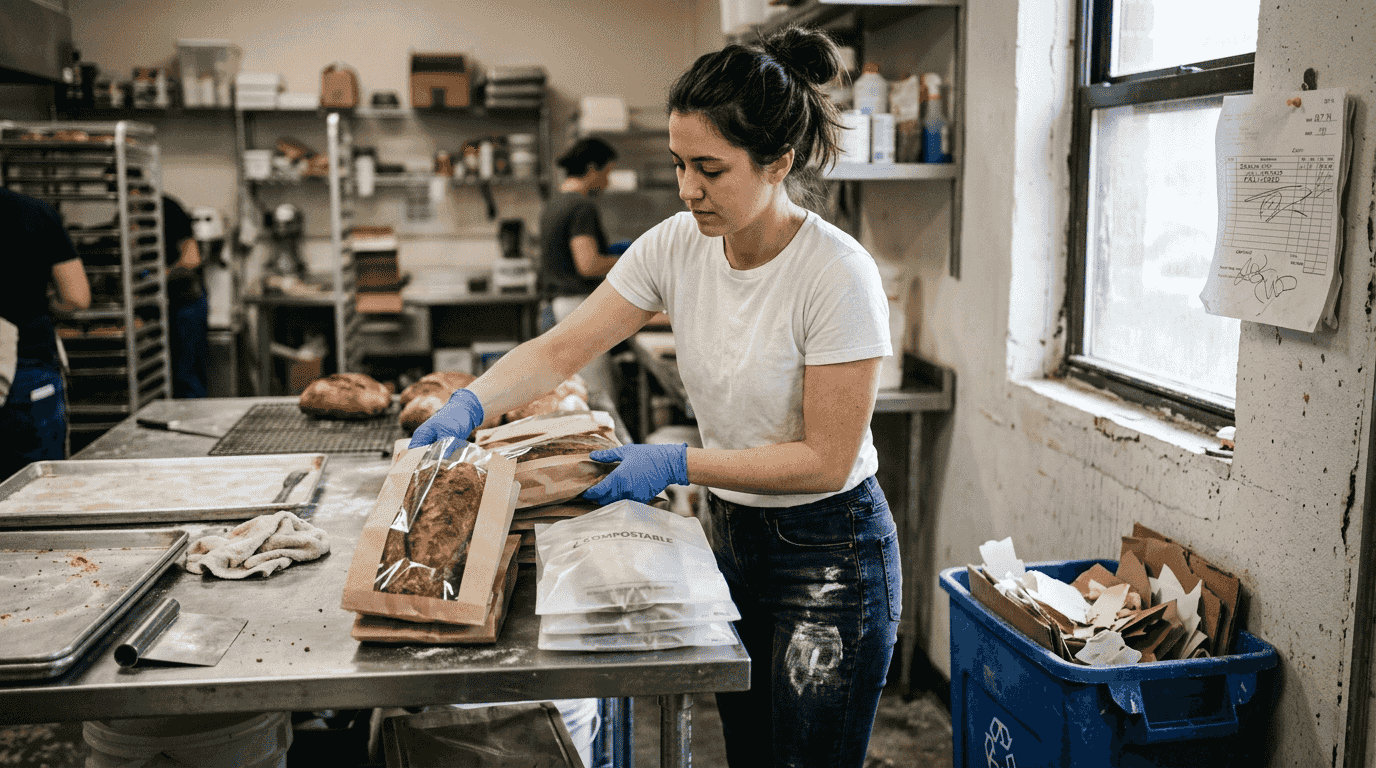
Compostable films made from plant-based polymers offer comparable barrier properties to conventional plastics while breaking down completely in commercial composting facilities. These materials work exceptionally well for pre-sliced bread requiring moisture retention and extended shelf life. Biodegradable plastics derived from cornstarch or sugarcane provide similar protection with reduced environmental impact compared to petroleum-based alternatives.
Recycled paper bags with strategically placed window cut-outs deliver high sustainability credentials while allowing customers to inspect product quality before purchase. The windows use minimal clear film bonded to recycled kraft paper, creating an appealing rustic aesthetic that resonates with artisanal bread positioning. This combination maximizes recyclability while maintaining essential product visibility.
Sustainability influences brand perception and consumer willingness to pay more for eco-friendly packaging. Canadian consumers actively reward brands demonstrating environmental commitment through purchasing decisions and word-of-mouth recommendations.
Eco-label certifications from recognized organizations build immediate customer trust without requiring lengthy explanation. Look for certifications like BPI Compostable, FSC (Forest Stewardship Council), or Canada’s EcoLogo program. These third-party validations justify premium pricing while differentiating your products from competitors making unsubstantiated environmental claims.
Balancing sustainability with adequate product protection remains essential for maintaining bread quality throughout the distribution chain. Even the most environmentally responsible packaging fails if products arrive stale or damaged. Work with packaging suppliers who understand both essential packaging materials candy business operations require and environmental performance standards.
Pro Tip: Request sample quantities of sustainable materials before committing to large orders. Test how they perform with your specific products under real retail conditions including temperature fluctuations and handling stress.
- Plant-based compostable films break down completely in 90 to 180 days under proper composting conditions
- Recycled paper packaging typically costs 15 to 25% less than virgin materials while delivering comparable strength
- FSC-certified paper ensures forests are managed responsibly with replanting programs and biodiversity protection
- Many municipalities now accept compostable packaging in organic waste streams, increasing convenience for consumers
Transparent and re-sealable bread bags: enhancing product visibility and freshness
Clear packaging transforms how customers evaluate and purchase bread products. Visual inspection builds confidence while practical features extend product life after the initial purchase.
Transparent bread packaging can boost sales by as much as 15% in retail stores. Customers make split-second purchasing decisions based on visible freshness indicators like golden crust color, even texture, and absence of defects. Eliminating visual barriers removes a major purchase hesitation point.
Resealable closures help maintain product freshness after opening while adding significant convenience value customers appreciate. Zip-lock mechanisms, press-to-seal strips, and adhesive flaps all extend usable product life compared to twist-tie closures that create gaps allowing air infiltration. This feature particularly benefits customers purchasing larger loaves consumed over multiple days.
Common materials for transparent bread bags include recyclable BOPP (biaxially oriented polypropylene) and newer bio-based PLA films. BOPP offers excellent clarity, moisture resistance, and printability for branding elements. PLA derived from renewable resources provides similar optical properties with improved sustainability credentials, though it typically costs 20 to 30% more than conventional plastics.
This packaging approach suits retail formats prioritizing maximum shelf life and high product turnover. Supermarkets, convenience stores, and retailers with significant grab-and-go business benefit most from the immediate visual appeal and extended freshness transparent resealable bags deliver.
Pro Tip: Position transparent packaging to showcase your product’s best visual angle. Orient loaves so customers see appealing crust texture and golden color through the clear window rather than the plain bottom surface.
Clear packaging creates an unspoken quality promise. If you’re confident showing customers exactly what they’re buying, they assume you have nothing to hide and everything to offer.
- Resealable bags reduce food waste by extending usable product life 3 to 5 days beyond initial opening
- Oxygen transmission rate in quality clear films matches or exceeds opaque packaging materials
- Transparent windows work effectively even in partially clear designs combining kraft paper bases with strategic visibility panels
- Consider types of plastic packaging candy shops use when evaluating material options for your specific products
Custom branding and private label packaging: stand out on shelves
Generic packaging disappears on crowded retail shelves. Custom branded designs create instant recognition while communicating your unique value proposition to potential customers.
Customized designs convey your brand story and values through visual elements that resonate with target customers. Color psychology, typography choices, and imagery all work together creating emotional connections beyond basic product identification. A rustic kraft design with hand-drawn illustrations communicates artisanal quality differently than sleek modern graphics suggesting innovation and precision.
70% of consumers prefer products with customized packaging, driving higher purchase intention. This preference translates directly to increased sales when your branded packaging stands out from competitors using stock designs or minimal decoration.
Private label co-packing services throughout Canada facilitate scalable customization without requiring massive upfront investments in printing equipment or inventory. These private label co-packing packaging services partners handle design adaptation, printing, and fulfillment, letting you test custom packaging concepts before committing to large production runs.
Reusable packaging options add premium appeal while strengthening sustainability credentials. Fabric bread bags, wooden boxes, and rigid containers customers keep and reuse create lasting brand impressions extending far beyond the initial purchase. Each reuse reinforces brand recognition and demonstrates environmental commitment through practical action rather than marketing claims.
Branding influences both immediate shelf impact and long-term customer loyalty. Distinctive packaging helps customers locate your products quickly during repeat purchases while making strong first impressions on new shoppers. Investment in professional design supports competitive advantage that compounds over time as brand recognition builds.
- Custom printing minimum order quantities have dropped significantly, with some suppliers accepting runs as small as 1,000 units
- Digital printing technology enables cost-effective short runs and seasonal design variations impossible with traditional printing
- Embossed logos and textured finishes add premium tactile appeal that photographs poorly but creates strong in-hand impressions
- Coordinating packaging design across product lines creates visual family relationships that encourage customers to try new items
Comparing bread packaging types: bags, boxes, and wraps
Different packaging formats deliver distinct advantages depending on your product characteristics, target market, and business priorities. This comparison helps you evaluate options systematically.
| Packaging Type | Shelf Life Extension | Sustainability | Cost Efficiency | Brand Impact | Best Use Case |
|---|---|---|---|---|---|
| Plastic bags (resealable) | Excellent (7 to 14 days) | Low to moderate | High | Moderate | High-volume retailers prioritizing freshness and convenience |
| Paper bags with windows | Moderate (3 to 5 days) | Excellent | High | Good | Artisanal bakeries and eco-focused retailers |
| Reusable boxes | Good (5 to 7 days) | Excellent | Low | Excellent | Premium bakeries targeting gift buyers and brand builders |
| Compostable film wraps | Very good (5 to 10 days) | Excellent | Moderate | Moderate | Eco-conscious retailers balancing sustainability and protection |
| Kraft paper wraps | Poor (1 to 2 days) | Excellent | Very high | Low | Same-day consumption products and farmers markets |
Plastic bags offer superior shelf life extension through excellent moisture and oxygen barriers but score lower on sustainability metrics unless made from bio-based or recycled content. They work best for retailers where product turnover speed and convenience matter more than environmental messaging.
Paper bags feature high sustainability and consumer appeal but provide shorter shelf life unless lined with protective barriers. The affordability and recyclability make them attractive for bakeries emphasizing artisanal positioning and environmental values over maximum shelf life.
Reusable boxes deliver premium brand impact and excellent sustainability credentials at higher per-unit costs. They justify premium pricing while creating lasting customer relationships through repeated brand exposure. Consider these essential food packaging types candy businesses use when evaluating reusable options.
Comparison shopping helps you align packaging investment with business priorities and customer expectations. No single format wins across all criteria, so clarify which factors matter most for your specific retail context and product positioning.
Which bread packaging is best for your retail format? situational recommendations
Your retail format and customer profile determine which bread packaging strategies deliver optimal results. These targeted recommendations help you match packaging to business context.
Kraft paper bags with window cut-outs suit candy shops and dessert retailers favoring artisanal, eco-friendly branding. The rustic aesthetic complements handcrafted sweets and premium baked goods while demonstrating environmental responsibility. Windows provide essential product visibility without sacrificing the natural, unprocessed brand image kraft paper communicates. This packaging pouches candy shops approach works especially well for businesses targeting conscious consumers willing to pay premium prices.
Reusable gift boxes with embossed logos fit premium bakeries targeting gift buyers and repeat customers. The substantial upfront investment in quality boxes pays dividends through enhanced brand perception and repeated exposure as customers reuse containers. This packaging elevates ordinary bread purchases into gift-worthy presentations that justify higher price points and create memorable unboxing experiences.
Transparent, resealable plastic bags work best for retailers emphasizing maximum shelf life and customer convenience over sustainability messaging. Supermarkets, convenience stores, and high-volume retailers benefit from the superior product protection and extended freshness these bags deliver. Clear visibility combined with practical reclosure features addresses the primary concerns of customers prioritizing value and convenience.
Matching packaging format with store positioning and customer expectations maximizes sales impact while controlling costs. A premium boutique bakery using cheap plastic bags sends confused brand signals, just as a convenience store investing in expensive reusable boxes misaligns packaging with customer priorities. Consider custom take away packaging candy strategies when developing your packaging approach.
- Test multiple packaging formats with customer feedback before committing to large inventory purchases
- Seasonal variations in packaging design create novelty and urgency without requiring permanent format changes
- Secondary packaging like branded shopping bags extends brand impression beyond the primary product packaging
- Display packaging differently than storage packaging, using premium formats for shelf appeal and practical options for backstock
Explore Canadian private label and packaging services for your bread business
Implementing the right bread packaging strategy requires reliable partners who understand Canadian retail requirements and consumer preferences. Specialized service providers streamline the transition from packaging concept to retail-ready products.
Leverage expert private label co-packing packaging services to customize your bread packaging without the complexity of managing printing vendors, material sourcing, and fulfillment logistics independently. These partners bring established relationships with material suppliers and proven processes that reduce lead times and minimize costly errors during implementation.
Access proven product display solutions like the 72 bags display kit for distributors that enhance in-store presence through professional presentation systems. Effective displays amplify the impact of great packaging by organizing products attractively and maximizing visibility in high-traffic retail locations.
Partner with established Canadian providers to streamline your packaging and branding efforts while maintaining quality standards. The right partnership reduces the trial-and-error period inevitable when developing new packaging systems independently. Expert guidance helps you avoid common pitfalls around material selection, print quality, and regulatory compliance that can derail packaging initiatives. Explore starter options like the freeze dried candy starter pack to see professional packaging standards in action before committing to custom solutions.
Frequently asked questions
What materials are best for eco-friendly bread packaging?
Compostable films, biodegradable plastics, and recycled paper with window cut-outs rank as top eco-friendly choices for bread packaging. Your selection depends on whether you prioritize maximum compostability, product visibility, or cost efficiency. Compostable films work best when customers have access to commercial composting, while recycled paper delivers immediate recyclability through existing municipal programs.
How does transparent packaging increase bread sales?
Clear packaging lets customers see freshness indicators like golden crust color and even texture, encouraging immediate purchase decisions. Transparent bags remove uncertainty about product quality that opaque packaging creates. Resealable transparent options add convenience value that drives repeat purchases as customers appreciate extended freshness after opening.
What packaging type suits dessert shops with artisanal bread?
Kraft paper bags with window cut-outs match artisanal aesthetics while meeting sustainability expectations of dessert shop customers. The natural brown color and texture communicate handcrafted quality and environmental responsibility without words. Strategic window placement provides necessary product visibility while maintaining the rustic, unprocessed brand image that differentiates artisanal products from mass-market alternatives.
How much does custom branded bread packaging typically cost?
Custom branded packaging costs vary from $0.15 to $1.50 per unit depending on materials, printing complexity, and order quantities. Digital printing enables smaller runs starting around 1,000 units at higher per-unit costs, while offset printing requires 5,000 to 10,000 unit minimums but reduces per-unit expenses significantly. Factor in design costs ranging from $500 to $3,000 for professional artwork that reproduces well across different materials and printing methods.
Recommended
- Creative Candy Packaging: Boosting Canadian Freeze-Dried Sales – Spaceman
- 6 Essential Biscuit Packaging Types for Retail Success – Spaceman
- Candy Pouch Packaging: Boosting Retail Appeal in Canada – Spaceman
- 7 Creative Food Packaging Design Ideas for 2025 – Spaceman
- Master Grocery Shopping on a Budget: Save Money in 2025 - Dietium