

Many retailers believe candy supply chains are straightforward, but the reality in 2026 is far more complex. Global trade tensions, ingredient shortages, and temperature-controlled logistics create unprecedented challenges for Canadian wholesale buyers. Understanding these dynamics is essential for maintaining quality products, controlling costs, and staying competitive in an unpredictable market.
Table of Contents
- Introduction To The Wholesale Candy Supply Chain
- Raw Material Supply Challenges In Candy Production
- Seasonal Demand And Inventory Management
- Cold Chain Logistics And Quality Assurance
- Technology Adoption In Candy Supply Chains
- Impact Of Trade Policies And Tariffs On Candy Supply
- Risk Management And Supply Chain Resilience
- Customization, Private Labeling, And Value-Add Services
- Conclusion And Practical Next Steps For Retailers
- Explore Spaceman’s Private Label & Co-Packing Services
Key takeaways
| Point | Details |
|---|---|
| Supply disruptions | Wholesale candy chains face major disruptions from tariffs and ingredient shortages, requiring strategic adaptation. |
| Demand forecasting | Accurate seasonal forecasting and cold chain logistics prevent costly stockouts and maintain product quality. |
| Technology advantage | AI-driven tools enhance forecasting accuracy and supply resilience by up to 20%. |
| Strategic sourcing | Private labeling and diversified supplier networks provide competitive edges for Canadian retailers. |
Introduction to the wholesale candy supply chain
The wholesale candy supply chain connects manufacturers, distributors, and retailers through a complex network influenced by global trade patterns and regulatory requirements. For Canadian businesses, this candy suppliers Canada guide landscape includes unique domestic sourcing mandates and evolving trade regulations that directly impact product availability and pricing.
Global trade disruptions create ripple effects throughout this supply network. When tariffs shift or trade policies change, ingredient costs fluctuate rapidly. Canadian retailers must navigate these changes while managing perishability concerns and seasonal demand spikes that can make or break annual profitability.
Understanding each component helps you identify vulnerabilities. Manufacturers produce the candy, distributors handle logistics and warehousing, and retailers connect products with consumers. Each step introduces potential bottlenecks, especially when dealing with temperature-sensitive products or time-critical seasonal inventory.
Key supply chain roles and challenges include:
- Manufacturers facing raw material shortages and production costs
- Distributors managing cold chain compliance and transportation logistics
- Retailers balancing inventory levels against demand volatility
- Regulatory bodies enforcing quality standards and trade compliance
- Trade policies creating cost uncertainty through tariff fluctuations
Success requires coordinated planning across all partners. When you select candy suppliers strategically and understand choosing candy distributors Canada factors, you build resilience against supply disruptions that competitors may struggle to overcome.
Raw material supply challenges in candy production
Sugar shortages represent one of the most critical bottlenecks in candy production. Climate change has disrupted traditional growing regions, while Canadian domestic sourcing mandates compound availability issues by limiting import flexibility.
Trade tariffs add another layer of complexity to ingredient sourcing. When tariff volatility doubles supply chain concerns, raw material costs spike unpredictably, forcing retailers to either absorb margin pressure or pass increases to customers. Both options carry risks in competitive markets.
Crop failures in key production regions exacerbate these constraints. When weather events damage cocoa harvests in West Africa or sugar cane crops in Brazil, global supplies tighten immediately. Canadian retailers feel these impacts despite geographic distance because candy ingredients trade on global markets.
Strategies for managing raw material volatility:
- Diversify supplier networks across multiple geographic regions
- Prioritize domestic ingredient sources where regulations require
- Build longer-term supplier relationships with transparent pricing agreements
- Monitor commodity markets to anticipate cost trends
- Consider alternative sweeteners when sugar supplies tighten
Trade policy shifts demand constant attention. When governments adjust import duties or negotiate new trade agreements, your ingredient costs change overnight. Staying informed about policy developments lets you adjust sourcing strategies proactively rather than reacting to surprise cost increases.
The source Canadian candy guide approach emphasizes local partnerships that reduce exposure to international trade disruptions. While domestic sourcing may carry premium pricing, it provides supply stability that offshore alternatives cannot guarantee during periods of trade tension.
Understanding candy supply chain challenges helps you anticipate problems before they impact your inventory. Proactive planning beats reactive scrambling when ingredient shortages hit.
Seasonal demand and inventory management
Candy sales follow predictable seasonal patterns, with 40-60% surges during major holidays like Halloween and Christmas. These spikes create enormous pressure on inventory planning. Order too little and you lose sales during peak profit periods. Order too much and you’re stuck with excess inventory that erodes margins through markdowns or waste.
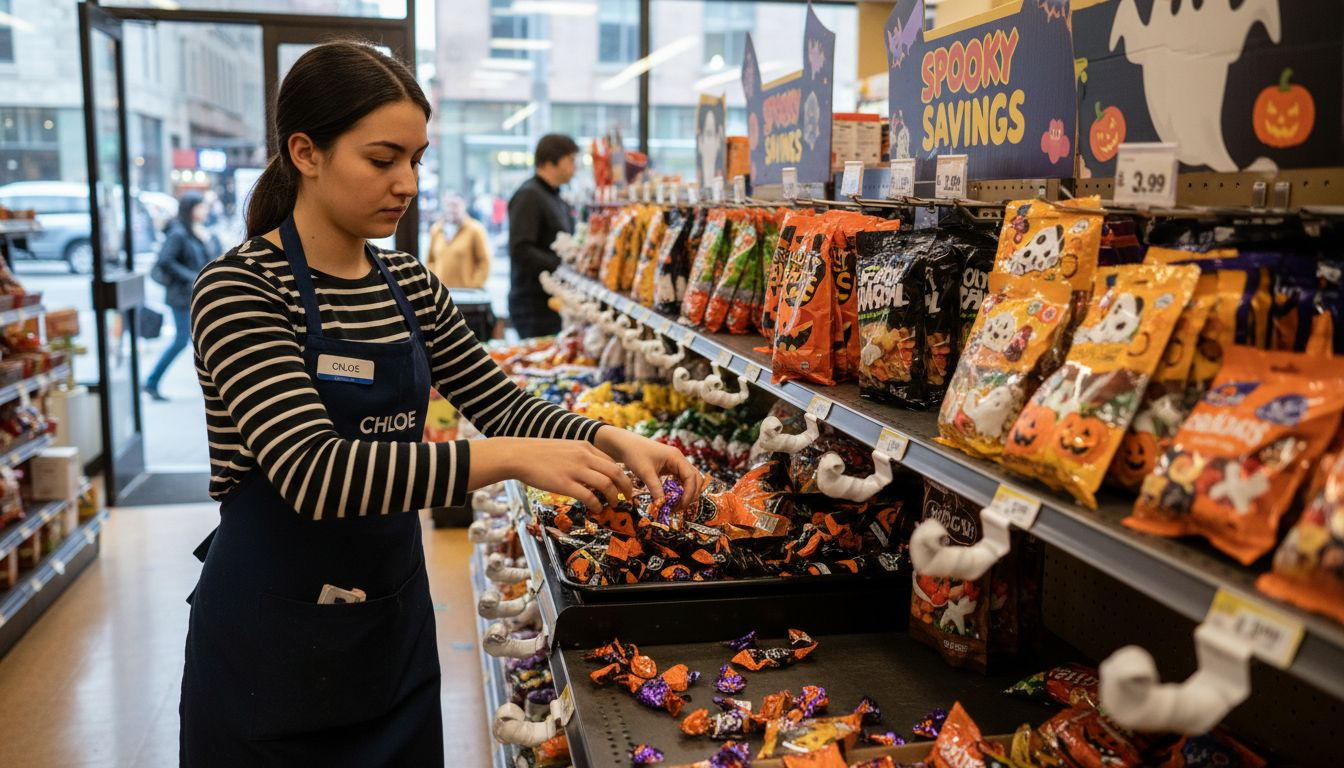
Stockouts during high-demand periods hurt more than just immediate sales. Customers who can’t find products may switch to competitors and never return. Lost sales compound over time as brand loyalty shifts to retailers who maintained consistent availability.
Overstock situations create different problems. Perishable candy loses quality over time, forcing clearance sales that damage profit margins. Warehouse space for excess inventory also carries costs that eat into profitability even before you discount products.
Forecasting accuracy determines success. Historical sales data provides the foundation, but external factors like weather patterns, economic conditions, and competitive promotions all influence actual demand. Combining multiple data sources improves prediction reliability.
Pro Tip: Layer AI forecasting tools over historical data to identify subtle demand patterns human analysis might miss, improving order accuracy by up to 20%.
Best practices for seasonal inventory management:
- Start holiday planning 6-8 months ahead to secure supplier commitments
- Analyze previous years’ sales by product, week, and location
- Build safety stock buffers for best-selling items during peak periods
- Establish backup supplier relationships for critical products
- Use sell-through data to adjust reorder timing mid-season
The wholesale candy purchasing tips framework helps structure ordering decisions around data rather than intuition. When you quantify demand patterns, you remove guesswork from inventory investments.
Demand analytics reveal opportunities competitors miss. Understanding candy supply chain seasonal demand patterns at granular levels lets you stock the right products in the right quantities, maximizing both sales and margins.
Cold chain logistics and quality assurance
Temperature control is non-negotiable for chocolate and gum products. Even brief exposure to heat causes chocolate to bloom, creating an unappealing appearance that reduces salability. Gum textures degrade when temperature fluctuates, affecting chewability and flavor release.
AI-powered cold chain solutions transform quality assurance. Compliance rates improved from 59% to over 85% when companies adopted real-time monitoring systems with automated alerts. These technologies catch problems before entire shipments spoil.
IoT sensors track temperature throughout the distribution journey. When conditions drift outside acceptable ranges, systems alert logistics teams immediately. Fast response prevents minor temperature excursions from becoming major quality failures.
Cost savings from reduced spoilage justify technology investments quickly. Premium chocolate commands higher margins, but only when quality remains pristine. Every shipment that arrives in perfect condition protects both revenue and brand reputation.
Pro Tip: Specify packaging with built-in thermal protection and require temperature data loggers on all chocolate shipments to verify cold chain integrity.
Maintaining cold chain compliance builds customer trust. When shoppers consistently find high-quality products on your shelves, they return more frequently and recommend your store to others. Quality reputation becomes a competitive moat that’s difficult for competitors to breach.
The candy distribution Canada margins freeze dried approach shows how product selection and logistics interact. Some products tolerate temperature variations better than others, allowing strategic category management that balances margins with operational complexity.
Advanced cold chain technology candy supply systems provide data that improves supplier accountability. When you can prove temperature violations occurred at specific points in the supply chain, you strengthen negotiating positions for credits or replacements.
Technology adoption in candy supply chains
Artificial intelligence and machine learning are revolutionizing how retailers predict demand and manage inventory. AI improves forecasting accuracy by up to 20%, helping align supply with volatile demand patterns that traditional methods struggle to anticipate.
Automation extends beyond forecasting into order processing, inventory tracking, and supplier communications. Digital platforms connect all supply chain partners in real time, eliminating communication delays that formerly caused coordination failures.
Vendor collaboration improves dramatically when partners share data through integrated systems. Suppliers see your inventory levels and sales velocity, enabling them to proactively manage production and delivery schedules. This synchronization reduces both stockouts and excess inventory across the supply network.
| Metric | Traditional Forecasting | AI-Driven Forecasting |
|---|---|---|
| Demand accuracy | 65-75% | 85-95% |
| Stockout rate | 8-12% | 2-4% |
| Excess inventory | 15-20% | 5-8% |
| Planning time | 3-5 days | 2-4 hours |
Key technology benefits for Canadian candy retailers:
- Real-time visibility into inventory across multiple locations
- Automated reorder triggers based on sales velocity and lead times
- Predictive analytics identifying emerging demand trends early
- Supplier performance dashboards highlighting reliability metrics
- Exception management systems flagging anomalies requiring attention
Digital transformation requires investment but pays dividends quickly. When you select candy suppliers who embrace technology partnerships, you gain access to shared data that improves decision making for both parties.
The source Canadian candy guide emphasizes finding partners with modern systems. Suppliers still using manual processes create blind spots in your supply chain that technology cannot bridge.
Staying current with 2026 supply chain technology trends keeps you competitive as industry standards evolve. Early adopters gain advantages that become table stakes as competitors catch up.
Impact of trade policies and tariffs on candy supply
Trade policy uncertainty ranks as the primary external risk factor for candy supply chains in 2026. When 72% of supply chain professionals cite tariff volatility as their top regulatory concern, you know this issue demands strategic attention.
Tariff spikes increase import costs unpredictably. A sudden 10% tariff on cocoa products can eliminate profit margins instantly if you cannot adjust pricing. Customers resist price increases, especially when competitors absorb costs temporarily to maintain market share.
Import duty structures vary by product category and country of origin. Canadian retailers must track multiple trade agreements simultaneously, understanding which products qualify for preferential treatment under USMCA versus standard tariff schedules.
Practical sourcing strategies during tariff volatility:
- Diversify supplier base across countries with different tariff exposures
- Develop relationships with domestic ingredient suppliers as hedges
- Build tariff scenarios into pricing models before committing to orders
- Monitor trade policy news sources for advance warning of changes
- Negotiate flexible contracts allowing price adjustments for tariff shifts
Proactive supplier negotiations help share tariff risk. When you discuss potential cost increases before they materialize, suppliers often agree to split unexpected tariff costs rather than passing full increases downstream. These conversations work better than demanding retroactive concessions.
Price adjustments to customers require careful timing. Frequent small increases frustrate shoppers less than infrequent large jumps. When tariffs force cost increases, consider phased implementation that gives customers time to adjust.
The choosing candy distributors Canada process should include evaluating how partners manage tariff exposure. Distributors with diversified sourcing provide more stability than those dependent on single-country imports.
Understanding 2026 supply chain trade disruption patterns helps you anticipate problems rather than reacting after costs spike. Policy developments follow predictable election cycles and trade negotiation schedules that attentive retailers can track.
Risk management and supply chain resilience
Geopolitical conflicts create supply disruptions that cascade through global candy supply chains. When geopolitical risks rank among top threats in 2026, building resilience becomes as important as optimizing costs.
Climate events increasingly impact ingredient availability. Hurricanes damage sugar cane crops, droughts reduce cocoa yields, and floods disrupt transportation networks. Each event creates temporary supply tightness that affects pricing and availability for months afterward.
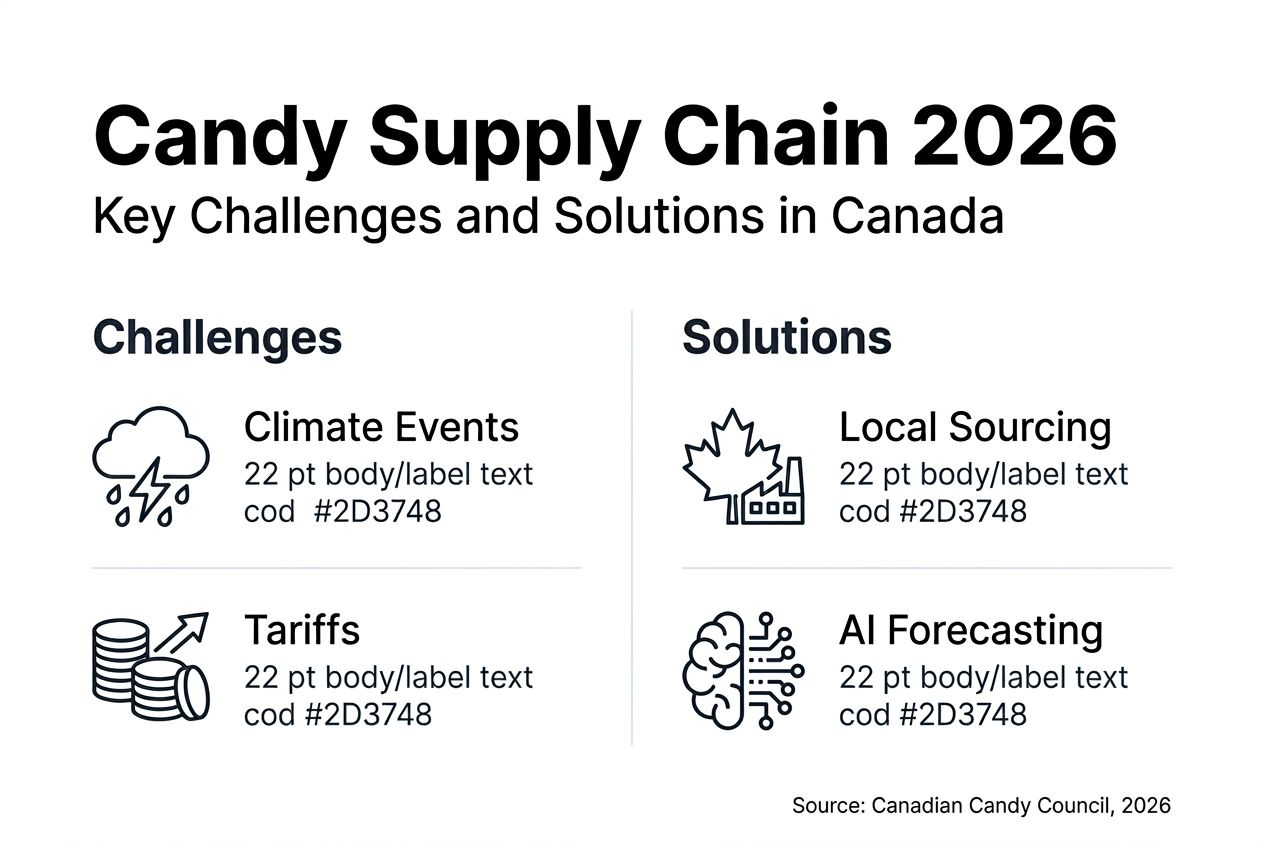
Trade sanctions limit sourcing options suddenly. When governments restrict commerce with specific countries, supply chains dependent on those regions scramble to find alternatives. Diversified sourcing networks adapt faster than concentrated ones.
Ingredient shortages occur when multiple risk factors compound. A crop failure in one region becomes critical when tariffs limit alternative sources and geopolitical tensions constrain logistics options. Resilience requires planning for multiple simultaneous disruptions.
“Supply chain leaders who build resilience through diversified networks and real-time monitoring maintain availability while competitors face stockouts during disruptions.”
Risk mitigation strategies for Canadian candy retailers:
- Qualify backup suppliers for critical ingredients before disruptions occur
- Maintain strategic inventory buffers for products with volatile supply
- Implement real-time monitoring systems tracking supplier health metrics
- Develop contingency plans for transportation route disruptions
- Build cross-functional teams coordinating risk response across departments
Contingency planning prevents panic responses. When you’ve already identified alternative suppliers and logistics routes, disruptions become manageable inconveniences rather than existential threats. The planning investment pays for itself the first time you avoid a crisis.
The wholesale candy purchasing tips framework includes risk assessment as a core component. Understanding supplier vulnerabilities helps you build resilience before problems materialize.
Flexible sourcing plans provide options when primary suppliers face constraints. Qualifying multiple vendors for each critical product category costs time upfront but delivers security when supply chains tighten. Understanding critical supply chain risks 2026 helps prioritize which products need backup sources most urgently.
Customization, private labeling, and value-add services
Private labeling creates product differentiation that protects margins in competitive markets. When you control branding, you’re not competing directly with identical products available at every competitor. Unique offerings build customer loyalty that resists price-based competition.
Product customization increases retail appeal beyond generic wholesale offerings. Custom flavor combinations, package sizes, and seasonal variations give shoppers reasons to choose your store over alternatives. These distinctions matter more as competition intensifies.
Co-packing services streamline packaging logistics while maintaining quality control. Rather than managing packaging operations internally, partnering with specialized providers delivers professional results without capital investments in equipment and facilities.
Benefits of private label and customization strategies:
- Complete branding control differentiating your products from competitors
- Faster time to market for seasonal and trend-responsive offerings
- Cost savings through specialized partner expertise and equipment
- Flexible order quantities matching your inventory needs
- Quality consistency from partners focused on packaging excellence
Branding control extends to every customer touchpoint. Package design, ingredient messaging, and nutritional positioning all reinforce your retail identity rather than promoting manufacturer brands that customers can find elsewhere.
Time to market matters for seasonal products and emerging trends. When you start selling private label candy through specialized partners, you can respond to market opportunities faster than competitors managing everything internally.
Exploring private label co-packing packaging services reveals options for retailers at every scale. Services range from simple repackaging to complete custom formulation, letting you choose the level of differentiation that fits your market positioning.
Conclusion and practical next steps for retailers
Wholesale candy supply chains in 2026 present complex challenges spanning raw materials, seasonality, cold chain requirements, trade policies, and geopolitical risks. Success requires moving beyond reactive problem-solving toward proactive strategic planning that builds resilience.
Technology and data-driven decision making separate leaders from followers. Supply chain leaders integrate customer centricity and data-driven insights to maximize value while maintaining resilience against disruptions that competitors struggle to navigate.
Actionable steps for optimizing your candy supply chain:
- Conduct supplier risk assessments identifying vulnerabilities in your network
- Implement AI-powered forecasting tools improving demand prediction accuracy
- Invest in cold chain monitoring technology protecting product quality
- Explore private labeling opportunities differentiating your product mix
- Build relationships with Canadian suppliers reducing trade policy exposure
Canadian suppliers and service providers offer advantages during periods of international trade uncertainty. Domestic partnerships simplify compliance while reducing exposure to tariff volatility and cross-border logistics complications.
The Total Value Supply Chain approach balances cost efficiency with resilience and customer satisfaction. Optimizing any single factor in isolation creates vulnerabilities elsewhere. Integrated planning across all supply chain dimensions delivers sustainable competitive advantages.
Leveraging specialized partners for candy suppliers Canada guide services and private label co-packing packaging services lets you focus on retail excellence while experts handle supply chain complexity.
Adopting supply chain trends 2026 best practices positions your business for growth despite external uncertainties. The retailers who thrive in coming years will be those who built resilient supply networks today.
Explore Spaceman’s private label & co-packing services
Navigating candy supply chain complexity becomes simpler when you partner with specialists who understand Canadian market dynamics. Spaceman offers comprehensive private label, co-packing, and packaging services designed specifically for wholesale candy retailers facing the challenges outlined throughout this guide.

Our private label co-packing packaging services help you differentiate product offerings while maintaining quality and efficiency. From freeze-dried candy to custom packaging solutions, we provide the flexibility you need to respond to market opportunities quickly.
Pro Tip: Starting with products like our freeze dried candy starter pack or freeze dried candy wholesale display kit lets you test private label concepts with minimal risk before scaling successful offerings.
Frequently asked questions
What are the biggest challenges in the wholesale candy supply chain in 2026?
The primary challenges include ingredient shortages driven by climate impacts and domestic sourcing mandates, trade tariff volatility creating cost uncertainty, cold chain logistics requirements for quality maintenance, and seasonal demand spikes straining inventory planning. Technology adoption and strategic supplier diversification help mitigate these challenges by improving forecasting accuracy and building supply resilience.
How can Canadian retailers manage seasonal candy demand effectively?
Implement AI-powered forecasting tools that analyze historical sales patterns alongside external factors like weather and economic conditions. Build inventory buffers for best-selling products 6-8 months before peak seasons, and establish backup supplier relationships ensuring availability during high-demand periods.
Why is cold chain logistics critical for candy quality?
Temperature fluctuations cause chocolate blooming and gum texture degradation that make products unsalable despite being safe to consume. AI-enabled cold chain monitoring systems have improved compliance rates from 59% to over 85%, dramatically reducing spoilage costs while protecting brand reputation through consistent quality.
What impact do trade tariffs have on candy ingredient sourcing?
Tariff volatility creates unpredictable cost increases that can eliminate profit margins overnight, with 72% of supply chain professionals citing this as their top regulatory concern. Retailers must diversify supplier networks across multiple countries, develop domestic sourcing alternatives, and build flexible pricing strategies that accommodate sudden tariff changes.
Recommended
- Wholesale Freeze Dried Candy Canada: 9.96% CAGR Growth – Spaceman
- Candy Distribution Canada: Boost Margins 50% Freeze-Dried – Spaceman
- Why Freeze-Dried Candy Wholesale is the Next Big Opportunity for Retai – Spaceman
- Candy Suppliers Canada: Complete Guide for Retailers – Spaceman
- Fresh vs Frozen Foods: Making Smart Choices in 2025 – naturessoulshop