

Canada’s food wholesale sector hit a remarkable EBITDA multiple of 16.53x in 2026, up 124.9% year over year. This explosive growth signals massive opportunity for retailers and distributors, yet many struggle with sourcing wholesale candy, navigating freeze-dried options, and understanding private labeling. The complexity of choosing suppliers, managing inventory, and capitalizing on emerging trends like freeze-dried candy creates confusion that costs businesses money and market share. This guide cuts through the noise to deliver practical strategies for building profitable wholesale candy operations in Canada.
Table of Contents
- Key takeaways
- Overview of wholesale candy distribution in Canada
- Choosing the right wholesale candy supplier in Canada
- Understanding freeze-dried candy wholesale trends and benefits
- Leveraging private label and co-packing services for wholesale candy
- Explore Spaceman’s wholesale candy and private label services
- Frequently asked questions about wholesale candy distribution in Canada
Key Takeaways
| Point | Details |
|---|---|
| Market growth | Canada’s wholesale candy EBITDA multiple reached 16.53x in 2026, signaling strong margins and ample opportunity for retailers and distributors. |
| Distributor types | The market comprises traditional candy wholesalers, freeze dried candy specialists, and private label providers, each serving distinct customer needs. |
| Supply chain resilience | Supplier capabilities, lead times, geographic reach, and service options determine margins and risk during seasonal spikes. |
| Value added options | Private labeling, copacking, and custom packaging enable differentiation and higher margins. |
| Pricing and terms | Evaluate minimum order quantities, lead times, and shipping costs to determine true cost per unit and maximize profitability. |
Overview of wholesale candy distribution in Canada
Canada’s wholesale candy market represents a lucrative opportunity for retailers and food distributors willing to navigate its complexities. The sector’s profitability is undeniable, with food wholesale EBITDA multiples reaching 16.53x in 2026, reflecting strong investor confidence and robust margins. This growth creates space for businesses to capture market share through strategic sourcing and product differentiation.
The wholesale candy landscape includes three primary distributor types. Traditional candy wholesalers offer established brands and classic confections with predictable demand patterns. Freeze-dried candy specialists focus on innovative products with premium positioning and higher margins. Private label providers enable retailers to develop branded candy lines that build customer loyalty and competitive advantage. Each category serves distinct business needs and market segments.
“The 124.9% year over year increase in food wholesale valuations demonstrates unprecedented market strength and opportunity for strategic players.”
Understanding supplier capabilities shapes your competitive position. Key differentiators include:
- Product range depth across traditional, freeze-dried, and specialty categories
- Minimum order flexibility that aligns with your inventory capacity
- Delivery reliability and geographic coverage across Canadian provinces
- Value-added services like private labeling, co-packing, and custom packaging
- Supply chain resilience during seasonal demand spikes
The best wholesale candy distributors in Canada distinguish themselves through consistent quality, transparent pricing, and partnership approaches that support retailer growth. Market dynamics favor distributors who combine traditional candy expertise with emerging categories like freeze-dried products, creating diversified revenue streams that weather seasonal fluctuations.
Risk management matters in wholesale candy distribution. Suppliers with shallow product portfolios expose you to demand volatility, while those offering broad selections enable you to test new categories without switching partners. Geographic reach affects delivery costs and lead times, directly impacting your margins and ability to respond to customer needs.
Choosing the right wholesale candy supplier in Canada
Supplier selection determines your profitability, operational efficiency, and market competitiveness. Start by evaluating product range, ensuring suppliers stock both traditional favorites and trending items like freeze-dried candy. A diverse catalog lets you respond quickly to consumer preferences without managing multiple vendor relationships.
Pricing structures vary significantly across wholesale candy distributors. Some offer volume discounts that reward larger purchases, while others maintain flat pricing with lower minimum order quantities. Calculate your true cost per unit after factoring in shipping, storage, and potential waste from overordering. The food wholesale sector’s 16.53x EBITDA multiple indicates strong supplier margins, creating room for negotiation on pricing and terms.
Key evaluation criteria include:
- Minimum order quantities that match your storage capacity and cash flow
- Lead times from order placement to delivery at your location
- Delivery options including direct shipping, regional hubs, or pickup
- Payment terms such as net 30, net 60, or prepayment requirements
- Return policies for damaged or unsellable inventory
- Technical support for product questions and merchandising guidance
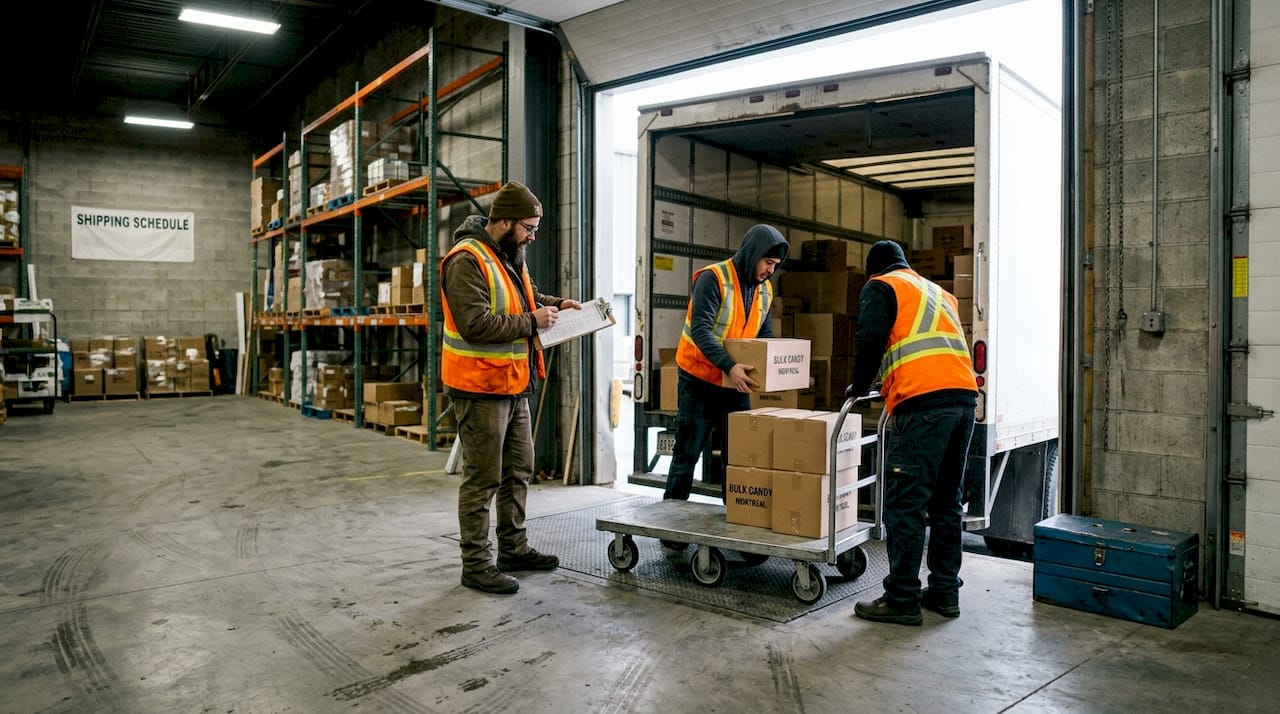
Logistics capabilities separate exceptional suppliers from mediocre ones. Reliable delivery schedules prevent stockouts that lose sales, while flexible ordering accommodates seasonal demand spikes. Assess whether suppliers maintain safety stock for fast-moving items and how they handle backorders when products are temporarily unavailable.
Pro Tip: Use market growth data and EBITDA multiples as negotiation leverage when discussing pricing and terms with suppliers. The sector’s profitability means distributors have margin flexibility for strategic partners.
Private labeling and co-packing services add strategic value for retailers building branded product lines. Suppliers experienced in these areas help you differentiate from competitors while maintaining quality control. Evaluate their private label capabilities, minimum production runs, and design support when custom branding matters to your strategy.
| Supplier feature | What to evaluate | Why it matters |
|---|---|---|
| Pricing | Volume discounts, freight costs, payment terms | Directly impacts gross margins |
| MOQ | Cases per order, dollar minimums | Affects cash flow and storage needs |
| Lead times | Order to delivery duration | Influences inventory planning |
| Private label | Design support, minimum runs, customization | Enables brand differentiation |
| Product range | Traditional, freeze-dried, specialty items | Supports diverse customer preferences |
Supply chain resilience became critical through recent global disruptions. Ask suppliers about backup sourcing, inventory buffers, and contingency plans for transportation delays. Distributors with robust supply chains maintain service levels when competitors face shortages, protecting your revenue during peak seasons.
Assess supplier reputation through references from other retailers in your market segment. Selecting candy suppliers requires due diligence on financial stability, customer service responsiveness, and track record for quality consistency. A comprehensive supplier guide helps you compare options systematically rather than choosing based on price alone.
Understanding freeze-dried candy wholesale trends and benefits
Freeze-dried candy represents a premium product category with distinct advantages for Canadian retailers. The freeze-drying process removes moisture while preserving flavor, creating a light, crunchy texture that appeals to consumers seeking novel experiences. Extended shelf life reduces waste and markdowns compared to traditional candy, directly improving your bottom line.
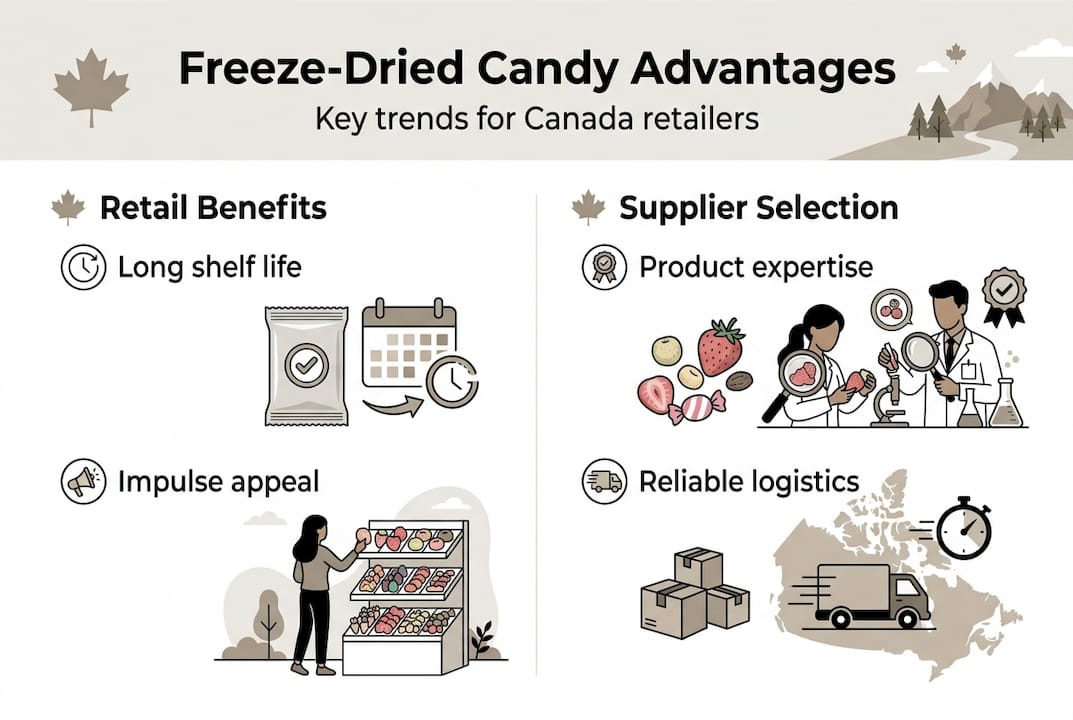
Consumer interest in freeze-dried candy continues growing, driven by social media exposure and novelty appeal. The category attracts health-conscious buyers who perceive freeze-dried products as less processed, plus adventurous consumers drawn to unique textures and intensified flavors. This dual appeal creates broader market reach than conventional candy categories.
Top 5 benefits of stocking freeze-dried candy:
- Higher profit margins through premium pricing that consumers willingly pay for novelty
- Extended shelf life of 12-24 months reduces spoilage and clearance markdowns
- Lightweight products lower shipping costs and simplify inventory handling
- Strong social media appeal drives organic marketing and word-of-mouth promotion
- Differentiation from competitors still focused on traditional candy selections
Market dynamics favor early adopters in freeze-dried candy distribution. The 16.53x EBITDA multiple in food wholesale reflects profitability potential in niche categories like freeze-dried products, where limited competition supports premium pricing. Retailers who establish freeze-dried candy sections before saturation capture loyal customers and first-mover advantages.
Consumer trends driving freeze-dried candy popularity include:
- Social media virality creating awareness and trial among younger demographics
- Texture innovation appealing to consumers seeking new sensory experiences
- Perceived health benefits from reduced sugar density per piece
- Gift and novelty purchases for special occasions and unique presents
- Snacking occasions where lightweight, non-melting candy offers convenience
“Freeze-dried candy’s combination of premium pricing, extended shelf life, and consumer excitement creates a rare trifecta of profitability, operational efficiency, and market differentiation.”
Sourcing freeze-dried candy wholesale requires evaluating supplier expertise in this specialized category. Production quality varies significantly, affecting texture consistency and flavor retention. Boosting margins with freeze-dried candy depends on partnering with manufacturers who maintain strict quality standards and can scale production to meet your demand.
Inventory management differs for freeze-dried versus traditional candy. While extended shelf life reduces urgency, the premium price point means slower turnover for some SKUs. Start with variety packs that let customers sample multiple flavors, then expand into full-size packages of proven sellers. Bulk freeze-dried candy purchasing strategies balance selection breadth with inventory investment.
Retail presentation matters for freeze-dried candy success. Eye-catching packaging and prominent placement drive impulse purchases, while product education through signage helps customers understand the unique benefits. Position freeze-dried candy near checkout or in high-traffic areas where novelty appeal converts browsers into buyers.
Leveraging private label and co-packing services for wholesale candy
Private labeling transforms wholesale candy from a commodity into a branded differentiator that builds customer loyalty and insulates you from price competition. By partnering with co-packers, retailers create custom candy products under their own brand, capturing higher margins and strengthening market position. This strategy works especially well for businesses with established customer bases seeking exclusive products.
Co-packing services handle production, packaging, and quality control while you focus on branding, marketing, and sales. Experienced co-packers bring manufacturing expertise, regulatory compliance knowledge, and economies of scale that would be prohibitively expensive to develop in-house. The 16.53x EBITDA multiple in food wholesale reflects the strategic value investors place on branded and private label food products.
| Aspect | Private label | Standard wholesale |
|---|---|---|
| Brand control | Complete control over branding and positioning | Selling established third-party brands |
| Profit margins | Higher margins from premium pricing and exclusivity | Standard wholesale margins |
| Minimum orders | Higher MOQs for custom production runs | Lower MOQs for stocked inventory |
| Market differentiation | Unique products competitors cannot replicate | Same products available to all retailers |
| Customer loyalty | Builds brand affinity and repeat purchases | Loyalty tied to manufacturer brand |
| Investment required | Upfront costs for design, packaging, production | Lower initial investment |
Key advantages of co-packing services include:
- Access to specialized equipment and production expertise without capital investment
- Scalability that grows with your business without facility expansion
- Quality assurance through established manufacturing processes and testing
- Regulatory compliance handled by experienced food safety professionals
- Flexible production runs that adapt to seasonal demand patterns
- Faster time to market compared to building in-house manufacturing
Considerations when selecting co-packing partners involve production capabilities, minimum order quantities, lead times, and quality consistency. Evaluate their experience with your target product categories, especially specialized items like freeze-dried candy that require specific equipment and expertise. Private label and co-packing services should align with your volume projections and growth timeline.
Pro Tip: Partner with co-packers experienced in freeze-dried candy production to capitalize on this high-margin niche while it remains undersaturated in Canadian markets.
Product development through private labeling starts with market research to identify gaps in current offerings. Analyze competitor products, customer feedback, and emerging trends to design candy that meets unmet needs. Co-packers often provide formulation support and packaging design guidance, accelerating your path from concept to shelf.
Branding strategy determines private label success. Develop packaging that communicates quality, tells your brand story, and stands out on crowded shelves. Investment in professional design pays dividends through higher perceived value and stronger shelf presence. Sourcing Canadian candy for private label projects requires understanding regional preferences and local ingredient availability.
Financial modeling for private label candy accounts for design costs, minimum production runs, packaging materials, and inventory carrying costs. While upfront investment exceeds standard wholesale purchasing, the margin improvement and competitive differentiation justify the expense for retailers with sufficient sales volume. Calculate your breakeven point based on realistic sales projections and pricing assumptions.
Regulatory compliance cannot be overlooked in private label candy production. Canadian food safety regulations require proper labeling, ingredient declarations, allergen warnings, and nutritional information. Reputable co-packers handle these requirements, but you remain ultimately responsible for compliance. Candy factory partnerships should include clear agreements about quality standards and regulatory responsibilities.
Explore Spaceman’s wholesale candy and private label services
Spaceman delivers comprehensive solutions for Canadian retailers and distributors seeking wholesale candy excellence. Our private label and co-packing services transform your vision into market-ready products with full support from concept through production. We specialize in freeze-dried candy manufacturing, bringing expertise that ensures quality consistency and production efficiency.
Our freeze-dried candy wholesale variety pack includes 40 bags across popular flavors, perfect for retailers testing this high-margin category. For established operations ready to scale, the wholesale retail display kit provides 72 bags with a professional display rack that drives impulse purchases. These solutions combine product quality with merchandising support, helping you maximize sales per square foot while building customer excitement around innovative candy offerings.
Frequently asked questions about wholesale candy distribution in Canada
What are the minimum order quantities for wholesale candy in Canada?
Minimum order quantities vary by supplier and product category, typically ranging from one case (12-24 units) to full pallet orders (500-1000 units). Freeze-dried candy often requires higher MOQs due to specialized production, while traditional candy offers more flexibility. Negotiate terms based on your storage capacity and projected sales velocity.
How can I assess the reliability of a candy distributor?
Request references from current retail clients in your market segment and verify their track record for on-time delivery, order accuracy, and customer service responsiveness. Check financial stability through credit reports and evaluate their supply chain depth by asking about backup sourcing and inventory buffers. Starting candy distribution successfully depends on choosing partners with proven operational excellence.
What are the lead times to expect when ordering freeze-dried candy wholesale?
Standard freeze-dried candy orders from established inventory typically ship within 5-10 business days. Custom or private label production extends lead times to 4-8 weeks depending on order complexity, packaging customization, and production schedules. Plan seasonal inventory purchases 6-8 weeks ahead to ensure availability during peak demand periods.
Can I create my own candy brand through private labeling?
Yes, private labeling lets you develop branded candy products through partnerships with co-packers who handle production while you control branding, packaging design, and market positioning. Minimum production runs typically start at 500-1000 units depending on product complexity. This approach builds customer loyalty and enables premium pricing unavailable with generic wholesale products.
What regulations affect candy distribution in Canada?
Canadian candy distribution requires compliance with Food and Drugs Act regulations, including proper labeling with bilingual ingredient lists, nutritional information, allergen declarations, and manufacturer contact details. Provincial regulations may add requirements for business licensing and food handler certification. The wholesale candy supply chain in Canada operates under CFIA oversight, making regulatory knowledge essential for legal operations and consumer safety.