

The main types of packaging box materials are corrugated cardboard, paperboard (folding cartons), rigid set-up board, molded pulp, plastic, metal, wood, and multi-material laminates. Each one solves a different problem, so the “best” choice depends entirely on what the box needs to do.
- Need shipping durability? Pick corrugated cardboard.
- Need retail shelf presence? Pick paperboard folding cartons.
- Need a luxury unboxing moment? Pick rigid set-up boxes.
- Need eco-friendly cushioning? Pick molded pulp inserts.
- Need moisture or grease resistance? Pick plastic or a laminated composite.
- Need a reusable gift container? Pick metal tins.
- Need to survive a freight pallet? Pick wood crates.
Key Takeaways
The right packaging box material comes down to matching protection, barrier needs, and print requirements to the product, then verifying that any coating or lamination doesn’t quietly undo the recyclability of the base material.
| Point | Details |
|---|---|
| Match material to risk first | Define damage risk and weight before picking corrugated, rigid board, or another stock. |
| Corrugated wins for shipping | Single-wall handles most parcels under 15 pounds; double-wall suits heavier or fragile freight. |
| Coatings undercut recyclability | Lamination, wax, and soft-touch finishes often block curbside recycling even on recycled-fiber boxes. |
| Verify claims, don’t assume them | Ask suppliers for TDS documents and FSC certificates before approving any material. |
| Space-man supports packaging decisions | Space-man’s private label and co-packing services help food and candy brands source the right box materials for production runs. |
Table of Contents
- Why Box Material Choice Actually Matters
- Corrugated Cardboard for Shipping and Heavy Protection
- Paperboard and Folding Cartons for Retail Presentation
- Rigid Set-Up Boxes for Premium Presentation and Gifting
- Rigid Plastic Boxes and Clamshells for Moisture or Barrier Needs
- Metal Tins and Metal Boxes
- Molded Pulp for Protective Trays and Eco-Friendly Inserts
- Wood and Crates for Heavy or Long-Distance Shipments
- Composite and Multi-Material Constructions
- Coatings, Finishes, and Additives That Change Performance
- Key Specs and Terms You’ll See on a Box Quote
- How to Pick the Right Box Material: A Supplier Checklist
- What Actually Makes a Box “Eco-Friendly”
- Packaging Choices We’ve Used for Candy and Small Food Brands
- How Space-man Can Help With Your Box Sourcing
- Sources
- FAQ
Why Box Material Choice Actually Matters
Picking a box material isn’t just an aesthetic decision. It’s a balancing act between six factors: protection and strength, barrier performance against moisture and oxygen, weight and cost, print and finishing quality, sustainability and end-of-life, and food-contact or regulatory compliance.
Here’s the catch: these factors pull against each other constantly. A material that prints beautifully, like coated paperboard, often can’t survive a rough freight ride the way corrugated can. A plastic clamshell that blocks moisture perfectly might be a nightmare for curbside recycling. Chase strength too hard and you’ll pay for it in shipping weight. Chase a premium look and you’ll pay for it in cost per unit.
- Protection and strength (will it survive the trip?)
- Barrier properties (does the product need to stay dry, fresh, or sealed?)
- Weight and cost (does shipping weight eat your margin?)
- Print and branding (does the box need to sell the product on a shelf?)
- Sustainability and end-of-life (can it actually be recycled or composted where your customer lives?)
- Food-contact and regulatory rules (does the material need certification?)
Pro Tip: Never take a supplier’s word for “recyclable” or “compostable” at face value. Ask for the technical data sheet and check it against your local recycling rules, because a coating or laminate can quietly cancel out an otherwise eco-friendly base material — more on that in the sustainability section below.
Corrugated Cardboard for Shipping and Heavy Protection
Corrugated is the workhorse of the packaging world, and for good reason. It’s built from two flat paper liners sandwiching a fluted (wavy) medium in between, which creates air pockets that absorb shock and resist crushing. You’ll see it as single-wall (one fluted layer), double-wall (two), or triple-wall (three) depending on how much weight or impact the box needs to survive.
Flute types matter more than most people realize:
- A-flute: thickest, best cushioning, used for fragile goods.
- B-flute: thinner, great print surface, common in retail-ready cartons.
- C-flute: the middle ground, the most common shipping flute.
- E-flute and F-flute: very thin, used for lightweight retail boxes needing a crisp print finish.
Strength gets measured in ECT (edge crush test) and BCT (box compression test). A 32 ECT single-wall box is standard for light e-commerce parcels under about 20 pounds. Heavier or stacked freight usually calls for double-wall board with a higher ECT rating.
Corrugated remains the most widely used packaging category for shipped goods, largely because it’s cheap to produce and easy to recycle. Clean, uncoated corrugated is one of the most recyclable materials in the packaging world, though wax-coated or heavily laminated versions can contaminate recycling streams.
Pro Tip: If your product weighs under 15 pounds and travels by standard parcel carrier, single-wall corrugated is almost always enough. Save double-wall for anything fragile, heavy, or headed for freight pallets.
Paperboard and Folding Cartons for Retail Presentation
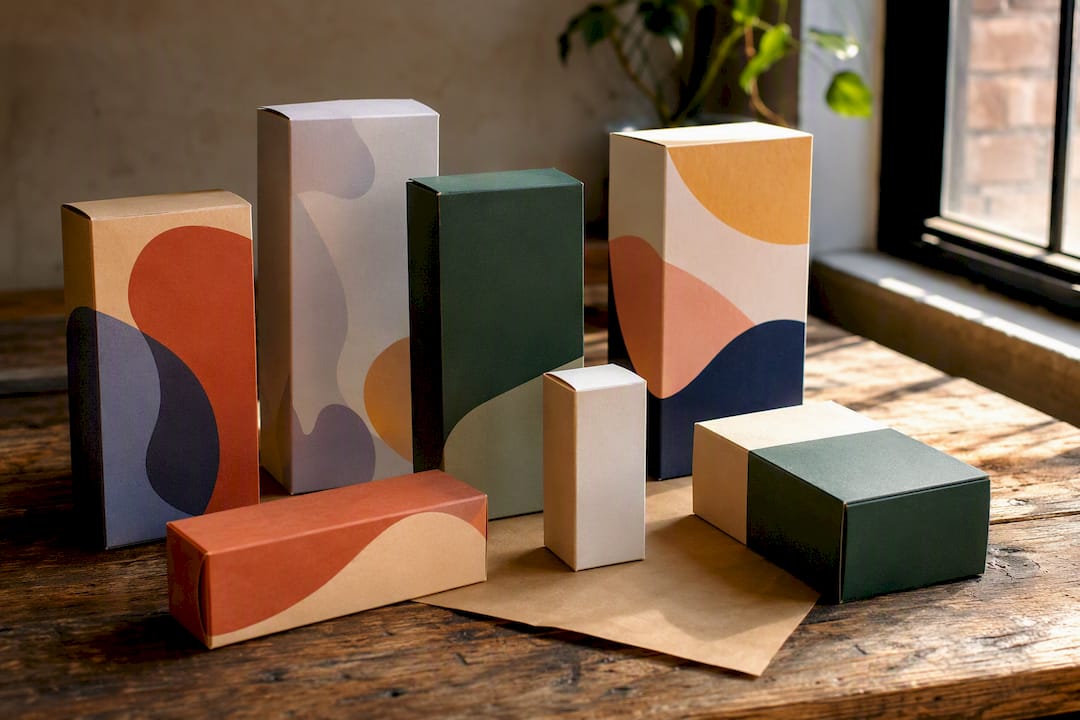
Paperboard is thinner and more refined than corrugated, and it’s what most folding cartons on store shelves are made from. The two common types are SBS (solid bleached sulfate, bright white and premium-looking) and FBB or kraft board (often recycled, with a more natural brown tone). GSM (grams per square meter) typically ranges from 250 to 400 for folding cartons, with higher GSM giving you a stiffer box and a better print surface.
Choose folding cartons over corrugated when the product is light, the box needs high-color graphics, or it’s going to sit on a retail shelf where looks matter more than crush resistance. The tradeoff is cushioning: paperboard offers almost none, and it’s more sensitive to moisture than corrugated unless you add a lamination or an inner liner.
- Matte or gloss lamination adds a premium feel and some moisture resistance.
- Soft-touch coatings feel great in hand but usually aren’t recyclable curbside.
- Uncoated kraft board is the most recycling-friendly option but limits print vibrancy.
Every coating you add for looks tends to subtract from recyclability, so weigh that trade before locking in a finish.
Rigid Set-Up Boxes for Premium Presentation and Gifting
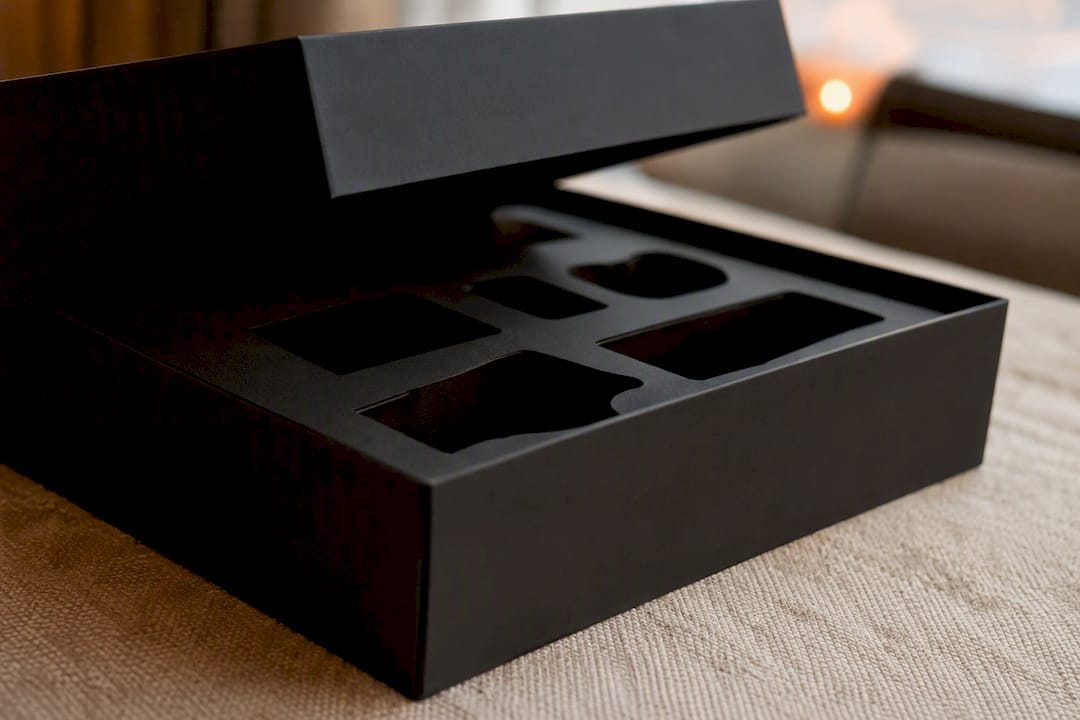
Rigid boxes, sometimes called set-up boxes, use high-caliper greyboard (often 1.5mm to 3mm thick) wrapped in printed art paper or fabric. Unlike folding cartons, they don’t fold flat. They arrive pre-formed, which is exactly why they feel so substantial when a customer opens one.
This is the material of choice for luxury retail, gift boxes, and subscription boxes where the unboxing experience is part of the product. The premium feel and print surface come at a real cost, though: rigid boxes cost significantly more per unit than paperboard, and they take up far more warehouse space since they can’t be shipped flat.
- Premium tactile feel and structural presence.
- Excellent surface for foil stamping, embossing, and specialty finishes.
- Higher unit cost and storage footprint compared to folding cartons.
- Zero cushioning on their own.
Pro Tip: If you’re shipping a rigid retail box directly to a customer, nest it inside a plain corrugated shipper first. It protects the pretty box from getting dented in transit, and the customer never sees the plain outer layer.
Rigid Plastic Boxes and Clamshells for Moisture or Barrier Needs
Plastic earns its place in packaging when a product needs visibility, resealability, or a moisture barrier that fiber-based materials can’t match. The most common plastics used in rigid boxes and clamshells are PET (clear, food-safe, widely recyclable), PP (more durable, resists heat better), and PS (cheap but more brittle and harder to recycle in most municipal programs).
Food-contact use requires verified food-grade certification from the supplier, not just an assumption based on the plastic type. If your product touches the packaging directly, that documentation matters for shelf-stable food safety as much as for consumer trust.
Roughly 91% of plastic produced globally is never recycled, which is the single biggest reason plastic should be a deliberate choice for barrier needs, not a default.
PET clamshells are accepted by most curbside programs, but mixed or colored plastics often aren’t. Compostable plastics sound appealing, but most need industrial composting facilities that many regions simply don’t have.
Metal Tins and Metal Boxes
Metal earns its keep when a product needs a barrier that plastic and paper can’t match, or when the packaging itself is meant to be part of the gift. Tinplate steel and aluminum are the two common choices, and both offer excellent protection against oxygen, moisture, and light, which translates into a much longer shelf life for the product inside.
The cost is higher than nearly every other box material on this list, and recycling infrastructure for metal varies a lot by region. Where curbside metal recycling exists, though, it’s genuinely effective.
- Best for confections, holiday gift sets, and limited-edition drops where reuse is part of the appeal.
- Excellent barrier performance for extending shelf life.
- Higher per-unit cost than fiber or plastic alternatives.
- Recycling rates depend heavily on local infrastructure.
Molded Pulp for Protective Trays and Eco-Friendly Inserts
Molded pulp, sometimes called molded fiber, is made from recycled paper fiber pressed into shape under heat and pressure. Think of an egg carton. That same manufacturing process now shows up in candy trays, wine bottle inserts, and mailer box liners that used to be foam.
It’s genuinely one of the more sustainable options on this list, typically made from high recycled content and often industrially compostable when uncoated. That last part matters: any water-resistant coating applied to molded pulp can affect whether it composts as cleanly as the marketing suggests.
- Excellent shock absorption for fragile items.
- Strong recycled-content and compostability profile when uncoated.
- Limited print and branding surface, so it usually pairs with a printed outer box.
Wood and Crates for Heavy or Long-Distance Shipments
Wooden crates and plywood boxes come into play when a product is too heavy or structurally demanding for cardboard, or when it’s headed overseas on a pallet. If you’re shipping wood packaging across international borders, treated and stamped wood meeting ISPM 15 rules is typically required, and enforcement varies by destination country, so confirm the specific requirement before you ship.
- Best for heavy machinery, industrial parts, or palletized export freight.
- Highly durable and often reusable across multiple shipments.
- Significantly heavier and more expensive than fiber-based alternatives.
Composite and Multi-Material Constructions
Composite boxes combine two or more materials to get performance that neither one delivers alone. Common builds include paperboard laminated with polyethylene (PE) for moisture resistance, foil laminates for an airtight barrier, and metallized films for a glossy, reflective finish that pure paper can’t achieve.
These constructions solve real problems: grease resistance for food packaging, extended shelf life for snacks, or an eye-catching shine for retail shelves. The catch is recycling. Once you laminate a recycled paperboard box with PE, it usually can’t go through standard curbside paper recycling anymore, even though the base material started out perfectly recyclable.
- Choose composites when grease resistance or extended shelf life genuinely requires it, not just because a glossy finish looks nice.
- Design for disassembly where possible, so at least the recyclable component can be separated.
- Always ask the supplier what happens to the laminate at end-of-life before you commit.
Pro Tip: If sustainability messaging matters to your brand, a composite laminate can quietly undercut every other eco-friendly choice you’ve made. Ask the specific question: “Can this exact combination go through curbside recycling in the markets where I sell?”
Coatings, Finishes, and Additives That Change Performance
The base material is only half the story. Coatings and finishes change how a box feels, prints, and holds up, and they almost always change how recyclable it is too.
- Aqueous varnish: water-based, generally recycling-friendly, modest sheen.
- Solvent-based varnish: stronger sheen, worse for recyclability.
- Matte or gloss lamination (PP film): premium look, typically not curbside recyclable.
- Soft-touch coating: velvety feel, popular for premium retail, generally not recyclable.
- UV coating: high gloss and scratch resistance, mixed recyclability depending on thickness.
- Wax coating: strong moisture resistance, but wax-coated corrugated is a known recycling contaminant.
- Metallized foil stamping: great for branding accents, negligible impact on recyclability if used sparingly.
Pro Tip: Request the technical data sheet (TDS) for any finish before approving it. It should state the exact coating chemistry and give you a straight answer on end-of-life, not a vague “eco-friendly” claim.
Key Specs and Terms You’ll See on a Box Quote
Every box quote comes loaded with abbreviations, and knowing what they mean saves you from over-paying or under-protecting.
- ECT (edge crush test): measures how much stacking weight a box can handle before crushing. Higher ECT means better stacking strength.
- BCT (box compression test): measures the full box’s compression strength, factoring in size and design, not just the material.
- GSM (grams per square meter): measures paper or board density. Higher GSM generally means stiffer material and a better print surface.
- Ply: the number of layers in the board. More plies generally mean more strength and more bulk.
- Fluting: the wavy inner layer of corrugated board (A, B, C, E, F flutes), which determines cushioning and print quality.
Copy these terms into your next supplier email. It’s the fastest way to sound like you know exactly what you’re asking for, because you will.
How to Pick the Right Box Material: A Supplier Checklist
Work through this in order, and you’ll avoid most of the expensive mistakes people make when choosing box materials.
- Define the damage risk and weight. Is the product fragile, heavy, or both? This decides whether you’re looking at corrugated, rigid board, or something else entirely.
- Choose the structural stock. Match the base material to the risk you just identified.
- Pick the finish and barrier needs. Does the product need grease resistance, moisture protection, or just a nice print?
- Check food-contact and regulatory needs. If the box touches food directly, confirm food-grade certification in writing.
- Verify recyclability and end-of-life. Ask specifically about the combination of base material plus coating, not just the base material alone.
- Request samples and a technical data sheet. Never approve a material sight unseen.
Questions worth asking any supplier directly:
- “Is this stock FSC-certified, and can you show me the certificate?”
- “What exact coating or lamination is used, and does it affect recyclability?”
- “Can you provide ECT or BCT data along with physical samples?”
Watch for these red flags:
- Vague recyclability claims with no specifics (“eco-friendly” without a TDS to back it up).
- No willingness to provide sample prints before a full production run.
- An unknown or undisclosed coating on the finished box.
What Actually Makes a Box “Eco-Friendly”
Recycled content, FSC certification, industrial compostability, and curbside recyclability are four separate claims, and suppliers sometimes blur them together on purpose. Recycled content means some percentage of the material came from post-consumer or post-industrial waste. FSC certification means the virgin fiber came from a responsibly managed forest, tracked through a chain of custody. Compostability, especially industrial compostability, means the material breaks down under specific facility conditions that most households don’t have. Curbside recyclability means your local municipal program will actually accept it, which varies wildly by region.
Here’s where it gets tricky: a box made from recycled fiber can lose its recyclability entirely if it’s laminated with polyethylene or coated with a non-recyclable finish, even though the base material itself was perfectly sustainable.
Pro Tip: Ask suppliers for both the recycled content percentage and the full coating breakdown on the same document. If they can’t produce both, that’s your answer.
- Recycled content ≠ recyclable.
- FSC certification covers sourcing, not end-of-life.
- Compostable often means “industrially compostable,” not backyard compost.
- Always check the material and coating combination together, never separately.
Packaging Choices We’ve Used for Candy and Small Food Brands
Working with freeze-dried candy and small-batch confections teaches you fast that fragile, moisture-sensitive products punish sloppy packaging choices. A corrugated mailer with a molded pulp tray inside has worked well for candy that can’t tolerate crushing or shifting during transit. For retail-facing runs, a rigid gift box nested inside a plain corrugated shipper protects the presentation without sacrificing shipping durability.
The biggest lesson: moisture control and branding often pull in opposite directions, and the fix is almost always structural, not cosmetic.
How Space-man Can Help With Your Box Sourcing
Figuring out the right material is only half the job. Sourcing it reliably, in the right quantities, without getting stuck testing five suppliers before you find one that delivers consistent quality, is the part that actually eats your time.
Space-man runs private label, co-packing, and packaging services for consumer goods brands, and box and bag sourcing is part of that conversation, not a separate headache you have to solve on your own. If you’re a food or candy brand weighing corrugated versus a composite laminate for shelf life, that’s exactly the kind of trade-off Space-man works through with clients daily, alongside actual production and packaging runs. For custom manufacturing quotes on corrugated, folding carton, or rigid box builds, Packwire is a solid resource to compare against. Reach out to Space-man for a packaging consultation and get a straight answer on what material fits your product, your budget, and your shipping reality, before you commit to a production run.
Sources
- Vistaprint — Every type of packaging material
- National Geographic Education — Plastic recycling stat
- PackagingDigest — 5 types of packaging materials and their best uses
Always confirm final material decisions against your supplier’s own technical data sheets and your local recycling program, since both change faster than any guide can track.
FAQ
What is the most durable material for shipping boxes? Double-wall or triple-wall corrugated cardboard offers the best combination of crush resistance and cushioning for heavy or fragile shipments. Single-wall corrugated handles most standard parcels just fine.
Which packaging box material is the most eco-friendly? Uncoated corrugated and molded pulp tend to score highest on recyclability and compostability, but the real answer depends on the specific coating or lamination applied. Always check the full material combination, not just the base stock.
Can plastic boxes be recycled? Some can. PET is widely accepted in curbside recycling programs, but PP, PS, and mixed plastics are far less consistently accepted depending on your region’s facilities.
What’s the difference between paperboard and corrugated cardboard? Paperboard is a single, thinner sheet used mostly for retail folding cartons where print quality matters most. Corrugated has a fluted inner layer between two liners, giving it far more cushioning and stacking strength for shipping.
Do I need food-grade certification for candy or food packaging? Yes, if the packaging material makes direct contact with the food. Ask your supplier for written food-grade certification rather than assuming based on the material type alone.
How do I know if a coated box is still recyclable? Request the technical data sheet and check the specific coating chemistry against your local recycling program’s guidelines. Generic “eco-friendly” labeling on packaging isn’t a reliable substitute for that documentation.