

Most American consumers do not realize that nearly half of all over-the-counter medications now come from private label pharmacy brands. This shift has changed how people buy healthcare products, giving them more affordable and trusted options right at their local stores. With private label pharmacy lines growing in popularity, understanding their impact helps both businesses and shoppers make smarter choices when it comes to quality, price, and control.
Table of Contents
- What Private Label Pharmacy Means Today
- Business Models For Private Label Pharmacy
- Key Steps In Private Label Pharmacy Launch
- Legal, Regulatory, And Safety Essentials
- Profit Margins And Common Pitfalls
Key Takeaways
| Point | Details |
|---|---|
| Strategic Evolution | Private label pharmacy has evolved into a sophisticated approach, moving beyond generic medication to innovative products tailored to consumer needs. |
| Business Models | Retailers now utilize various sourcing strategies, including third-party manufacturing and direct sourcing, to enhance profitability and efficiency. |
| Launch Steps | Successful product launches require thorough market research, quality assurance, and strategic branding to meet consumer expectations effectively. |
| Regulatory Compliance | Navigating pharmaceutical regulations is essential for maintaining consumer trust and ensuring product safety, making compliance a competitive advantage. |
What Private Label Pharmacy Means Today
Private label pharmacy represents a strategic evolution in retail pharmaceutical offerings, where pharmacies and retailers develop their own branded medication and healthcare products. Modern private label brands have transformed significantly over the past decades, shifting from simple cost alternatives to sophisticated brand-building tools.
Today’s private label pharmacy goes far beyond generic medication reproduction. It encompasses a comprehensive approach to product development, packaging, and marketing that allows retailers to create unique healthcare experiences. Pharmacies can now develop product lines that reflect their specific brand identity, consumer needs, and quality standards. These products range from over-the-counter medications and supplements to specialized wellness offerings that target specific health demographics.
The strategic importance of private label pharmacy has grown exponentially. Retailers now view private labels as powerful tools for enhancing brand loyalty and market differentiation, not just as budget-friendly alternatives. By controlling product development, pharmacies can:
- Create targeted healthcare solutions
- Offer more competitive pricing
- Build stronger customer trust
- Develop unique brand narratives
- Respond quickly to emerging health trends
This dynamic approach allows pharmacies to position themselves as innovative healthcare partners, moving beyond traditional dispensing models to become proactive health management brands.
Business Models for Private Label Pharmacy
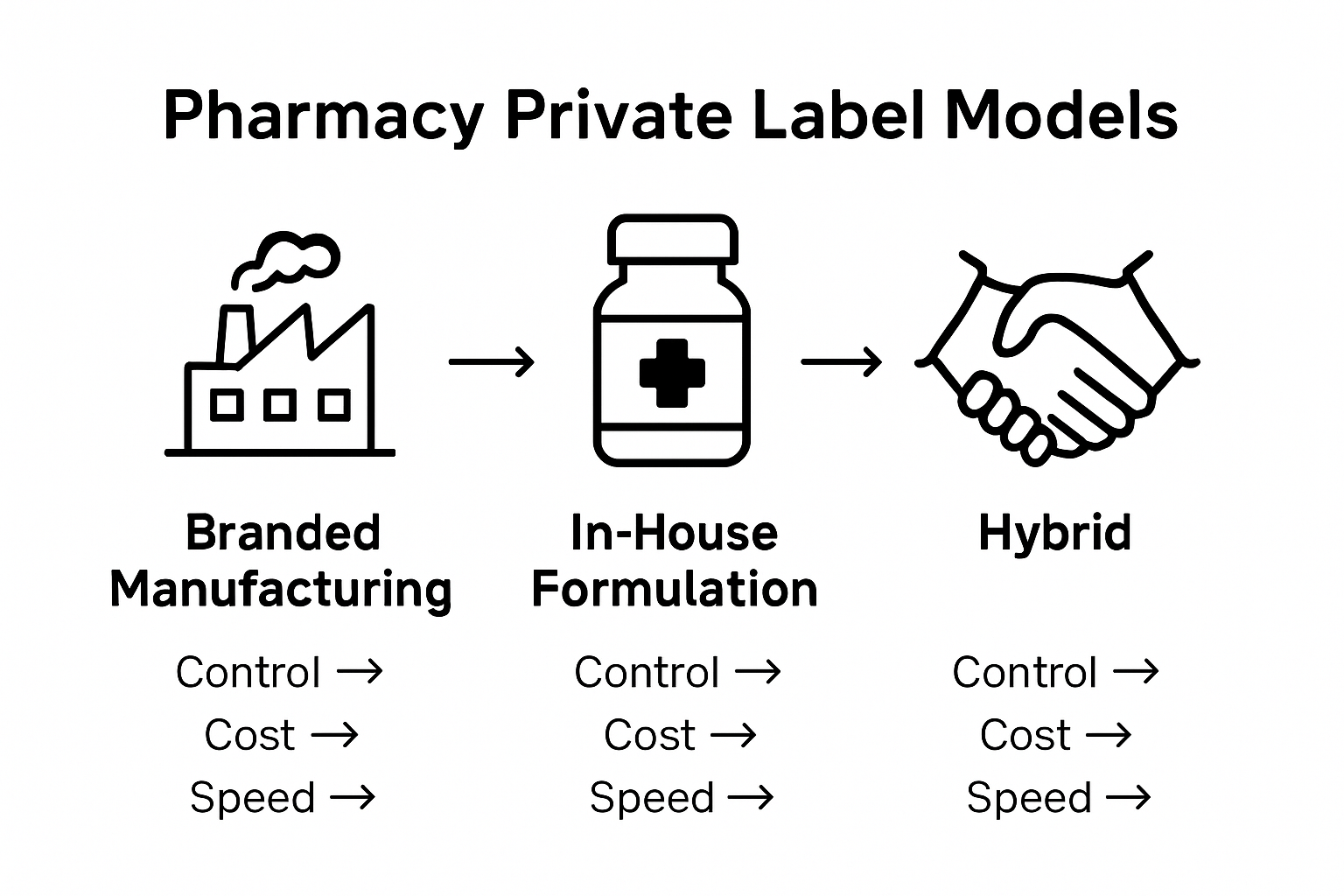
Private label pharmacy business models have dramatically transformed, offering retailers sophisticated strategies for product development and market positioning. Retailers now employ diverse approaches to manufacturing and sourcing pharmaceutical products, ranging from third-party contract manufacturing to fully integrated in-house production facilities.
Third-Party Manufacturing Model represents a prevalent strategy where pharmacies collaborate with specialized manufacturers to produce branded medications. This approach allows retailers to leverage external expertise while maintaining control over product specifications, packaging, and branding. By partnering with established manufacturers, pharmacies can quickly introduce new product lines without significant upfront infrastructure investments.
Direct sourcing strategies have emerged as another powerful business model, enabling pharmacies to bypass traditional intermediaries and optimize their supply chains. Key advantages of this model include:
- Reduced procurement costs
- Enhanced quality control
- Greater supply chain transparency
- Faster product innovation cycles
- Improved profit margins
The hybrid model is gaining significant traction, where pharmacies combine multiple sourcing strategies. This approach allows maximum flexibility, enabling retailers to balance cost-effectiveness, product quality, and market responsiveness. Successful private label pharmacy businesses now view their product lines as strategic assets, not just commodity offerings, transforming how healthcare products are conceived, developed, and marketed.
Key Steps in Private Label Pharmacy Launch
Launching a successful private label pharmacy requires strategic planning and meticulous execution, involving multiple critical phases that transform a concept into a marketable product line. The journey begins with comprehensive market research, which helps pharmacies identify specific consumer needs, potential gaps in existing product offerings, and opportunities for differentiation.

Market Research and Needs Assessment forms the foundational step of private label pharmacy development. Pharmacies must conduct in-depth analysis of consumer demographics, health trends, and existing product landscapes. This involves gathering data through surveys, analyzing prescription patterns, and understanding patient preferences. By mapping out precise consumer requirements, pharmacies can design targeted product lines that address specific health management needs.
Establishing robust quality assurance and regulatory compliance protocols represents another crucial stage in private label pharmacy launch. Key strategic components include:
- Identifying reputable manufacturing partners
- Developing stringent quality control mechanisms
- Ensuring full compliance with pharmaceutical regulations
- Creating comprehensive product testing frameworks
- Implementing track-and-trace systems
The final phase involves strategic branding and marketing, where pharmacies transform their private label products from generic offerings to distinctive healthcare solutions. This requires developing compelling packaging, creating targeted marketing narratives, and building consumer trust through transparent communication about product origins, ingredients, and quality standards. Successful private label pharmacies view this not just as product launch, but as building a comprehensive healthcare brand that resonates with consumer expectations and needs.
Legal, Regulatory, and Safety Essentials
Navigating the complex landscape of pharmaceutical regulations represents a critical challenge for private label pharmacies, requiring comprehensive understanding of legal frameworks and stringent compliance mechanisms. The regulatory environment demands meticulous attention to detail, with pharmacies needing to obtain specific licenses, adhere to manufacturing standards, and implement robust safety protocols that protect consumer health.
Licensing and Compliance form the cornerstone of legal operations in private label pharmacy. This involves obtaining multiple regulatory approvals from health authorities, which typically include demonstrating manufacturing capabilities, product safety standards, and comprehensive quality control processes. Pharmacies must maintain detailed documentation proving their ability to consistently produce pharmaceutical products that meet or exceed national health standards.
Pharmaceutical safety requires an integrated approach to regulatory compliance and risk management. Key strategic components include:
- Implementing comprehensive pharmacovigilance systems
- Conducting regular quality control testing
- Maintaining transparent supply chain documentation
- Tracking product performance and potential adverse reactions
- Establishing rapid response protocols for potential safety issues
Successful private label pharmacies recognize that legal and safety compliance is not merely a regulatory requirement but a fundamental commitment to consumer trust. This approach goes beyond minimum standards, transforming regulatory adherence into a competitive advantage that demonstrates the pharmacy’s dedication to product quality, consumer safety, and ethical healthcare practices.
Profit Margins and Common Pitfalls
Private label pharmacies present significant opportunities for enhanced profit margins by strategically reducing production and marketing expenses, yet navigating these financial landscapes requires nuanced understanding and careful strategic planning. The potential for increased profitability hinges not just on cost reduction, but on developing a comprehensive approach that balances economic efficiency with robust product quality and consumer perception.
Supply Chain Economics play a critical role in determining the financial success of private label pharmaceutical ventures. Pharmacies must meticulously analyze every aspect of their production and distribution model, identifying opportunities for cost optimization without compromising product integrity. This involves negotiating favorable manufacturing agreements, streamlining logistics, and implementing lean operational strategies that minimize overhead while maintaining high-quality standards.
Managing complex market dynamics represents another crucial factor in achieving sustainable profitability. Common challenges include:
- Maintaining consistent product quality
- Differentiating brand positioning
- Controlling production costs
- Managing supply chain complexity
- Developing effective marketing strategies
Successful private label pharmacies recognize that profit margins are not solely about reducing expenses, but about creating a comprehensive value proposition. This means investing strategically in product development, building consumer trust, and continuously adapting to market shifts. The most profitable private label pharmacy programs view cost management as a dynamic process, continuously refining their approach to balance economic efficiency with exceptional consumer value.
Elevate Your Private Label Pharmacy Brand with Expert Packaging Solutions
The article highlights the challenge pharmacies face in creating standout private label products that reflect their brand identity while ensuring quality and compliance. Key goals include developing unique packaging, maintaining consumer trust, and responding swiftly to market trends. At Space-Man, we understand how crucial packaging and branding are to transforming your private label offerings from generic to exceptional healthcare solutions. Our freeze dried candy manufacturing expertise combined with comprehensive private labeling and packaging services will help you build a competitive edge.
Partner with us to:
- Develop customized packaging that enhances your brand story
- Streamline co-packing and bagging processes for faster market entry
- Ensure consistent product quality that builds customer loyalty
Ready to unlock your private label pharmacy’s full potential with tailored packaging and manufacturing? Visit Space-Man today to explore how our private labeling and co-packing services can empower your brand to capture consumer trust and differentiate in a crowded market. Don’t wait to transform your product line into a distinctive healthcare brand that resonates with your customers.
Frequently Asked Questions
What is private label pharmacy?
Private label pharmacy involves pharmacies and retailers developing their own branded medication and healthcare products, allowing them to create unique healthcare experiences and enhance brand loyalty.
How do pharmacies ensure product quality in private label products?
Pharmacies establish robust quality assurance protocols, partner with reputable manufacturers, and implement stringent regulatory compliance measures to ensure that their private label products meet high safety and quality standards.
What are the advantages of using private label pharmacy products?
Private label pharmacy products often offer more competitive pricing, targeted healthcare solutions, and a unique brand experience, making them appealing to consumers seeking specific health management options.
How can pharmacies effectively market private label products?
Pharmacies can effectively market private label products by developing compelling packaging, creating targeted marketing narratives, and building consumer trust through transparent communication about product origins and quality standards.