

Freeze-dried candy has exploded in popularity among health-conscious consumers who believe its light, airy texture means fewer calories and better nutrition. This assumption is misleading. While freeze-drying does preserve certain nutrients better than heat-based methods, the candy itself remains high in sugar and calories. Understanding what freeze-drying actually does to candy’s nutritional profile helps you make informed choices about when and how to enjoy these novel treats without compromising your health goals.
Table of Contents
- Understanding Freeze-Dried Candy: What It Is And How It’s Made
- Nutritional Profile Of Freeze-Dried Candy: Myths And Facts
- Preservation Benefits And Shelf Life Advantages Of Freeze-Dried Candy
- Is Freeze-Dried Candy A Healthy Choice? Considerations For Health-Conscious Consumers
- Discover High-Quality Freeze-Dried Candy From Spaceman
- Frequently Asked Questions About Freeze-Dried Candy Nutrition
Key takeaways
| Point | Details |
|---|---|
| Calorie concentration | Freeze-dried candy contains the same calories as regular candy, just in a lighter form that can lead to overconsumption. |
| Sugar content remains high | Expect 15-25 grams of carbs per small serving with minimal protein or vitamins. |
| Superior preservation | Freeze-drying retains up to 90% of vitamins and antioxidants compared to heat drying methods. |
| Extended shelf life | Properly stored freeze-dried candy lasts up to 25 years versus 6-12 months for regular candy. |
| Texture appeal over nutrition | The crunchy texture and concentrated flavor are the main benefits, not improved nutritional value. |
Understanding freeze-dried candy: what it is and how it’s made
Freeze-drying transforms regular candy through a sophisticated preservation process called sublimation. During this process, candy is frozen to extremely low temperatures, then placed in a vacuum chamber where the ice crystals convert directly from solid to vapor without becoming liquid. This freeze drying process removes nearly all moisture while maintaining the candy’s original structure and cellular integrity.
The result is a product with remarkable flavor concentration. Studies show that freeze-drying utilizes sublimation to preserve flavor and nutritional profile, creating an intensified taste experience that can be 300-400% more potent than the original candy. The absence of heat during this process is crucial because it prevents the degradation of heat-sensitive compounds that would otherwise break down during conventional drying methods.
Here’s what happens during freeze-drying:
- Water content drops from 10-20% to less than 2%
- Original cellular structure remains intact, creating the signature crunch
- Flavor compounds become concentrated in the remaining solids
- Color and appearance stay remarkably similar to the original candy
- Weight decreases by 90-95% while volume stays the same
A critical point many consumers miss is that freeze-drying does not add or remove sugars. The original ingredients determine the final nutritional profile. If you start with a gummy bear containing 20 grams of sugar, the freeze-dried version will have the same 20 grams, just without the water weight. This means the calories per gram actually increase because you’re eating a more concentrated form of the same candy.
Pro Tip: Freeze-drying avoids the nutrient loss that occurs at temperatures above 140°F, making it superior to heat-based preservation for maintaining vitamins and delicate flavor compounds.
The technology behind freeze-drying was originally developed for preserving medical supplies and food for astronauts. Today, candy manufacturers use industrial freeze-dryers that can process hundreds of pounds per batch, creating everything from freeze-dried Skittles to marshmallows with that distinctive light, crispy texture that dissolves instantly on your tongue.
Nutritional profile of freeze-dried candy: myths and facts
The nutritional reality of freeze-dried candy often surprises health-conscious consumers. While the airy texture and lighter weight create an illusion of healthiness, freeze-dried candy is high in sugar and calories, offering minimal protein or vitamins. A typical serving of freeze-dried candy contains 15-25 grams of carbohydrates, almost entirely from sugar, with negligible amounts of protein, fiber, or essential nutrients.

The most pervasive myth is that freeze-dried candy contains fewer calories than its regular counterpart. In reality, calories get concentrated when water is removed. A 40-gram serving of regular gummy bears might contain 140 calories, while the freeze-dried equivalent weighing just 8 grams contains the same 140 calories. This concentration means you can easily consume more calories without feeling as full, since the volume-to-calorie ratio is dramatically altered.
Here’s a nutritional comparison between freeze-dried and regular candy:
| Nutrient | Regular Gummy Bears (40g) | Freeze-Dried Gummy Bears (8g equivalent) |
|---|---|---|
| Calories | 140 | 140 |
| Total Carbs | 32g | 32g |
| Sugars | 21g | 21g |
| Protein | 2g | 2g |
| Fat | 0g | 0g |
| Fiber | 0g | 0g |
| Vitamins | Trace | Trace |
The lightweight nature of freeze-dried candy creates another challenge: portion control. You might eat three times as many pieces without realizing you’ve consumed the same calories as a much larger portion of regular candy. The quick dissolution in your mouth also bypasses the satiety signals that come from chewing denser foods.
Freeze-drying does offer one genuine nutritional advantage. The process retains up to 90% of vitamins and antioxidants, far better than heat drying methods that can destroy 50-80% of these compounds. However, this benefit only matters if the original candy contained meaningful amounts of these nutrients to begin with. Most conventional candies start with minimal nutritional value, so preserving 90% of almost nothing still yields almost nothing.
Key nutritional limitations to understand:
- High glycemic impact causes rapid blood sugar spikes
- Lacks fiber, protein, and healthy fats for balanced nutrition
- Acidic candy varieties can still damage tooth enamel despite reduced stickiness
- Not suitable for ketogenic, low-carb, or diabetic-friendly diets
- Provides empty calories with minimal micronutrient density
Pro Tip: The crunchy texture of freeze-dried candy can actually help with portion control if you practice mindful eating, since each piece requires conscious attention rather than mindless chewing.
For a detailed comparison of how different candy types perform after freeze-drying, check out this guide on freeze-dried vs regular candy nutrition. Understanding these differences helps you make informed choices about when freeze-dried candy fits into your overall dietary pattern.
Preservation benefits and shelf life advantages of freeze-dried candy
The removal of moisture through freeze-drying creates an environment where spoilage organisms cannot survive. Bacteria, mold, and yeast all require water to grow and reproduce. By reducing moisture content to below 2%, freeze-dried candy becomes shelf-stable for extraordinary periods. Research shows that freeze-dried candy can last up to 25 years under proper storage conditions, compared to just 6-12 months for regular candy.
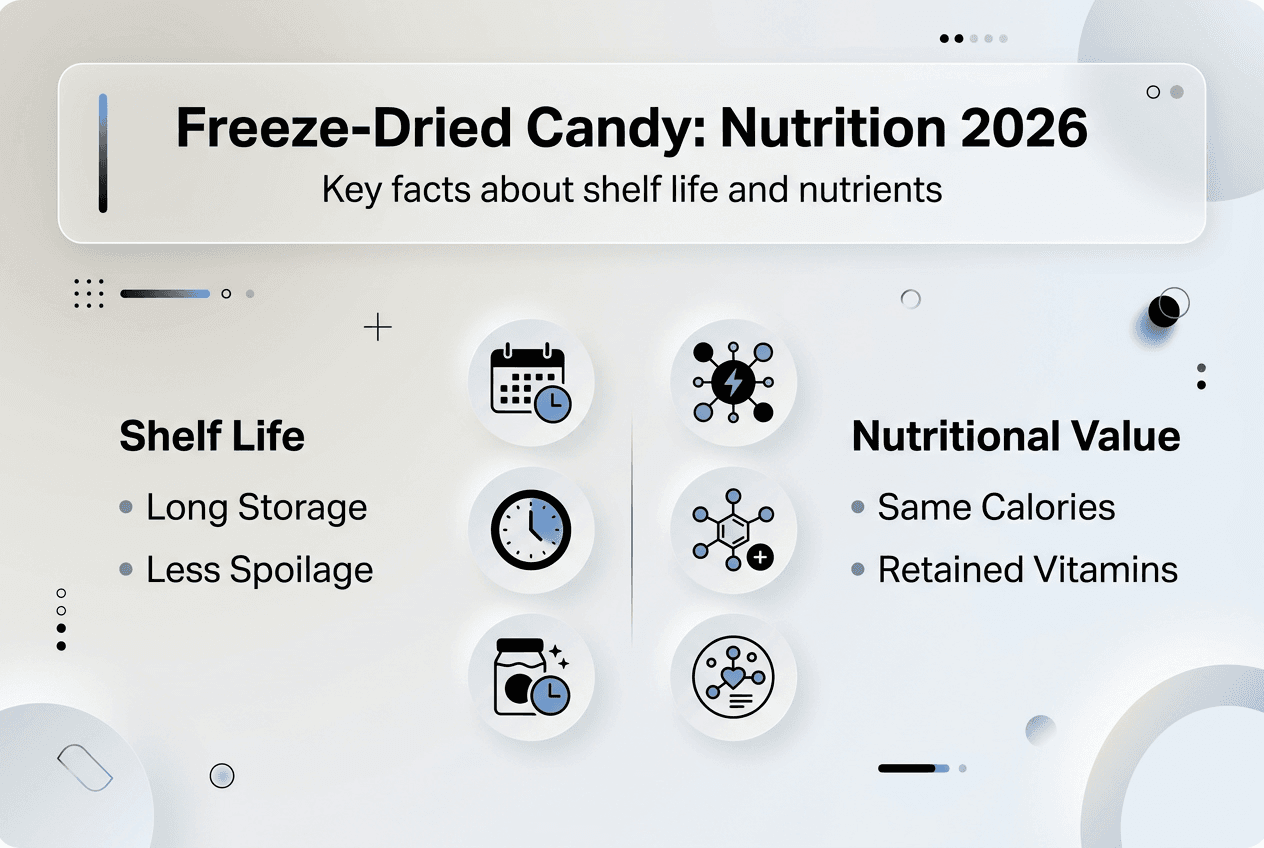
This extended shelf life isn’t just about convenience. It represents a significant reduction in food waste, which matters even for treats like candy. When products last longer without degrading, fewer resources are wasted on production, transportation, and disposal of expired goods. The environmental impact of this preservation method extends beyond the candy itself.
Here’s how different candy types compare in shelf life:
| Candy Type | Regular Shelf Life | Freeze-Dried Shelf Life | Storage Requirements |
|---|---|---|---|
| Gummy candy | 6-9 months | 20-25 years | Cool, dry, sealed |
| Chocolate | 12-18 months | 15-20 years | Below 70°F, sealed |
| Hard candy | 12 months | 25+ years | Moisture-free container |
| Marshmallows | 2-4 months | 20-25 years | Airtight packaging |
| Taffy | 6 months | 15-20 years | Vacuum sealed |
The preservation of heat-sensitive nutrients and functional ingredients represents another significant advantage. Studies indicate that freeze-dried candy preserves heat-sensitive compounds like probiotics and live cultures, opening possibilities for functional candy products that deliver benefits beyond taste. Some manufacturers now incorporate beneficial bacteria, botanical extracts, or vitamin complexes that remain viable throughout the product’s extended shelf life.
Factors that maximize freeze-dried candy preservation:
- Oxygen-free packaging using nitrogen flushing or oxygen absorbers
- Storage temperatures between 50-70°F for optimal stability
- Protection from light exposure, which can degrade colors and flavors
- Humidity control below 15% relative humidity
- Sealed containers that prevent moisture reabsorption
The vacuum conditions during freeze-drying also prevent oxidation, which causes flavor deterioration in conventionally dried foods. Fats don’t go rancid as quickly, colors stay vibrant, and aromatic compounds remain intact. This is why freeze-dried candy tastes remarkably fresh even years after production, while heat-dried alternatives develop off-flavors within months.
For practical storage guidance, explore these resources on freeze-dried candy shelf life and storing freeze-dried candy properly. Following best practices ensures you get the full preservation benefits this technology offers.
Emergency preparedness enthusiasts particularly value freeze-dried candy for long-term food storage. The combination of extended shelf life, lightweight packaging, and maintained palatability makes it ideal for situations where conventional candy would spoil. Whether for camping trips, disaster kits, or simply reducing shopping frequency, the preservation advantages offer genuine practical value.
Is freeze-dried candy a healthy choice? Considerations for health-conscious consumers
Freeze-dried candy occupies an interesting position in the spectrum of treat foods. While freeze-dried candy is more a novelty snack than a nutritious food choice, it does offer some advantages over regular candy when consumed mindfully. The light, crunchy texture can satisfy sweet cravings with smaller portions, since the intense flavor and unique mouthfeel create a more engaging eating experience.
However, the high sugar and calories can impact weight, dental health, and blood sugar levels just as severely as conventional candy. A single serving often contains your entire recommended daily limit of added sugars, which the American Heart Association sets at 25 grams for women and 36 grams for men. Exceeding these limits regularly contributes to obesity, type 2 diabetes, heart disease, and other chronic conditions.
Key health considerations before making freeze-dried candy a regular treat:
- Assess your current sugar intake from all sources, not just candy
- Consider your metabolic health, including blood sugar control and insulin sensitivity
- Evaluate your dental health history and cavity risk
- Account for your overall calorie needs and weight management goals
- Factor in any dietary restrictions like diabetes or carbohydrate-controlled diets
- Understand that the concentrated nature can lead to overconsumption
The innovation in functional freeze-dried candy deserves attention from health-conscious consumers. Some manufacturers now add probiotics, adaptogens, botanical extracts, or vitamin complexes to create products that deliver benefits beyond simple pleasure. For example, freeze-dried candy infused with fruiting body extract can provide cognitive support compounds while satisfying sweet cravings. These functional additions don’t eliminate the sugar content, but they do add value beyond empty calories.
Pro Tip: Treat freeze-dried candy as an occasional indulgence rather than a daily snack, limiting consumption to once or twice per week to minimize metabolic impact while still enjoying the unique experience.
Situations where freeze-dried candy might fit into a health-conscious lifestyle:
- Post-workout when you need quick carbohydrates for glycogen replenishment
- During endurance activities like hiking where lightweight, energy-dense food is valuable
- As a controlled portion dessert when you measure out a single serving
- For special occasions when you want a novel treat experience
- When traveling and conventional candy would melt or spoil
“While freeze-drying preserves more nutrients than heat processing, the base ingredient matters most. Starting with candy that’s primarily sugar means you end up with well-preserved sugar, not a health food. Enjoy it for what it is: a novel sensory experience, not a nutritional upgrade.”
The comparison with other treat options helps put freeze-dried candy in perspective. When evaluated against options like best freeze dried candies, you’ll notice that nutritional profiles remain similar across varieties. The choice comes down to flavor preference and texture enjoyment rather than meaningful nutritional differences.
For individuals managing specific health conditions, freeze-dried candy presents the same challenges as regular candy. People with diabetes must account for the carbohydrate load in their meal planning. Those with insulin resistance should limit consumption to prevent blood sugar spikes. Anyone managing their weight needs to track these calories just as carefully as they would any other concentrated sugar source.
The bottom line for health-conscious consumers: freeze-dried candy is neither a health food nor a nutritional villain. It’s a treat that offers superior preservation, unique texture, and concentrated flavor. Consumed occasionally and in controlled portions, it can fit into a balanced diet without derailing your health goals. The key is approaching it with realistic expectations about what it is and isn’t.
Discover high-quality freeze-dried candy from Spaceman
If you’re ready to experience the unique texture and intensified flavors of premium freeze-dried candy, Spaceman offers carefully curated options for Canadian consumers. Our freeze dried candy bundle provides variety packs that let you sample different flavors and textures, helping you discover your favorites without committing to large quantities of a single type.
For businesses interested in offering freeze-dried candy to their customers, we provide comprehensive private label co-packing services that handle everything from formulation to packaging. Whether you’re a retailer looking to stock unique products or an entrepreneur developing your own candy brand, our manufacturing expertise and quality standards ensure consistent results that meet Canadian food safety regulations. Explore how freeze-dried candy can add a novel, shelf-stable option to your product lineup.
Frequently asked questions about freeze-dried candy nutrition
Is freeze-dried candy lower in calories than regular candy?
No, freeze-dried candy contains the same calories as the original candy because freeze-drying only removes water, not sugar or other caloric ingredients. The lighter weight and airy texture can actually lead to consuming more calories since you might eat more pieces without realizing the caloric density.
Can freeze-dried candy fit into a keto diet?
Freeze-dried candy is not suitable for ketogenic diets due to its high carbohydrate content, typically 15-25 grams per small serving with almost no fat or protein. These carbs come entirely from sugar, which will quickly exceed the 20-50 gram daily carb limit most keto dieters maintain.
How long does freeze-dried candy last when stored properly?
Properly stored freeze-dried candy can last 20-25 years or more when kept in airtight containers with oxygen absorbers, away from moisture, heat, and light. This dramatically exceeds the 6-12 month shelf life of regular candy and makes it valuable for long-term storage or emergency preparedness.
Does freeze-drying preserve vitamins and minerals in candy?
Freeze-drying preserves up to 90% of vitamins and antioxidants present in the original candy, far better than heat-based drying methods. However, most conventional candy contains minimal vitamins and minerals to begin with, so this preservation advantage only matters if the original product had meaningful nutritional content.
Are there freeze-dried candies with added health ingredients like probiotics?
Yes, some innovative manufacturers now incorporate probiotics, botanical extracts, adaptogens, and vitamin complexes into freeze-dried candy formulations. The low-temperature process allows these heat-sensitive ingredients to remain viable throughout the product’s extended shelf life, creating functional treats that offer benefits beyond taste.
Does the crunchy texture of freeze-dried candy help prevent cavities?
While freeze-dried candy is less sticky than regular candy and doesn’t cling to teeth as long, it still contains high amounts of sugar that feed cavity-causing bacteria. The quick dissolution might slightly reduce contact time, but proper oral hygiene remains essential, and the candy should still be considered a cavity risk comparable to conventional sweets.