

TL;DR:
- Freeze drying preserves food’s cellular structure and retains most nutrients, offering a longer shelf life. Dehydrating is cheaper and faster but results in shorter storage times and nutrient loss. Using both methods strategically maximizes preservation quality and practicality.
Freeze drying is not the same as dehydrating. Both methods remove moisture from food, but they use completely different processes and deliver very different results. Freeze drying, known in scientific and industrial circles as lyophilization, works by freezing food solid and then pulling moisture out through sublimation under vacuum. Dehydrating works by blowing warm air across food to evaporate liquid water. If you are trying to figure out which method is right for your food preservation goals, the difference between freeze drying and dehydrating matters more than most people realize.
Is freeze drying the same as dehydrating? The core process explained
The two methods share one goal but take completely opposite routes to get there. Understanding how each one works makes the choice between them much clearer.
How freeze drying works
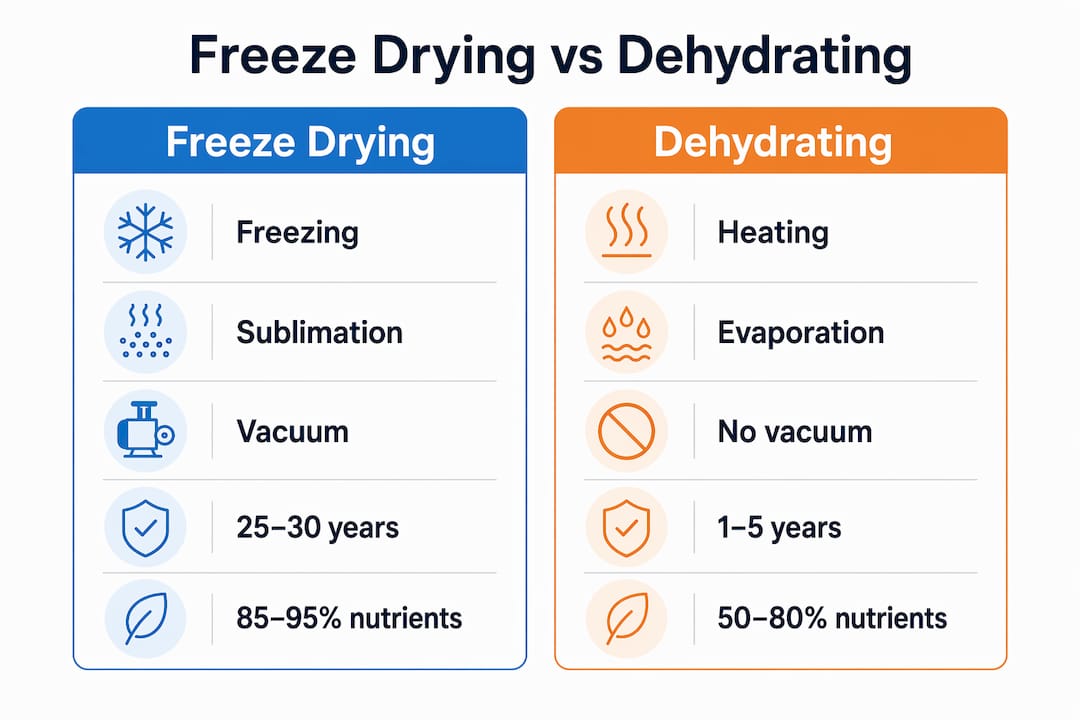
Freeze drying follows three distinct steps. First, food is frozen to roughly negative 40°F, locking all moisture into solid ice crystals. Second, the food goes into a vacuum chamber where pressure drops dramatically. Third, the ice crystals convert directly from solid to vapor through a process called sublimation, skipping the liquid phase entirely. This is the key to why freeze drying preserves food so well. Because no liquid water ever moves through the food’s cells, the cellular structure stays almost perfectly intact.
How dehydrating works
A food dehydrator circulates warm air at temperatures between 95°F and 165°F across food over several hours. The heat causes liquid water to evaporate from the food’s surface and interior. This process is simple, affordable, and effective for many foods. The trade-off is that heat causes cellular collapse, which changes texture, color, and some nutrient content. Dehydration leaves a final moisture content of 5–10% in the food, compared to just 1–3% for freeze-dried products. That extra moisture is the main reason dehydrated foods have a shorter shelf life.
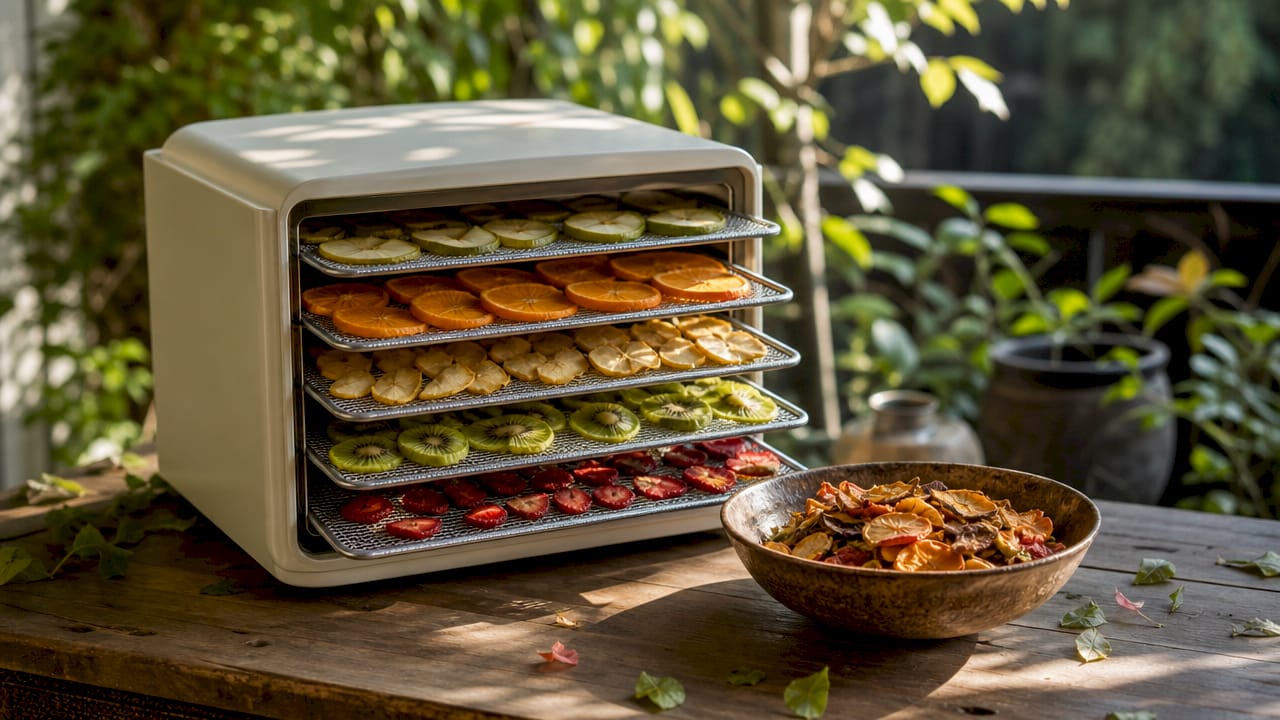
Pro Tip: A standard food dehydrator cannot perform freeze drying. It has no vacuum system and no freezing mechanism. No DIY substitute can replicate sublimation at home using a dehydrator alone.
How do shelf life, nutrition, and flavor compare?
This is where the gap between the two methods becomes striking. The outcomes for long-term storage and nutritional quality are not even close.
Shelf life
Freeze-dried foods last 25–30 years when stored properly. Dehydrated foods typically last 1–5 years. That is not a small difference. It is the reason freeze-dried products dominate emergency preparedness, military rations, and long-haul backpacking. The ultra-low moisture content of freeze-dried food leaves almost nothing for bacteria or mold to work with.
Nutritional retention
Freeze drying retains roughly 85–95% of a food’s original nutrients. Dehydrating retains around 50–80%. The gap is most visible with heat-sensitive vitamins like vitamin C and vitamin A, which degrade when exposed to the temperatures used in dehydration. Freeze drying’s cold process protects these nutrients far better. For health-conscious readers, this difference alone often tips the decision.
“Freeze drying retains significantly more nutrients than heat-based dehydration, making it the preferred method for preserving the full nutritional profile of fruits, vegetables, and proteins.”
Flavor and rehydration
Freeze-dried food rehydrates in 5–15 minutes using cold water. Dehydrated food typically needs 20–60 minutes and usually requires hot water. Beyond speed, the quality of rehydrated freeze-dried food is noticeably closer to fresh. Dehydrated food, after rehydration, often has a softer or mushier texture because the cellular structure was already compromised by heat. For flavor, freeze drying locks in volatile aromatic compounds that heat destroys, which is why freeze-dried strawberries taste intensely like fresh strawberries rather than dried ones.
| Factor | Freeze dried | Dehydrated |
|---|---|---|
| Shelf life | 25–30 years | 1–5 years |
| Final moisture content | 1–3% | 5–10% |
| Nutrient retention | 85–95% | 50–80% |
| Rehydration time | 5–15 minutes | 20–60 minutes |
| Equipment cost | $2,500–$4,500 | $60–$350 |
What practical factors affect the choice: cost, equipment, and use cases
Cost is the most immediate barrier for most people exploring freeze drying vs dehydrating at home or at a small commercial scale.
- Equipment cost: Freeze dryers cost $2,500–$4,500 for home units. A quality food dehydrator runs $60–$350. That is a significant gap for anyone just starting out.
- Per-serving cost: Freeze-dried food servings cost $8–$18. Dehydrated servings cost $1–$5. The price difference reflects both equipment investment and longer processing cycles.
- Energy use: Freeze dryers consume considerably more electricity than dehydrators. They also require stable ambient temperatures between 45°F and 80°F and good ventilation to run efficiently.
- Processing time: A freeze-drying cycle takes 20–40 hours depending on the food and batch size. Dehydrating takes 4–12 hours for most foods.
- Best use cases for freeze drying: Long-term food storage, premium snack production, delicate fruits, dairy, and full meals.
- Best use cases for dehydrating: Everyday snacks like jerky and dried fruit, bulk production on a budget, and foods where texture change is acceptable.
Pro Tip: If you want the benefits of freeze drying without the equipment investment, buying professionally freeze-dried products is often the most cost-effective path for home consumers.
How do texture and food structure differ after each method?
Texture is one of the most noticeable differences between freeze-dried and dehydrated foods, and it affects far more than just how something feels in your mouth.
Freeze drying preserves the food’s original porous, airy structure because sublimation removes ice without disturbing cell walls. The result is a light, crispy texture that snaps cleanly. Think of freeze-dried candy or strawberries: they are almost weightless and dissolve on the tongue. This porous structure is also why freeze-dried foods rehydrate so quickly and return to something close to their original form.
Dehydrating causes cellular collapse. Heat forces liquid water out through the cell walls, which shrink and compress in the process. The result is a dense, chewy, or leathery texture. Beef jerky is the classic example. That texture works well for some foods and some snacking occasions, but it means the food will never fully return to its original form after rehydration.
For recipes, the texture difference matters a lot. Freeze-dried ingredients blend smoothly into powders, rehydrate cleanly in soups and sauces, and hold their shape in baked goods. Dehydrated ingredients add chew and density, which works well in trail mix or granola but less well in dishes where you want a fresh-food result.
Key tips and common pitfalls for better preservation results
Getting the most out of either method requires knowing a few things that most beginner guides skip over entirely.
- Package freeze-dried food correctly: Freeze-dried foods are highly hygroscopic, meaning they absorb moisture from the air almost immediately after opening. High-barrier Mylar bags with oxygen absorbers are the standard for long-term storage. Regular zip-lock bags will not cut it.
- Cook proteins before freeze drying: Freeze drying does not kill all bacteria. Raw proteins must be cooked before or after the process to eliminate pathogens. This is a food safety requirement, not a suggestion.
- Pretreat high-sugar foods: Foods with very high sugar content, like certain candies or fruit purees, can become sticky or partially melt during the primary drying phase of freeze drying. Pretreatment or professional processing handles this correctly.
- Control your environment: Freeze dryers need stable ambient temperatures and good airflow. Running a freeze dryer in a hot garage in summer will extend cycle times and stress the vacuum pump.
- Blanch vegetables before dehydrating: Blanching stops enzyme activity that causes color and flavor loss during dehydration. Skipping this step leads to dull, less flavorful results.
Pro Tip: For dehydrating meats, always follow USDA guidelines on internal temperature before or after drying. Heat-treating jerky to 160°F kills harmful bacteria that the drying process alone may not eliminate.
Key Takeaways
Freeze drying and dehydrating are fundamentally different processes that produce different results in shelf life, nutrition, texture, and cost.
| Point | Details |
|---|---|
| Different processes | Freeze drying uses sublimation under vacuum; dehydrating uses heat evaporation. |
| Shelf life gap | Freeze-dried foods last 25–30 years; dehydrated foods last 1–5 years. |
| Nutrition advantage | Freeze drying retains 85–95% of nutrients versus 50–80% for dehydrating. |
| Cost difference | Freeze dryers cost $2,500–$4,500; dehydrators cost $60–$350. |
| Texture outcome | Freeze drying creates a light, porous texture; dehydrating creates a dense, chewy one. |
My honest take on freeze drying vs dehydrating
I have spent a lot of time around both methods, and the most common mistake I see is people treating this as an either/or debate with a clear winner. It is not that simple.
Freeze drying is genuinely superior for preserving nutritional quality, flavor, and shelf life. If you are storing food for emergencies, creating premium snacks, or working with delicate ingredients like berries or dairy, freeze drying wins without much argument. The texture and taste results are in a different league from dehydrated equivalents.
But dehydrating is not a consolation prize. For everyday snack making, jerky, dried herbs, or bulk fruit production, a dehydrator is faster, cheaper, and perfectly suited to the job. Spending $3,500 on a freeze dryer to make beef jerky is like buying a sports car to drive to the grocery store. The tool does not match the task.
The most practical approach for serious food enthusiasts is to use both. Keep a dehydrator for everyday preservation and high-volume work. Source professionally freeze-dried products for long-term storage or premium applications where quality is the priority. That hybrid approach gives you the best of both methods without overcommitting to equipment you may not need every day.
The bottom line: match the method to the goal. Freeze drying is not always better. It is just better at specific things. Know what those things are, and you will make the right call every time.
— Chadi
Space-man’s freeze-dried products worth exploring
Space-man specializes in professionally freeze-dried candy made in Canada, and the results speak for themselves. The light, crunchy texture and intense flavor that freeze drying produces are exactly what you get with every bag.

Whether you are a food enthusiast wanting to try freeze-dried snacks for the first time or a business looking for private label and co-packing services, Space-man has options built for both. The 10-pack candy bundle is a great starting point for anyone curious about what professionally freeze-dried food actually tastes like. Free shipping makes it an easy first step.
FAQ
Is freeze drying the same as dehydrating?
No. Freeze drying uses freezing and vacuum sublimation to remove moisture, while dehydrating uses heat evaporation. The two processes produce different textures, shelf lives, and nutritional outcomes.
Which method retains more nutrients?
Freeze drying retains 85–95% of a food’s original nutrients. Dehydrating retains 50–80%, with the biggest losses occurring in heat-sensitive vitamins like vitamin C and vitamin A.
How long do freeze-dried foods last compared to dehydrated?
Freeze-dried foods last 25–30 years when stored in high-barrier packaging with oxygen absorbers. Dehydrated foods typically last 1–5 years under similar storage conditions.
Can a dehydrator freeze dry food?
No. A dehydrator cannot freeze dry food because it lacks both a freezing mechanism and a vacuum system. Sublimation requires both, and no home workaround can replicate the process.
Why does freeze-dried food cost more than dehydrated?
Freeze dryers cost $2,500–$4,500 versus $60–$350 for dehydrators, and freeze-drying cycles take significantly longer. Those higher equipment and energy costs are reflected in the per-serving price of freeze-dried products.