

Over 70 percent of american households rely on freeze dried foods for long term storage, yet many lose quality because of simple packaging mistakes. Preserving taste and nutrition is a real challenge if moisture or air slips past the seal. With the right methods and tools, you can keep your freeze dried goods fresh and safe for months. This guide walks you through practical steps every american home can follow to ensure the safest and most reliable food storage.
Table of Contents
- Step 1: Assess Packaging Needs And Prepare Supplies
- Step 2: Select Suitable Storage Containers Or Bags
- Step 3: Control Humidity And Temperature Settings
- Step 4: Seal Goods Properly For Long-Term Storage
- Step 5: Verify Product Integrity And Monitor Regularly
Quick Summary
| Key Insight | Explanation |
|---|---|
| 1. Use Airtight Packaging | Ensure packaging is moisture and vapor proof to preserve flavor and nutrition of freeze dried foods. |
| 2. Choose Proper Containers | Select containers that block air, moisture, and light for optimal food storage, such as glass jars or vacuum-sealed bags. |
| 3. Monitor Humidity and Temperature | Maintain a cool, consistent temperature around 60°F to maximize the shelf life of freeze dried products. |
| 4. Seal Goods Correctly | Use vacuum packaging or Mylar bags with oxygen absorbers for effective long-term food preservation. |
| 5. Regularly Inspect Stored Foods | Conduct routine checks for moisture and spoilage signs to ensure food safety and quality. |
Step 1: Assess Packaging Needs and Prepare Supplies
Packaging is the unsung hero of preserving freeze dried goods. When done right, it protects your food’s flavor, texture, and nutritional value from degradation. According to North Dakota State University, your packaging must be moisture and vapor proof to maintain the quality of your freeze dried items.
To get started, gather your essential supplies. The National Park Service recommends assembling a packaging kit that includes non-stick scissors, archival ink pens, measuring tape, labels, protective gloves, and bone folders. These tools will help you create airtight, well-organized packaging that keeps your freeze dried goods in top condition. Your packaging materials should be food grade, durable, and resistant to oils and water National Park Service.
Pro tip: Choose transparent packaging whenever possible. This allows you to quickly inspect your goods without opening the container and exposing them to potential moisture or air. When selecting your storage containers, prioritize those with tight sealing mechanisms to maximize preservation. Your next step will involve carefully transferring and sealing your freeze dried goods using the supplies you’ve just gathered.
Step 2: Select Suitable Storage Containers or Bags
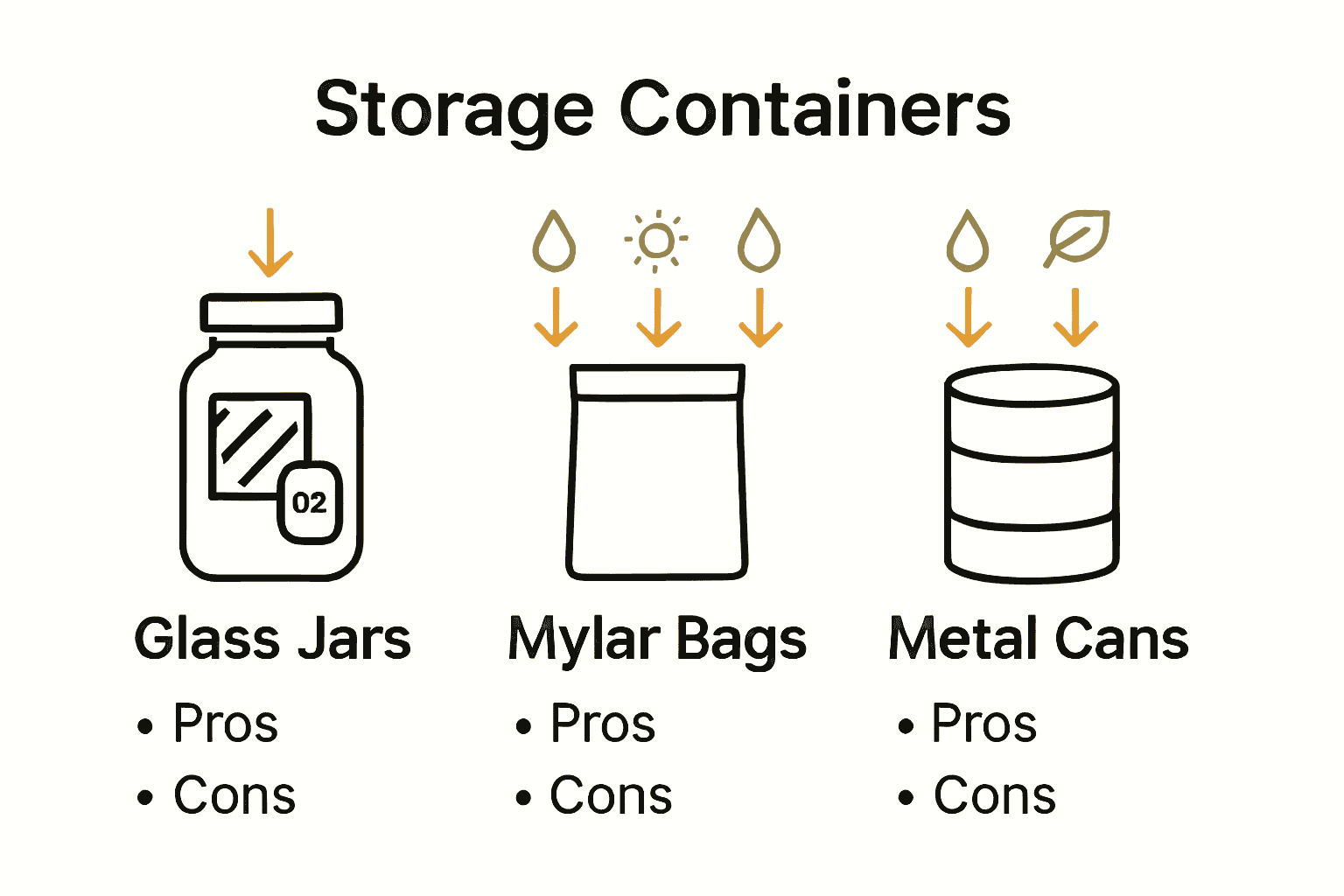
Choosing the right storage container can make or break the longevity of your freeze dried goods. According to Penn State Extension, your storage solution needs to block out air, moisture, and light to maintain optimal food quality. This means considering options that range from zip top bags for short term storage to more advanced preservation techniques.
For longer shelf life, glass canning jars with oxygen absorbers or vacuum sealed containers work wonderfully. Mylar bags with oxygen absorbers and heat sealing provide an excellent barrier against environmental factors. The North Dakota State University notes that your containers must be moisture and vapor resistant to effectively preserve your food North Dakota State University.
Pro tip: Metal cans offer another airtight storage option that protects against light exposure. When selecting your container, consider the duration you plan to store your freeze dried goods and choose a solution that matches your specific preservation needs.
 Your next step will involve carefully transferring your freeze dried foods into these carefully selected containers to lock in freshness.
Step 3: Control Humidity and Temperature Settings
Preserving the quality of your freeze dried goods starts with creating the perfect storage environment. According to the National Center for Home Food Preservation, temperature plays a critical role in determining how long your food will remain at peak quality National Center for Home Food Preservation. Your goal is to find a storage location that minimizes temperature fluctuations and maintains a consistently cool atmosphere.
Research shows that most freeze dried foods perform best when stored at temperatures around 60 degrees Fahrenheit. At this temperature, you can expect many dried fruits to maintain their quality for up to one year. As temperatures rise to 80 degrees, your storage time dramatically reduces to approximately six months. Penn State Extension recommends selecting storage spaces like dark cupboards, basements, or closets that naturally provide a stable and cool environment.
Pro tip: Invest in a small thermometer to monitor your storage area and avoid placing your containers near heat sources like stoves, ovens, or direct sunlight. Consistent temperature and minimal humidity are your best allies in maintaining the longevity and quality of your freeze dried foods.
Your next step will involve monitoring these conditions to ensure optimal preservation.
Step 4: Seal Goods Properly for Long-Term Storage
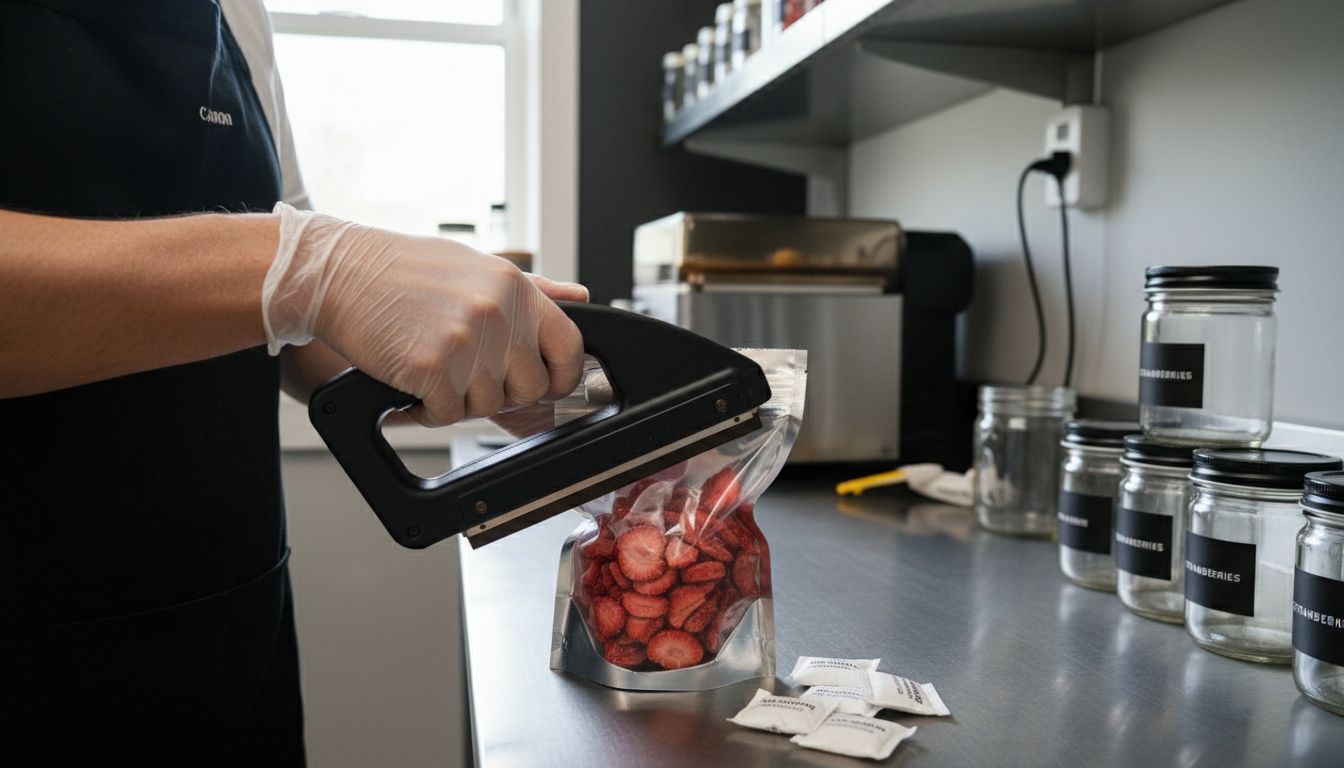
Successfully preserving freeze dried goods comes down to one critical step sealing them correctly. According to North Dakota State University, proper sealing requires meticulous attention to detail. Your primary goal is to create an airtight barrier that prevents moisture and oxygen from compromising your food’s quality.
For optimal long-term storage, Penn State Extension recommends using specialized techniques like vacuum packaging and Mylar bags with oxygen absorbers. Vacuum packaging removes most oxygen from the container, while Mylar bags provide an additional layer of protection by blocking air and light. When using rigid containers, ensure the sealing edge remains completely free from moisture or food particles to guarantee a tight seal.
Pro tip: Invest in a quality heat sealer for Mylar bags and always use oxygen absorbers to extend your freeze dried goods shelf life. Remember that even a tiny amount of moisture or air can compromise your carefully preserved foods. Your next step will involve creating a systematic labeling system to track the storage date and contents of each sealed container.
Step 5: Verify Product Integrity and Monitor Regularly
Maintaining the quality of your freeze dried goods requires consistent and careful monitoring. According to the National Center for Home Food Preservation, foods that appear perfectly dry can still spoil if moisture is reabsorbed during storage National Center for Home Food Preservation. Your vigilance is key to preventing potential food waste and ensuring safe consumption.
Regular inspections are crucial for catching any signs of moisture or potential spoilage early. Penn State Extension recommends storing your freeze dried products in locations with minimal light exposure and consistent cool temperatures. When checking your stored goods, look for any signs of condensation inside glass containers, discoloration, or unusual odors. If you notice moisture but the food has not yet spoiled, use it immediately or consider redrying and repackaging.
Pro tip: Create a simple monitoring schedule where you inspect your stored freeze dried goods every few weeks. Any signs of mold should result in immediate disposal of the entire container to prevent potential health risks. Your proactive approach will help maintain the quality and safety of your carefully preserved foods.
Secure Your Freeze Dried Goods with Expert Packaging Solutions
Storing freeze dried goods properly means you must control moisture oxygen and temperature to keep your products fresh and safe for longer periods. If you find sealing and protecting your goods challenging or want to avoid spoilage from improper storage environments Space-Man specializes in professional bagging packaging and private labeling that ensures airtight preservation with high-quality materials and expert techniques.

Stop risking your valuable freeze dried inventory to moisture or oxygen damage that can degrade taste and nutrition. Partner with us now to access durable packaging options designed for long-term freshness and a trusted supplier who knows the exact needs of freeze dried consumer goods. Visit Space-Man and discover how our co-packing and packaging services can help you seal in quality right from the start. Make your move today and protect what matters.
Explore our services at Space-Man Packaging Solutions to get started.
Frequently Asked Questions
How should I package freeze dried goods to keep them fresh?
To package freeze dried goods effectively, ensure your materials are moisture and vapor proof. Gather non-stick scissors, archival ink pens, and airtight containers to create well-sealed packages.
What types of storage containers are best for freeze dried foods?
For maximum freshness, consider using glass canning jars with oxygen absorbers or vacuum-sealed bags. Select containers that block air, moisture, and light to help preserve the quality of your goods for longer periods.
What temperature is ideal for storing freeze dried goods?
The best temperature for preserving freeze dried foods is around 60 degrees Fahrenheit. Aim to monitor your storage area’s temperature to avoid fluctuations that could reduce freshness over time.
How can I ensure a proper seal on my freeze dried products?
Properly seal your freeze dried goods by using vacuum packaging or Mylar bags with oxygen absorbers. Ensure that all sealing edges are clean and free from moisture to create an airtight barrier.
How often should I check on my stored freeze dried foods?
It’s advisable to inspect your freeze dried goods every few weeks for any signs of moisture or spoilage. Conduct a thorough visual and odor check, and if you see condensation, use the food immediately or repackage it.