

Standing out among bold American snack brands is no small feat for Canadian freeze dried candy producers. With over 80 percent of buyers admitting that attractive packaging sways their decisions, the quest for innovative food packaging design has never been more urgent. Staying ahead of emerging trends and understanding what truly appeals on the shelf gives your brand the chance to thrive in a fiercely competitive market.
Table of Contents
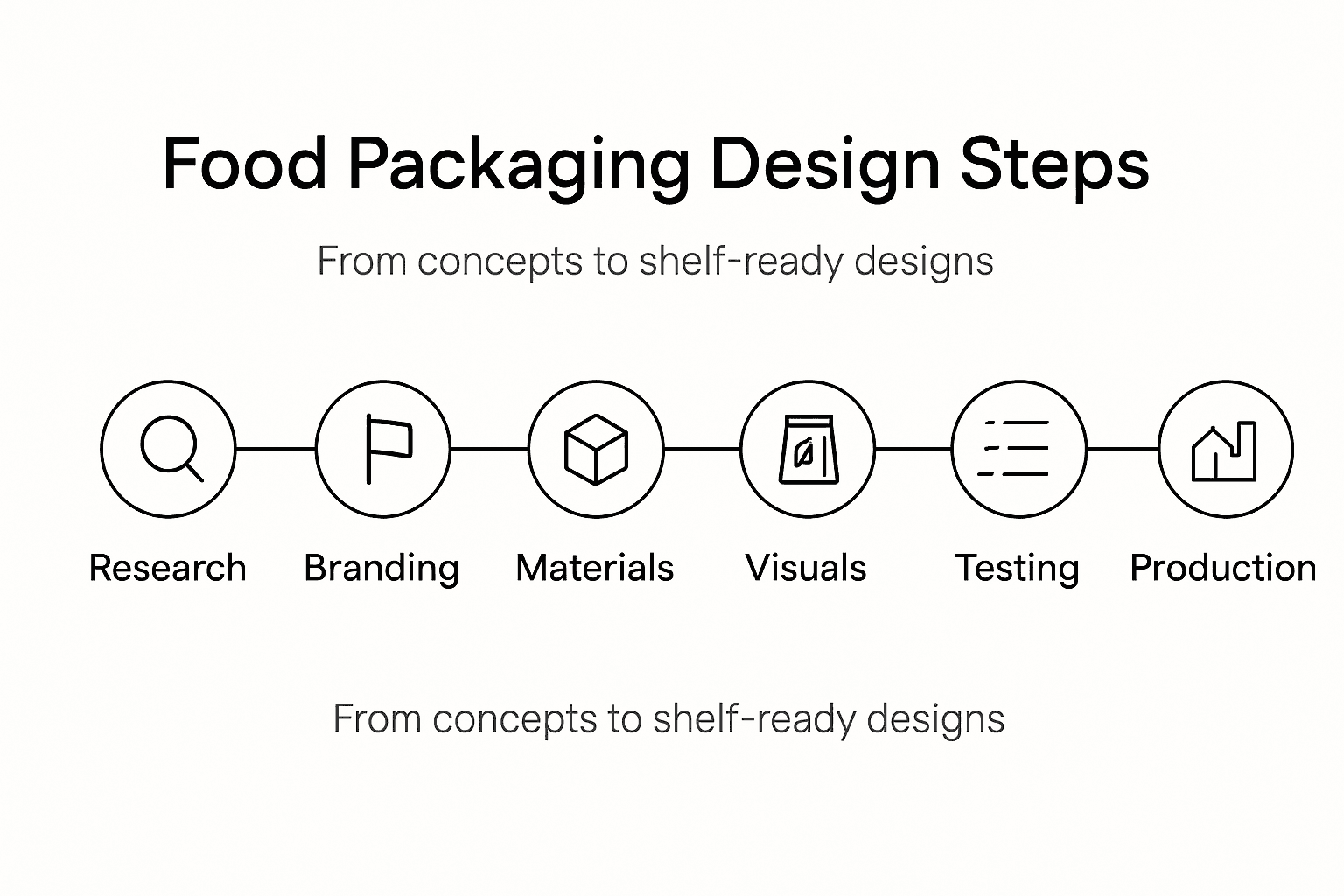
- Step 1: Research Market Trends and Competitors
- Step 2: Define Branding and Packaging Objectives
- Step 3: Select Materials and Packaging Formats
- Step 4: Create Compelling Visual and Structural Designs
- Step 5: Test Packaging for Functionality and Compliance
- Step 6: Finalize Design and Prepare for Production
Quick Summary
| Key Point | Explanation |
|---|---|
| 1. Conduct Thorough Market Research | Gather insights on market trends and competitor packaging to inform design decisions. |
| 2. Define Clear Branding Objectives | Establish branding goals that align with your visual and emotional messaging to attract the target audience. |
| 3. Select Sustainable Materials | Choose materials that balance functionality with environmental responsibility for a competitive edge. |
| 4. Create Engaging Visual Designs | Develop packaging that communicates your brand story and appeals to consumers through strategic design choices. |
| 5. Test Packaging for Compliance | Ensure that packaging meets safety and regulatory standards before final production, maintaining consumer trust. |
Step 1: Research Market Trends and Competitors
Understanding the competitive landscape is critical when designing food packaging that stands out on store shelves. Your goal in this step is to gather comprehensive insights about current market dynamics and emerging trends in food packaging design.
Start by conducting thorough market research using industry reports, academic publications, and competitive analysis. Global packaging market trends reveal significant innovations in materials and technologies that can dramatically impact your packaging strategy. Look specifically at emerging trends like sustainable materials, smart packaging technologies, and automation techniques that are reshaping product presentation.
Your research should include a detailed competitive analysis where you map out what similar brands in your market are doing. Review their packaging designs, color schemes, material choices, and unique selling propositions. Pay special attention to brands that have successfully differentiated themselves through innovative packaging. Advancements in food packaging manufacturing highlight the importance of integrating smart technologies and sustainable approaches to create packaging that not only looks appealing but also provides additional value to consumers.
Pro tip: Create a competitive matrix spreadsheet where you track packaging design elements, materials used, pricing, and unique features of top competitors to help you identify potential gaps and opportunities in the market.
Step 2: Define Branding and Packaging Objectives
Defining clear branding and packaging objectives is fundamental to creating food packaging that captures consumer attention and communicates your product’s unique value. Your objectives will serve as a strategic blueprint for design decisions that align visual elements with your brand identity and market positioning.
Visual elements in food packaging design play a critical role in influencing consumer perception and purchasing intentions, making it essential to develop a comprehensive strategy that goes beyond mere aesthetic considerations. Start by identifying your target audience demographics, understanding their preferences, and determining the key messages you want your packaging to communicate. Consider factors like color psychology, typography, imagery, and overall design language that will resonate with your potential customers. Rational packaging design requires careful consideration of safety standards and eco-friendly approaches that meet both regulatory requirements and consumer expectations.
Your branding objectives should encompass more than just visual appeal. They need to articulate your brand’s unique selling proposition, sustainability commitments, and the emotional connection you want to establish with consumers. Creative packaging design ideas can help differentiate your product in a competitive market while maintaining authenticity and brand integrity.
Pro tip: Create a detailed branding guidelines document that clearly outlines your packaging objectives, including specific color palettes, typography rules, imagery standards, and the emotional narrative you want your packaging to convey.
Step 3: Select Materials and Packaging Formats
Selecting the right materials and packaging formats is a critical decision that impacts your product’s shelf life, environmental sustainability, and consumer perception. Your choices will directly influence how customers interact with and experience your food product.
Advancements in food packaging materials have transformed the landscape of product presentation and preservation, offering manufacturers unprecedented options for innovative packaging solutions. Consider multiple factors when evaluating materials including barrier properties, recyclability, cost effectiveness, and visual appeal. Rational packaging design requires careful consideration of safety standards and eco friendly approaches that balance functional requirements with environmental responsibilities. Modern packaging materials range from traditional plastics to cutting edge biodegradable alternatives each offering unique benefits for different product types.
When exploring essential packaging types for your specific product, prioritize materials that maintain product integrity while communicating your brand’s values. Analyze factors like moisture resistance, oxygen transmission rates, and thermal stability to ensure your packaging preserves food quality and extends shelf life. Consider consumer preferences for sustainable packaging that demonstrates environmental consciousness without compromising product protection.
Pro tip: Create a comprehensive material comparison matrix that evaluates potential packaging materials across multiple dimensions including cost, environmental impact, preservation capabilities, and aesthetic qualities before making a final selection.
Here’s a comparison of common food packaging materials and their key attributes:
| Material Type | Sustainability Level | Barrier Protection | Typical Use Cases |
|---|---|---|---|
| Traditional Plastic | Low | Strong moisture/air | Snacks, beverages, ready meals |
| Biodegradable Plastic | High | Moderate | Health foods, eco lines |
| Glass | Moderate | Excellent | Sauces, beverages |
| Paper/Cardboard | High | Low-moderate | Bakery, dry goods, takeout |
| Aluminum | Moderate | Excellent | Cans, baked goods |
Step 4: Create Compelling Visual and Structural Designs
Creating compelling visual and structural designs is about transforming your packaging from a mere container into a powerful communication tool that captures consumer attention and tells your brand’s story. Your design must work harder than just protecting the product it needs to create an immediate emotional connection.
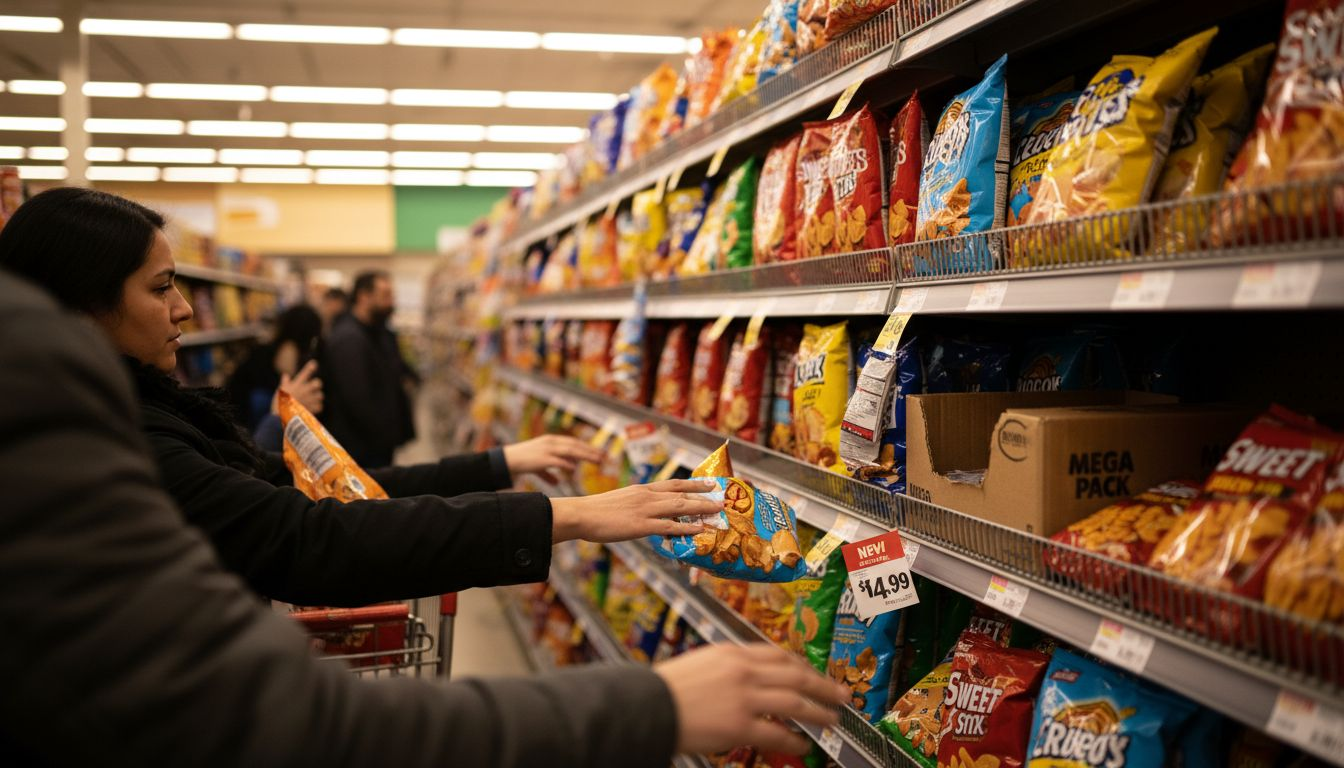
Visual elements in food packaging design play a critical role in influencing consumer perception and purchasing intentions, making every design choice strategically important. Focus on developing a visual language that speaks directly to your target audience through color psychology, typography, imagery, and structural innovation. Rational packaging design requires careful consideration of safety standards and structural integrity that balance aesthetic appeal with functional performance. Consider how the shape, texture, and visual elements can communicate your brand’s personality and product attributes.
When developing your design, think beyond traditional boundaries. Explore creative packaging design ideas that can differentiate your product in a crowded marketplace. Analyze how the physical structure of your packaging can enhance user experience through ergonomic considerations, ease of use, and visual storytelling. Pay attention to how colors, graphics, and structural elements work together to create a cohesive and memorable brand identity that stands out on the shelf.
Pro tip: Develop multiple design prototypes and conduct consumer focus group testing to gather objective feedback on how your packaging design resonates with your target audience before making a final selection.
Step 5: Test Packaging for Functionality and Compliance
Testing your packaging for functionality and compliance is a critical final step that ensures your product meets regulatory standards and maintains consumer safety. This phase validates all the design and material choices you have carefully developed throughout the previous stages.
Advanced testing systems can verify critical packaging information like use by dates and label legibility, which are essential for consumer protection and regulatory adherence. Develop a comprehensive testing protocol that evaluates multiple dimensions of packaging performance including structural integrity, material durability, food safety compatibility, and information clarity. Optical character recognition technologies play a crucial role in assessing packaging label accuracy to guarantee that all required information is present and readable under various conditions.
Your testing process should simulate real world scenarios that your packaging might encounter during transportation, storage, and consumer handling. This includes temperature fluctuations, humidity exposure, mechanical stress, and potential mishandling. Essential packaging types have unique compliance requirements that demand specialized testing approaches. Pay close attention to how your packaging performs under different environmental conditions while maintaining product quality and safety standards.
Pro tip: Partner with a certified food packaging testing laboratory that can provide comprehensive and objective assessments of your packaging design across multiple regulatory and performance criteria.
Step 6: Finalize Design and Prepare for Production
Finalizing your food packaging design and preparing for production is the culmination of your strategic planning and creative efforts. This critical stage transforms your carefully developed concept into a market ready product that will capture consumer attention and deliver your brand promise.
Advancements in food packaging manufacturing provide innovative opportunities for integrating smart technologies and sustainable materials, making this final phase an opportunity to incorporate cutting edge design elements. Work closely with your production team to ensure that your design specifications can be precisely translated into physical packaging. Rational packaging design demands careful consideration of functional and environmental objectives, so review every technical detail to guarantee your packaging meets both aesthetic and practical requirements.
Prepare comprehensive production documentation that includes detailed design files, material specifications, color codes, and printing instructions. Creative packaging design ideas can help differentiate your product during this critical transition from concept to reality. Coordinate with manufacturers to run multiple prototype iterations, ensuring that the final production run perfectly reflects your original vision while maintaining manufacturing feasibility and cost effectiveness.
Pro tip: Develop a digital style guide with precise color pantone codes, exact typography specifications, and high resolution design files to provide crystal clear instructions for your production team.
This summary highlights the main objectives at each packaging design stage:
| Step | Main Objective | Example Activity |
|---|---|---|
| Market Research | Identify trends & competitors | Analyze shelf presence |
| Branding Definition | Clarify brand message and target audience | Develop visual guidelines |
| Material Selection | Choose materials for function & sustainability | Compare material properties |
| Design Creation | Develop effective, appealing packaging | Build and test design prototypes |
| Testing | Ensure compliance and performance | Simulate transport, check legibility |
| Production | Finalize and launch packaging | Document specs, align with factory |
Elevate Your Food Packaging to Stand Out on the Shelf
Designing food packaging that truly captures consumer attention and reflects your brand’s unique story is a challenge that requires expert insight and precise execution. The article highlights the importance of selecting the right materials, creating compelling visuals, and ensuring compliance—all vital steps to overcome common hurdles in shelf appeal. If you are looking to transform your packaging while maintaining sustainability and functionality, our private labeling and packaging services can help you achieve these goals with confidence.
Ready to boost your product’s shelf presence with packaging that balances innovation and practicality? Explore our Wholesale Freeze Dried Candy & Treats for high-quality products primed for custom packaging solutions. Discover how our expertise at Space-Man can guide you through the entire process from design to production. Don’t miss the chance to try our flexible options for both bulk and personalized orders like those in Bulk Unbranded Freeze Dried Candy & Treats to start creating packaging that truly connects with your customers. Take action today and elevate your packaging strategy!
Frequently Asked Questions
How can I research market trends for food packaging design?
To research market trends for food packaging design, start by reviewing industry reports, academic publications, and competitive analyses. Gather insights on current packaging innovations and consumer preferences to inform your design decisions.
What are the key objectives I should define for my food packaging?
Your key objectives for food packaging should include clarifying your brand message, identifying target audience preferences, and emphasizing sustainability. Develop a detailed branding guideline document that outlines color palettes, typography, and the emotional experience you want to convey.
How do I choose the right materials for food packaging?
Selecting the right materials involves evaluating options based on their barrier properties, sustainability, cost, and visual appeal. Create a materials comparison matrix to help you assess each material across these criteria before finalizing your choice.
What visual design elements should I focus on for maximum shelf appeal?
To create maximum shelf appeal, focus on elements like color psychology, typography, and imagery that resonate with your target audience. Develop multiple design prototypes and conduct consumer focus group testing to refine your packaging design.
How can I test my packaging for functionality and compliance?
You can test your packaging for functionality by simulating real-world conditions, such as transportation stress and temperature variations. Establish a comprehensive testing protocol to assess structural integrity, food safety, and label clarity to ensure compliance with regulations.
What steps should I take before finalizing my food packaging design for production?
Before finalizing your design, prepare detailed production documentation that includes design files, material specifications, and printing instructions. Collaborate closely with your production team to ensure that your packaging meets both aesthetic and functional requirements.