

Choosing the right wholesale candy supplier can make or break your american retail business. With more than 80 percent of small retailers reporting that customer preferences shift quickly, understanding what people really want is key. From targeting health conscious shoppers to stocking the latest novelty treats, mastering your wholesale candy selection means paying close attention to both market trends and unique consumer needs—so you can offer the perfect sweets that keep customers coming back for more.
Table of Contents
- Step 1: Define Your Target Customers And Candy Needs
- Step 2: Research Suppliers And Compare Product Assortments
- Step 3: Evaluate Pricing, Minimums, And Shipping Options
- Step 4: Assess Quality, Packaging, And Labeling Services
- Step 5: Verify Compliance And Place A Sample Order
- Step 6: Review Results And Finalize Your Wholesale Candy Partner
Quick Summary
| Key Point | Explanation |
|---|---|
| 1. Identify target customer segments | Understand who will buy your candy by analyzing age, income, and local preferences to guide your inventory decisions. |
| 2. Research and compare suppliers | Evaluate multiple candy suppliers on product range, pricing, and reliability to find the best match for your needs. |
| 3. Analyze pricing and shipping costs | Thoroughly examine pricing tiers, order minimums, and shipping fees to ensure cost-effective purchases and profitability. |
| 4. Assess product quality and packaging | Request samples to verify candy quality and evaluate packaging designs that protect products and appeal to customers. |
| 5. Verify compliance and order samples | Ensure suppliers meet regulatory standards by obtaining documentation and testing sample quantities before placing large orders. |
Step 1: Define your target customers and candy needs
Successful wholesale candy selection starts with understanding your specific customer base. By identifying who will be purchasing and consuming your candy, you can make strategic purchasing decisions that align with market demand and consumer preferences.
Begin by analyzing market segments through detailed demographic research. This means breaking down potential customers into specific groups based on age, income, location, and purchasing behaviors. For example, a convenience store will have different candy needs compared to a specialty gift shop or a movie theater concession stand. Consider factors like average customer age, local community preferences, seasonal trends, and price sensitivity.
Specific customer segments might include children and teenagers seeking colorful novelty candies, health conscious adults interested in organic or low sugar options, international candy enthusiasts looking for unique flavors, or budget conscious consumers seeking value packs. Each segment requires a tailored approach to inventory selection. Candy Suppliers Canada: Complete Guide for Retailers can provide additional insights into matching your inventory with customer preferences.
Pro tip: Always test new candy selections in small quantities first. This allows you to gauge customer interest without risking significant inventory investment. Track which items sell quickly and which sit on shelves to continuously refine your wholesale purchasing strategy.
Step 2: Research suppliers and compare product assortments
Researching and comparing wholesale candy suppliers is a critical step in building a successful retail candy strategy. Your goal is to identify vendors who can consistently deliver high quality products that match your target customer preferences.
Start by analyzing product network perspectives that help you understand complementary and substitutable candy options. This means looking beyond individual products and examining how different candy selections work together in your inventory. Reach out to multiple suppliers and request comprehensive product catalogs that showcase their complete range of offerings. How to Select Candy Suppliers for Retail Success can provide additional guidance on this process.
During your research, evaluate suppliers based on several key criteria such as product diversity, pricing structures, minimum order quantities, shipping costs, and delivery reliability. Pay close attention to their ability to provide consistent inventory and their flexibility in accommodating your specific business needs. Some suppliers might specialize in certain types of candy like international imports, nostalgic classics, or health conscious options.

Pro tip: Create a comprehensive comparison spreadsheet that tracks each supplier’s strengths and weaknesses. Include columns for product range, pricing, minimum order requirements, shipping terms, and sample testing options. This systematic approach will help you make an informed decision and select suppliers that align perfectly with your retail strategy.
Step 3: Evaluate pricing, minimums, and shipping options
Successfully choosing wholesale candy requires a comprehensive analysis of pricing structures, order minimums, and shipping logistics. This step is crucial for maintaining profitability and ensuring smooth inventory management for your retail business.
Advanced sales forecasting techniques can help you navigate the complexities of wholesale pricing strategies. Carefully examine each supplier’s pricing tiers, looking for volume discounts that align with your business model. Some suppliers offer sliding scale pricing where per unit costs decrease as order quantities increase. Compare these pricing structures across multiple vendors to identify the most cost effective options for your specific inventory needs.
Pay close attention to minimum order requirements and shipping costs, which can significantly impact your overall expenses. Shopper behavior monitoring systems suggest that understanding these financial nuances can help optimize your purchasing strategy. Request detailed pricing breakdowns that include shipping fees, potential bulk discounts, and any additional charges. 8 Types of Packaging Boxes Every Business Should Know can provide additional insights into how packaging might influence your shipping and handling costs.
Pro tip: Create a comprehensive spreadsheet that calculates total landed costs for each supplier. Include not just product pricing, but also shipping expenses, minimum order quantities, potential storage costs, and projected sales volumes. This systematic approach will help you make data driven decisions that maximize your profit margins and minimize financial risk.
Step 4: Assess quality, packaging, and labeling services
Choosing wholesale candy goes far beyond price and availability. You need to carefully evaluate the quality, packaging, and labeling services that can significantly impact your retail success and customer perception.
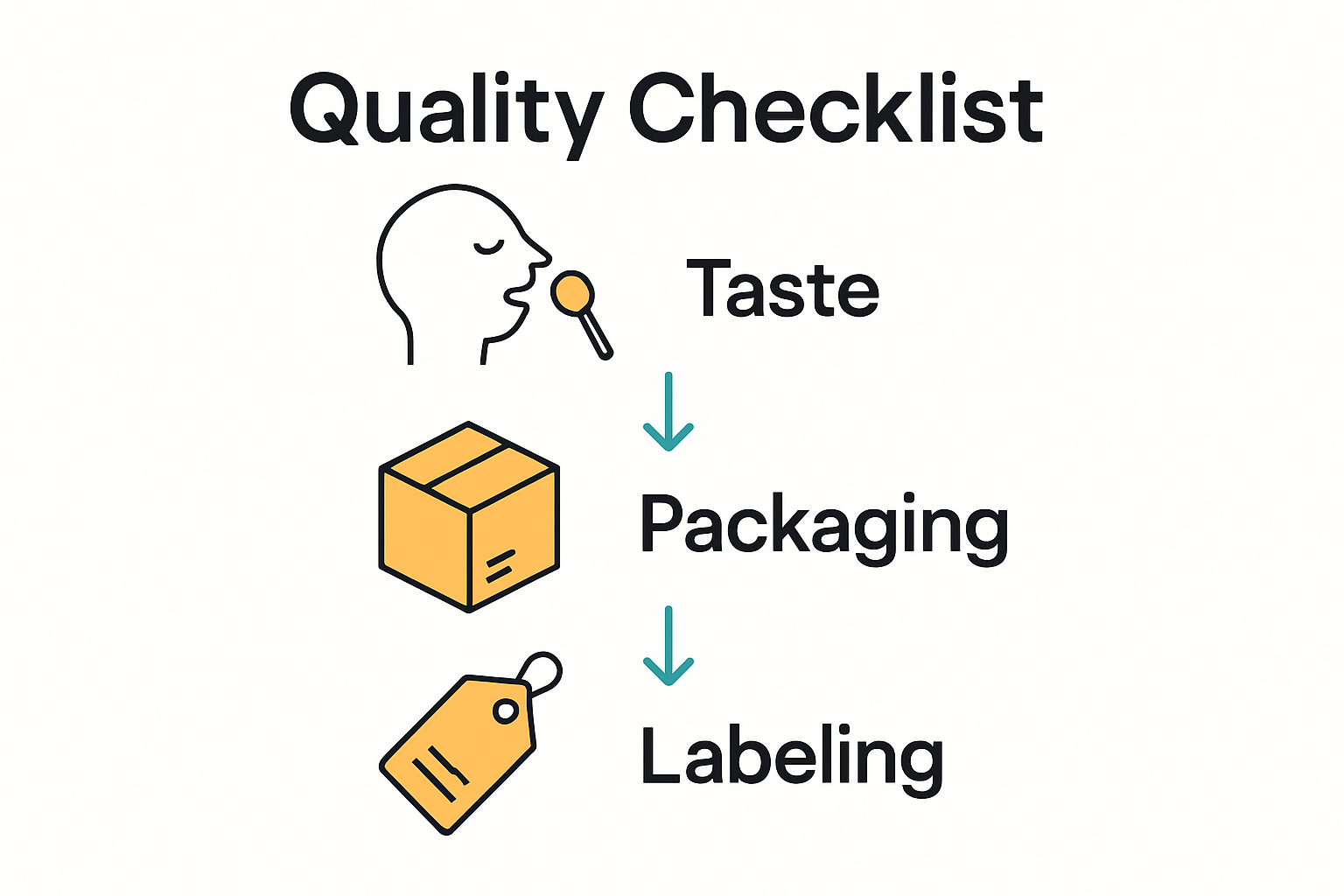
Consumer behavior studies demonstrate that product packaging and labeling play a critical role in purchasing decisions. Request product samples from potential suppliers to thoroughly assess candy quality, taste, appearance, and shelf stability. Look for consistent color, texture, and flavor profiles that meet your target market expectations. Pay special attention to packaging materials that protect product integrity and maintain freshness during transportation and storage.
Utilize advanced research techniques similar to virtual store simulations to critically evaluate packaging designs and labeling options. Understanding Food Packaging Regulations in Canada can help ensure your selected suppliers meet legal requirements for food packaging and labeling. Verify that potential suppliers offer customization options like private labeling, custom packaging sizes, and branding opportunities that align with your business identity.
Pro tip: Develop a comprehensive evaluation checklist for packaging and labeling that includes criteria like material quality, design aesthetics, regulatory compliance, branding potential, and product protection. This systematic approach will help you select suppliers who not only provide great candy but also support your overall retail strategy.
Step 5: Verify compliance and place a sample order
Preparing to finalize your wholesale candy supplier selection requires a strategic approach to verifying regulatory compliance and testing product quality through sample orders. This critical step helps minimize potential risks and ensures your chosen vendor meets your business standards.
Understanding your target market is essential when verifying product compliance and selecting appropriate sample quantities. Request comprehensive documentation from potential suppliers including ingredient lists, nutritional information, allergen warnings, and certification of food safety standards. How to Start Private Label: Build Your Own Brand Today can provide additional guidance on navigating these regulatory requirements.
Utilize psychographic segmentation techniques to evaluate how well the sample products align with your specific customer preferences. Place small initial orders that allow you to thoroughly test product quality, packaging integrity, and market reception without significant financial risk. Request samples across different product lines to assess consistency and variety.
Pro tip: Create a detailed evaluation framework for your sample orders that includes specific scoring criteria such as taste quality, packaging durability, shipping condition, and overall customer appeal. This systematic approach will help you make an informed decision and select a wholesale candy supplier that truly meets your business needs.
Step 6: Review results and finalize your wholesale candy partner
After completing your comprehensive supplier evaluation, you are now ready to make a strategic decision about your wholesale candy partner. This final step requires a careful and systematic approach to selecting the vendor that best meets your business requirements.
Market segmentation strategies can help you assess which supplier aligns most closely with your target consumer groups. Compile a detailed comparison spreadsheet that scores each potential supplier across critical metrics including product quality, pricing, minimum order quantities, shipping reliability, packaging options, and overall value proposition. Wholesale Candy Purchasing Tips for Smart Retailers can provide additional insights into making this crucial selection.
Analyzing consumer behavior patterns will help you predict which supplier can best support your long term business growth. Look beyond immediate pricing and consider factors like product innovation, responsiveness to market trends, customization capabilities, and potential for future collaboration. Schedule final conversations with your top two or three candidates to discuss contract terms, clarify expectations, and assess their commitment to your business success.
Pro tip: Trust your instincts but back them up with data. A great wholesale partner is not just about the products they offer, but also about their reliability, communication, and willingness to grow alongside your business. Negotiate flexible terms that allow you to adjust your orders as your market demands evolve.
Unlock Retail Success with Expert Wholesale Candy Solutions
Choosing the right wholesale candy supplier can feel overwhelming when balancing product quality, pricing, packaging, and compliance. You want a partner who truly understands your customer segments and can deliver flexible options like private labeling and custom packaging to elevate your brand. If you are seeking reliable freeze dried candy manufacturing and distribution in Canada that aligns perfectly with retail goals, discovering tailored services is key.

Experience how Space Man supports retailers with end-to-end solutions including co-packing and bagging services designed to enhance your candy offerings. Don’t wait to optimize your candy inventory or risk costly missteps in supplier selection. Visit https://space-man.ca today and take confident steps toward retail resale success with a trusted Canadian partner who prioritizes your unique business needs and growth.
Frequently Asked Questions
How do I define my target customers for wholesale candy?
To define your target customers, start by analyzing demographic factors such as age, income, and purchasing behaviors. Segment your potential buyers to tailor your candy selection to specific market demands, ensuring you align inventory with customer preferences.
What factors should I compare when researching candy suppliers?
When researching candy suppliers, consider product diversity, pricing structures, minimum order quantities, shipping costs, and delivery reliability. Create a spreadsheet to systematically compare each supplier’s strengths and weaknesses based on these criteria.
How can I evaluate the pricing and shipping options for wholesale candy?
To evaluate pricing, look for volume discounts offered by suppliers and factor in shipping costs. Calculate total landed costs, including product prices and shipping fees, to ensure you choose the most cost-effective option for your purchasing needs.
Why is packaging and labeling important in wholesale candy selection?
Packaging and labeling are essential because they impact product quality perception and consumer buying decisions. Assess samples for packaging materials and designs that could enhance your brand and protect product integrity during storage and transport.
What should I do after placing a sample order for wholesale candy?
After placing a sample order, thoroughly evaluate the product for taste, packaging integrity, and market appeal. Use a detailed framework to score the samples based on your specific criteria, and adjust your strategy based on the results to ensure you’re selecting the right supplier.
How do I finalize my wholesale candy supplier selection?
Finalize your supplier selection by compiling a comparison of potential suppliers against critical metrics like product quality, pricing, and delivery reliability. Discuss contract terms with your top candidates to clarify expectations and ensure you have a reliable partner for your retail needs.