

Most American candy trends reach Canadian shelves within months, placing extra pressure on local shops to innovate. With freeze-dried treats growing in popularity, lyophilization is quickly reshaping how confectionery businesses manage quality and inventory. Understanding this technology gives Canadian candy shop owners a powerful edge, helping them deliver longer-lasting, vibrant candies that stand out and stay fresh for much longer.
Table of Contents
- Defining A Lyophilizer And Key Concepts
- Stages Of Lyophilization In Candy Making
- Types Of Lyophilizers And Equipment Features
- Impact On Candy Quality And Shelf Life
- Operational Challenges And Common Mistakes
Key Takeaways
| Point | Details |
|---|---|
| Lyophilization Process | The lyophilization process involves rapid freezing, sublimation, and secondary drying to ensure product stability. |
| Equipment Selection | Choose lyophilizers with precise temperature control and real-time moisture monitoring for optimal results. |
| Candy Quality | Freeze-drying preserves texture and flavor while extending shelf life significantly compared to traditional methods. |
| Operational Challenges | Address challenges such as temperature management and scale-up issues to maintain product quality during production. |
Defining a Lyophilizer and Key Concepts
A lyophilizer represents a sophisticated piece of scientific equipment designed to transform liquid substances into stable, dry products through a complex dehydration process known as freeze-drying. This innovative technology plays a crucial role across multiple industries, particularly in pharmaceutical, food preservation, and specialty manufacturing sectors where maintaining product integrity is paramount.
The lyophilization process involves three critical stages that work in precise sequence. First, the product undergoes rapid freezing, which transforms the liquid into a solid state while preserving its molecular structure. Next, a vacuum environment is created where primary drying occurs through sublimation - a unique physical transformation where ice transitions directly from solid to vapor without passing through the liquid state. The final stage involves secondary drying, which removes any remaining moisture molecules, ensuring complete dehydration and long-term product stability.
Specialists utilize lyophilization to protect sensitive materials that might degrade under traditional drying methods. Advanced preservation techniques enable manufacturers to extend product shelf life, maintain bioactivity, and enhance solubility across various applications. The process is particularly valuable for preserving biologics, injectable medications, nutraceuticals, and other temperature-sensitive compounds that require meticulous handling.
Pro tip: When selecting a lyophilizer for your business, prioritize models with precise temperature control and real-time moisture monitoring capabilities to ensure consistent, high-quality results.
Stages of Lyophilization in Candy Making
Freeze-drying candy is a meticulous process that transforms ordinary sweets into crispy, lightweight delicacies through three precise stages. The first critical stage involves rapid freezing techniques that convert internal moisture into structured ice crystals while maintaining the candy’s original shape and structural integrity.
During the primary drying phase, the frozen candy is placed inside a specialized vacuum chamber where atmospheric pressure drops dramatically. This controlled environment enables sublimation, a fascinating physical process where ice transitions directly from solid to vapor without passing through the liquid state. By avoiding heat exposure, this method preserves the candy’s original flavor profile, color, and nutritional characteristics, distinguishing it from traditional dehydration methods that often compromise taste and texture.
The final stage focuses on complete moisture removal through secondary drying. Manufacturers carefully apply gentle heat to extract any remaining trace moisture molecules, ensuring the candy achieves an ultra-light, crisp texture. This precise technique results in freeze-dried candies that retain their original dimensions while developing a unique, melt-in-your-mouth quality that differentiates them from conventionally dried products. The result is a delicate, expanded confection with intense flavor concentration and remarkable shelf stability.
Pro tip: Invest in a high-quality vacuum chamber with precise temperature controls to consistently achieve optimal freeze-drying results for your candy production.
Types of Lyophilizers and Equipment Features
Candy manufacturers have several specialized lyophilizer types to choose from, each designed to meet specific production requirements. Laboratory lyophilizer configurations range from compact benchtop models ideal for small-batch experimentation to industrial floor-standing systems capable of handling large-scale production volumes. These machines differ significantly in size, capacity, and technological sophistication.
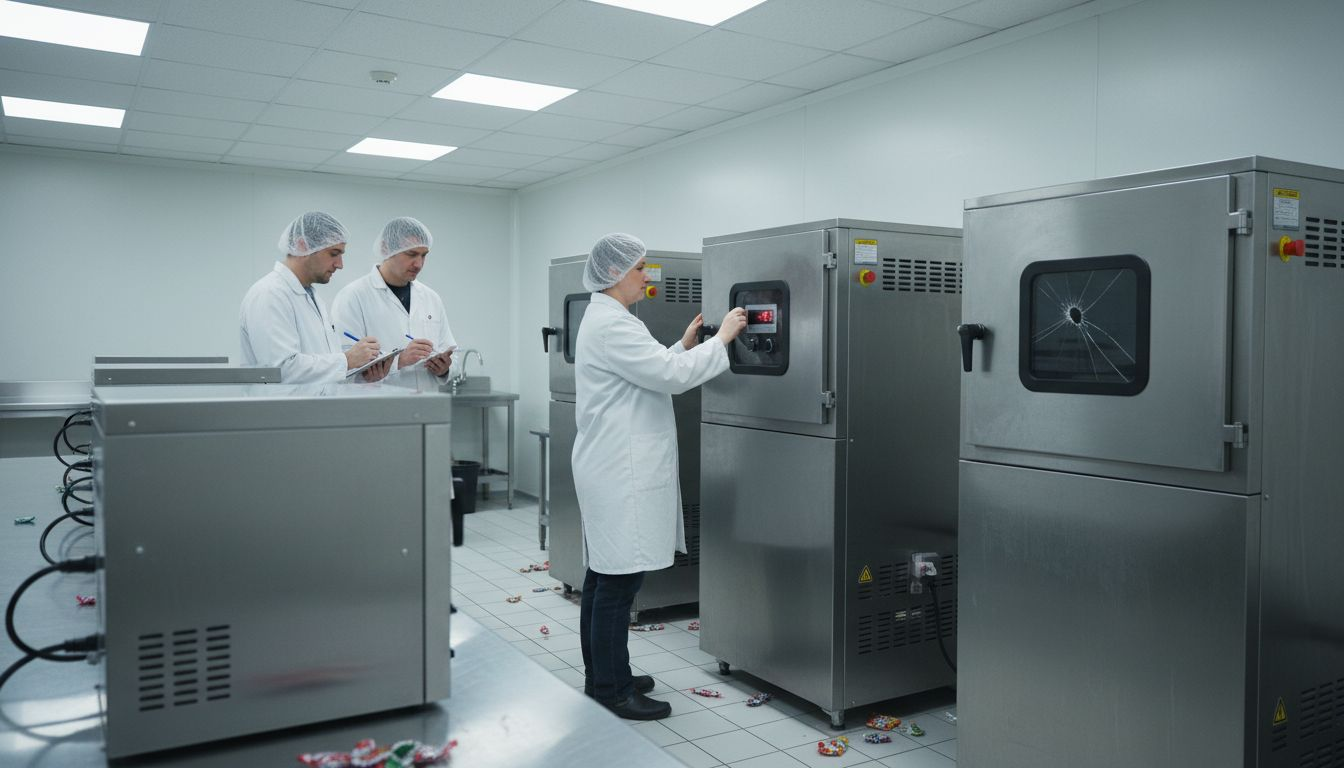
The primary lyophilizer categories include benchtop, floor-standing, manifold, and rotating drum models. Benchtop lyophilizers are perfect for small-scale candy research and development, offering precise temperature control in a compact footprint. Floor-standing units represent the industrial workhorses, featuring advanced control systems and substantial processing capacities that can handle continuous production runs. Manifold freeze dryers excel at processing multiple small liquid samples simultaneously, while rotating drum lyophilizers provide continuous processing capabilities for high-volume candy production.
Key equipment features that distinguish modern lyophilizers include sophisticated vacuum systems, programmable temperature controls, and integrated moisture monitoring technologies. Manufacturers must consider critical parameters such as shelf temperature range, condenser temperature, vacuum pump capacity, and overall system flexibility. Advanced models now incorporate real-time data logging, touchscreen interfaces, and automated process control, enabling unprecedented precision in freeze-drying candy while maintaining product quality and consistency.
Here’s a summary of common lyophilizer types and their optimal uses:
| Lyophilizer Type | Best For | Key Benefit |
|---|---|---|
| Benchtop | R&D, small-batch candy | Space-saving, precise control |
| Floor-standing | Industrial production | High capacity, automation |
| Manifold | Multiple liquid samples | Parallel processing ability |
| Rotating drum | High-volume continuous runs | Uninterrupted production |
Pro tip: Select a lyophilizer with modular design capabilities to ensure scalability and adaptability as your candy production needs evolve.
Impact on Candy Quality and Shelf Life
Lyophilization dramatically transforms candy preservation by implementing a revolutionary approach to maintaining product quality. Preservation techniques enable manufacturers to extend shelf life while maintaining the original sensory characteristics of their confectionery products. By removing moisture through sublimation, freeze-drying creates a unique environment that dramatically slows down chemical and biological degradation processes.
The freeze-drying process offers remarkable benefits for candy quality. Structural integrity remains intact, with candies retaining their original shape, color, and intricate details. Flavor molecules are preserved more effectively compared to traditional drying methods, resulting in an intense taste experience. The ultra-low moisture content prevents microbial growth, oxidation, and enzymatic reactions that typically cause rapid deterioration, effectively extending the product’s marketable lifespan from weeks to potentially months or even years.
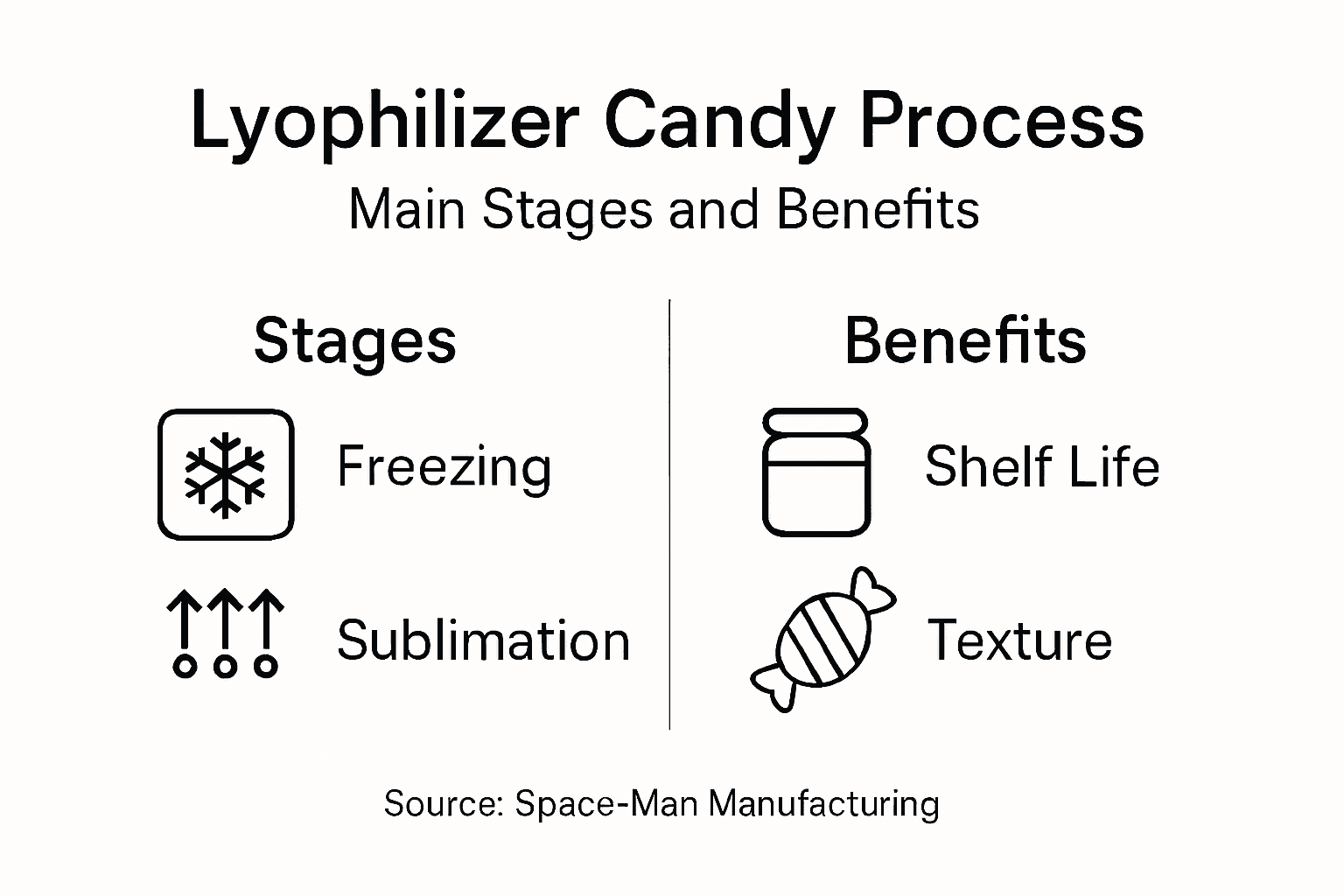
Numerous factors contribute to the enhanced shelf stability of freeze-dried candies. The absence of water inhibits chemical breakdown mechanisms, preventing sugar crystallization, color changes, and flavor degradation. Manufacturers can now create lightweight, portable candy products that maintain their original sensory qualities for extended periods. This preservation method also reduces packaging requirements, as the low-moisture environment provides natural protection against environmental factors that typically compromise food quality.
This table highlights how freeze-drying impacts key aspects of candy quality:
| Quality Trait | Freeze-Dried Candies | Conventionally Dried Candies |
|---|---|---|
| Texture | Crisp, airy | Chewy or hard |
| Flavor Intensity | Highly concentrated | Often diminished |
| Shelf Life | Months to years | Weeks to months |
| Color Preservation | Vivid, original tones | Possible fading |
Pro tip: Conduct regular moisture content testing to ensure consistent quality and maximize the extended shelf life potential of your freeze-dried candy products.
Operational Challenges and Common Mistakes
Manufacturers navigating the lyophilization process for candy production encounter numerous complex operational challenges. Lyophilization infrastructure challenges frequently emerge from equipment limitations, technical complexities, and intricate process control requirements that can significantly impact product quality and production efficiency.
The most critical operational hurdles involve precise temperature management and understanding product-specific molecular behaviors. Freeze-drying candies requires extremely controlled freezing rates to prevent structural collapse, with manufacturers needing to account for variations in sugar content, moisture levels, and molecular composition. Common mistakes include inadequate thermal profiling, inconsistent vacuum application, and failure to implement proper excipients that stabilize the product during the freeze-drying process. These errors can result in compromised texture, flavor degradation, and significant product loss.
Scale-up presents another substantial challenge in candy lyophilization. Transitioning from small-batch experimental processes to large-scale production involves complex engineering considerations. Manufacturers must carefully manage equipment differences, potential vial breakage risks, and maintain uniform drying conditions across larger production volumes. Variability in nucleation, uneven moisture removal, and inconsistent vacuum efficiency can dramatically impact the final product’s quality, making precise process design and continuous monitoring absolutely crucial for successful commercial freeze-dried candy production.
Pro tip: Invest in comprehensive process validation protocols and maintain detailed batch records to systematically identify and mitigate potential lyophilization variability in your candy production.
Master Freeze-Dried Candy Quality with Expert Lyophilization Solutions
Optimizing freeze-dried candy production requires overcoming challenges like precise temperature control, moisture monitoring, and consistent vacuum application to preserve texture and flavor. If you want to avoid common pitfalls such as structural collapse or flavor degradation, partnering with experienced manufacturers who understand these complex processes is essential.
Discover how our Canadian-based team at Space-Man can support your candy business with expert freeze-dried manufacturing, private labeling, and packaging services. Benefit from advanced lyophilization technology and industry know-how that ensures your products deliver crispy texture, intense flavor, and extended shelf life. Start enhancing your candy production today by visiting Space-Man’s range of services and solutions tailored for freeze-dried confectionery success.
Frequently Asked Questions
What is a lyophilizer and how does it work in candy making?
A lyophilizer is a specialized scientific device that freeze-dries substances, including candy, by transforming liquid into stable, dry products through sublimation and dehydration. The process involves rapid freezing, followed by creating a vacuum environment for primary drying and then secondary drying to remove any remaining moisture.
What are the stages of the lyophilization process for candy?
The lyophilization process for candy involves three critical stages: 1) Rapid freezing to form structured ice crystals, 2) Primary drying in a vacuum chamber where sublimation occurs, and 3) Secondary drying to remove remaining moisture, resulting in a crispy and lightweight candy product.
How does freeze-drying affect the quality and shelf life of candy?
Freeze-drying helps maintain the original texture, flavor, and color of candy while extending its shelf life significantly. The absence of moisture prevents degradation, resulting in a product that can last for months or years, unlike conventionally dried candy that may spoil within weeks.
What are the different types of lyophilizers available for candy manufacturing?
There are several types of lyophilizers, including benchtop models for small-scale research, floor-standing units for industrial production, manifold for processing multiple samples, and rotating drum lyophilizers for continuous high-volume runs. Each type serves distinct needs based on production demands.
Recommended
- How Lyophilization Works in Freeze-Dried Candy – Spaceman
- Complete Guide to Machines for Freeze Drying Candy – Spaceman
- What Does a Freeze Dryer Look Like in Candy Production – Spaceman
- What Is a Freeze Dryer Machine? Complete Overview – Spaceman
- Freeze Dried Strawberry Crumbs – Granavitalis
- How to Store Fresh Food Naturally for Maximum Freshness – naturessoulshop