

Standing out in a crowded confectionery aisle has never been more challenging for Canadian retailers. As trends shift and consumer expectations rise, the packaging you choose for freeze-dried confections does more than protect—it signals quality, sustainability, and brand story in an instant. Innovative gourmet packaging blends high-quality materials and eye-catching design to turn your freeze-dried treats into products that shoppers notice and remember. Discover what transforms ordinary packaging into shelf-ready solutions that elevate both your brand and your bottom line.
Table of Contents
- Defining Gourmet Packaging For Confections
- Types Of Gourmet Packaging Solutions
- Key Features For Freeze-Dried Candy
- Compliance And Safety In Canadian Packaging
- Maximizing Shelf Impact And Avoiding Pitfalls
Key Takeaways
| Point | Details |
|---|---|
| Gourmet Packaging Adds Value | Invest in gourmet packaging to enhance perceived value, protect quality, and establish brand loyalty. |
| Packaging Must Meet Standards | Ensure compliance with Canadian regulations for materials, labeling, and allergen declarations to avoid legal issues. |
| Sustainability is Key | Utilize recyclable or compostable materials to align with consumer preferences for environmentally responsible packaging. |
| Balance Aesthetics and Function | Create impactful designs while maintaining functional performance to avoid disappointing customers with damaged products. |
Defining Gourmet Packaging for Confections
Gourmet packaging for confections isn’t just a pretty wrapper. It’s a strategic business tool that communicates quality, protects your product, and influences buying decisions the moment a customer sees it on the shelf. For Canadian retail buyers, understanding what separates gourmet packaging from standard options is crucial because it directly impacts profit margins, customer satisfaction, and brand loyalty. Think of it as the difference between a candy bar in a plain wrapper and one presented in a custom box that feels expensive before anyone even tastes what’s inside.
At its core, gourmet packaging serves multiple functions simultaneously. It must be high-quality and functional, designed to maintain product freshness while catching attention in a crowded retail environment. The research shows that active edible food packaging materials tailored for confectionery products focus on enhancement, safety, and shelf-life extension. But what does that actually mean for your store? It means gourmet packaging combines premium materials, thoughtful design, and sometimes sustainable solutions to align with what today’s discerning consumers expect from freeze-dried confections. Here’s what distinguishes gourmet packaging from the everyday stuff:
- Material quality: Uses superior cardboard grades, specialty papers, or sustainable alternatives that feel substantial in customers’ hands
- Design sophistication: Features professional typography, custom artwork, and strategic use of color to reflect the premium nature of freeze-dried products
- Functional elements: Includes practical features like resealable closures, clear windows showcasing the product, or compartments for variety packs
- Brand consistency: Maintains visual identity across your entire product line while standing out against competitor offerings
- Sustainability considerations: Increasingly incorporates recyclable or compostable materials without compromising appearance or protection
The psychology behind gourmet packaging goes deeper than aesthetics. When you invest in custom candy packaging, you’re creating a communication channel between your brand and the customer. Packaging design serves as “a communication vehicle that elevates brand perception through technological and design innovations,” according to research examining gourmet food packaging and consumer engagement. For Canadian retailers, this means customers viewing your freeze-dried candies don’t just see a product—they perceive value, trustworthiness, and quality before making a purchase decision.
What separates gourmet packaging from ordinary options comes down to intentionality. A standard package protects the product. A gourmet package protects the product while telling a story about who you are as a business, what makes your freeze-dried confections special, and why a customer should choose your offering over others. This is particularly important in the Canadian market, where consumers increasingly prefer locally sourced, thoughtfully packaged goods that reflect care and attention to detail. Your packaging becomes part of the total customer experience, influencing not just the initial sale but repeat purchases and word-of-mouth recommendations.
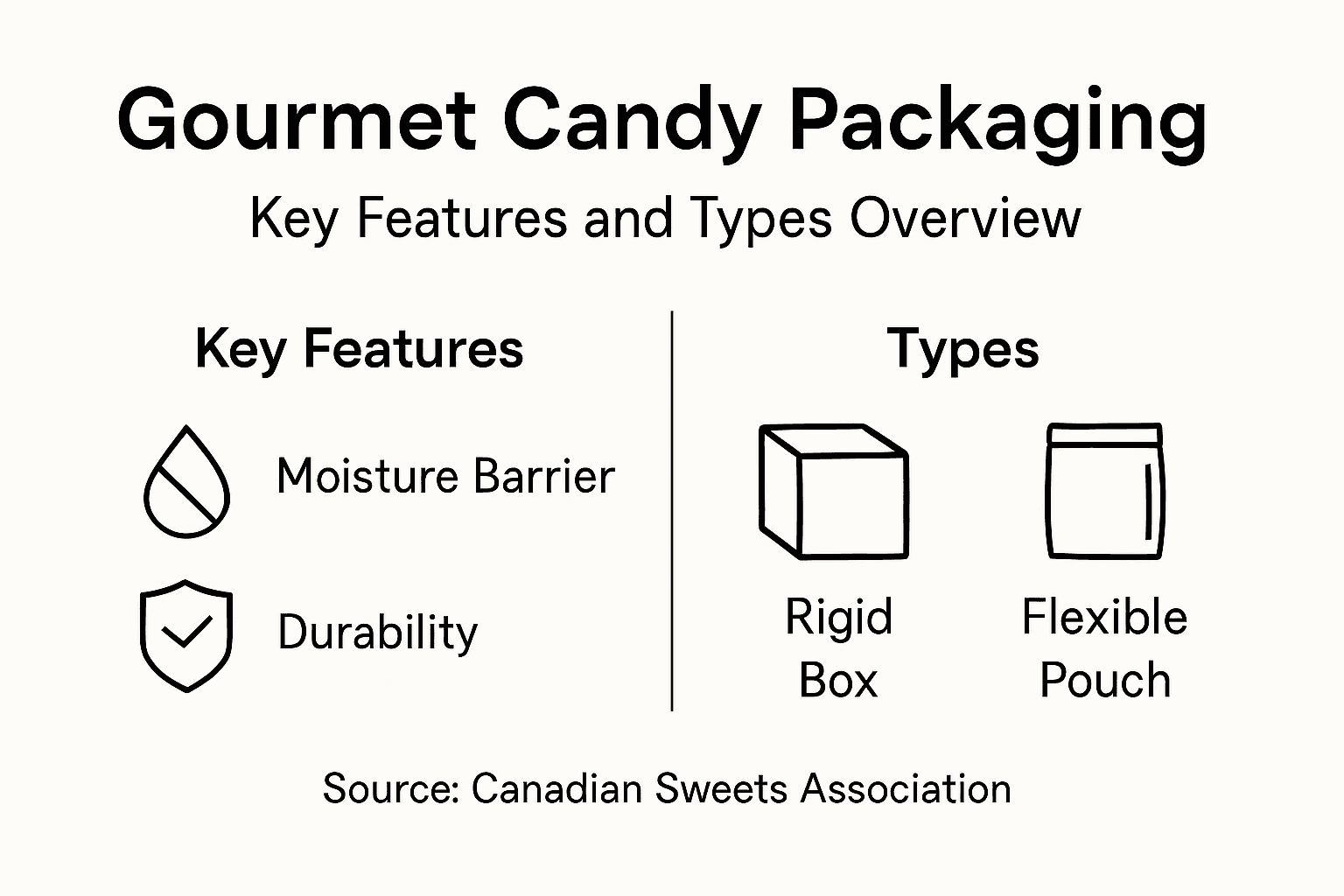
The practical distinction also involves understanding different packaging types available. Whether you’re looking at rigid boxes, flexible pouches, or custom-designed containers, gourmet options in each category prioritize both form and function. Understanding the range of food packaging options for candy businesses helps you select solutions that genuinely elevate your freeze-dried candy presentation while meeting your operational needs.
Pro tip: Start by analyzing competitor packaging at your price point and one level above to identify what visual elements, material qualities, and design features make certain products feel more premium. Use these observations to brief your packaging supplier on your exact expectations, ensuring the gourmet packaging you invest in delivers measurable ROI through increased customer perception of value.
Types of Gourmet Packaging Solutions
When you walk into a Canadian specialty store and spot freeze-dried candies, the packaging you see isn’t random. It represents deliberate choices about materials, design, and functionality. The reality is that gourmet packaging comes in several distinct types, each offering different advantages depending on your product, target customer, and shelf positioning. Understanding these options helps you select solutions that genuinely elevate your freeze-dried candy sales rather than just looking nice on the shelf.
Rigid boxes remain the gold standard for premium confections. These come in various forms: traditional hinged lid boxes, two-piece construction boxes, or drawer-style containers that create an unboxing experience customers actually remember. Rigid packaging communicates luxury through its substantial feel and structural integrity. When a customer picks up a rigid box of freeze-dried candies, they immediately perceive premium quality. The downside? Cost. Rigid boxes run higher per unit than flexible alternatives, which makes them ideal for your higher-price-point products or specialty gift collections. The material options have expanded significantly too. Beyond standard white or kraft cardboard, you can source boxes made from edible or active packaging materials that actually contribute to product preservation through moisture barriers and antimicrobial properties, adding functional value beyond appearance.
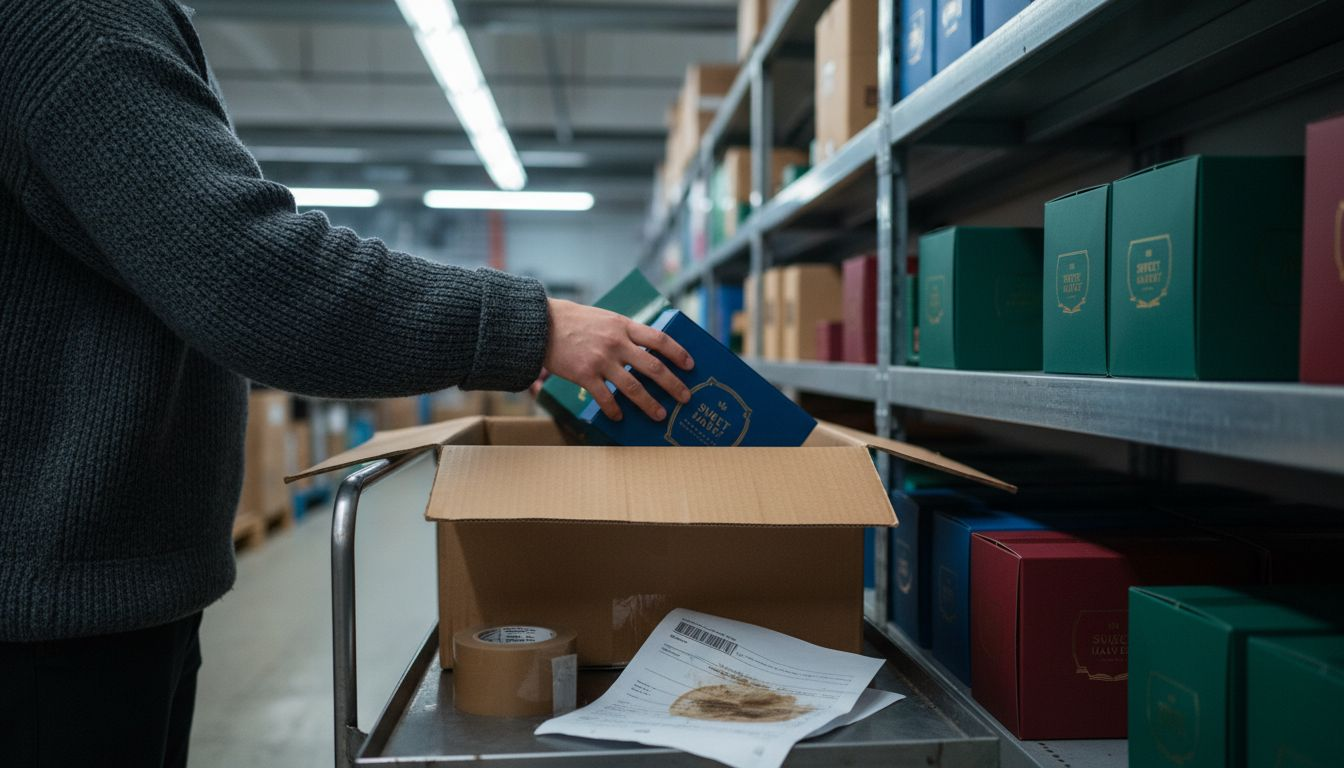
Flexible pouches and stand-up bags represent the practical middle ground. These work exceptionally well for freeze-dried candies because they offer visibility through clear windows while maintaining product freshness through resealable closures. Flexible packaging costs less than rigid boxes but still conveys quality when designed thoughtfully. The key advantage? Space efficiency on your shelves. Stand-up pouches use vertical real estate effectively, allowing retailers to display more SKUs in the same footprint. Modern vibrant contrasts and artisanal illustrations on flexible packaging create visual impact that rivals rigid boxes. Many Canadian retailers find flexible pouches particularly attractive for variety packs or value-sized offerings where you want to maintain premium positioning without hitting the price point of rigid boxes.
Custom-designed containers represent the innovation frontier. These include everything from kraft paper boxes with custom inserts to specialty shapes that make your product immediately recognizable on shelves. Custom containers allow maximum creative control over brand expression. You might choose shaped boxes that echo the freeze-dried candy format, transparent acrylic boxes for maximum product visibility, or corrugated options with die-cut windows. The trade-off involves minimum order quantities typically higher than standard boxes, but the differentiation you achieve often justifies the investment, especially if you’re positioning yourself as a local artisanal producer in the Canadian market.
Composite materials and hybrid solutions have gained serious traction. These combine paperboard, plastic, or biopolymer components strategically. For instance, a paperboard sleeve might wrap around a clear plastic tray, giving you the premium look of paper with the product visibility of plastic. These hybrid approaches often appeal to environmentally conscious retailers because you can optimize material use while maintaining functionality. The contemporary confectionery market increasingly demands solutions that look premium while addressing sustainability concerns, and hybrid packaging delivers on both fronts.
To quickly compare gourmet packaging solutions, review the advantages and key drawbacks of each type:
| Packaging Type | Best For | Major Benefit | Main Limitation |
|---|---|---|---|
| Rigid Boxes | Gift selections, premium SKUs | Maximum product protection | Higher cost per unit |
| Flexible Pouches | Everyday and variety packs | Space-saving, strong barriers | Less crush resistance |
| Custom Containers | Brand differentiation, innovations | Unique shape, strong identity | Higher minimum orders |
| Hybrid/Composite | Sustainability-focused offerings | Eco appeal and functionality | Complex manufacturing |
Selection Framework
Choosing between these options requires evaluating several factors:
- Price point of your product - Rigid boxes suit premium tiers; flexible pouches work across mid to premium ranges
- Storage and shipping constraints - Flexible packaging requires less warehouse space and shipping volume
- Shelf visibility requirements - Clear windows on pouches compete effectively with closed rigid boxes when designed right
- Target demographic - Gift-focused customers value rigid boxes; convenience-focused buyers appreciate resealable pouches
- Brand story alignment - Sustainable materials for eco-conscious brands, artisanal designs for heritage positioning
The reality is that Canadian retailers often succeed by mixing packaging types across their freeze-dried candy lineup. Your flagship product might feature stunning rigid gift packaging, while your everyday SKU uses cost-effective flexible pouches. Understanding different packaging types available for products helps you build a cohesive collection that maximizes appeal across customer segments without breaking your production budget.
Pro tip: Start with 2-3 packaging formats tested across your current product line, then track which combinations drive the highest margin per shelf-foot occupied and generate the most customer repeat purchases; scale your investment in the winners rather than rolling out new formats across your entire range at once.
Key Features for Freeze-Dried Candy
Freeze-dried candies are a completely different animal from traditional confections, and their packaging needs to reflect that reality. Because freeze-dried products have been stripped of moisture through a specialized process, they’re simultaneously more delicate and more shelf-stable than their conventional counterparts. Your packaging must protect them from the very thing that makes them special: their crispy, light texture. Miss this requirement, and you end up with broken candy and disappointed customers. The key is understanding exactly what freeze-dried candies demand from their packaging, then selecting solutions that deliver on those demands without compromising the premium positioning that makes these products profitable.
The first critical feature is moisture and oxygen protection. Freeze-dried candies are hygroscopic, meaning they actively absorb moisture from the air. Expose them to humidity for even a few days, and that beautiful crispy texture transforms into a soggy mess. Your packaging must create an effective barrier against both moisture and oxygen, which is why simple paper bags won’t cut it for premium offerings. High-quality barrier films, foil-lined pouches, or coated paperboard all provide the protection freeze-dried products require. Protection against moisture and oxygen isn’t just about keeping the product edible, it’s about maintaining the sensory experience customers expect. When someone buys freeze-dried strawberries or other candies, they’re purchasing a specific texture and flavor profile. The moment moisture compromises that experience, you’ve lost a repeat customer. For Canadian retailers stocking freeze-dried candies, this single feature often determines whether you get repeat purchases or returns.
Mechanical durability ranks equally high on the importance scale. Freeze-dried candies shatter like glass when pressure is applied. They’re inherently fragile because that’s part of their appeal, yet the packaging must prevent crushing during shipping, handling, and shelf stocking. This is where rigid boxes genuinely excel. They provide structural protection that flexible pouches simply cannot match, especially for delicate items like freeze-dried fruit. If you’re using flexible packaging, you’ll need interior protection elements like cushioning inserts or compartments. The choice between rigid and flexible packaging for freeze-dried candies often comes down to this single factor. Your packaging supplier should understand the importance of mechanical durability as a non-negotiable requirement, not an afterthought.
Design elements matter far more than many retailers realize. Eye-catching colors and tactile finishes aren’t purely aesthetic choices for freeze-dried candies. They communicate quality and premium positioning at the shelf. When a customer sees bold visual contrasts and carefully considered finishes, they perceive higher value before reading a single word. Texture matters here too. A matte finish with subtle texture suggests craftsmanship, while glossy finishes can feel cheap if not executed perfectly. The packaging should make customers want to touch it, then feel premium when they do. For Canadian retail buyers, this visual communication often justifies the higher cost of gourmet packaging because it drives faster turnover and supports higher price points.
Resealability has become non-negotiable for freeze-dried candy packaging. Many customers buy these products for snacking over multiple days or weeks. If your packaging doesn’t seal properly after opening, the product you sold them becomes inedible within hours. Resealable zippers, fold-over closures, or magnetic seals all work, depending on your packaging type. The feature seems simple but directly impacts repeat purchases and customer satisfaction ratings. A customer who can properly reseal their freeze-dried candies becomes a loyal repeat buyer. One whose package won’t close properly leaves a negative review and never comes back.
Sustainability features have shifted from nice-to-have to essential in the Canadian market. Environmentally conscious consumers increasingly examine packaging before purchasing. Using recyclable paperboard, compostable films, or incorporating active antimicrobial elements that extend shelf life naturally all contribute to sustainability positioning. The advantage? Sustainable packaging often performs better functionally while supporting premium pricing, so you’re not sacrificing profit for environmental responsibility.
Here is a summary of essential packaging features for freeze-dried candies and how they affect business outcomes:
| Feature | Why It Matters | Business Impact |
|---|---|---|
| Moisture/Oxygen Barrier | Preserves crisp texture | Reduces returns, boosts loyalty |
| Mechanical Durability | Prevents candy breakage | Less damaged goods, fewer refunds |
| Resealability | Supports multiple servings | Increases repeat purchases |
| Bilingual Labeling | Meets Canadian laws | Avoids fines and recalls |
Pro tip: Request sample testing from your packaging supplier where they intentionally expose freeze-dried candy prototypes to humid conditions for 7-14 days to verify moisture barrier performance; actual performance in humid environments matters far more than technical specification sheets, and Canadian humidity varies by region, so test packaging in the specific climate where your retailers are located.
Compliance and Safety in Canadian Packaging
Here’s the reality: selling gourmet freeze-dried candy packaging in Canada isn’t just about making things look beautiful. You’re operating within a regulatory framework that protects consumers, and non-compliance can result in fines, product seizures, or worse. As a Canadian retail buyer or store owner, understanding these requirements isn’t optional. It’s foundational to legitimate business operations. The good news? The regulations are learnable, and when you follow them correctly, they actually build consumer trust and protect your brand reputation.
Canada’s packaging regulations stem from federal and provincial legislation, with the Canadian Food Inspection Agency (CFIA) serving as the primary enforcement body. The regulations cover everything from material safety to labeling requirements, all designed to ensure that what consumers purchase won’t harm them. For freeze-dried candies specifically, you need to understand three major compliance areas. First, your packaging materials must be food-safe and approved for contact with edible products. This means checking material composition, confirming that inks and coatings won’t leach into the product, and ensuring that adhesives used in box construction meet Canadian standards. Second, you must comply with food packaging regulations in Canada, which specify acceptable materials, barrier properties, and labeling placement. Third, your packaging must include all required information in both English and French, a uniquely Canadian requirement that many first-time retailers overlook.
Labeling compliance deserves special attention because mistakes here are common and costly. Canadian regulations require specific information displayed on every package: product name, net quantity in metric units, list of ingredients, allergen declarations, manufacturer or distributor information, and nutritional information when applicable. For freeze-dried candies, allergen declarations matter significantly. Even though freeze-drying removes water, it concentrates the allergen proteins present in the original fruit or ingredient. If your freeze-dried strawberry candy came from strawberries, you must declare strawberry as an allergen. The English and French requirement applies to all text on the package. You cannot simply translate the label after designing it in English. Your packaging needs to accommodate both languages from the design stage. Many retailers make the mistake of cramming French text into insufficient space, creating packaging that looks unprofessional and raises compliance questions. Design your packaging with bilingual requirements built in from the start.
Material safety standards carry serious weight in Canadian food packaging. Understanding food safety regulations in Canada helps you grasp why these standards exist and what they protect against. The regulations restrict certain substances in packaging materials. For example, some plastics and coatings may contain chemicals that migrate into food under specific conditions. Your packaging supplier should provide documentation proving that materials meet Canadian standards. When you’re evaluating packaging options, ask your supplier for certificates of compliance or safety data sheets. Don’t accept vague assurances. Get documentation. This protects you if there’s ever a regulatory audit or consumer complaint.
Storage and handling of packaged products also falls under compliance requirements. You need to maintain packaging in conditions that preserve product integrity. If freeze-dried candies are stored in humid warehouse conditions, the packaging may fail to protect the product effectively, even if the packaging itself meets all standards. Retailers often overlook this aspect. Perfect packaging cannot compensate for poor storage conditions. Climate control in your storage areas matters for compliance because the end consumer expects to receive a product in the condition the packaging promises to deliver.
When working with private label or co-packing partners, make sure compliance responsibility is clearly defined in your contract. Who verifies that packaging meets Canadian standards? Who ensures bilingual labeling is correct? Who handles CFIA documentation if needed? Getting these details in writing prevents expensive disputes later. Your packaging partner should take responsibility for confirming that materials meet Canadian food safety standards and that all labels include required information in correct languages.
Key Compliance Checkpoints
Before you approve any packaging design, verify these items:
- Material approval - Supplier provides documentation confirming food contact safety
- Bilingual labeling - All required information appears in both English and French
- Allergen declarations - All potential allergens from source ingredients are listed
- Net quantity - Displayed in metric units with proper sizing and placement
- Manufacturer information - Your company name, address, or distributor contact is clearly shown
- Storage conditions - Label specifies any special storage requirements
Pro tip: Before placing your first large order of packaging, request that your supplier provide a sample label mock-up with all required Canadian compliance elements included, then submit this sample to CFIA for a pre-approval review if you’re uncertain about any elements; this minimal step costs little but prevents you from producing thousands of non-compliant packages that will cause problems when you attempt to distribute them through Canadian retailers.
Maximizing Shelf Impact and Avoiding Pitfalls
You’ve invested in premium freeze-dried candies, sourced beautiful ingredients, and perfected your product. Now comes the moment that determines success or failure: the shelf. Your packaging has roughly 2-3 seconds to capture a customer’s attention before they move on to something else. That’s not enough time for consumers to read your entire label. It’s barely enough time to register that your product exists. Maximizing shelf impact means understanding that every design choice, color selection, and visual element serves one purpose: stopping customers in their tracks long enough to pick up the package. Miss this, and all your other efforts dissolve into invisibility.
Bold colors and distinctive visual contrasts form the foundation of shelf impact. When freeze-dried candies compete alongside conventional candies, energy drinks, and impulse purchases, muted or safe color palettes lose. You need designs featuring bold colors and contrasting elements that make your packaging jump off the shelf. This doesn’t mean garish or unprofessional. It means intentional, strategic use of color psychology. Warm colors like reds and oranges trigger excitement and appetite. Cool colors communicate premium quality or natural ingredients. The key is contrast. If your competitors use dark packaging, consider a vibrant accent color that makes your product the visual standout. Artisanal illustrations also matter tremendously. A hand-drawn element or custom illustration communicates that real people made this product with care, not a faceless corporation manufacturing commodity goods. For Canadian retailers stocking freeze-dried candies, this authenticity resonates with consumers increasingly skeptical of mass-produced confections.
The critical pitfall many retailers stumble into involves sacrificing function for aesthetics. You can design the most stunning package imaginable, but if it fails to protect freeze-dried candies from moisture, or if the closure system breaks during shipping, you’ve created a beautiful disaster. The research emphasizes that balancing visual appeal with functional protection determines long-term success. Customers remember the first purchase experience more than the packaging design. If their freeze-dried candies arrive crushed or have absorbed moisture, the beautiful box becomes a symbol of disappointment. Your packaging strategy must integrate aesthetics and performance from the design phase onward. Test your visual designs on actual packaging samples before committing to large production runs. What looks great on a digital mockup might not translate effectively to physical cardboard or film.
Sustainability has shifted from a marketing advantage to a baseline expectation among Canadian consumers. You’ll encounter pitfalls if your gorgeous packaging communicates premium quality while screaming waste. Over-packaging represents a common mistake. If a package clearly contains excess material or unnecessary components, environmentally conscious customers will judge your brand negatively despite the beautiful design. The reality is that sustainable packaging design now extends to avoiding over-packaging while ensuring recyclability. Your packaging should look premium without appearing wasteful. Use efficient material combinations. If you choose recyclable materials, make this clear on the package. Don’t hide sustainability efforts. Communicate them. When customers understand that your beautiful packaging is also responsible, they become advocates rather than critics.
Common Pitfalls and How to Avoid Them
Watch out for these specific mistakes that undermine packaging effectiveness:
- Overcrowded design - Jamming too much visual information confuses customers and dilutes shelf impact. Simplicity wins in retail environments where customers make split-second decisions
- Illegible text - Trendy fonts that look sophisticated on design mockups become impossible to read on actual shelf from customer viewing distance. Test legibility from 6 feet away
- Ignored bilingual requirements - Canadian retailers often cram French text into insufficient space, creating an unprofessional appearance that signals disregard for regulatory compliance
- Packaging that doesn’t reflect product reality - If your packaging suggests artisanal, locally produced candies but customers discover they’re mass manufactured, trust evaporates instantly
- Poor material choices for shelf conditions - Matte finishes that photograph beautifully can look dull under retail lighting. Glossy finishes can reflect harsh fluorescent lights in unflattering ways. Request shelf mockups before finalizing material selections
- Failure to test on actual retail shelves - Home viewing and retail shelf display create completely different visual contexts. Request samples displayed in actual store conditions before approving final designs
Design Strategy Framework
Approach shelf impact systematically rather than relying on intuition:
- Analyze competitor packaging at your price point and one tier above to identify what visual elements succeed
- Define your unique visual identity with colors, illustrations, or design elements that distinguish you from competitors
- Balance visual impact with functional clarity ensuring protection claims, sustainability features, and essential information remain visible
- Test materials under actual shelf conditions before committing to large production volumes
- Verify bilingual compliance thoroughly to avoid costly reprinting or regulatory issues
- Request shelf mockups showing your packaging alongside competitor offerings to verify realistic visual impact
Pro tip: Create a test display in your retail environment with 5-10 packaging mockups from competitors and place your design among them, then observe customer behavior and gather feedback for 1-2 weeks before finalizing production; what looks impressive in isolation often performs differently when competing directly for shelf attention alongside established brands.
Elevate Your Freeze-Dried Candy Sales with Gourmet Packaging
Facing the challenge of standing out in the competitive Canadian confectionery market means mastering gourmet packaging that protects delicate freeze-dried candies while making a bold shelf impact. You want packaging that offers superior moisture and oxygen barriers, mechanical durability, and resealability combined with striking design that tells your brand story clearly and sustainably. These packaging features do more than preserve your candies; they create an emotional connection with customers who value quality and authenticity.
Discover how our private labeling, co-packing, and bagging services bring your gourmet packaging vision to life. Whether you are expanding your Wholesale Freeze Dried Candy & Treats selection or offering unique Bulk Unbranded Freeze Dried Candy & Treats, we ensure your product presentation matches the premium quality inside.
Start transforming your freeze-dried candy’s shelf presence today by partnering with a trusted Canadian manufacturer and distributor. Visit Space-Man.ca to explore how gourmet packaging solutions can increase customer loyalty, reduce product returns, and boost repeat sales. Don’t let your product blend in; let it shine with packaging that sells.
Frequently Asked Questions
What is gourmet packaging for freeze-dried candies?
Gourmet packaging for freeze-dried candies is a carefully designed solution that combines high-quality materials, sophisticated design, and functional features to communicate premium quality, protect the product, and enhance customer experience.
How does gourmet packaging influence consumer buying decisions?
Gourmet packaging enhances brand perception and communicates quality, trustworthiness, and uniqueness, influencing consumers to choose your freeze-dried candies over competing products at the point of purchase.
What are the essential features of packaging for freeze-dried candies?
Key features include moisture and oxygen barriers to preserve texture, mechanical durability to prevent breakage, resealability for multi-use convenience, and sustainable materials for eco-conscious consumers.
What types of gourmet packaging solutions are available for freeze-dried candies?
Available types include rigid boxes for premium products, flexible pouches for everyday offerings, custom-designed containers for brand differentiation, and hybrid packaging solutions that blend materials for functionality and sustainability.