

Most American households rely on some form of food preservation, yet few realize that freeze dryers can remove up to 98 percent of moisture while dehydrators achieve only 80 to 90 percent. With growing interest in long-term food storage and home-based business opportunities, understanding the science behind these devices has never mattered more. Explore how these machines differ in method, results, and real-world benefits for anyone serious about American food preservation.
Table of Contents
- How Freeze Dryers and Dehydrators Work
- Types and Features of Each Device
- Key Differences in Food Preservation Results
- Costs, Energy Use, and Business Implications
- Choosing the Right Option for Candy Businesses
Key Takeaways
| Point | Details |
|---|---|
| Freeze Drying vs. Dehydrating | Freeze drying removes 98% moisture and preserves food’s original structure and nutrients, while dehydrating removes 80-90% moisture but alters texture and flavor more significantly. |
| Business Impacts | Freeze dryers require a higher initial investment but produce premium quality, shelf-stable products; dehydrators are more budget-friendly with simpler operation. |
| Nutritional Retention | Freeze-dried foods retain about 97% of nutrients with a shelf life exceeding 25 years, whereas dehydrated foods retain only 60-75% of nutrients and have a shorter shelf life of around 15 years. |
| Choice Considerations | The decision between freeze drying and dehydrating hinges on budget, intended food types, and desired preservation outcomes, impacting both quality and market differentiation. |
How Freeze Dryers and Dehydrators Work
Understanding the mechanisms behind food preservation technologies reveals fascinating differences between freeze dryers and dehydrators. While both methods aim to remove moisture, their approaches and outcomes are dramatically distinct.
Freeze drying represents a sophisticated preservation technique that begins by completely freezing the food. This process involves placing frozen food under a high-vacuum environment, allowing water molecules to transition directly from solid ice to vapor without passing through a liquid state - a phenomenon known as sublimation. The result? Remarkable moisture removal up to 98%, which preserves the food’s original cellular structure, nutritional profile, and sensory characteristics.
In contrast, traditional food dehydrators operate through a more straightforward heat-based mechanism. By applying low, consistent temperatures and steady airflow, dehydrators gradually extract moisture, typically removing 80-90% of water content. This approach, while effective, can significantly alter the food’s texture, flavor, and nutritional density. The heat exposure means some enzymatic breakdown occurs, which can compromise the food’s original qualities.
Key Preservation Differences:
- Freeze Drying: Sublimation process, 98% moisture removal
- Dehydrating: Heat-based extraction, 80-90% moisture removal
- Freeze Dried Foods: Maintain original structure and nutrients
- Dehydrated Foods: Experience more structural and nutritional changes
The original development of freeze-drying emerged from medical research during World War II, with NASA later refining the technique for space mission food preservation. Today, it represents a cutting-edge approach to maintaining food’s intrinsic qualities across extended storage periods.
Types and Features of Each Device
When exploring food preservation technologies, home freeze dryers and food dehydrators offer distinct approaches with unique characteristics that cater to different preservation needs. Each device comes with its own set of features, advantages, and considerations for home food preservation enthusiasts.
Home freeze dryers have emerged as a sophisticated preservation technology that represents a significant investment for serious food preservation. These advanced machines are typically more expensive and consume more electricity compared to traditional dehydrators. However, they deliver exceptional results by maintaining the food’s original color, shape, and nutritional integrity. Freeze dryers can handle a broader range of foods, including complete meals, making them incredibly versatile for home food preservation.
In contrast, food dehydrators offer a more traditional and budget-friendly approach to moisture removal. Available in various models such as stackable and shelf configurations, these devices use low heat and consistent airflow to extract moisture. While more affordable and energy-efficient, dehydrators often result in more significant food shrinkage and texture modifications during the preservation process.
Comparative Device Features:
-
Freeze Dryers:
- Higher initial cost
- More electricity consumption
- Preserve food’s original structure
- Handle wider variety of foods
- Maintain nutritional profile
-
Dehydrators:
- Lower initial investment
- More energy-efficient
- Simpler operational mechanism
- More texture changes during preservation
- Best for specific food types
The choice between a freeze dryer and a dehydrator ultimately depends on your specific preservation goals, budget, and the types of foods you intend to preserve. While freeze dryers offer superior preservation quality, dehydrators remain an accessible and practical option for many home food preservation enthusiasts.
Key Differences in Food Preservation Results
When it comes to food preservation, nutritional retention and longevity are critical factors that dramatically distinguish freeze drying from traditional dehydration methods. The preservation technique you choose can significantly impact the quality, taste, and nutritional value of your stored foods.
Freeze-dried foods demonstrate remarkable nutrient preservation capabilities, retaining approximately 97% of their original nutritional content. This impressive preservation rate allows these foods to maintain their essential vitamins, minerals, and bioactive compounds. Moreover, freeze-dried products boast an extraordinary shelf life of 25 years or more, thanks to the near-complete removal of moisture - typically 98-99% - which prevents bacterial growth and enzymatic degradation.
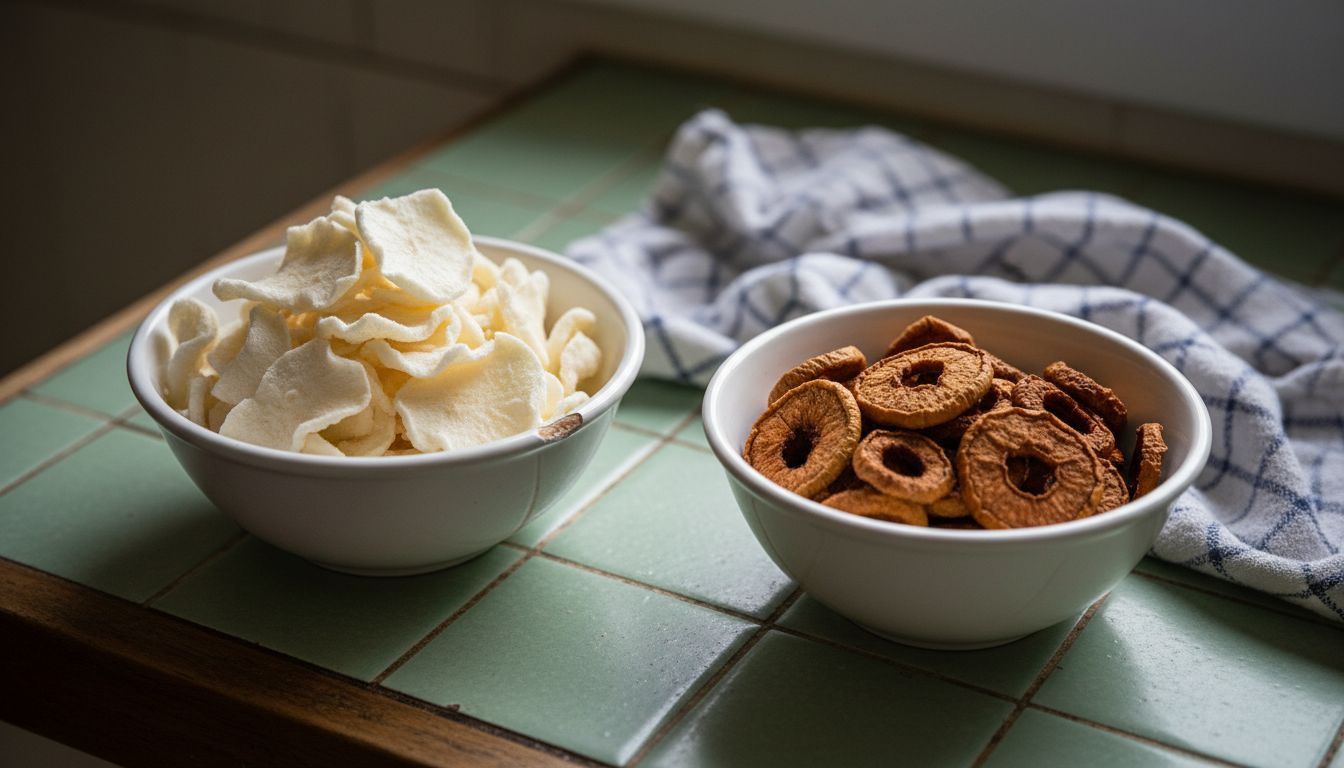
In contrast, dehydrated foods experience more substantial nutritional compromise. The nutrient retention in dehydrated products ranges between 60-75%, with significant losses of heat-sensitive compounds like vitamin C and antioxidants. Dehydration’s heat-based process causes more structural damage, resulting in a shorter shelf life of around 15 years and more pronounced changes in food’s original texture and flavor profile.
Preservation Outcome Comparison:
-
Freeze-Dried Foods:
- 97% nutrient retention
- 25+ years shelf life
- Minimal structural changes
- Original texture preservation
- Minimal flavor alteration
-
Dehydrated Foods:
- 60-75% nutrient retention
- 15 years shelf life
- Significant structural modifications
- Texture and flavor changes
- More moisture content
The fundamental difference lies in the preservation mechanism. Freeze drying’s gentle, low-temperature process minimizes nutrient degradation, while dehydration’s heat exposure accelerates nutritional breakdown. For those prioritizing long-term food quality and nutritional integrity, freeze drying emerges as the superior preservation method.
Costs, Energy Use, and Business Implications
For businesses and entrepreneurs exploring food preservation technologies, understanding the financial landscape of freeze dryers and dehydrators is crucial. The investment goes far beyond the initial purchase price, encompassing operational costs, energy consumption, and long-term business potential.
Home freeze dryers represent a significant capital investment, ranging from $2,000 to over $10,000. While the upfront cost might seem prohibitive, these machines offer substantial advantages for businesses seeking high-quality food preservation. The higher initial expense is often offset by the ability to produce premium preserved foods that are substantially cheaper than commercially available freeze-dried products. Businesses can potentially create value-added products with minimal shrinkage and superior quality.
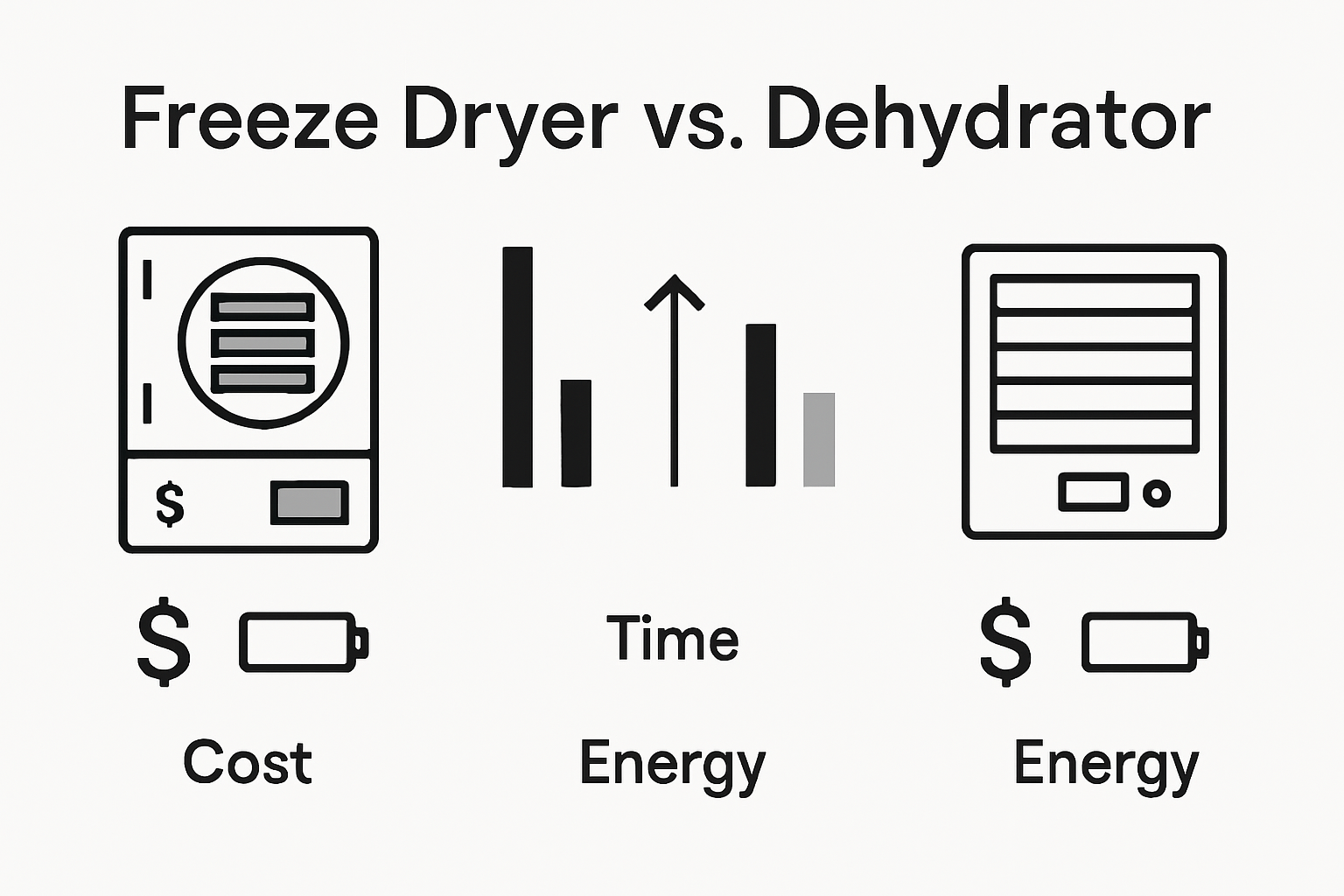
The operational costs of freeze dryers extend beyond their purchase price, with higher energy consumption compared to traditional dehydration methods. However, the return on investment can be significant for businesses targeting niche markets that value nutritional integrity and long-shelf-life products. Dehydrators, by contrast, represent a more budget-friendly initial investment with lower energy requirements, making them attractive for smaller operations or those with limited capital.
Business Considerations:
-
Freeze Dryers:
- Higher initial investment ($2,000-$10,000)
- Premium product quality
- Higher energy consumption
- Ideal for high-end food preservation
- Longer shelf-life products
-
Dehydrators:
- Lower initial cost
- Lower energy requirements
- Simpler operational model
- Better for budget-conscious businesses
- More limited product range
Business owners must carefully evaluate their specific needs, target market, and long-term growth strategies when choosing between these preservation technologies. The decision involves balancing initial costs, ongoing expenses, product quality, and potential market differentiation. While freeze dryers offer superior preservation, they demand a more significant financial commitment and sophisticated operational approach.
Choosing the Right Option for Candy Businesses
Candy businesses face critical decisions when selecting preservation technologies that can dramatically impact product quality, shelf life, and overall market positioning. Understanding the nuanced differences between freeze drying and traditional dehydration becomes paramount for strategic product development.
Freeze-drying offers exceptional advantages for candy preservation, particularly for businesses focused on maintaining premium product characteristics. This method uniquely preserves the original shape, color, and structural integrity of candies, ensuring that delicate confectionery items retain their visual appeal and sensory qualities. Hard candies, in particular, benefit from freeze-drying’s minimal shrinkage and color preservation technique, which can differentiate a brand in a competitive marketplace.
The preservation method’s economic implications are equally significant for candy businesses, requiring careful cost-benefit analysis. While freeze-drying demands higher initial investment and energy consumption, it provides superior product quality that can command premium pricing. Smaller candy businesses might find dehydration more economically accessible, whereas larger manufacturers can leverage freeze-drying’s advanced preservation capabilities to create unique, long-shelf-life products.
Strategic Preservation Considerations for Candy Businesses:
-
Freeze-Dried Candies:
- Retain original shape and color
- Minimal structural changes
- Premium product positioning
- Extended shelf life
- Ideal for complex, delicate confections
-
Dehydrated Candies:
- Lower production costs
- Simpler processing
- More suitable for robust candy types
- Faster production cycles
- Budget-friendly option
Ultimately, the choice between freeze-drying and dehydration depends on a candy business’s specific goals, target market, and financial capabilities. Innovative companies recognize that preservation technology is not just about extending shelf life, but about maintaining the intrinsic quality that distinguishes their brand in a competitive confectionery landscape.
Discover Premium Freeze-Dried Candy Solutions That Meet Your Preservation Goals
Choosing between freeze drying and dehydration can be a tough decision for candy businesses and food enthusiasts alike. With freeze drying offering superior nutrient retention, minimal structural changes, and extended shelf life, it addresses the common pain points of maintaining product quality and premium appearance described in the article. If you want your candy to keep its original shape, color, and flavor without sacrificing shelf life or nutritional integrity, understanding these key differences is just the start.

Explore how Space-Man’s freeze-dried candy products bring your preservation vision to life with exceptional quality and bespoke services including private labeling, co-packing, and professional packaging. Don’t compromise on product excellence or market positioning. Visit Space-Man here now and elevate your candy preservation strategy with trusted expertise and cutting-edge freeze drying technology. Act today to stay ahead in the competitive confectionery market.
Frequently Asked Questions
What is the main difference between freeze drying and dehydrating?
Freeze drying uses sublimation to remove up to 98% of moisture from food, preserving its original structure and nutrients, while dehydrating uses heat to extract 80-90% of moisture, resulting in more changes in texture and flavor.
How does freeze drying affect the nutritional content of food compared to dehydrating?
Freeze-dried foods retain approximately 97% of their original nutrients, whereas dehydrated foods lose around 25-40% of their nutritional content due to the heat involved in the process.
What are the costs associated with freeze dryers and dehydrators?
Freeze dryers typically range from $2,000 to over $10,000, with higher energy consumption, while dehydrators are more budget-friendly with lower initial costs and energy requirements.
Which method is better for preserving candy products?
Freeze drying is often better for candy preservation because it maintains the original shape, color, and structural integrity of delicate confections, while dehydration may lead to texture changes and reduced visual appeal.
Recommended
- Difference Between Freeze Dryer and Dehydrator: Complete Guide – Spaceman
- What Is a Freeze Dryer Machine? Complete Overview – Spaceman
- Best Freeze Dryer: Complete Guide for 2025 Buyers – Spaceman
- Freeze Dryer vs Food Dehydrator: Complete Guide – Spaceman
- Understanding the Difference Between Sauté and Fry Pan – Brass & Steel