

If you do nothing else, do these three things: right-size your boxes, switch to recycled-content outer packaging, and cut or replace your plastic filler. Those three changes deliver the biggest sustainability payoff for the least amount of money and hassle, because oversized boxes waste material and inflate dimensional-weight shipping costs, recycled cardboard is often cheaper than virgin stock, and filler is the easiest thing in your supply chain to just… remove. A British Business Bank report found most UK consumers have actively cut back on single-use plastic, so this isn’t just an internal cost exercise. Customers notice.
Here’s what to do in the next 72 hours:
- Measure your five best-selling SKUs and check how much empty space sits in each box.
- Pull your current tape, labels, and mailers and check whether they’re actually recyclable where your customers live.
- Order a 20-unit test batch of recycled-content mailers or boxes before committing to anything larger.
Quick stat: cardboard already accounts for the vast majority of U.S. shipping materials, and ShipStation notes it’s one of the lowest-impact options available when sourced responsibly. You’re not reinventing packaging. You’re just making smarter choices within a system that already favors paper fiber.
Key Takeaways
The fastest, cheapest path to sustainable packaging is right-sizing your boxes and swapping outer materials to recycled content before you touch anything else.
| Point | Details |
|---|---|
| Start with right-sizing | Measure your top-selling SKUs and eliminate excess box volume before buying new materials. |
| Test before you scale | Order 20 to 50 unit batches and run a drop test plus transit simulation first. |
| Match material to disposal reality | Compostable only works if your customers have industrial composting access; check labels and local rules. |
| Vet suppliers on specifics | Ask for recycled content percentage, FSC certification, and lab test data, not marketing claims. |
| Get help with food-specific packaging | Space-man offers pilot production runs for private label and co-packing clients validating new packaging formats. |
Table of Contents
- 15 Eco-Friendly Packaging Ideas for Small Business Budgets
- What’s the Difference Between Recyclable, Compostable, and Recycled Materials?
- How Do You Cut Packaging Waste Without Increasing Damage?
- Choosing the Right Sustainable Packaging for Your Product
- How to Transition to Eco-Friendly Packaging Step by Step
- Budget-Friendly Ways to Source Sustainable Packaging
- What to Look for in an Eco-Friendly Packaging Supplier
- Why We Tell Small Businesses to Start Small and Measure
- How Space-man Supports Small Business Packaging Decisions
- Sources
15 Eco-Friendly Packaging Ideas for Small Business Budgets
You don’t need a sustainability department to fix your packaging. You need a prioritized list and the willingness to test before you commit. Here’s one, ranked roughly by ease of implementation.
- Right-sized boxes. Replaces oversized standard cartons. Cuts void fill needs and shipping cost immediately. Catch: you’ll need two or three box sizes instead of one. Test: measure your top 10 SKUs and order sample sizes in 5% smaller increments.
- Recycled kraft mailers. Replaces glossy branded mailers. Cheap, lightweight, widely recyclable. Catch: less premium “feel” out of the box. Test: run 50 units and track unboxing feedback.
- Unbranded recycled boxes. Replaces custom-printed cartons. Keeps costs low while you validate the format. Catch: less brand visibility during shipping. Test: order the smallest available print run, or none at all.
- Molded pulp inserts. Replaces foam or plastic trays. Compostable, sturdy for fragile items. Catch: higher unit cost at low volume. Test: request samples for your heaviest or most breakable product.
- Paper honeycomb wrap. Replaces bubble wrap for cushioning. Fully recyclable, surprisingly good shock absorption. Catch: bulkier to store than rolled plastic. Test: drop-test a wrapped item from waist height.
- Shredded kraft or paper void fill. Replaces plastic air pillows. Cheap, recyclable, made from scrap paper. Catch: less consistent cushioning than engineered inserts. Test: pack, ship, and open a sample box yourself.
- Recycled poly mailers (where accepted). Replaces virgin plastic mailers for soft goods. Lower carbon footprint than new plastic. Catch: not curbside recyclable everywhere. Test: check your customers’ local recycling rules first.
- Compostable mailers. Replaces standard poly mailers. Breaks down under the right conditions. Catch: TIPA’s certified materials need industrial composting to fully degrade within roughly 180 days, and most curbside programs don’t accept them. Test: only roll out if you can clearly label disposal instructions.
- Reusable tote or pouch packaging. Replaces single-use mailers for repeat customers. Builds loyalty, cuts long-term waste. Catch: higher upfront cost per unit. Test: pilot with your subscription or VIP customers first.
- Seed-paper inserts. Replaces disposable thank-you cards. Plantable, memorable, genuinely different. Catch: novelty wears off if overused. Test: include in a limited run and track social shares.
- Minimal printed collateral. Replaces multi-page inserts and glossy catalogs. Saves paper and printing cost. Catch: less room for upsells. Test: switch one SKU line to a single-card insert and watch reorder rates.
- Water-based or soy inks. Replaces solvent-based printing. Lower toxicity, easier recycling. Catch: slightly higher cost per print run. Test: ask your printer for a small sample batch before switching fully.
- Compostable labels and tape. Replaces plastic-based adhesive tape. Keeps the whole package compostable if you’re using compostable mailers. Catch: can be pricier and less sticky in humid climates. Test: tape a box and leave it in transit-like conditions for 48 hours.
- Take-back or refill programs. Replaces one-and-done packaging entirely. Builds a genuinely circular relationship with repeat buyers. Catch: needs logistics planning and customer education. Test: offer it to your highest-frequency customers first, as Shopify recommends.
- Bulk shipping to reduce per-unit impact. Replaces frequent small shipments to distributors or retail partners. Fewer trips, lower per-unit carbon cost. Catch: requires more upfront storage or planning. Test: compare per-unit shipping cost on a consolidated order versus your current cadence.
Pro Tip: Never roll out a new packaging format to your full catalog at once. Order the smallest batch your supplier allows, ship it to yourself or a friend, and open it like a customer would. You’ll catch problems in an afternoon that would otherwise show up as returns three weeks later.
A freeze-dried candy brand switching from foam-lined boxes to molded pulp trays, for example, would want to run that pack-and-ship test specifically in summer heat conditions, since pulp behaves differently once humidity gets involved.
What’s the Difference Between Recyclable, Compostable, and Recycled Materials?
These three terms get used interchangeably, and that’s exactly where small businesses get burned. Recycled-content materials are made from reclaimed fiber or plastic and are usually also recyclable again after use. Recyclable just means the material can go through a recycling stream, assuming your customer’s local system accepts it. Compostable means the material breaks down biologically, but almost always requires specific conditions.
- Recycled-content fiber (cardboard, kraft paper): Widely recyclable, low cost, minimal contamination risk if you skip laminates and heavy coatings.
- Molded pulp: Compostable and recyclable in most systems, but bulkier to ship flat than folded cardboard.
- Compostable bioplastics: Often need industrial composting facilities, not backyard bins or curbside pickup.
- Glass and aluminum: Excellent for refillable or reusable systems, but heavier, meaning higher transport emissions per shipment.
Compostable does not mean “throw it anywhere.” TIPA’s certified compostable materials are engineered to break down into water, CO2, and biomass within roughly 180 days, but only in appropriate composting conditions. Look for BPI or EN 13432 certification labels, and check whether your city’s compost program actually accepts packaging waste before you promise customers it’s compostable. FSC’s lifecycle guidance makes the point plainly: material choice alone doesn’t make packaging sustainable. What happens after the customer opens the box matters just as much.
How Do You Cut Packaging Waste Without Increasing Damage?
Reducing material and protecting your product aren’t opposites, they just require better design instead of more padding. A box that fits your product with half an inch of clearance, reinforced with structural folds instead of loose filler, often protects better than a bigger box stuffed with air pillows.
Run a simple two-step test before switching formats:
- Drop test: drop a packed box from about three feet onto a hard floor, six sides, and check for damage.
- Transit simulation: ship a test unit to yourself or a colleague using your actual carrier and route, then inspect it on arrival.
For protective materials, match the job to the product:
- Molded pulp or honeycomb paper for anything fragile that would otherwise get foam.
- Corrugated dividers for multi-item boxes that need internal separation.
- Insulated paper liners for temperature-sensitive food items, including anything that needs to survive a hot delivery truck.
- Shredded kraft void fill for lightweight items that just need to stop shifting around.
Choosing the Right Sustainable Packaging for Your Product
Not every product needs the same packaging fix, and guessing wastes money. Run through this before you order anything:
- Fragility: Does it need rigid structure or just gentle cushioning?
- Weight: Heavier products may need thicker fiber or reinforced corners.
- Moisture and temperature sensitivity: Food and confectionery items, especially anything freeze-dried, need materials with real moisture resistance.
- Primary vs. secondary packaging: The bag or wrapper touching the product has different requirements than the outer shipping box.
- Brand experience: Are you selling an unboxing moment, or just getting the product there intact?
- Local disposal infrastructure: Compostable only helps if your customers actually have somewhere to compost it.
When you’re vetting suppliers, ask directly: what percentage is recycled content, do they hold FSC Chain of Custody certification, what’s the minimum order quantity, what are lead times, and what does custom printing add to the unit cost? As a rule of thumb, default to recyclable materials unless your product specifically benefits from compostable packaging and your customer base has composting access. Reusable packaging earns its higher cost only with repeat buyers.
How to Transition to Eco-Friendly Packaging Step by Step
You don’t flip a switch on packaging, you phase it in. Here’s the sequence that avoids expensive mistakes:
- Audit: List every packaging SKU you use, measure box dimensions, calculate void percentage (the empty space you’re currently shipping air in), and note current material and recyclability.
- Test: Order small batches of your top candidate materials, run the pack-and-transit test described above, and track any damage or returns.
- Compare: Weigh new material costs against savings from lighter, smaller packaging, including dimensional-weight shipping savings, which DHL notes can meaningfully cut freight cost on top of the environmental benefit.
- Scale: Standardize on two or three box sizes, lock in a supplier contract, set reorder points so you never run out mid-season, and print clear disposal instructions directly on the packaging.
That last step gets skipped constantly, and it’s the one that actually closes the loop, since compostable or recyclable materials only work if the customer knows what bin they belong in.
Budget-Friendly Ways to Source Sustainable Packaging
Cost is usually the real objection, not willingness. Start with the free wins: right-sizing and simplifying materials cost nothing extra, they just require measuring what you already use. Buy stock recycled boxes instead of custom-printed ones until your format is locked in, since custom printing and low-volume premiums are what actually drive most packaging costs up for small brands.
When you do order, buying a slightly larger batch than you think you need usually lowers your per-unit price meaningfully. For sourcing, look for:
- Suppliers with low minimum order quantities built for small businesses.
- Your existing supplier’s recycled or compostable product lines. They may already carry what you need.
- Local suppliers over distant ones, to cut shipping-related emissions and lead times.
- FSC Chain of Custody certification if forestry sourcing matters to your brand story.
Stock recycled boxes, low-MOQ custom printers, molded pulp specialists, and compostable mailer vendors are the four supplier types most small businesses actually need.
What to Look for in an Eco-Friendly Packaging Supplier
Not every “eco-friendly” claim on a supplier’s website holds up. Before signing anything, verify these directly:
- Recycled content percentage, stated as an actual number, not “eco-conscious” marketing language.
- Chain of Custody or FSC certification, which confirms responsible sourcing rather than just recycled marketing claims.
- BPI certification or an equivalent standard for anything marketed as compostable.
- Lab test data on moisture resistance and grease resistance if you’re packaging food, which matters enormously for anything like chocolate or freeze-dried treats that can’t tolerate humidity.
- Minimum order quantities and lead times, so you know what a test run actually costs and how long it takes.
- A returns policy for defective packaging, because a bad print run or a batch of boxes that arrive damp is a real cost if there’s no recourse.
Food and candy packaging carries extra weight here. Grease resistance, food-safe coatings, and moisture barriers aren’t optional details, they’re the difference between a product that survives shipping and one that arrives ruined. Pro Tip: Always request performance samples and run a small pilot batch before converting your full product line. A supplier’s spec sheet and your actual product’s behavior in transit are sometimes two very different things.
Why We Tell Small Businesses to Start Small and Measure
Here’s my honest take after looking at how this plays out across food and candy brands: the businesses that succeed with sustainable packaging aren’t the ones that go all-in on day one. They’re the ones who pick one product line, change one thing, and actually measure what happens to damage rates, costs, and customer feedback before touching anything else.
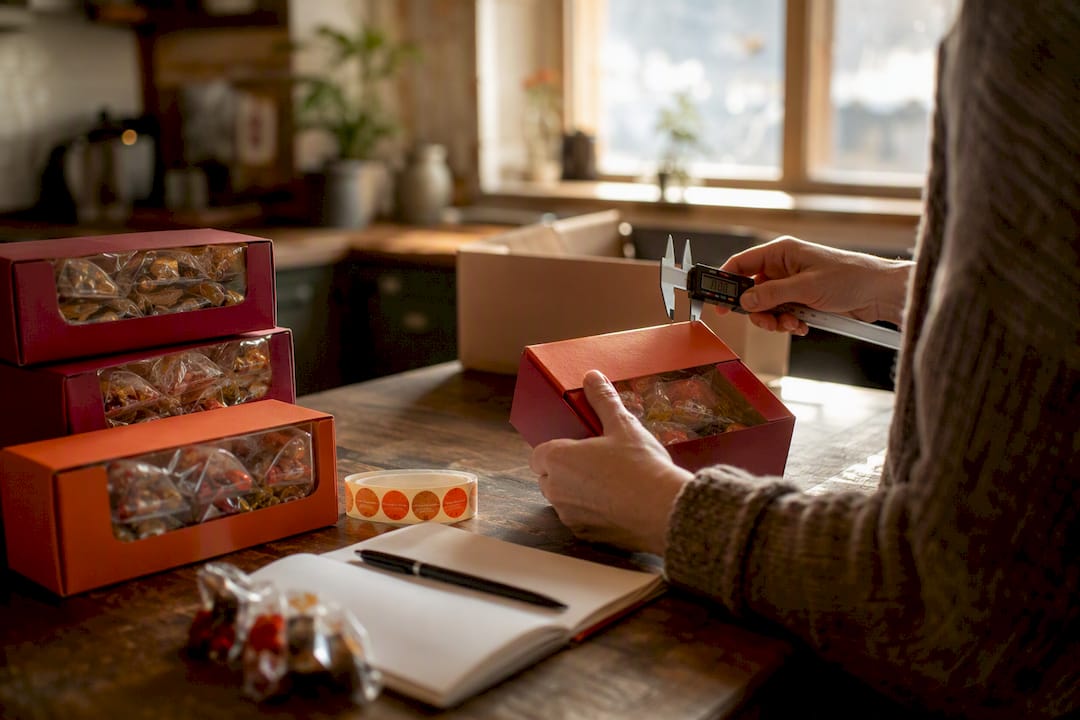
Space-man has worked through packaging changes on food products, where moisture and temperature aren’t theoretical concerns, they’re the whole ballgame. If you’re weighing a packaging switch for candy, chocolate, or anything freeze-dried, that’s a conversation worth having before you commit to a supplier.
How Space-man Supports Small Business Packaging Decisions
Space-man runs private label, co-packing, and packaging services for food and consumer goods brands across Canada, which means we deal with the moisture, grease, and shelf-life questions that make food packaging harder than a standard shipping box. If you’re trying to figure out whether a recycled mailer or a compostable insert will actually hold up around freeze-dried candy or chocolate, that’s exactly the kind of thing we help sort out before you commit to a full print run.

We can run a small pilot batch first, so you validate a new packaging format on 50 or 100 units instead of gambling on a warehouse full of stock that might not perform. That’s a much cheaper way to find out if a material works than discovering it after a bad transit season. If you’re weighing a packaging change or thinking about co-packing support, get in touch through our private label, co-packing, and packaging services page and we’ll walk through what a pilot run would look like for your product.
Sources
- Eco-friendly packaging alternatives
- Eco-Friendly Packaging: 8 Sustainable Packaging Ideas for 2024
- Fsc
- Sustainable Packaging Options for Small Businesses - ShipStation
- Sustainable packaging in logistics | DHL