

For this article, “diy edible gifts” means ready-to-gift packaged freeze-dried candy and confection gift sets, either purchased retail-ready or produced through private-label and co-packing arrangements. If you’re gifting fast, buy ready-made. If you need branded products at scale, start with a supplier checklist and request samples before you commit to anything. A supplier working both angles offers products retail-ready and as a co-packing partner.
TL;DR:
- Buying ready-made gift sets is ideal for immediate needs, while private-label co-packing suits brands planning bulk seasonal or branded products.
- Co-packer selection requires thorough vetting of NDA agreements, sample cycles, allergen controls, logistics, and pricing structures, not just sales pitches.
- Proper packaging with barrier pouches and clear labels significantly enhances gift appeal and shelf life, especially for freeze-dried confections sensitive to humidity.
- Larger production runs reduce per-unit costs but demand early planning to secure slots, accurate lead times, and prevent delays in seasonal gift launches.
- Ingredient quality and texture are crucial, with strong-flavor, airy, or crunchy items that withstand freeze-drying performing best in retail-ready gifts.
Table of Contents
- What Counts as a DIY Edible Gift Today?
- Quick Guide: Buy Retail-Ready Gifts vs. Contract Private-Label or Co-Packing
- What Should You Ask a Co-Packing Supplier Before Signing?
- Packaging and Labeling: What Actually Affects Giftability
- Pricing, Lead Times, and Planning for Seasonal Runs
- Basic DIY Edible Gift Recipes and Ideas
- How Do You Actually Put a Gift Set Together?
- What Should You Look for When Choosing Ingredients?
- What Safety Steps Actually Matter for Edible Gifts?
- Creative Packaging Ideas That Make Homemade Gifts Feel Premium
- How Long Do These Gifts Actually Stay Fresh?
- What I’ve Learned Running Freeze-Dried Gift and Co-Packing Projects
- Ready to Buy or Build Your Own Gift Line?
- Sources
What Counts as a DIY Edible Gift Today?
The phrase “DIY edible gifts” sounds like it means baking cookies in your kitchen. In the packaged gifting world, though, it actually points to something more specific: retail-ready freeze-dried candy, chocolate sets, and confection assortments you can buy pre-packaged and hand over immediately, or have manufactured under your own label through a co-packer. Think of it less as “do it yourself with a mixing bowl” and more as “design it yourself, someone else produces it.”
That distinction matters because it changes your entire buying decision. A shopper grabbing a gift box off a shelf and a business owner launching a branded holiday line are solving completely different problems, even though both fall under “homemade food gifts” in casual conversation. One wants speed and low risk. The other wants control over branding, flavor, and unit economics at volume.
Freeze-dried candy has become a favorite in this category because it holds texture and shelf life better than most confections, and it photographs well in a gift box, which matters more than people admit when they’re buying for someone else. Ice cream sandwiches, marshmallows, and chocolate pieces round out the typical retail-ready lineup you’ll see marketed as easy edible gifts or easy food gifts around the holidays.
Quick Guide: Buy Retail-Ready Gifts vs. Contract Private-Label or Co-Packing
If you need something in hand this week, buy retail-ready. If you’re building a brand or supplying a retailer, start the co-packing conversation now, because sample cycles and production slots fill up fast heading into the holidays.
Retail-ready purchases make sense when you’re buying small quantities for immediate gifting, when you want zero production risk, or when you just need something that looks good and tastes great without touching a spec sheet. Private-label and co-packing make more sense when you’re building a brand, ordering in bulk, running seasonal SKUs, or meeting a retailer’s private-brand requirements. The tradeoffs break down like this:
- Turnaround: Retail-ready ships in days. Co-packed runs typically need weeks of lead time once specs and samples are locked.
- Customization: Retail-ready offers none. Co-packing lets you control flavor, packaging, branding, and portion size.
- Cost shape: Retail-ready is priced per unit at retail. Co-packing cost drops sharply as order volume increases, since setup and changeover time gets spread across more units.
- Risk: Retail-ready has none. Co-packing carries MOQ commitments and sample-approval time you need to plan around.
Pro Tip: If you’re not sure which path fits, request a sample kit from a co-packer at the same time you’re browsing retail-ready options. Comparing both in hand makes the decision obvious in a way spec sheets never do.
Your immediate next step is simple: browse ready-made gift sets if you’re buying for someone this season, or start requesting quotes and samples now if you’re planning a branded run for next year.
What Should You Ask a Co-Packing Supplier Before Signing?
Vetting a co-packer is less like shopping and more like hiring a business partner, so treat the first conversation like an interview, not a sales call. Work through these points roughly in order:
- NDA and IP protection. A legitimate co-packer should be willing to sign a non-disclosure agreement covering your formulation and label design before any real specs get shared. Contracts in this industry rarely include non-compete clauses, so don’t expect exclusivity, just confidentiality.
- Sample and mockup process. Ask exactly how many rounds of samples are included, how long each round takes, and whether an on-site production trial happens before the full run.
- QA and allergen handling. Confirm traceability practices, cross-contamination controls, and how allergen segregation works on their floor.
- Logistics capacity. Many co-packers extend beyond production into kitting, warehousing, and fulfillment, which matters a lot during a holiday crunch.
- Pricing structure. Ask for setup fees, per-unit cost at different volumes, and the exact minimum order quantity, in writing.
Vendors differ quite a bit here. Some will source your ingredients for you; others only run material you supply, which matters if your product needs special handling like nut-free lines or dual wet-and-dry processing. You may end up working with more than one partner if your formulation is complex.
Packaging and Labeling: What Actually Affects Giftability
Packaging does two jobs at once: it protects the product and it sells the gift before anyone opens it. For freeze-dried candy specifically, barrier pouches matter more than most people realize, because freeze-dried texture is sensitive to humidity in a way regular candy isn’t. Window boxes and rigid multipacks work well for retail shelf presence and for gift-giving since buyers want to see what’s inside without opening it.
Labels need to cover the basics cleanly: full ingredient list, allergen call-outs, and clear storage instructions, since freeze-dried products behave differently than their fresh counterparts once opened. Labeling rules vary by country, so treat any specific claim on a package as something to verify against your own market’s regulations rather than copying what a competitor does.
A few upgrades punch above their cost:
- Printed inserts explaining what freeze-dried candy actually is, since many buyers haven’t tried it before.
- Ribbon, tissue, or a simple gift sleeve that turns a bag into a “gift” rather than a snack.
- Sustainable or recyclable materials, which increasingly influence buying decisions without adding much cost.
Poor sealing is the most common cause of damage in transit and lost shelf life, so don’t cut corners on the barrier layer to save a few cents per unit. For more ideas on presentation, this rundown of gourmet packaging approaches covers finishes that work specifically for freeze-dried candy.
Pricing, Lead Times, and Planning for Seasonal Runs
Per-unit price is driven largely by run length, not just ingredients. Conversion changeover, setup, and clean-up time get charged whether you order 500 units or 50,000, which means larger runs often see per-unit costs drop sharply compared to small ones.
For holiday and seasonal gift packs specifically, booking early buys you scale without needing to hire seasonal staff yourself, plus more consistent quality and faster turnaround than scrambling in November. Expect a few line items beyond the base unit cost:
- Kitting fees for multipacks or bundled gift sets.
- Storage fees if product sits in a warehouse ahead of a launch date.
- Rush fees if you’re compressing an already tight production window.
- Packaging upgrades like custom boxes or specialty inserts.
Track four numbers when comparing quotes: turnaround days, MOQ, landed unit cost, and how long the sample-approval cycle actually takes. That last one gets underestimated constantly, and it’s the number most likely to blow your launch date if you don’t ask about it upfront.
Basic DIY Edible Gift Recipes and Ideas
If you’re building a private-label lineup or just want inspiration for a retail-ready assortment, a few formats consistently perform well as gifts. Freeze-dried candy mixes, like a combination of freeze-dried Skittles, sour gummies, and chocolate pieces in one bag, give buyers variety in a single gift without needing multiple SKUs.
Chocolate-covered freeze-dried fruit is another strong seller, since it pairs a familiar flavor (strawberry, banana) with a genuinely new texture. Freeze-dried ice cream sandwiches make a novelty gift that works especially well for younger recipients or as a stocking-stuffer format. Marshmallow-based treats round things out nicely for anyone building a “s’mores kit” style gift set, which tends to sell particularly well in the fall and winter months.
The common thread across all of these: pick two or three flavors that photograph well together, keep portion sizes generous enough to feel like a real gift rather than a sample, and lean into textures people haven’t tried before. Novelty is what makes a freeze-dried gift memorable instead of forgettable. For a broader list of formats that work well at small scale, this rundown of easy edible gift ideas is worth a look.
How Do You Actually Put a Gift Set Together?
Whether you’re assembling a one-off gift or planning a private-label run, the process follows the same basic steps. Start by choosing your base products, ideally two or three complementary items rather than five random ones, since variety without focus just looks cluttered.
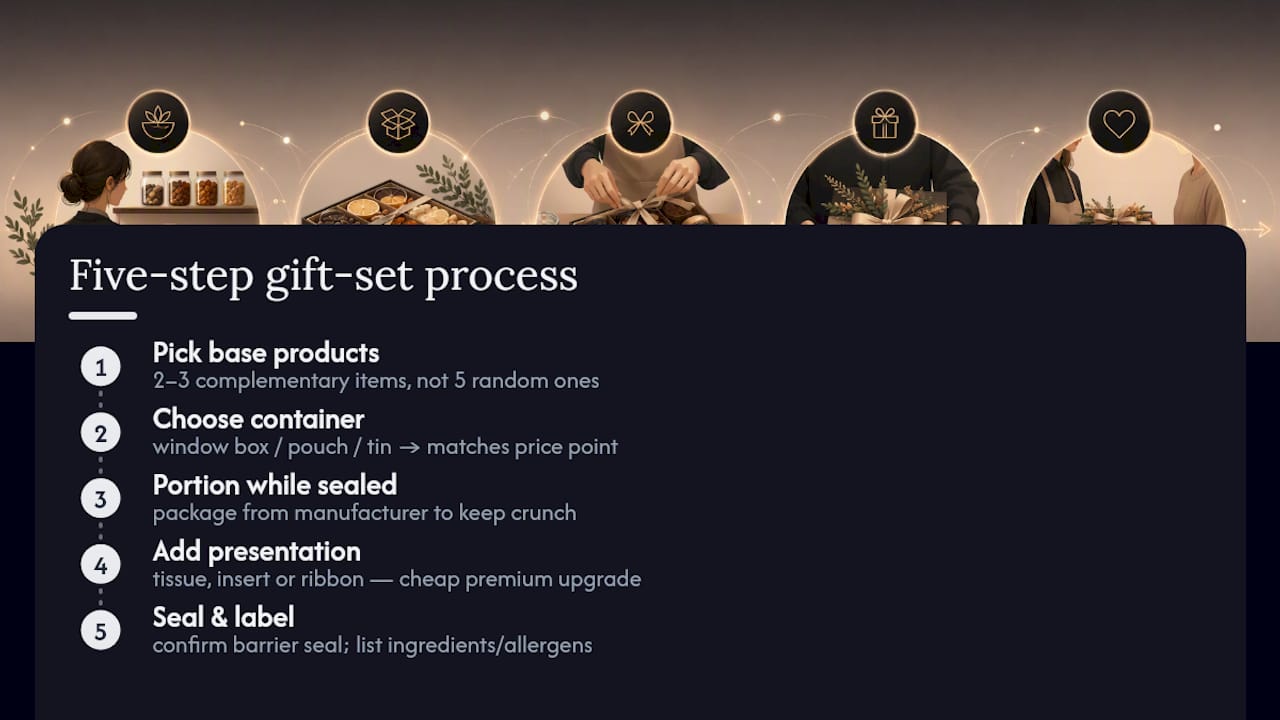
Next, settle on your container. A window box, a resealable barrier pouch, or a rigid gift tin each signal a different price point, so match the container to how the gift is actually positioned. Portion each product into its packaging while it’s still sealed from the manufacturer whenever possible, since freeze-dried items lose their crunch quickly once exposed to air.
Add your presentation layer: tissue paper, a printed insert, or a ribbon closure. This step is where a $10 gift starts looking like a $25 gift, and it’s the cheapest upgrade in the entire process. If you’re doing this at business scale rather than one gift at a time, this is exactly the stage where kitting services from a co-packer save real time, since bundling multiple SKUs into a single retail-ready pack is a standard part of what contract packagers offer.
Finally, seal and label. Double-check that your barrier packaging is fully sealed, since a half-sealed pouch is the number one reason freeze-dried gifts arrive stale. Confirm your label lists ingredients and allergens clearly before the gift ever leaves your hands or your production floor.
What Should You Look for When Choosing Ingredients?
Ingredient quality shows up fastest in freeze-dried products, because the process concentrates flavor rather than masking it. A mediocre base candy freeze-dries into a mediocre freeze-dried candy. Start with products that already have a strong flavor profile on their own, since freeze-drying intensifies sweetness and tartness rather than smoothing it out.
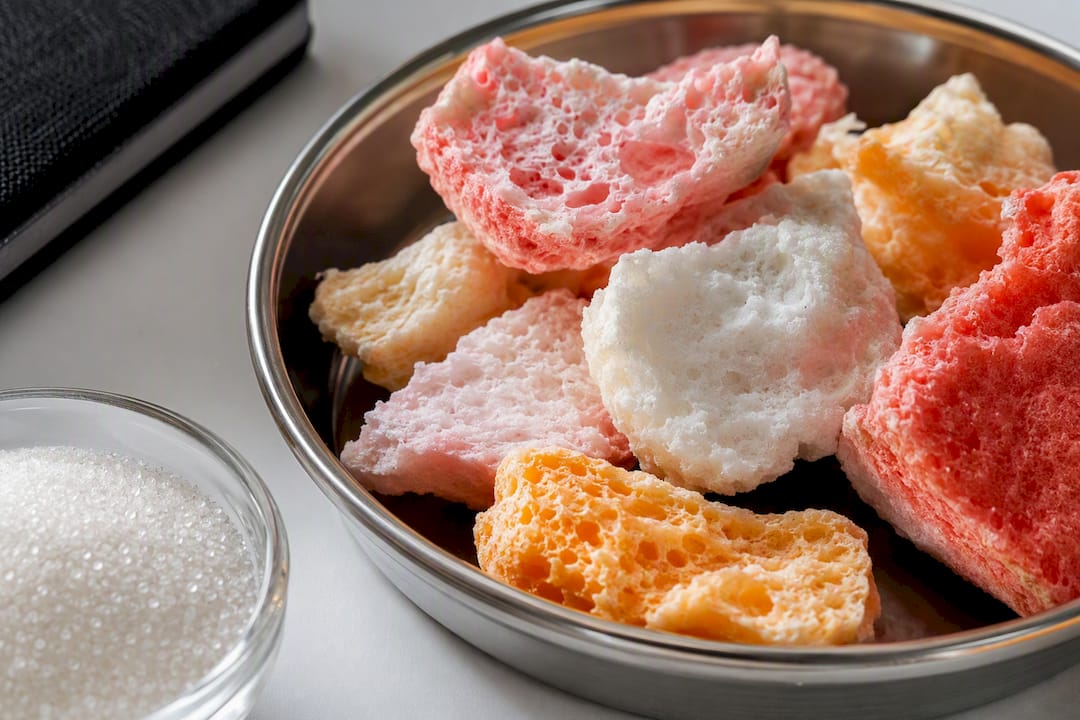
Texture matters just as much as flavor. Items with some internal air or moisture, like marshmallows, gummies, and certain chocolates, freeze-dry into that signature crunchy, airy texture people specifically seek out. Dense, oily items don’t always convert well, which is why you’ll rarely see freeze-dried caramel on a gift shelf.
If you’re sourcing for a private-label run, ask your co-packer directly whether they procure ingredients or only run materials you supply. This affects both your ingredient control and your cost structure, and it’s a detail that gets missed in early conversations more often than it should. For anyone building a full branded lineup, the private-label playbook Space-man put together walks through ingredient and packaging decisions side by side.
What Safety Steps Actually Matter for Edible Gifts?
Food safety for edible gifts comes down to a few non-negotiable habits, whether you’re assembling gifts at home for friends or overseeing a production run. Clean hands and sanitized surfaces before any product handling is the baseline, not an extra step. Cross-contamination is the biggest risk category, especially with allergens like nuts, dairy, and gluten showing up in candy bases more often than people expect.
Store all base ingredients and finished products away from moisture until they’re sealed in their final packaging, since freeze-dried items are especially prone to reabsorbing humidity and losing their texture within hours of exposure. If you’re gifting across state or country lines, check that your finished product’s labeling meets the destination’s food labeling requirements, since these vary and a generic label won’t always cut it.
At a production scale, this is where certified co-packing facilities earn their fee. Ask directly about allergen segregation on the production floor, traceability documentation per batch, and how cleaning protocols work between different product runs. A supplier who answers these questions specifically, rather than generally, is one worth taking seriously.
Creative Packaging Ideas That Make Homemade Gifts Feel Premium
Packaging is where a decent gift becomes a memorable one, and you don’t need a huge budget to get there. Mason jars layered with different colored freeze-dried candies create a visual effect that sells the gift before anyone tastes it. Kraft paper bags with a wax seal give a rustic, handmade feel that works especially well for smaller batch gifts.
For anyone selling at a slightly larger scale, tiered gift boxes with a clear window let the product do the selling without extra copy on the packaging. Reusable tins are also worth considering. They add a small material cost but give the recipient something to keep, which increases how memorable the gift feels long after the candy is gone.
Sustainable materials, like recyclable pouches or compostable inserts, are increasingly expected rather than a bonus, particularly with younger gift recipients who notice this kind of detail. If you’re short on packaging ideas, this list of creative packaging approaches for small businesses has several formats worth borrowing directly.
How Long Do These Gifts Actually Stay Fresh?
Shelf life depends entirely on how well the product was sealed after freeze-drying, not on the ingredients themselves. Properly sealed freeze-dried candy in a barrier pouch or airtight container can last many months at room temperature, since removing moisture is what gives freeze-dried products their long shelf stability in the first place.
Once opened, though, the clock resets fast. Freeze-dried products left exposed to air can lose their signature crunch within a day or two, especially in humid environments. Store finished gifts in a cool, dry spot away from direct sunlight, and avoid the fridge, since condensation from temperature swings does more damage than room-temperature storage ever will.
If you’re gifting rather than storing for yourself, tell the recipient plainly: keep it sealed until you’re ready to enjoy it, and reseal tightly if you don’t finish it in one sitting. For a deeper breakdown on storage specifics by product type, this guide on storing freeze-dried sweets covers the details worth knowing before you gift or sell anything.
What I’ve Learned Running Freeze-Dried Gift and Co-Packing Projects
The biggest misconception I run into is that private-label gifting is just “picking a flavor and slapping on a label.” It’s really a negotiation between what you imagine and what a production floor can actually hit consistently at your target price. The projects that go smoothly are the ones where the client shows up to sample rounds in person, or at least reviews mockups fast instead of sitting on them for two weeks.
Sustainability and QA aren’t separate conversations from flavor and packaging, either. They shape which materials you can even use and how fast a run can move. The gap between a good gift brand and a struggling one usually isn’t creativity. It’s whether they treated the supplier relationship as a partnership from the first sample onward.
— Chadi
Ready to Buy or Build Your Own Gift Line?
A practical alternative to guessing your way through a holiday gift line alone is to work with a freeze-dried candy manufacturer that also provides private-label, co-packing, and bagging services, so you get one partner instead of juggling a manufacturer, a packager, and a fulfillment company separately.
Before reaching out, have a few things ready: your target product specs, rough volume needs, packaging preferences, and a timeline, especially if you’re aiming for a holiday launch. A knowledgeable supplier can walk you through sample requests so you’re tasting and reviewing real product before committing to a full production run, not just approving a spec sheet on faith. If you’re further along and ready to talk numbers, the private-label and co-packing services page covers what’s involved and how to request a quote or sample kit to get your project moving.