

Finding the right custom packaging can feel overwhelming when every candy brand in Canada is fighting for shopper attention. Thoughtful packaging not only protects delicate sweets but also shapes how people experience your store and products. This guide breaks down the most impactful packaging types, branding strategies, and compliance essentials so you deliver a memorable, safe, and visually appealing candy offering that stands out for Canadian consumers.
Table of Contents
- What Custom Food Packaging Means
- Types Of Packaging For Candy Products
- Personalized Branding And Consumer Appeal
- Canadian Food Packaging Laws And Safety
- Common Risks And Cost Considerations
Key Takeaways
| Point | Details |
|---|---|
| Custom Food Packaging as a Brand Asset | Custom food packaging functions as a strategic tool for brand communication, enhancing consumer experience and brand identity. |
| Sustainability and Safety Regulations | Understanding and adhering to food safety regulations and sustainability are critical for compliance and consumer trust. |
| Importance of Design and Interaction | Innovative packaging design can create engaging consumer experiences and foster emotional connections with the brand. |
| Financial Considerations and Risks | Packaging decisions carry economic implications; thorough risk assessments are essential to mitigate potential issues and optimize costs. |
What Custom Food Packaging Means
Custom food packaging represents far more than a simple container for edible products. It’s a strategic communication tool that transforms ordinary candy into a brand experience. At its core, custom packaging serves multiple critical functions, blending protection, preservation, and powerful marketing into one integrated solution.
The fundamental purpose of custom food packaging goes beyond basic containment. Modern packaging is designed to enhance food quality and safety through carefully engineered materials and design strategies. For Canadian candy manufacturers, this means creating packages that:
- Protect delicate confectionery products from environmental damage
- Extend shelf life and maintain product freshness
- Communicate brand story and visual identity
- Provide critical nutritional and ingredient information
- Create memorable unboxing experiences for consumers
Custom packaging integrates sophisticated design principles with practical functionality. Manufacturers now view packaging as an active component of product strategy, not just a passive wrapper. Intelligent packaging technologies are emerging that can monitor food conditions, track freshness, and even interact with consumer smartphones for enhanced engagement.
Custom packaging transforms a simple product into a comprehensive brand communication platform.
Modern custom food packaging involves complex considerations around sustainability, consumer psychology, and technological innovation. Brands must balance aesthetic appeal with practical requirements, creating packages that are visually stunning while meeting stringent food safety regulations.
Pro tip: Invest in packaging design that tells a story, not just contains a product - your packaging is often the first physical touchpoint between your brand and potential customers.
Types Of Packaging For Candy Products
Candy packaging is a sophisticated world of materials and designs tailored to preserve, protect, and promote delectable treats. Food packaging innovations have dramatically transformed how confectionery products are presented and preserved, offering manufacturers numerous strategic options for product containment.
Traditional packaging materials for candy products include:
- Foil wrappers: Perfect for chocolate bars and individual candies
- Plastic films: Lightweight and versatile for various candy shapes
- Paper-based packaging: Eco-friendly and customizable for brand storytelling
- Composite materials: Combining multiple layers for enhanced protection
- Rigid containers: Ideal for premium or fragile confectionery items
Modern candy packaging goes beyond mere protection. Intelligent packaging technologies are emerging that can monitor product freshness, track environmental conditions, and even provide interactive consumer experiences. These advanced solutions help manufacturers extend shelf life, maintain product quality, and create more engaging brand interactions.
Packaging is no longer just a container - it’s a dynamic communication platform for candy brands.
The selection of packaging depends on multiple factors including product type, shelf life requirements, transportation needs, and brand positioning. Packaging material characteristics such as barrier properties against moisture and oxygen play a crucial role in maintaining candy quality and preventing degradation.
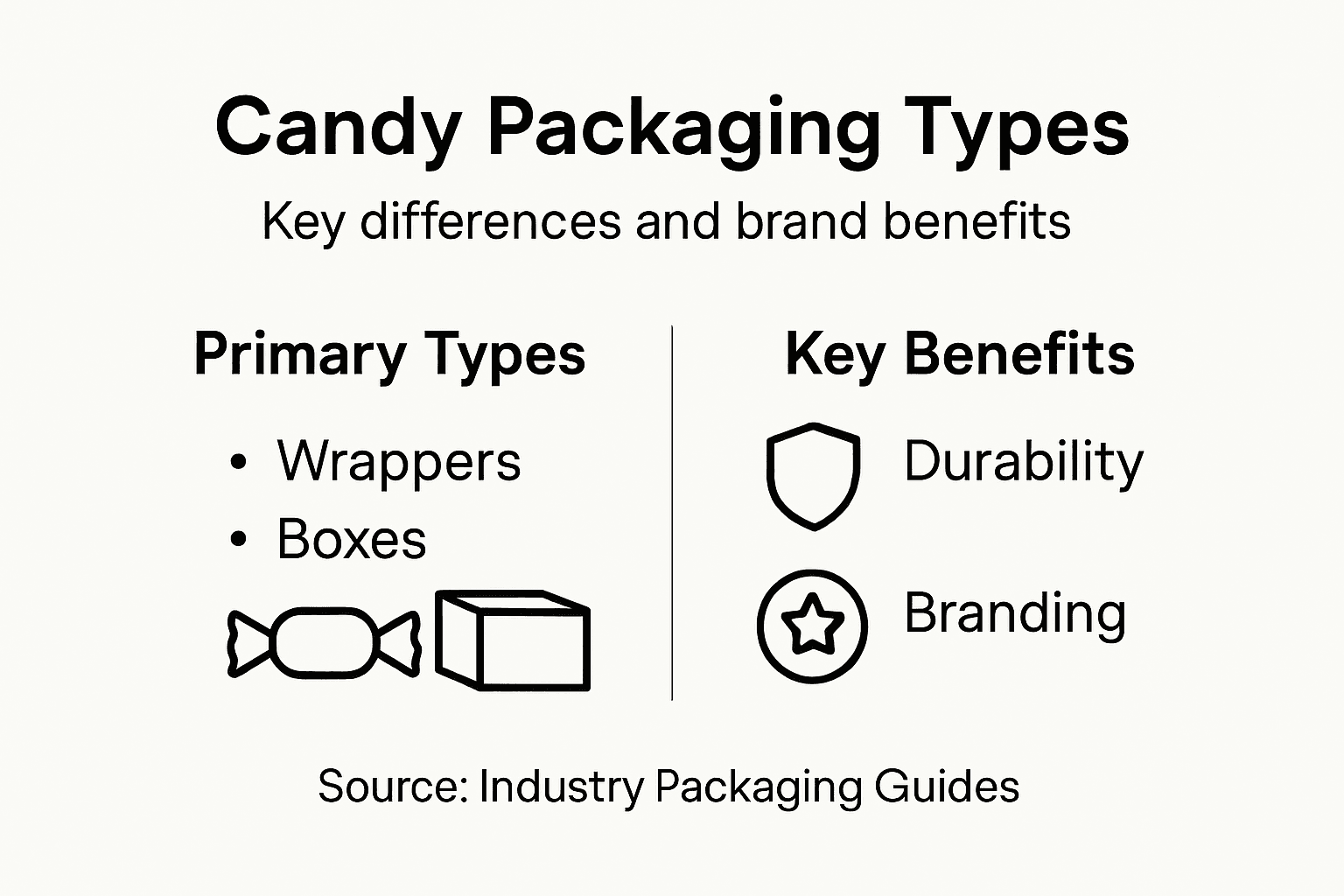
Here’s how traditional and modern candy packaging options compare:
| Packaging Type | Durability & Protection | Branding Potential | Sustainability Considerations |
|---|---|---|---|
| Foil Wrappers | Moderate for small items | Limited print space | Often not recyclable |
| Plastic Films | High moisture barriers | Customizable graphics | May contribute to plastic waste |
| Paper-Based Packaging | Lower durability, eco-friendly | Excellent for storytelling prints | Widely recyclable and compostable |
| Composite Materials | Superior multi-layer barriers | Flexible for premium designs | Difficult to recycle, complex disposal |
| Rigid Containers | Maximum protection, reusable | High-end presentation | Can be recyclable, resource intensive |
Pro tip: Choose packaging materials that not only protect your product but also tell your brand’s unique story and resonate with your target consumer’s values and preferences.
Personalized Branding And Consumer Appeal
Personalized branding transforms candy packaging from a simple container into a powerful storytelling medium. Consumer perceptions of packaging play a crucial role in purchasing decisions, making each design element a strategic opportunity to connect emotionally with potential customers.
Effective personalized branding strategies for candy packaging include:
- Creating unique visual narratives that reflect brand personality
- Developing color schemes that trigger specific emotional responses
- Incorporating storytelling elements that resonate with target demographics
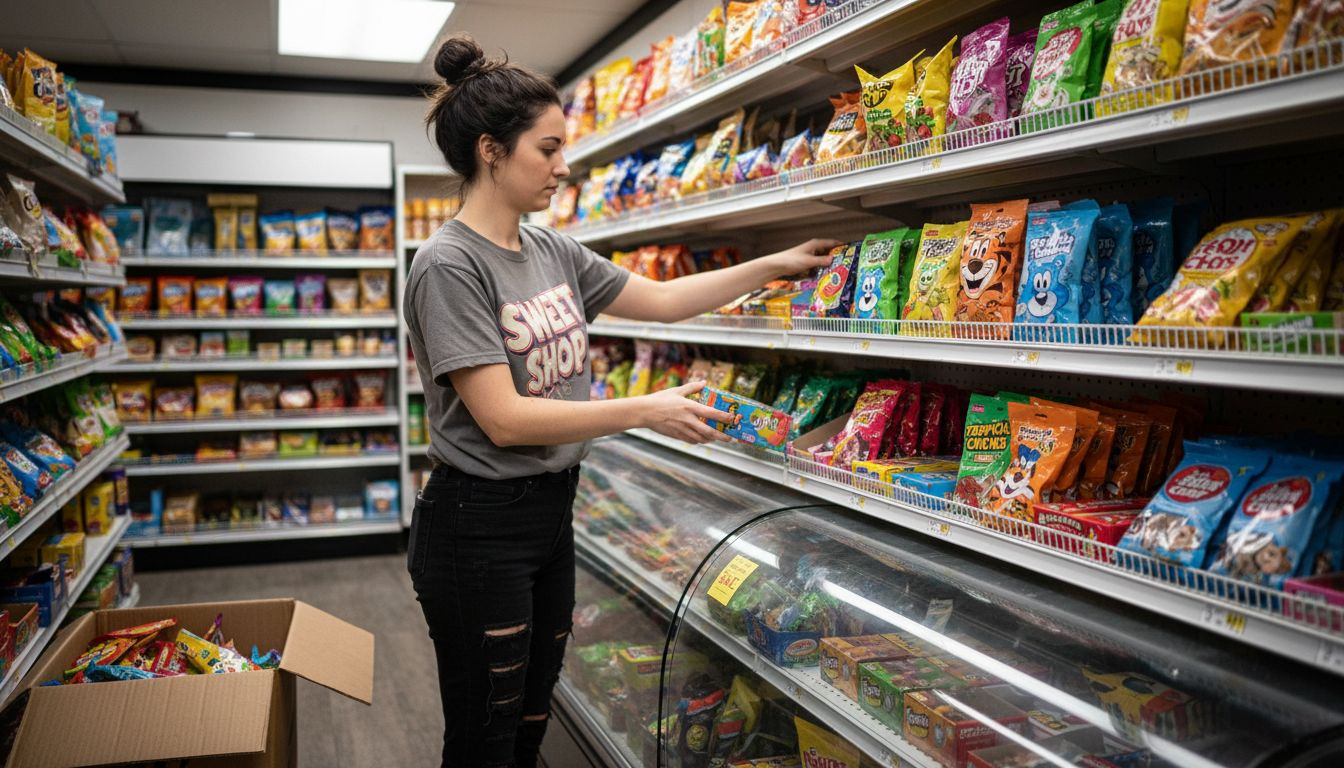
- Designing packaging that stands out on crowded retail shelves
- Leveraging sustainable materials to appeal to environmentally conscious consumers
Modern candy brands recognize that packaging is far more than protection - it’s a direct communication channel with consumers. Visual design elements become critical touchpoints that convey brand values, quality perception, and product positioning. Innovative packaging designs now integrate interactive elements, QR codes, and augmented reality experiences that transform passive packaging into engaging brand interactions.
Packaging is the silent ambassador of your brand’s identity and promise.
The psychology of packaging goes deep. Color choices, texture, material selection, and graphic design all contribute to subconscious consumer judgments about product quality, brand reliability, and purchase worthiness. Successful candy brands understand that personalized packaging is an investment in emotional connection, not just product presentation.
Pro tip: Invest in packaging design that tells a genuine story about your brand’s unique values and creates an immersive experience beyond the initial visual encounter.
Canadian Food Packaging Laws And Safety
Navigation of food packaging regulations in Canada requires a comprehensive understanding of multiple governmental oversight mechanisms. Understanding food packaging regulations involves compliance with stringent standards set by Health Canada and the Canadian Food Inspection Agency (CFIA).
Key regulatory requirements for candy packaging in Canada include:
- Ensuring materials are food-safe and non-toxic
- Providing accurate nutritional labeling
- Meeting transparent ingredient disclosure standards
- Complying with bilingual packaging requirements
- Adhering to strict contamination prevention protocols
- Maintaining traceability of packaging materials
The Canadian regulatory landscape demands meticulous attention to safety and consumer protection. Packaging material selection becomes critical, with regulations prohibiting substances that might migrate into food products and potentially compromise consumer health. Manufacturers must conduct extensive testing to demonstrate packaging inertness and prevent chemical interactions with candy contents.
Safety in food packaging is not a suggestion - it’s a legal mandate.
Complex regulations extend beyond material selection to include comprehensive labeling requirements. Candy packaging must clearly communicate allergen information, nutritional content, and manufacturer details in both English and French. These stringent guidelines ensure consumer transparency and protect public health through informed purchasing decisions.
Pro tip: Always consult with a regulatory compliance specialist to ensure your candy packaging meets all current Canadian food safety standards and avoid potential legal complications.
Common Risks And Cost Considerations
Custom food packaging for candy brands involves navigating complex financial and operational challenges. Food packaging risks extend far beyond simple material selection, encompassing potential economic and reputational impacts that can significantly affect a brand’s success.
Key risks and cost considerations for candy packaging include:
- Material quality and durability variations
- Potential contamination and product safety issues
- Design complexity and manufacturing expenses
- Transportation and storage protection costs
- Regulatory compliance investment
- Brand reputation management expenses
- Sustainability and environmental impact costs
Economic factors play a critical role in packaging strategy. Packaging investment decisions require careful analysis of direct and indirect costs, balancing initial expenditures with long-term brand value. Manufacturers must consider not just material expenses, but also potential risks such as product damage, consumer perception, and potential recall scenarios.
Every packaging decision carries both financial and strategic implications for your candy brand.
Risk mitigation strategies involve comprehensive quality control, ongoing material testing, and proactive compliance management. Brands must develop robust systems that anticipate potential packaging failures and implement preventative measures to protect both product integrity and consumer trust.
The following table summarizes key risks and financial factors for custom candy packaging:
| Risk/Factor | Potential Impact | Strategic Solution |
|---|---|---|
| Material Flaws | Product spoilage, recalls | Quality assurance and supplier audits |
| Non-Compliance with Laws | Fines, market withdrawal | Regular regulatory reviews |
| High Design Complexity | Increased production costs | Streamline packaging processes |
| Inadequate Transportation Protection | Damaged goods, lost sales | Invest in robust packaging materials |
| Poor Sustainability Practices | Reputational harm, lost customers | Source eco-friendly options |
Pro tip: Conduct a comprehensive risk assessment and cost-benefit analysis before finalizing your packaging design to identify potential vulnerabilities and optimize your investment strategy.
Elevate Your Candy Brand With Custom Packaging and Premium Freeze Dried Treats
Struggling to find packaging that truly protects your candy while telling your brand’s story and complying with Canadian food safety laws? At Space-Man, we understand the critical balance between durability, visual appeal, and regulatory compliance. Our services go beyond basic packaging by offering private labeling, co-packing, and expertly designed solutions tailored for confectionery products.
Explore our Wholesale Freeze Dried Candy & Treats to see how premium products paired with customized packaging create unforgettable brand experiences. Whether you need bulk solutions like in our Bulk Unbranded Freeze Dried Candy & Treats or ready-to-go options, we ensure every package enhances freshness and consumer appeal. Start amplifying your candy brand today by visiting Space-Man and discover how smart packaging connects quality with customers.
Frequently Asked Questions
What is custom food packaging for candy products?
Custom food packaging for candy refers to specially designed wrappers, boxes, or containers that protect, preserve, and promote confectionery items. It integrates elements of brand storytelling and consumer engagement while ensuring product quality and safety.
How does custom packaging enhance the shelf life of candy?
Custom packaging enhances the shelf life of candy by utilizing engineered materials that provide barriers against moisture, oxygen, and light, thereby preventing spoilage and maintaining freshness for a longer duration.
What factors should I consider when choosing packaging for candy?
When choosing packaging for candy, consider product type, shelf life requirements, branding potential, sustainability, and compliance with food safety regulations. These elements will help you create effective packaging that protects your product while appealing to consumers.
How can personalized branding impact consumer perceptions of candy packaging?
Personalized branding can significantly impact consumer perceptions by creating unique visual narratives that resonate emotionally. Effective use of colors, materials, and storytelling elements in packaging can enhance brand recognition and influence purchasing decisions.