

Finding packaging that truly protects your candy while standing out in busy retail aisles can feel like a serious challenge. For many Canadian retailers and food businesses, the right candy box is more than just a container—it is a key part of your brand identity and customer experience. This guide brings clarity to identifying your unique packaging needs, helping you choose designs and materials that balance cost, durability, visual impact, and sustainability so your candy stays fresh and your business wins attention.
Table of Contents
- Step 1: Assess Your Retail Packaging Needs
- Step 2: Select Optimal Box Designs and Materials
- Step 3: Customize Branding for Wholesale Orders
- Step 4: Place and Manage Bulk Candy Box Orders
- Step 5: Verify Quality and Delivery Before Distribution
Quick Overview
| Key Insight | Detailed Explanation |
|---|---|
| 1. Assess Packaging Needs Thoroughly | Identify your product type and specific requirements to avoid inadequate packaging choices that harm product freshness. |
| 2. Choose Appropriate Box Materials | Select food-safe and recyclable materials like paperboard and kraft cardboard to balance protection, cost, and sustainability. |
| 3. Define Your Brand Consistency | Maintain a clear visual identity across boxes to enhance brand recognition and appeal to both retail and online customers. |
| 4. Communicate Detailed Order Specifications | Create a comprehensive document with dimensions, materials, and design specifications to prevent misunderstandings with suppliers. |
| 5. Perform Rigorous Quality Checks | Inspect boxes immediately upon delivery to ensure they meet your standards, avoiding future complications with customers. |
Step 1: Assess Your Retail Packaging Needs
Before you start hunting for custom candy boxes, take a step back and understand exactly what your business actually needs. This assessment shapes everything that follows, from box design to ordering quantities to your final budget.
Start by identifying your product type and its specific demands. Different candies have vastly different packaging requirements. Hard candies need moisture protection, while chocolate demands temperature control and barrier properties. Gummies require protection from sticking, and brittle items need impact resistance during shipping. Understanding these product-specific protection needs helps you avoid ordering boxes that look great but fail to keep your product fresh.
Next, consider how your customers will purchase from you. Are you selling primarily in retail stores, through your online store, or both? Retail shelf displays demand eye-catching designs that grab attention in crowded aisles, while online orders require boxes durable enough to survive shipping without crushing your carefully crafted candies. Wholesale customers care most about cost-effectiveness and whether boxes stack efficiently in their storage.
Think about your target customers too. Children’s candy needs bright colors and fun designs, while premium adult confections call for sophisticated, elegant packaging. Your packaging should speak directly to who’s buying.
Here’s what to analyze before moving forward:
- Your candy type and preservation requirements
- Sales channels (retail, online, wholesale, or mixed)
- Target customer demographics and preferences
- Annual volume you plan to order
- Budget constraints and cost per unit
- Sustainability expectations from your customers
You’ll also want to assess the roles your packaging must play. Beyond protecting your product, packaging serves as your silent salesman on shelves, communicates your brand identity, and often becomes part of the unboxing experience customers share on social media.
Consider your sustainability goals. More Canadian retailers and consumers now expect eco-friendly options. Whether you’re printing on recycled cardboard, using soy-based inks, or avoiding plastic inserts matters to your brand perception and increasingly to your customers.
Packaging assessment isn’t guesswork. Document your specific requirements in writing before contacting suppliers, and you’ll get better quotes, faster responses, and more suitable recommendations.
Pro tip: Create a simple one-page checklist of your exact needs before reaching out to any custom box manufacturer—including candy type, order volume, timeline, budget, and any regulatory requirements. This single document saves hours of back-and-forth emails and ensures suppliers quote you accurately.
Step 2: Select Optimal Box Designs and Materials
Now that you know what your candy needs, it’s time to choose the right box style and materials. This decision directly affects product protection, shelf appearance, and your manufacturing costs.
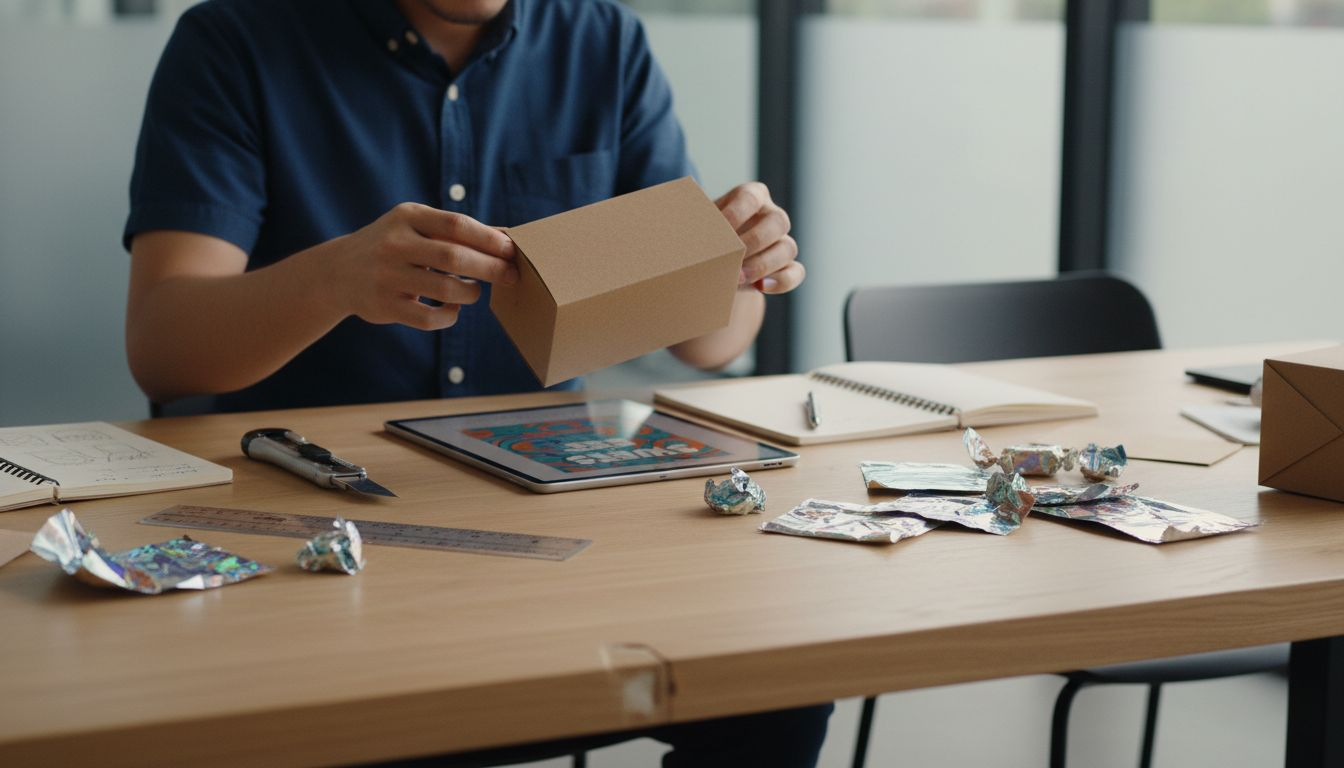
Start with the material foundation. Food-safe paperboard and kraft cardboard are your best options for candy packaging. Paperboard offers excellent printability and comes in various thicknesses, making it ideal for custom designs. Kraft cardboard provides durability and a natural aesthetic that appeals to environmentally conscious customers. Both materials are recyclable, which matters increasingly to Canadian retailers and consumers. When evaluating sustainable packaging options, consider whether you need virgin or recycled content, and what certifications matter to your brand.
Next, pick your box style based on how you’ll sell. Rigid set-up boxes work beautifully for premium chocolates and gift sets, creating that luxurious unboxing experience. Tuck-end boxes suit standard retail display and offer good protection with easy closure. Pillow-style boxes are lightweight and cost-effective for bulk wholesale orders. Each style has different stacking and shipping implications.
Consider these design features that enhance functionality:
- Die-cut windows showing your product inside
- Custom-fitted inserts protecting items from movement
- Secure closures that won’t pop open during shipping
- Foil stamping or embossing for premium appeal
- Full-color printing that captures your brand identity
Your design should balance durability with visual appeal. Thicker cardstock protects better during shipping but costs more. Thinner materials reduce expenses but may not survive rough handling. Think about where your boxes travel. A retail candy that moves from warehouse to store to customer needs different durability than wholesale boxes stacked in a retailer’s backroom.
Here’s a comparison of common candy box styles and their business advantages:
| Box Style | Best Use Case | Visual Appeal | Cost Effectiveness |
|---|---|---|---|
| Rigid Set-Up Box | Premium chocolates | Luxurious | Higher unit cost |
| Tuck-End Box | Retail candy displays | Versatile designs | Moderate, good for retail |
| Pillow Box | Bulk/wholesale orders | Minimalist | Very cost-effective |
| Windowed Box | Impulse buys/gifts | Eye-catching | Higher due to die-cutting |
Sustainability choices increasingly matter for Canadian small retailers. Skip plastic inserts when possible. Use water-based inks and soy-based printing. These choices cost slightly more upfront but build customer loyalty and align with evolving market expectations.
Material selection isn’t just about protection. Your box material communicates quality, sustainability commitment, and brand values before customers even open it.
Pro tip: Request samples in your exact specifications before committing to a large order—ask suppliers for five to ten sample boxes with your artwork and materials to test how they perform during actual shipping, how they look on shelves, and whether the size truly fits your product.
Step 3: Customize Branding for Wholesale Orders
Your boxes are now more than just containers. They’re mobile advertisements for your brand. This step transforms generic boxes into powerful marketing tools that retailers and end consumers remember.
Start by defining your visual identity clearly. Your logo, brand colors, and design style need to be locked in before you approach any manufacturer. These elements should be recognizable across all your wholesale boxes, whether you’re selling through retail stores or directly online. Consistency builds brand recognition, and recognition drives repeat purchases.
When working with manufacturers, discuss printing techniques that match your budget and vision. Advanced printing methods like CMYK and Pantone deliver vibrant, accurate colors at scale. CMYK works well for detailed, multi-color designs, while Pantone gives you precise color matching if you have specific brand colors. Offset printing handles large volumes efficiently.
Consider premium finishes that elevate perceived value. Matte finishes feel sophisticated and modern. Gloss finishes pop on shelves with shine and appeal. Spot UV highlights specific design elements like your logo. Embossing or foil stamping adds tactile luxury that justifies premium pricing. These touches cost more but significantly impact how customers perceive your product quality.
Customization options that strengthen wholesale appeal include:
- Custom box dimensions fitting your exact product size
- Die-cut windows showcasing your candy inside
- Branded tissue paper or custom inserts
- QR codes linking to recipes or brand stories
- Personalized messaging for seasonal campaigns
Think about your wholesale partners’ needs too. Integrating your brand logos and colors creates consistent identity across retail locations. When a retailer receives your boxes, they should feel like premium merchandise worth featuring prominently on their shelves.
Don’t forget the inside. Many Canadian retailers appreciate unboxing experiences. Custom inserts, branded tissue, or even a thank-you card create memorable moments customers share on social media, extending your brand reach organically.
Your box design is your brand’s first handshake with customers. Make it count.
Pro tip: Create a brand guideline document specifying your exact logo files, color codes (RGB and CMYK), approved fonts, and design rules, then share it with your manufacturer to ensure every order maintains perfect consistency across production runs.
Step 4: Place and Manage Bulk Candy Box Orders
You’ve done the groundwork. Now it’s time to actually place your order and keep everything on track. Bulk orders require clear communication and active management to avoid delays, quality issues, or costly mistakes.
Start by creating a detailed order specification document. This becomes your contract with the manufacturer. Include exact box dimensions, material specifications, color codes, artwork files, printing techniques, finishes, and your required quantity. Don’t leave anything to interpretation. Vague orders lead to expensive revisions or rejected shipments.
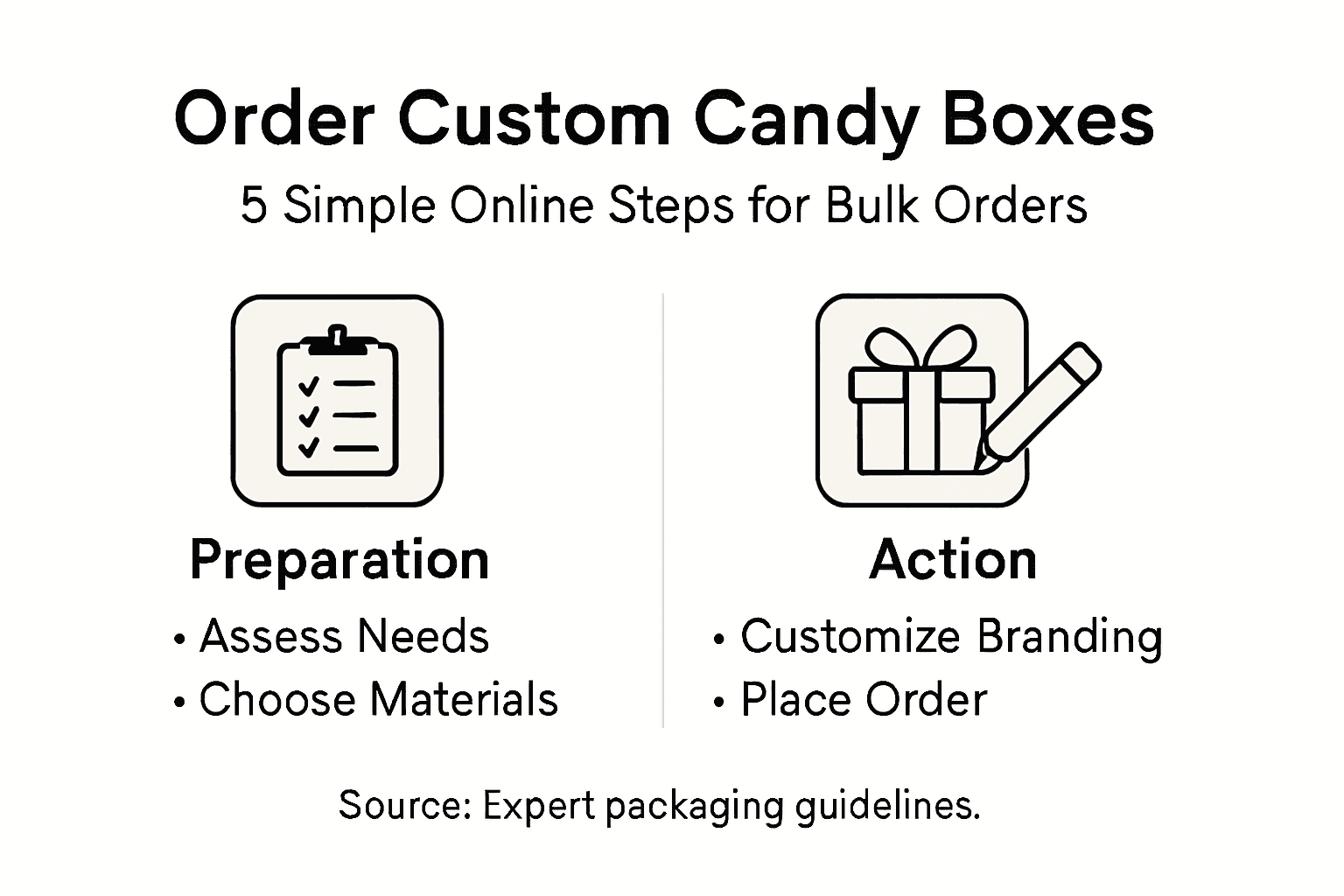
Communicate your timeline clearly. Effective bulk order placement requires establishing clear timelines and quality standards with suppliers. Tell manufacturers your production deadline, when you need samples approved, and your final delivery date. Build in buffer time because manufacturing takes longer than you expect, especially for custom work.
Discuss pricing and payment terms upfront. Wholesale manufacturers typically offer volume discounts, so your order size directly impacts your unit cost. Clarify whether you’re paying upfront, on a deposit basis, or upon delivery. Understand minimum order quantities and whether you can place smaller reorders later.
Key items to confirm before signing off:
- Final artwork approval and color matching
- Sample box inspection and sign-off
- Production schedule and milestones
- Shipping method and delivery address
- Quality control standards and inspection procedures
- Return policies if boxes arrive damaged
Once production starts, stay engaged. Request progress updates. Ask for production photos. Some manufacturers offer digital asset uploads so you can monitor status online. Don’t assume everything is fine until boxes arrive.
Manage your supply chain strategically too. Track when boxes arrive and plan your inventory carefully. Running out mid-season creates stress. Ordering too much ties up cash and storage space. Use data-driven forecasting to adjust orders dynamically based on actual sales trends.
When boxes arrive, inspect them thoroughly before paying your final invoice. Check dimensions, color accuracy, printing quality, and structural integrity. Catch problems immediately, not when you’re unpacking them for customers.
Communication gaps cost money. The time you invest in clear specifications and active management saves thousands in reprints and delays.
Pro tip: Maintain a running spreadsheet tracking order date, quantity ordered, unit cost, delivery date, and actual arrival date for every bulk order, then reference it when negotiating future orders to demonstrate your reliability and track cost trends over time.
Step 5: Verify Quality and Delivery Before Distribution
Your boxes have arrived. This is not the time to assume everything is perfect. A thorough quality check now prevents angry customers, wasted inventory, and brand damage later.
Start your inspection immediately upon delivery. Don’t wait days or weeks. Check the outer packaging first for visible damage, dents, or crushed corners. Open several boxes from different positions in the shipment—top, middle, and bottom. Damage sometimes concentrates in certain areas.
Inspect the boxes themselves methodically. Look at the structural integrity by opening and closing them multiple times. Check that flaps align properly and closures work smoothly. Examine the print quality closely—colors should match your approved samples, text should be crisp and clear, and there should be no smudges or misalignments. Quality verification includes confirming color fidelity for branding and food safety approvals to protect your reputation.
Measure a sample box to confirm dimensions match your specifications exactly. Even small deviations matter when you’re packing products. Check that die-cut windows are properly cut and don’t have rough edges. Verify that any special finishes like foil stamping or embossing are applied correctly.
Your quality checklist should include:
- Structural integrity and closure function
- Print accuracy and color matching
- Box dimensions and tolerance
- Die-cut precision and edge quality
- Material feel and durability
- Food safety compliance documentation
- Proper packaging and labeling of the shipment
Document everything with photos. If you find defects, photograph them clearly and immediately notify your manufacturer. Establishing quality metrics and communication channels with suppliers facilitates issue resolution before problems escalate.
Don’t accept substandard boxes to avoid conflict. You’re paying for exactly what was specified. Manufacturers expect quality control and budget for replacements. A five percent defect rate is typically acceptable in manufacturing, but anything higher warrants discussion.
Once you’ve verified quality, confirm the delivery matches your paperwork. Count boxes or verify the weight. Confirm the delivery date aligns with your timeline. If everything checks out, you’re ready to move forward.
Below is a summary of key inspection points to verify upon candy box delivery:
| Inspection Point | Why It Matters | What to Look For |
|---|---|---|
| Structural Integrity | Prevents shipping damage | No crushed or weak spots |
| Print Quality | Maintains brand consistency | Sharp, color-accurate text |
| Dimensional Accuracy | Ensures proper fit | Matches exact specifications |
| Food Safety Compliance | Required for regulations | Documentation present |
One hour of inspection now prevents weeks of customer complaints later.
Pro tip: Create a simple quality checklist template as a PDF or Google Form before boxes arrive, then use it consistently for every shipment so you never miss a critical inspection point and have documented evidence if disputes arise.
Unlock the Power of Custom Wholesale Candy Packaging with Space-Man
Ordering custom candy boxes wholesale online can be challenging when you need reliable suppliers who understand product protection, branding, and sustainability. Key pain points like selecting the right materials, ensuring quality control, and managing bulk orders call for trusted partners who simplify the process for you. With Space-Man, a leading Canadian freeze dried candy manufacturer and distributor, you gain access to tailored packaging solutions that align perfectly with your wholesale needs.
Explore our Wholesale Freeze Dried Candy & Treats – Spaceman for high-quality products that pair seamlessly with your custom boxes. Benefit from our private labeling, co-packing, and expert packaging services to elevate your brand and deliver outstanding customer experiences. Take control of your packaging journey today by visiting Space-Man and discover how our bulk unbranded options at Bulk Unbranded Freeze Dried Candy & Treats – Spaceman can help you customize your candy boxes more effectively. Make your next bulk order confidently and stand out in Canada’s competitive market.
Frequently Asked Questions
How do I assess my candy packaging needs before ordering custom boxes?
To assess your candy packaging needs, identify your product type, sales channels, target customer demographics, and annual volume. Document these specifics to create a clear checklist, which will help you communicate your requirements effectively to suppliers.
What are the best materials for custom candy boxes?
The best materials for custom candy boxes are food-safe paperboard and kraft cardboard. Choose these materials for their durability and printability, ensuring that they align with your brand’s sustainability goals by opting for recyclable options.
How can I enhance my box design and branding for wholesale orders?
You can enhance your box design by incorporating your logo, brand colors, and using advanced printing techniques. Consider adding features like custom dimensions and die-cut windows to improve functionality while making your packaging visually appealing to customers.
What steps should I follow to place a bulk order for custom candy boxes?
To place a bulk order, create a detailed specification document that includes dimensions, materials, color codes, and quantity. Communicate your timeline and discuss pricing upfront to ensure everything aligns with your expectations before confirming the order.
How do I verify the quality of my custom candy boxes upon delivery?
To verify quality, inspect the outer packaging for damage immediately upon delivery, then check the structural integrity and print quality of several boxes. Document any issues with photos and contact your manufacturer to resolve them before your inventory goes to customers.
What should I include in my order specification document for custom candy boxes?
Your order specification document should include exact box dimensions, material specifications, color codes, desired finishes, and the number of boxes required. Clear and detailed order specifications help prevent misunderstandings and ensure you receive exactly what you expect.
Recommended
- Create a Custom Candy Box to Boost Shop Sales – Spaceman
- Custom Candy Packaging Wholesale: Boosting Brand Growth – Spaceman
- Wholesale Candy Purchasing Tips for Smart Retailers – Spaceman
- How to Choose Wholesale Candy for Retail and Resale Success – Spaceman
- Blokbodemzakjes met bijen 235 x 145mm kopen?