

The three types of packaging materials are primary, secondary, and tertiary, and each one has a completely different job. Primary packaging touches the product and keeps it fresh or intact. Secondary packaging groups those units together for shelf display and shipping. Tertiary packaging handles the bulk transport and warehouse side of things, keeping stacks of product safe until they reach a store or a doorstep. Get the distinction right, and you cut down on damaged goods, wasted materials, and confused customers.
TL;DR:
- Properly matching packaging materials to product fragility and protection needs reduces the risk of damage and spoilage during shipping and handling.
- Primary packaging must provide effective barriers against moisture, oxygen, and light, especially for products like freeze-dried snacks and perishable goods.
- Secondary packaging should prioritize stackability and ease of access, with corrugated cartons being the most commonly used for their recyclability and lightweight nature.
- Tertiary packaging focuses on bulk transport, with palletization and stretch wrapping designed to minimize damage and optimize freight costs.
- Choosing the right materials involves balancing protection, sustainability, and cost, while considering the specific requirements of transport, retail presentation, and environmental goals.
Table of Contents
- What Are the 3 Types of Packaging Materials, Really?
- Secondary Packaging: The Layer That Sells on the Shelf
- Tertiary Packaging: The Unsung Hero of the Warehouse
- Common Packaging Materials Compared
- How to Choose Packaging Materials: A Practical Checklist
- How Space-man Puts These Packaging Rules to Work
- Why Most Packaging Advice Skips the Part That Actually Costs You Money
- Sources
What Are the 3 Types of Packaging Materials, Really?
If you’ve ever wondered why a candy bar has a wrapper, that wrapper sits in a box, and that box gets shrink-wrapped onto a pallet, you’ve already spotted all three layers in action.
Primary packaging is the material touching the actual product. Think the plastic pouch around freeze-dried candy, the glass jar holding jam, or the foil wrapper on a chocolate bar. Its job is to contain the product, protect it from air and moisture, preserve its shelf life, and (often) carry the branding that makes someone pick it up in the first place. According to MDI’s packaging breakdown, primary packaging is the innermost layer in direct contact with the product, and it’s the piece that does the heaviest lifting for both preservation and first impressions.
Secondary packaging groups those primary units together. Tertiary packaging handles bulk movement, usually pallets and crates that never make it past the loading dock. We’ll dig into each one below, but that’s the skeleton.
Common primary materials include:
- PET and HDPE plastics for bottles and rigid containers
- Paperboard for cereal boxes and folding cartons
- Glass for beverages and preserves
- Aluminum for cans and foil pouches
- Multilayer flexible films for snacks and candy that need an oxygen and moisture barrier
For something like freeze-dried candy, the primary pouch usually needs a real moisture barrier since freeze-dried texture turns chewy (and sad) the moment humidity sneaks in. That’s why a lot of snack brands lean on multilayer films, sometimes paired with an oxygen scavenger packet, rather than a simple single-layer bag. Our guide to flexible packaging types covers this in more depth if you’re weighing pouch options for a food product.
Secondary Packaging: The Layer That Sells on the Shelf
Secondary packaging wraps around multiple primary units so they can be handled, shipped, and displayed as one group. A 12-pack carton of soda cans is secondary packaging. So is a shrink-wrapped bundle of candy pouches or a countertop display box at a checkout counter.
This is also where retail presentation lives. A well-designed secondary pack does double duty: it protects the primary units during transit, and it becomes the thing a store employee slaps on a shelf without extra work, which is exactly why MDI’s research points to secondary packaging as the shelf-ready vehicle for a lot of consumer products.
Common secondary formats and materials:
- Corrugated cartons for grouping bottles, bags, or boxes
- Cardboard trays with shrink film for retail display
- Shrink-wrap bundles for multi-pack promotions
- Inner boxes that separate fragile primary units
Corrugated cardboard shows up constantly here because it’s light, stackable, and genuinely recyclable in most municipal systems. If you’re designing secondary packaging for a small brand, the two things worth obsessing over are stackability (will it topple on a shelf?) and how fast a store clerk can open and restock it. Nobody wants to fight a display box with seventeen pieces of tape.
Tertiary Packaging: The Unsung Hero of the Warehouse
Tertiary packaging is the bulk layer, built for warehouses and freight, not for customers. Most shoppers never see it because it’s designed for manufacturers and distribution centers, not the checkout line.
Picture a pallet stacked with cases of candy, wrapped tight in stretch film, ready to roll onto a truck. That’s tertiary packaging doing its job.
Typical tertiary elements include:
- Wood or plastic pallets as the base unit for stacking
- Stretch wrap to secure boxes to the pallet
- Large corrugated cartons or crates for grouping secondary packs
- Shipping containers for long-haul or overseas freight
Wood pallets are cheaper and widely available, but plastic pallets last longer and don’t splinter, which matters if you’re shipping food products where contamination is a real concern. The way you wrap and pattern a pallet actually changes your freight bill. Tighter, more uniform stacking reduces wasted truck space, and smarter stretch-film and pallet patterns cut both damage rates and shipping costs, which is a detail a lot of small brands overlook until their first damaged shipment shows up in a return email.
Common Packaging Materials Compared
Once you understand the three levels, the next question is what to actually make them out of. Plastic, paperboard, corrugated fiberboard, glass, metal, and flexible laminates cover the overwhelming majority of packaging you’ll encounter, whether you’re shipping candy or car parts.
Pro Tip: Don’t pick a material based on what looks premium on a shelf photo. Pick it based on what your product needs to survive shipping, and let the design follow the function.
Here’s the quick rundown:
| Material | Strengths | Watch out for |
|---|---|---|
| Paper & corrugated | Recyclable, printable, cheap | Weak against moisture unless coated |
| Plastics (PET, HDPE, PP, LDPE) | Lightweight, good barrier, food-safe options | Recycling streams vary by resin type |
| Glass | Excellent barrier, premium feel | Heavy, breaks, raises shipping cost |
| Metal (aluminum, tinplate) | Strong barrier, long shelf life | Heavier than plastic, higher material cost |
| Flexible laminates | Very light, strong barrier | Multi-material layers can complicate recycling |
Plastic families aren’t interchangeable, either. PET, HDPE, PP, and LDPE each have different barrier and recyclability profiles, so the right pick depends on both what you’re protecting and what recycling stream is actually available where you’re selling.
How to Choose Packaging Materials: A Practical Checklist
Most people overthink the design and underthink the sequence. Work through these in order, not all at once:
- Assess product fragility and shelf life. A crunchy freeze-dried treat needs a different barrier than a bar of soap.
- Nail down barrier needs. Does it need protection from oxygen, moisture, light, or all three?
- Map the transport and storage conditions. Cross-country truck routes and humid warehouses both push you toward tougher primary and secondary materials.
- Factor in retail and display requirements. If it’s going on a shelf, secondary packaging needs to look good and stock easily.
- Balance budget against sustainability goals. Recycled corrugated, mono-material films, and paper tape are solid, practical substitutions that don’t wreck your margins.
Fragility and shelf life usually carry the most weight for anything edible. A pouch that fails on barrier protection doesn’t just look bad, it ruins the product before it reaches a customer.
Sustainability pressure is pushing more brands toward mono-materials (easier to recycle than mixed laminates) and recycled content, though trade-offs between recyclability and performance are still very real and nobody’s found a perfect universal fix yet.
Pro Tip: Right-size your boxes and skip the oversized inserts. Overpackaging doesn’t just waste material, it also increases dimensional shipping weight, which means you’re paying more to ship air.
How Space-man Puts These Packaging Rules to Work
We’re not just writing about this stuff, we build it for a living. We manufacture freeze-dried candy, chocolates, marshmallows, and ice cream sandwiches, and also provide private-label, co-packing, and bagging services for other consumer goods brands.
For the candy products, that means:
- Primary: flexible barrier pouches, sometimes with oxygen scavengers, to keep that crunchy freeze-dried texture from going stale
- Secondary: display cartons and shrink-wrapped bundles built for retail shelves and distributor cases
- Tertiary: palletized bulk packs for wholesale orders headed to stores and distributors
If you’re a manufacturer trying to figure out your own primary, secondary, and tertiary strategy, our private label, co-packing, and packaging services page walks through what we can build alongside you, from pouch selection to pallet-ready bulk runs.
Why Most Packaging Advice Skips the Part That Actually Costs You Money
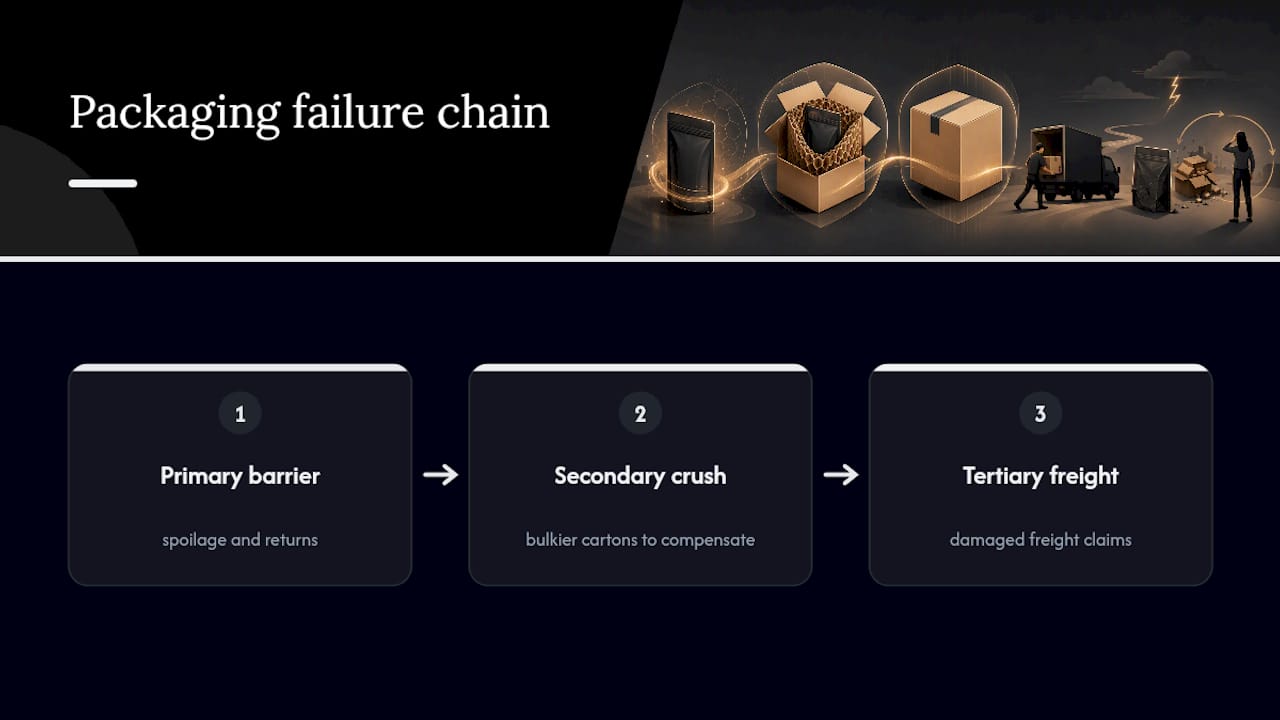
Most explanations of primary, secondary, and tertiary packaging stop at definitions. Fine for a quiz, useless for a business. The part that actually matters is that these three layers aren’t independent decisions, they’re a chain. Skimp on primary barrier protection, and you’ll overcompensate with a bulkier secondary carton to prevent crushing. Cheap out on tertiary stretch wrap, and you’ll eat the cost in damaged freight claims instead.
The conventional advice treats material choice as a taste decision: glass feels premium, plastic feels cheap. That framing misses the point entirely. The material has to match what the product actually needs to survive between your warehouse and someone’s kitchen counter. A freeze-dried treat in a beautiful but under-barriered pouch is a returned, stale product waiting to happen.
If you’re starting from scratch, prioritize barrier and fragility needs first, sustainability second, and aesthetics last. Looks can get fixed with a label reprint. A product that arrives crushed or stale cannot.
— Chadi
Sources
For deeper definitions, check MDI’s breakdown of the three packaging levels and Packaging Digest’s take on tertiary logistics. For material families, PropackInsights’ materials overview is a solid starting point, alongside our own guide to packaging box materials.
- What are Primary, Secondary, and Tertiary packaging? - MDI
- 3 levels of packaging you should know - Packaging Digest
- Main types of packaging materials - PropackInsights