

The main types of packaging tape are BOPP carton-sealing tape (hot melt or acrylic), water-activated kraft tape, filament/reinforced tape, PVC or masking tape, and double-sided bonding tape. The core rule: match adhesive system and backing to your box surface, packed weight, storage temperature, and whether you’re taping by hand or by machine. Test on your actual carton before you order a case of the wrong stuff.
TL;DR:
- Water-activated kraft tape provides the strongest bond and is fully recyclable, but requires a wet dispenser and is overkill for light or internal shipping.
- Acrylic adhesive BOPP tape resists temperature variations and UV damage, making it suitable for long-term storage and export, unlike hot melt tape that performs best at moderate temperatures.
- Filament reinforced tape is ideal for heavy cartons and stacking, especially when boxes exceed 15 to 20 pounds or are subject to rough handling.
- Proper testing involves applying tape to actual cartons and observing performance after 24 to 48 hours under realistic conditions to prevent seal failures during transit.
- Selection should consider carton surface type, packaged weight, storage temperature, application method, and sustainability goals to ensure reliable sealing and compliance.
Table of Contents
- Types of Packaging Tape: Construction, Uses, and Trade-Offs
- How to Choose the Right Packaging Tape
- Specialty Tape Options Worth Knowing About
- How Space-Man Chooses Tape for Freeze-Dried Candy Shipments
- What I’ve Learned About Tape and Trust
- Get Help Choosing and Testing Tape for Your Packaging Run
- Sources
Types of Packaging Tape: Construction, Uses, and Trade-Offs
Every roll of tape is really two decisions stacked on top of each other: what the backing is made of, and what adhesive holds it down. Get either one wrong for your box and you’ll find out the hard way, usually at 2 a.m. in a warehouse when a case pops open on a pallet.
BOPP carton-sealing tape (biaxially oriented polypropylene) is the workhorse of shipping. It comes clear or brown, and the adhesive underneath does the real work. Hot melt adhesive grabs fast and performs well between about 14 to 48°C (57 to 118°F), which makes it the default for high-speed automatic case sealers on a fulfillment line. Acrylic adhesive cures more slowly through evaporation, but it tolerates a much wider range, from -28°C to 65°C (-18°F to 149°F), and holds up far better against UV exposure and long-term storage. If your product sits in a hot truck for a week or spends months in a warehouse before it ships, acrylic is the safer bet even though it costs a bit more.
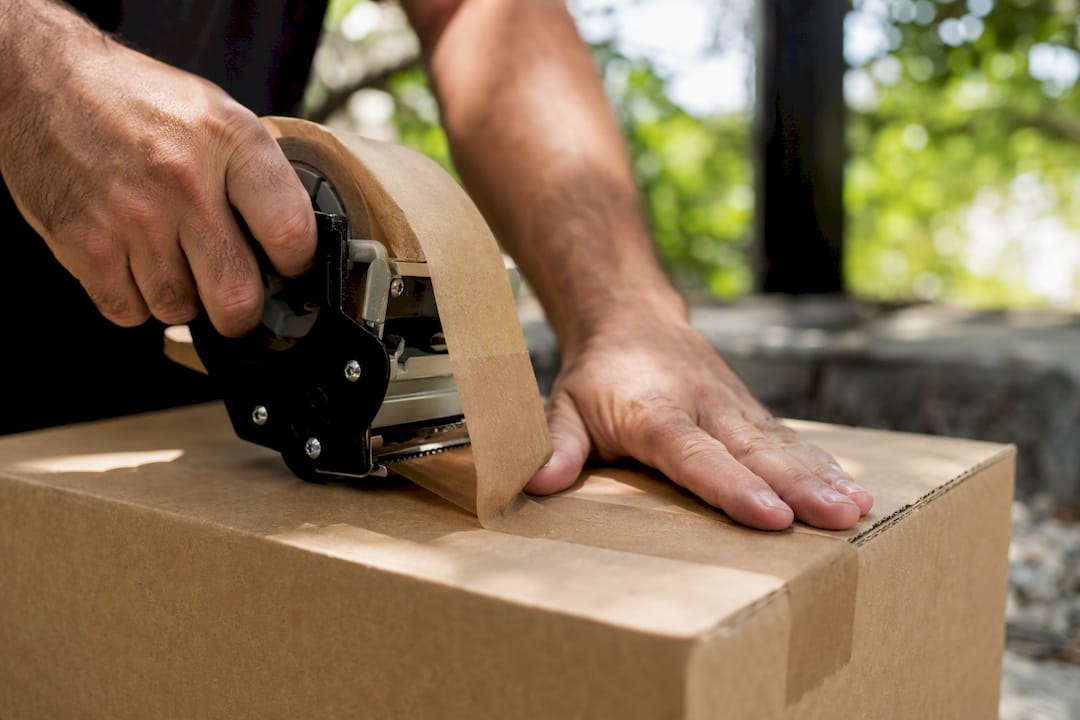
Water-activated tape, sometimes called gummed kraft tape, works differently than anything else on this list. You wet it, and the adhesive bonds directly into the fibers of the corrugate itself rather than just sticking to the surface. That bond is often stronger than the box, which is why it’s the go-to choice for heavy cartons and tamper-evident sealing. It’s also fully recyclable along with the box, since there’s no plastic film to strip out at the recycling facility. The catch is you need a dispenser (manual or electric) that wets the tape before application, which is a bigger upfront investment than a hand-held tape gun.
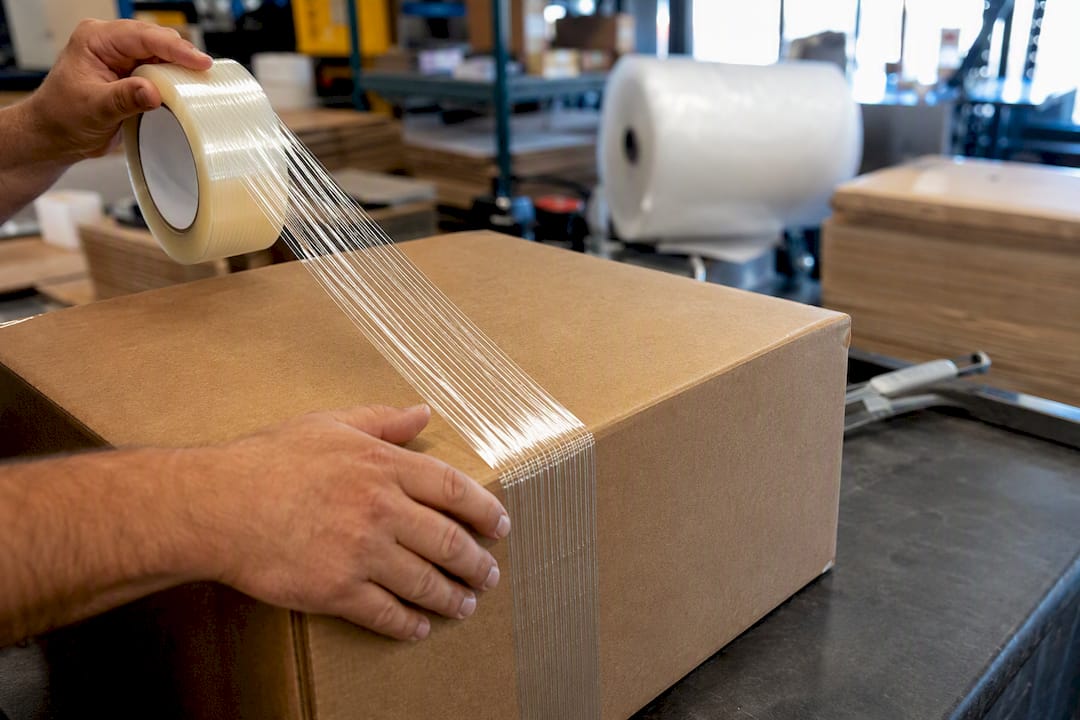
Filament tape is reinforced with strands of fiberglass running through the backing, giving it serious tensile strength. This is your tape for palletizing, bundling, or sealing boxes that are going to get stacked, strapped, or dropped from a forklift more than once. It’s overkill for a small mailer, but it’s the right call when the box weighs more than the person shipping it.
PVC and masking tapes are the specialty options that rarely belong on a shipping carton at all. PVC handles cold environments and general-purpose bundling reasonably well, and masking tape is writable and easy to tear by hand, which makes it handy for labeling or short-term internal use. Neither holds up well for long shipping durations or heavy loads, so treat them as supplementary tools, not sealing solutions.
Double-sided and specialty bonding tapes aren’t for sealing boxes at all. They’re for mounting point-of-sale displays, holding foam inserts in place inside a box, or bonding two surfaces together without visible tape on the outside.
Here’s the quick-reference version:
- BOPP hot melt: fast tack, best for high-speed machine sealing, moderate temperature range.
- BOPP acrylic: slower tack, best for cold storage, export, or long shelf life.
- Water-activated kraft: strongest bond, tamper-evident, fully recyclable, needs a dispenser.
- Filament/reinforced: highest tensile strength, best for pallets and heavy cartons.
- PVC/masking: low-cost, hand-tearable, poor for long-term or heavy-duty shipping.
- Double-sided/specialty: for bonding and mounting, not for sealing boxes.
Choosing the wrong backing for your box material is one of the most common mistakes shippers make, and it usually shows up as a support ticket instead of a lab test.
How to Choose the Right Packaging Tape
Run through this checklist before you commit to a case of anything:
- Check your carton’s surface. Recycled corrugate, virgin board, and coated finishes all grip adhesive differently. A glossy laminated box needs a stronger initial tack than a plain kraft box.
- Weigh your heaviest packed unit. Anything over roughly 15 to 20 pounds starts pushing standard BOPP tape toward its limit, and that’s when filament or water-activated tape earns its keep.
- Know your storage and shipping temperature. Hot melt struggles outside its comfort zone; acrylic is the better call for cold chain or export shipments that sit in variable conditions for weeks.
- Match the tape to your application method. Automated case sealers need consistent unwind tension and usually run on hot melt for speed; hand-applied tape has more flexibility, including water-activated dispensers for smaller operations.
- Factor in sustainability goals. If recyclability matters to your brand, water-activated kraft or recyclable BOPP moves up the list.
Once you’ve narrowed it down, run the 3-step test: apply the tape to a representative carton exactly the way you would in production, stack or store it under realistic conditions for at least 24 to 48 hours, then inspect the seal for lift, cracking, or adhesive failure. Corrugate finish, stack pressure, and dwell time all affect performance in ways a spec sheet won’t tell you.
Pro Tip: If you or your team is hand-taping for hours at a stretch, pay attention to unwind noise and tension. Low-noise, easy-unwind tape sounds like a minor detail, but it cuts down on operator fatigue and mistakes over an eight-hour shift.
Specialty Tape Options Worth Knowing About
A few functional variants solve problems that standard sealing tape can’t.
- Custom printed tape adds your logo across every seam, which doubles as branding and a light tamper deterrent. It typically runs 2 to 3 cents more per foot, but high-volume sellers often recoup that by cutting a separate labeling step entirely.
- Low-noise, easy-unwind tape matters more than people expect on a busy pack line, where the screech of a standard dispenser all day adds up to real fatigue.
- Cold-temp and UV-resistant acrylic formulations are built for cold chain logistics or export shipments that sit in a container for weeks.
- Sustainable options like kraft paper tape and recyclable BOPP let you ship without adding plastic waste that recycling centers have to strip out later, though paper tape needs a dispenser and doesn’t stretch like film.
Some brands stack these: water-activated tape for the tamper-evident bond, printed with a logo, so the unboxing moment does double duty as security and marketing.
How Space-Man Chooses Tape for Freeze-Dried Candy Shipments
Freeze-dried candy and ice cream sandwiches are fragile in ways a box of screws never has to worry about, so tape choice isn’t an afterthought for us at Space-Man. Retail corrugate boxes headed to stores usually get water-activated kraft tape for the tamper-evident seal customers expect. Direct-to-consumer mailers, which move faster and see less handling, often do fine with a solid acrylic BOPP.
For co-packing clients, we test tape on actual production cartons before a full run, not a sample box pulled from a shelf. A small trial catches adhesion problems on textured or recycled board that a spec sheet never will.
What I’ve Learned About Tape and Trust
I’ve watched a promising small-batch candy run get undone by a tape choice, not the product. The box looked great, the candy was good, and the seal failed halfway through transit. Recyclability and tamper evidence aren’t just checkbox features for food brands. They’re part of how a customer decides whether to trust what’s inside. Test before you scale. A $40 sample order beats a warehouse full of the wrong tape.
— Chadi
Get Help Choosing and Testing Tape for Your Packaging Run
Picking the right tape family is only half the job. Getting it dialed in for your specific cartons, weights, and shipping conditions is where most small brands actually get stuck. Space-Man’s private label and co-packing services test adhesive and backing choices on your real production cartons, not a generic sample, so you’re not guessing which tape holds up after 48 hours in transit.

When you reach out, expect a conversation about your box type, packed weight, and shipping conditions before anyone recommends a single roll of tape. That’s how we source materials and run trials for clients bagging and shipping everything from candy to other consumer goods. If you’re building out a private label run or need packaging tested end to end, check out Space-Man’s private label and co-packing services to get started, or browse the wholesale application if you’re sourcing at scale.
Sources
For more on adhesive systems and backing choices, see Packaging Digest’s breakdown of tape performance and Rajapack’s guide to adhesive tape selection. Pair either with a look at box material options before you decide.
- Packaging Digest — Tape types and adhesive systems (packaging performance)
- OPALUS — Types of packing tape: how to classify, test and select carton-sealing tape
- Alibaba Seller Blog — Packaging materials: tape types and adhesive guide