

Finding fresh ways to stand out in the snack aisle can feel like a constant challenge for Canadian shop owners. As more shoppers look for treats with a smaller environmental footprint, offering snacks in green packaging creates a powerful point of difference. Eco-friendly materials signal modern values while keeping freeze-dried snacks safe and appealing, helping your store attract today’s conscious consumer and build trust with every purchase.
Table of Contents
- Defining Green Packaging for Snacks
- Leading Types of Green Snack Packaging
- Consumer Appeal and Market Trends
- Legal Standards and Eco Claims in Canada
- Private Labeling and Packaging Success Strategies
Key Takeaways
| Point | Details |
|---|---|
| Green Packaging Definition | Green packaging prioritizes environmental responsibility while ensuring product integrity through strategic material selection and design principles. |
| Innovative Packaging Types | Leading green snack packaging types include bioplastics, bio-nanocomposites, and biodegradable films, focusing on reducing environmental impact and improving product protection. |
| Consumer Expectations | Sustainability has become a key factor in consumer purchasing decisions, with eco-conscious shoppers favoring products that demonstrate genuine ecological commitment. |
| Regulatory Compliance | Manufacturers must adhere to strict legal standards regarding eco-friendly claims in Canada, ensuring accurate messaging and substantiation to avoid penalties. |
Defining Green Packaging for Snacks
Green packaging for snacks represents a critical evolution in sustainable food product design. It goes beyond traditional packaging approaches by prioritizing environmental responsibility while maintaining product integrity. Sustainable food packaging solutions must balance ecological considerations with practical product protection requirements.
At its core, green packaging involves strategic material selection and design principles focused on minimizing environmental impact. Key characteristics include:
- Recyclable materials that can be reprocessed after initial use
- Biodegradable components that naturally decompose without harming ecosystems
- Renewable resource-based materials sourced from sustainable origins
- Minimal carbon footprint throughout the product lifecycle
Circular economy principles drive green packaging innovation, encouraging manufacturers to think holistically about packaging’s environmental journey. Green packaging strategies aim to reduce waste, optimize resource utilization, and create more sustainable consumption models.
Green packaging isn’t just about reducing material - it’s about reimagining how we protect and present food products while respecting planetary boundaries.
The most effective green packaging solutions integrate multiple sustainability strategies, considering environmental impact from production through post-consumer waste management. Manufacturers must analyze each stage of packaging development, ensuring that ecological benefits do not compromise product safety or consumer experience.
Pro tip: Start by conducting a comprehensive life-cycle assessment of your current packaging to identify specific opportunities for sustainable improvements.
Leading Types of Green Snack Packaging
The landscape of green packaging for snacks is rapidly evolving, with innovative materials transforming how manufacturers approach sustainable product protection. Emerging packaging technologies are introducing groundbreaking solutions that balance environmental responsibility with advanced food preservation techniques.
Key types of green snack packaging include:
- Bioplastics derived from renewable biological sources
- Bio-nanocomposites utilizing natural nanomaterials for enhanced performance
- Antimicrobial packaging that extends food freshness naturally
- Hybrid nanoparticle coatings designed to improve shelf life
- Biodegradable films made from plant-based polymers
These innovative packaging approaches go beyond traditional materials by integrating multiple sustainability features. Multifunctional packaging represents a significant breakthrough, allowing manufacturers to reduce environmental impact while simultaneously improving product protection and extending shelf life.
Here’s a summary highlighting the unique benefits of each leading green snack packaging type:
| Packaging Type | Material Source | Main Sustainability Benefit | Business Impact |
|---|---|---|---|
| Bioplastics | Renewable plants | Reduces reliance on petrochemicals | Appeals to eco-conscious buyers |
| Bio-nanocomposites | Natural nanomaterials | Enhanced packaging strength, lower resource use | Enables lighter, cost-effective products |
| Antimicrobial packaging | Organic agents | Extends freshness, minimizes food waste | Reduces spoilage losses |
| Hybrid nanoparticle coatings | Innovative blends | Boosts shelf life, minimal material use | Supports premium product positioning |
| Biodegradable films | Plant-based polymers | Simplifies post-use disposal, less landfill impact | Simplifies sustainability messaging |
Modern green packaging isn’t just an ecological choice - it’s a sophisticated technological solution that addresses multiple industry challenges simultaneously.
Manufacturers are increasingly adopting complex packaging strategies that combine technological innovation with environmental consciousness. By selecting materials that are both high-performing and sustainable, snack producers can meet growing consumer demands for eco-friendly products without compromising quality or safety.
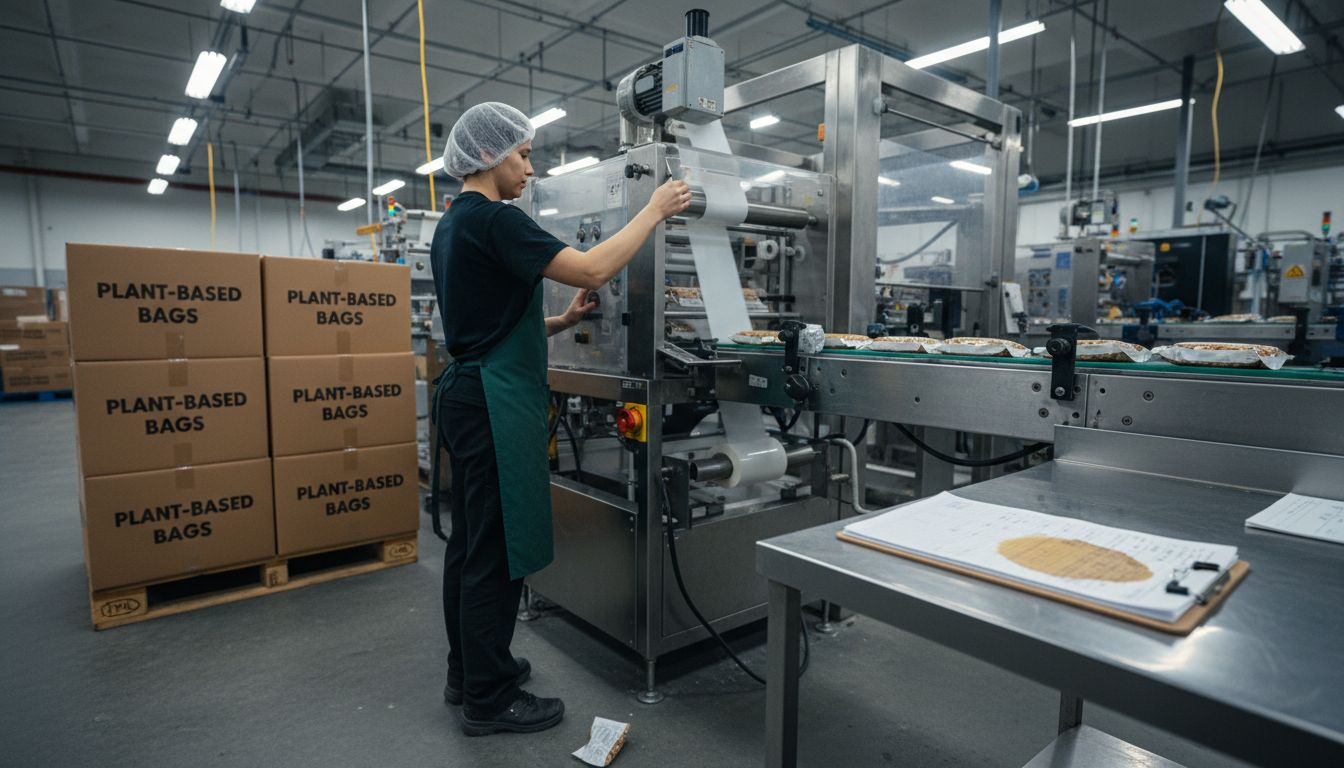
Pro tip: Investigate multi-layered packaging solutions that offer superior protection while minimizing overall material consumption.
Consumer Appeal and Market Trends
Sustainable packaging has transformed from a niche concept to a critical factor in consumer purchasing decisions. Consumer purchasing behaviors increasingly prioritize environmental considerations, with shoppers actively seeking out eco-friendly product options that align with their personal values.
Key consumer preferences in green packaging include:
- Minimal packaging waste that reduces environmental impact
- Recyclable and compostable materials
- Transparent sustainability messaging
- Visually appealing eco-friendly designs
- Plant-based packaging solutions
Regional variations play a significant role in sustainable packaging trends. North American and European markets demonstrate the most pronounced demand for environmentally responsible packaging, with consumers willing to pay premium prices for products that demonstrate genuine ecological commitment.
Sustainability is no longer a marketing advantage - it’s becoming a fundamental consumer expectation across global markets.
Market research indicates that while food safety and product quality remain paramount, sustainability is rapidly emerging as a key differentiator. Global consumer insights suggest that brands successfully integrating environmental consciousness into their packaging design will gain significant competitive advantages in the coming years.
Pro tip: Conduct regular consumer surveys to understand shifting sustainability preferences in your specific market segment.
Legal Standards and Eco Claims in Canada
Navigating the complex landscape of eco-friendly packaging regulations requires careful attention to Canadian legal standards. Food packaging regulations in Canada demand rigorous compliance with environmental claims and labeling requirements, creating a challenging but necessary framework for sustainable product development.
Key legal considerations for eco packaging claims include:
- Accurate environmental messaging that avoids misleading statements
- Verifiable sustainability certifications
- Clear material composition disclosure
- Transparent recycling instructions
- Compliance with federal environmental protection guidelines
Canadian regulators are increasingly stringent about greenwashing prevention, requiring businesses to substantiate their environmental claims with concrete evidence. Companies must provide scientific documentation demonstrating the ecological benefits of their packaging materials and production processes.
Eco-friendly packaging claims must be precise, measurable, and backed by verifiable scientific data.
Manufacturers must understand that environmental claims are not marketing suggestions but legal obligations. The Competition Bureau of Canada and Environment and Climate Change Canada actively monitor packaging claims, with potential penalties for companies making unsubstantiated or misleading environmental statements.
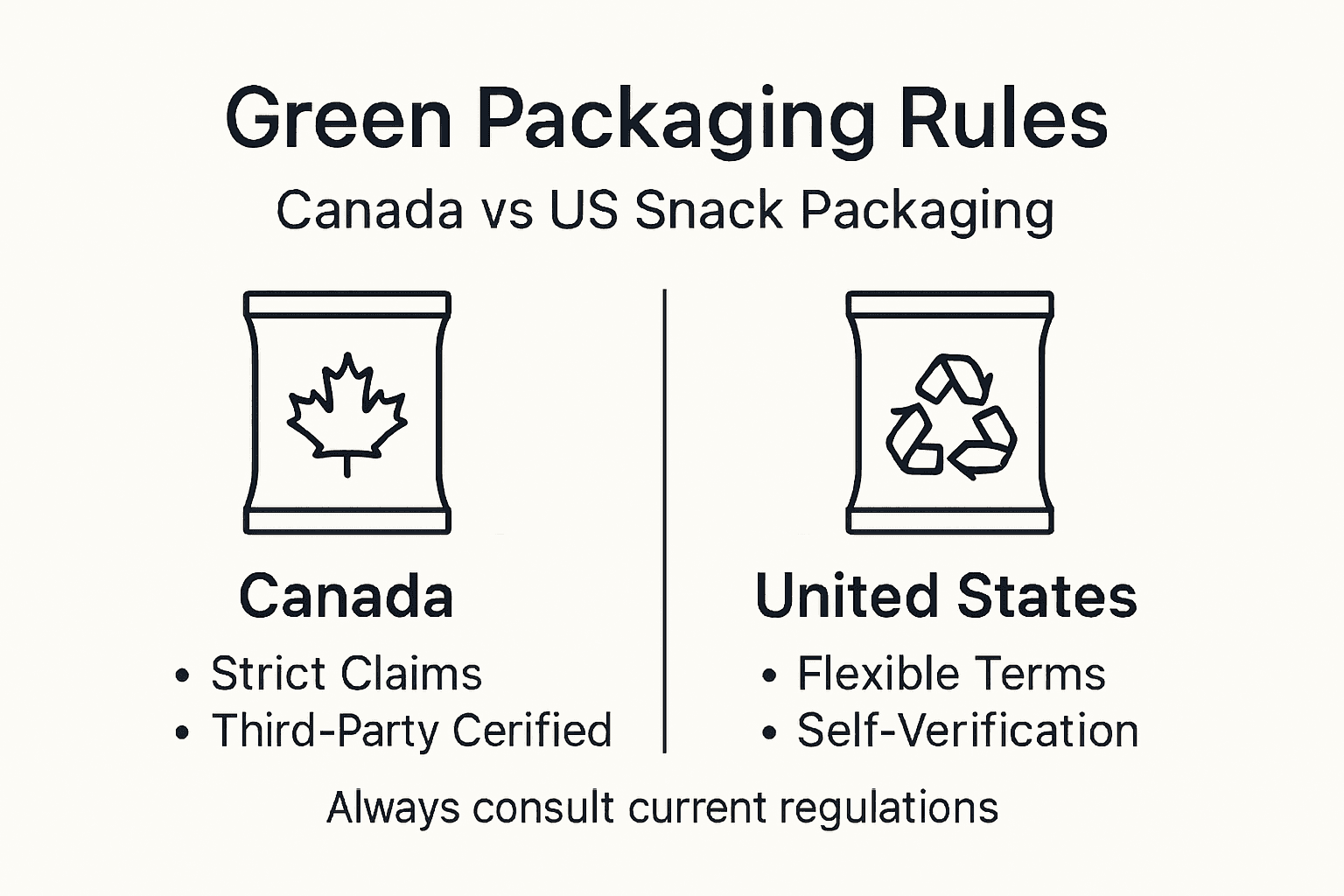
Key legal and regulatory differences for environmental packaging claims in Canada versus the U.S.:
| Requirement | Canada | United States |
|---|---|---|
| Claim Verification | Strict scientific proof required | Generally recommended, varies by state |
| Greenwashing Penalties | Legal penalties enforced | Enforcement depends on jurisdiction |
| Recycling Instructions | Must be precise and clear | Standardized guidelines, less mandated |
| Certification Disclosure | Mandatory for public claims | Voluntary, brand-driven |
Pro tip: Consult with legal experts specializing in environmental regulations to ensure your packaging claims meet all Canadian compliance standards.
Private Labeling and Packaging Success Strategies
Private labeling in green packaging demands a sophisticated approach that goes beyond simple material selection. Sustainable food packaging strategies require comprehensive integration of sustainability across product design, marketing, and supply chain management.
Key success strategies for private label green packaging include:
- Consumer-centric design that aligns with eco-conscious preferences
- Transparent sustainability credentials
- Authentic brand storytelling
- Certified eco-friendly material sourcing
- Innovative packaging functionality
Successful brands understand that brand identity through packaging is not just about appearance, but about creating a meaningful connection with environmentally aware consumers. This means developing packaging that communicates genuine commitment to sustainability through every design element.
Green packaging is a conversation with consumers, not just a visual statement.
Implementing these strategies requires a holistic approach that considers environmental impact, consumer perception, and brand differentiation. Manufacturers must balance aesthetic appeal, functional sustainability, and compelling storytelling to create packaging that resonates with eco-conscious shoppers.
Pro tip: Develop a comprehensive sustainability scorecard to evaluate and continuously improve your packaging design and environmental credentials.
Elevate Your Snack Brand with Green Packaging Solutions
Meeting the rising demand for eco-conscious snack packaging can feel overwhelming. The article highlights critical challenges like choosing biodegradable materials, ensuring clear sustainability messaging, and preventing greenwashing while maintaining product freshness and safety. At Spaceman, we understand these pain points deeply. Our expertise in Wholesale Freeze Dried Candy & Treats combined with private labeling and sustainable bagging and packaging services helps you create authentic green packaging that resonates with eco-aware consumers.
Ready to attract environmentally responsible shoppers with innovative, verified green packaging? Explore our range of customizable freeze dried candy options in bulk or select from our curated gift bundles. Partner with us to deliver snacks that combine environmental integrity with exceptional quality. Visit Spaceman today to start your sustainable packaging journey and gain the competitive edge your brand deserves.
Frequently Asked Questions
What is green packaging for snacks?
Green packaging for snacks refers to environmentally responsible packaging solutions that prioritize sustainability while ensuring product safety and integrity. It involves using recyclable, biodegradable, and renewable materials to minimize environmental impact.
What are the benefits of using bioplastics in snack packaging?
Bioplastics, derived from renewable plant sources, reduce reliance on petrochemicals, appeal to environmentally conscious consumers, and can be designed to provide excellent product protection while being more sustainable than traditional plastics.
How does antimicrobial packaging help in preserving snacks?
Antimicrobial packaging extends the freshness of snacks by incorporating organic agents that inhibit the growth of bacteria and mold, thus minimizing food waste and enhancing product shelf life.
What should manufacturers consider when developing green packaging?
Manufacturers should conduct a comprehensive life-cycle assessment of their packaging to identify opportunities for sustainable improvements, ensuring that ecological benefits do not compromise product safety or consumer experience.
Recommended
- Understanding Eco Friendly Packaging Solutions for Businesses – Spaceman
- Understanding Sustainable Candy Packaging: Key Concepts – Spaceman
- 7 Sustainable Packaging Ideas for Your Business – Spaceman
- 7 Creative Food Packaging Design Ideas for 2025 – Spaceman
- 7 accessoires indispensables pour chiens écoresponsables en 2026 – My Animal Lovers
- Τι είναι eco-friendly ρούχα: Η δύναμη της βιώσιμης μόδας - Judah Club