

Custom made food packaging protects your product, keeps it fresh through shipping or delivery, and turns every box or bag into a piece of branding real estate. The first move isn’t picking colors or fonts. It’s matching the packaging format and materials to your food type (dry, hot and greasy, or refrigerated) and confirming those materials actually meet food-contact safety standards, whether you’re sourcing through the FDA’s food-contact guidance or a manufacturer like Space-man.
TL;DR:
- Matching the packaging format to your food type and confirming food-contact safety standards is crucial before focusing on design or branding.
- Impact-resistant corrugated boxes are ideal for shipping heavy or hot items, while stand-up pouches are best for resealable snack products.
- Food-safe liners like polyethylene or PLA are necessary for direct contact, and verification of certification and barrier properties is essential for compliance.
- Request physical samples or 3D mockups early to detect fit and color issues, as digital proofs often hide production problems.
- Actual costs include design fees, setup charges, freight, and order volume, with low minimum orders increasingly accessible through digital printing options.
Table of Contents
- What Custom Made Food Packaging Formats Work Best?
- What Makes Food Packaging Materials Safe and Compliant?
- How Do You Prepare Artwork and Validate Fit?
- How Much Does Custom Packaging Cost and How Long Does It Take?
- Which Packaging Materials Are Actually Recyclable Where You Sell?
- What Should You Look for in a Packaging Supplier?
- What Questions Should You Ask a Packaging Vendor Before Signing?
- What Are the Red Flags When Choosing a Packaging Vendor?
- What Does Custom Packaging Actually Cost Once Everything Is Included?
- How Does the Ordering Process Actually Work?
- From the Maker: Space-Man’s Workflow for Private Label and Co-Packing Launches
- How Space-Man Can Help With Your Packaging Launch
- Sources
What Custom Made Food Packaging Formats Work Best?
Not every food product belongs in the same box, literally. The format decision comes before the design decision, and getting it backwards wastes both money and shelf space.
- Stand-up pouches: Best for dry snacks, granola, freeze-dried treats, and anything that needs a resealable zipper and a big window for shelf appeal.
- Corrugated boxes: The workhorse for hot food, heavy items, or anything shipped long distances. They absorb impact and hold up under weight.
- Clamshells: Standard for burgers, sandwiches, and prepared meals that need venting to avoid logging out.
- Bags (flat or gusseted): Good for bread, bulk snacks, and lower-cost runs where a window isn’t critical.
- Sleeves: Add-on branding for cups, wraps, or bars that already have primary packaging.
- Folding cartons: The go-to for bakery items, chocolates, and anything that benefits from a printed, retail-ready presentation.
Think through portion size, whether grease or oil is involved, whether the customer needs to reseal it, and whether the product sells off a shelf or gets handed over at a counter. A snack brand chasing retail placement needs a window or display-ready rack; a delivery-only kitchen can skip that spend entirely and put the budget into insulation instead.
What Makes Food Packaging Materials Safe and Compliant?
This is where a lot of new brands get burned. Food-grade paperboard, kraft stock, SBS (solid bleached sulfate), and corrugated fiberboard are the standard substrates, but the substrate is only half the story. What touches the food matters more.
Grease-resistant coatings and PE (polyethylene) or PLA (polylactic acid) liners are what actually keep oil, moisture, and grease from bleeding through print and compromising the box. Custom food boxes built for direct food contact typically specify one of these liner types depending on whether the product is hot, greasy, or moisture-heavy.
Before signing off on any supplier, ask for:
- Food-contact certification or migration testing documentation, not just a verbal assurance.
- Confirmation of food-safe inks used on any surface touching the product.
- Barrier property specs for hot or greasy items, in writing.
- Clarity on whether “eco-friendly” claims come with actual test data behind them.
Statistic Callout: Vague sustainability claims without documentation aren’t just a marketing risk. The FTC’s Green Guides treat unsupported eco-claims as potentially deceptive advertising, which means “recyclable” or “compostable” printed on a box without backup can create real legal exposure for the brand selling it, not just the packaging maker.
How Do You Prepare Artwork and Validate Fit?
Dielines are the flat, technical blueprint that shows a printer exactly where your box folds, cuts, and glues. Bleeds are the extra margin around artwork edges so nothing gets accidentally trimmed off. Safe areas keep your logo and text away from fold lines where they’d get distorted. Skip any of these and you’ll find out the hard way, after a production run, that your logo is bisected by a glue flap.
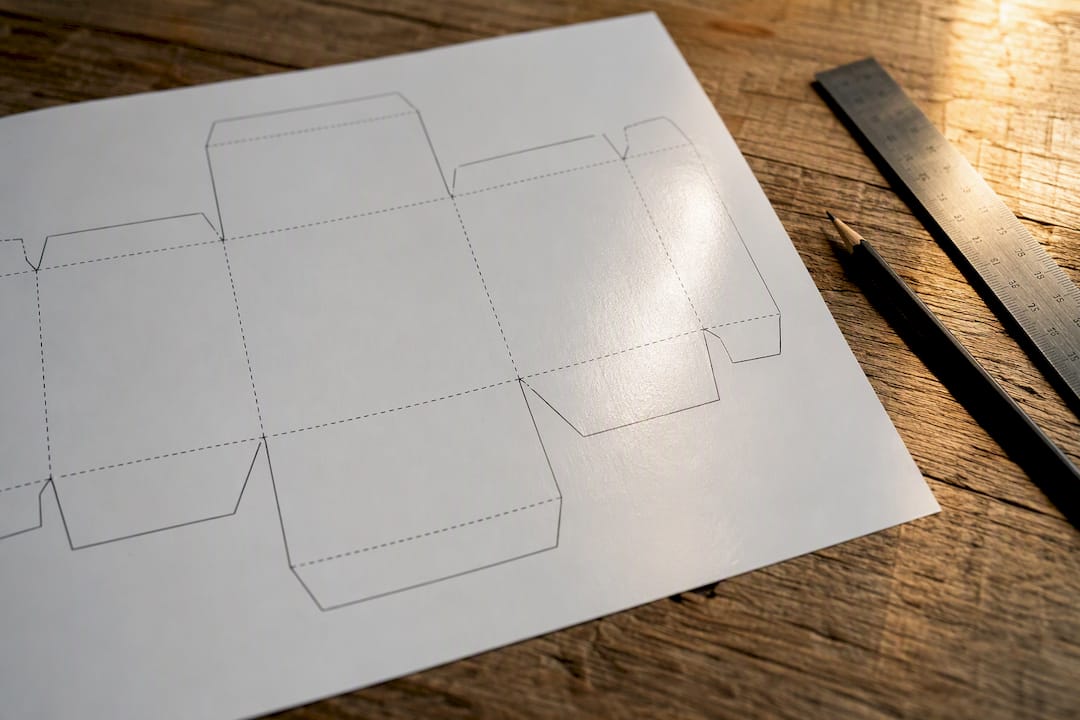
Digital printing suits shorter runs and faster turnarounds with no plates required; offset printing wins on large volumes where the per-unit cost drops significantly but setup takes longer. Finishes like aqueous coating, UV spot gloss, or matte lamination each change both the look and the cost, and greasy foods almost always need a coating that resists oil bleed-through regardless of which printing method you choose.
Before any full production run, run through this proof checklist:
- Does the product physically fit with room to close and seal properly?
- Is print registration sharp, with no color misalignment or ghosting?
- Is coating coverage even across the whole surface, especially seams?
- Does the fold hold up under repeated handling without cracking?
- Has someone actually signed off on a physical sample, not just a digital proof?
Pro Tip: Always request a physical sample or a 3D mockup before committing to a full run. A screen rendering hides fold-strength problems and color shifts that only show up once ink hits real stock.
How Much Does Custom Packaging Cost and How Long Does It Take?
Minimum order quantities vary widely by supplier and method. Traditional offset printing often requires higher MOQs because plate setup carries a fixed cost that only makes sense spread across thousands of units. Digital printing flips that math, and some suppliers now offer low or zero minimum orders with free 3D mockups, which lets a small brand test one SKU without betting the whole budget on an untested design.
Timeline typically runs from proof approval to delivery in a matter of weeks, with rush production available at a premium if a launch date is fixed. Build in buffer time. Printers are busy, and “should be ready Friday” rarely survives contact with a holiday order surge.
Your per-unit cost gets shaped by a handful of factors:
- Material type and thickness (corrugated costs more than a simple kraft bag).
- Number of print colors and whether you’re running spot colors or full CMYK.
- Special finishes like foil stamping, embossing, or spot UV.
- Tooling costs for custom die shapes, which get amortized across your order size.
- Total order volume, since per-unit price drops sharply as quantity climbs.
Which Packaging Materials Are Actually Recyclable Where You Sell?
Here’s the trap: a box can be technically recyclable and still end up in a landfill because the local facility doesn’t process that material or coating. Recyclable, compostable, and PCR (post-consumer recycled) content are three different claims, and none of them mean anything if your customer’s city doesn’t have the infrastructure to act on them.
Statistic Callout: Sustainability only delivers a real environmental benefit when the local waste stream actually accepts the material, coating and all. A compostable liner sitting next to a “compostable” label means nothing if the nearest facility only handles standard curbside recycling.
- Grease-resistant liners and PE/PLA coatings can make an otherwise recyclable paperboard box unrecyclable in standard streams.
- Certain laminates and barrier coatings chosen for shelf appeal or shelf life can block composting entirely, even on substrates that would otherwise qualify.
- Print simple, accurate disposal instructions on the pack instead of a generic recycling symbol that may not apply locally.
Verify your actual customer base’s disposal infrastructure before making any claim on the box. Our own breakdown of sustainability trade-offs in food packaging covers this in more depth if you’re building an eco-messaging strategy.
What Should You Look for in a Packaging Supplier?
Experience matters more in this industry than in most, because food packaging sits at the intersection of design, food safety, and manufacturing logistics. A supplier who’s only ever printed for retail apparel isn’t automatically equipped to handle grease-resistant liners or cold-chain packaging.
Look for three things before signing anything. First, relevant experience: ask how long they’ve worked specifically with food brands, and ask for examples in your category (frozen, hot, dry snack, bakery). A supplier who mostly does cosmetics packaging may technically be able to print your box, but they won’t anticipate the grease-bleed or moisture problems a food-focused shop catches before you even ask.
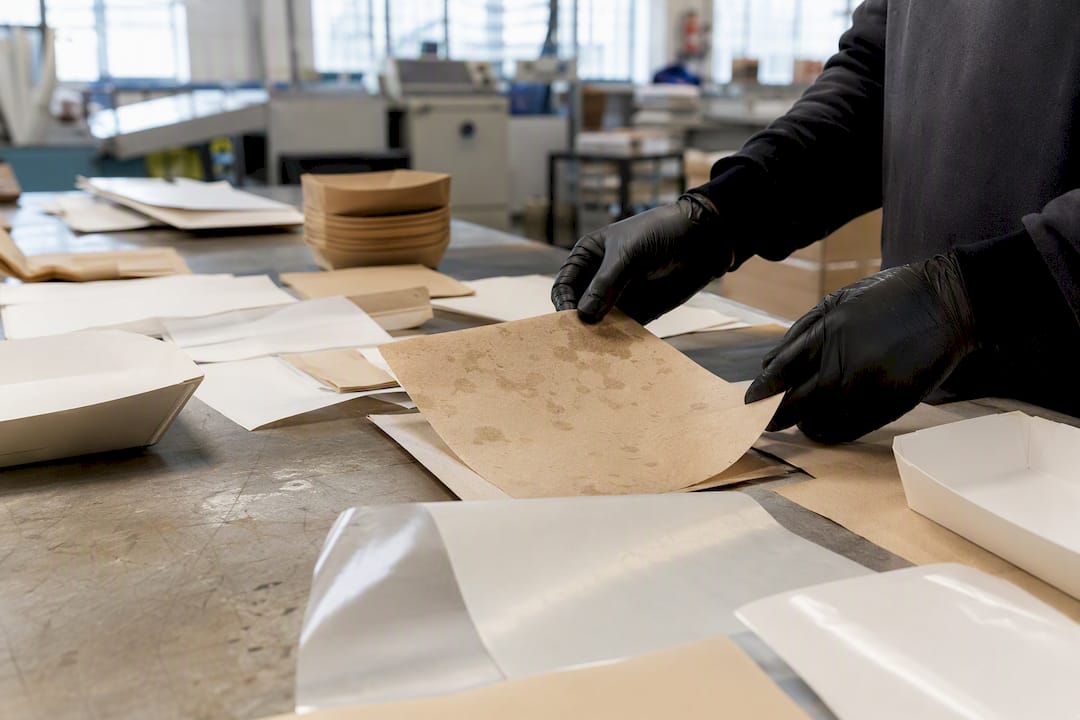
Second, certifications and documentation. This means food-contact safety compliance, not just a general quality badge. If a supplier can’t produce documentation on request, that’s worth pausing over.
Third, customization capability, meaning real design flexibility rather than a catalog of five stock box shapes with your logo slapped on. Can they handle custom dielines? Do they offer digital printing for smaller runs alongside offset for scale? Can they source PE or PLA liners depending on what your product needs?
End-to-end suppliers that handle prototyping, tooling, and quality testing in-house tend to catch fit and durability problems before they become expensive production mistakes, rather than after a few thousand units are already boxed. That in-house control is worth asking about directly, because a supplier that outsources tooling to a third party adds both time and a point of failure to your timeline.
What Questions Should You Ask a Packaging Vendor Before Signing?
A short conversation up front saves you from a very expensive surprise three weeks before launch. Come prepared with specific questions rather than a general “can you handle this.”
Ask about food-contact compliance directly: “What certification or testing backs the liner and ink you’re proposing for this product?” A vendor who answers with confidence and specifics is worth more than one who answers with a general reassurance.
Ask about samples: “Can I get a physical sample or 3D mockup before committing to a production run?” If the answer is no, or if samples cost an unusual amount relative to your order size, treat that as a data point.
Ask about minimum order quantities and what happens if you need to reorder a smaller batch later. Some vendors quietly build in penalty pricing for anything below a certain volume, which only becomes visible once you try to reorder.
Ask directly about lead times, including what happens if there’s a delay on their end, whether that’s a raw material shortage or an equipment issue. A vendor who gives you a vague “usually a few weeks” without a firm date range is harder to plan a launch around.
Ask what happens if a print run comes back with color drift, misregistration, or a coating defect. Reputable suppliers have a clear reprint or credit policy already defined. If they’ve never had to answer that question before, that’s itself informative.
Finally, ask about recyclability and disposal specifically for your market. A vendor that can tell you what recycling stream their coated boxes fit into is one that’s actually thought about the end-of-life question, not just the point-of-sale appearance.
What Are the Red Flags When Choosing a Packaging Vendor?
Some warning signs show up before you’ve placed a single order, if you know where to look.
A vendor who can’t produce food-contact documentation on request, or who deflects the question with “our packaging is totally safe,” is a red flag regardless of how polished their sample catalog looks. Vague reassurance is not the same as a certificate.
Pricing that seems unusually low compared to every other quote deserves scrutiny. Sometimes it’s a legitimately efficient operation. Often it means a liner substitution, a thinner stock, or a shortcut on quality testing that only shows up after the boxes are in your warehouse.
Watch for suppliers who resist providing a physical sample or 3D mockup before a full production commitment. If they’re confident in their work, a sample shouldn’t be a hard ask.
Unclear MOQ terms are another warning sign, particularly vendors who quote a low minimum up front and then add tooling fees, setup charges, or rush surcharges after you’ve already committed mentally to the partnership.
That kind of claim without a definition attached is closer to marketing copy than a fact you can put on your own packaging with confidence.
Finally, pay attention to communication gaps early in the quoting process. A vendor who’s slow, vague, or inconsistent about specs before you’ve even placed an order tends to get slower once your money is already committed.
What Does Custom Packaging Actually Cost Once Everything Is Included?
The quoted per-unit price on a packaging estimate is rarely the whole story. Design fees are often billed separately if you need custom artwork built from scratch rather than a template adjustment, and that can range from a flat project fee to an hourly design rate depending on the vendor.
Setup charges apply almost universally for custom die shapes or plate creation in offset printing, and they’re typically a one-time cost amortized better across larger orders. If you’re running a small first batch, ask specifically whether setup costs are waived on reorders using the same dieline, because many suppliers will drop that fee the second time around.
Shipping is the line item most first-time buyers underestimate. Packaging is bulky and often shipped in large pallet quantities, so freight costs scale with box size and order volume in a way that’s easy to miscalculate if you’re used to shipping the finished product rather than the empty containers.
Add it up before committing to a number in your head: design fee (if applicable), setup or tooling charge, per-unit material and print cost, and freight. A quote that only shows the per-unit price without those additions isn’t giving you the real number you’ll pay, and asking for an itemized breakdown up front avoids an unpleasant surprise on the invoice.
How Does the Ordering Process Actually Work?
The path from concept to boxes on your loading dock follows a fairly consistent sequence, even though the timeline varies by supplier and order size.
It starts with a design proof, either built from your existing artwork or created from scratch based on your specs. This is a digital rendering, and it’s your first chance to catch obvious errors: wrong dimensions, misspelled copy, color choices that don’t match your brand.
Next comes fit testing, which matters more than most first-time buyers expect. A box that looks correct on screen can be too tight, too loose, or awkward to seal once an actual product sits inside it. This is where a physical prototype earns its cost, because digital renderings don’t capture how a fold behaves under real material stress.
After fit testing, most suppliers move to a physical prototype or pre-production sample, printed on the actual stock with the actual liner or coating, so you can check color accuracy, texture, and how it holds up to grease or moisture in a real-world test rather than a lab assumption.
Only after sign-off on that sample does full production begin. Skipping any of these steps to save a week of turnaround is exactly how brands end up with a warehouse of boxes that don’t quite work, whether that’s a lid that won’t stay shut or a color that shifted between the screen and the press.
From the Maker: Space-Man’s Workflow for Private Label and Co-Packing Launches
Every private label order we run goes through the same sequence: confirm the spec, build a fit sample, get sign-off, then move to production. Skipping the sample step is the single most common mistake we see brands make when they’re in a hurry to launch, and it’s almost always the one that costs the most to fix afterward.
We handle freeze-dried candy, chocolate, marshmallow, and ice cream sandwich production and packaging for both our own retail line and partner brands, which means our quality checks are built around products that are genuinely finicky about moisture and temperature. That operational experience carries directly into how we approach co-packing and private label runs for other consumer goods brands.
— Chadi
How Space-Man Can Help With Your Packaging Launch
If you’re a small food brand, a subscription box, or a retailer trying to get custom packaging right without hiring a design team and chasing five different vendors, that’s exactly the gap Space-man’s private label and co-packing services are built to close. One point of contact from spec to delivery instead of juggling a printer, a packager, and a fulfillment partner separately.
When you request a quote, come prepared with a few specifics: your intended portion size, the material or finish you’re leaning toward, your target quantity for the first run, and your launch timeline. That information lets us give you a real number instead of a vague range, and it shortens the back-and-forth considerably.
If you want to see how the finished product presents before committing to a full production run, request a sample or a quote and we’ll walk you through what fits your product and your budget.
Sources
- PMC article on sustainability and packaging disposal
- Custom Food Boxes | Apexio Packaging
- Custom packaging guide: boost appeal and compliance — FormlyPro blog