

TL;DR:
- Working with a private-label co-packer that gates production on mockup approval and verifies food-safety credentials offers a low-risk way to create branded snacks for events. Space-man provides full private-label, co-packing, and packaging services with low MOQs, supporting various formats suited for promotional use. Choose your snack type and packaging carefully, ensure mockup approval in writing, and expect a total lead time of two to four weeks for most orders.
The fastest, lowest-risk way to get branded snacks for your next event or gifting program is to work with a private-label co-packer that gates production on a signed-off mockup, publishes clear minimum order quantities, and holds verifiable food-safety credentials. No guesswork, no surprise reprints, no “the logo looked fine on screen” disasters.
Here’s what that looks like in practice:
- Choose a co-packer with mockup-gated production. Suppliers that won’t print until you approve a photoreal digital mockup eliminate the most common (and expensive) reprint scenarios.
- Confirm MOQs upfront. Promotional runs for events often start at low quantities for certain snack types, with pricing varying based on pack counts.
- Verify food-safety credentials before you commit. Ask for HACCP documentation or equivalent, food-contact-safe material certifications, and lot-tracking capability.
- Request a quote or upload your artwork to get the process moving. Space-man offers private-label and co-packing services with packaging options built for promotional runs.
Table of Contents
- Why Space-man’s private-label and co-packing services are worth your attention
- What types of custom logo snacks work best for which situations?
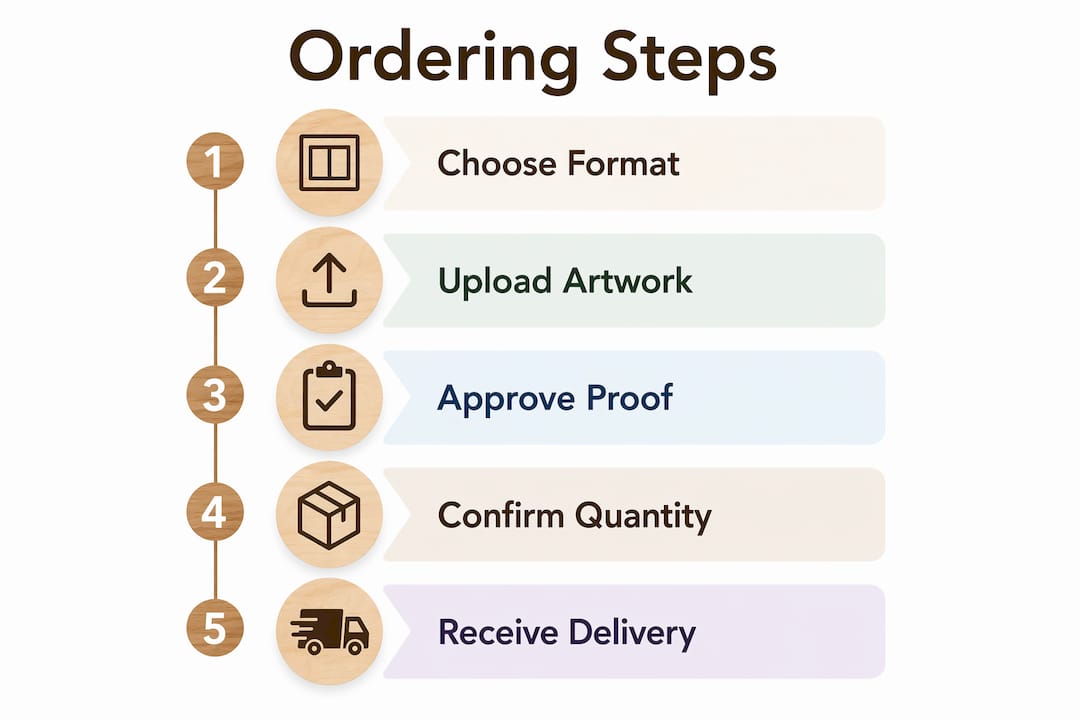
- How does ordering custom logo snacks actually work?
- What should you budget for MOQs, pricing, and turnaround time?
- Packaging options, customization methods, and sustainability choices
- Food-safety and U.S. labeling requirements you need to verify
- How to prepare logo files and approve proofs without surprises
- Key Takeaways
- What I’ve learned from branded snack packaging projects
- Space-man can handle your branded snack order from artwork to delivery
- Useful sources and references
Why Space-man’s private-label and co-packing services are worth your attention
Space-man is a freeze-dried candy manufacturer and distributor that also runs full private-label, co-packing, and bagging/packaging services for consumer goods. For businesses ordering custom logo snacks, that combination matters: you’re not dealing with a print shop that happens to touch food, you’re working with a manufacturer that understands both the product and the packaging.
What Space-man’s service covers:
- Private-label production with your branding applied at the manufacturing stage
- Co-packing for existing products you want repackaged under your brand
- Full bagging and packaging services, including resealable pouches, single-serve snack bags, small jars and packets, and gift box formats
- Digital printing options that support short runs, multiple SKUs in one production run, and full-coverage graphics across pouch finishes
- Low minimum bundles designed for promotional and event runs
Packaging formats and their best uses:
| Format | Best use case |
|---|---|
| Resealable pouches | Swag bags, trade show giveaways, long-distance shipping |
| Single-serve snack bags | Office pantry, conference tables, event handouts |
| Small jars or packets | VIP gift sets, desk drops, premium gifting |
| Gift boxes | Corporate gifting, holiday programs, client appreciation |
Trust signals that matter:
- Mockup approval workflow: production doesn’t start until you sign off on the proof
- Food-safety processes and food-contact-safe material sourcing
- Sample photo availability so you can see the finished product before mass production ships
- Production transparency at each stage, from artwork submission through fulfillment
Pro Tip: Ask your supplier specifically whether production is gated on mockup approval or whether they start printing on receipt of artwork. The difference can cost you an entire run if your logo placement is off.
What types of custom logo snacks work best for which situations?
Not every snack format travels well, photographs well, or lands the same way with recipients. Matching the product to the occasion is where most buyers get it wrong the first time.
Common formats for branded snack packaging:
- Freeze-dried candy — lightweight, long shelf life, genuinely surprising to recipients; great for swag bags and mailers
- Mints and hard candy — compact, inexpensive per unit, easy to brand; ideal for trade show tables and reception areas
- Snack mix or trail mix — high perceived value, works well in resealable pouches; popular for VIP gifting and office pantry programs
- Popcorn — crowd-pleaser, available in multiple flavors; best for on-site events where freshness is guaranteed
- Granola and healthy snack packs — appeals to wellness-conscious recipients; strong fit for HR gifting and wellness programs
- Single-serve jars or packets — premium look, great for desk drops and gift sets
- Chips or crisps — familiar, broadly liked; works for casual events but fragile in transit
Use-case grid:
| Format | Trade show | Swag bag | VIP gift | Office pantry | Long-distance shipping |
|---|---|---|---|---|---|
| Freeze-dried candy | ✓ | ✓ | ✓ | ✓ | ✓ |
| Mints / hard candy | ✓ | ✓ | — | ✓ | ✓ |
| Snack mix / trail mix | ✓ | ✓ | ✓ | ✓ | ✓ |
| Popcorn | ✓ | — | — | ✓ | — |
| Granola / healthy packs | — | ✓ | ✓ | ✓ | ✓ |
| Single-serve jars | — | ✓ | ✓ | — | ✓ |
| Chips / crisps | ✓ | — | — | ✓ | — |
Perishability and transport resilience are the two factors that kill otherwise good snack choices. Popcorn and chips are crowd favorites at live events but arrive crushed or stale when shipped. Freeze-dried formats and sealed, high-barrier pouches hold up across temperature swings and longer distribution windows. For anything going into a mailer or a swag bag that might sit in a car trunk for three days, prioritize shelf stability over novelty.
Some vendors offer direct-to-recipient shipping for corporate gifting programs, which removes the logistics burden from your team entirely.
How does ordering custom logo snacks actually work?
The process is more straightforward than most buyers expect, but the details at each step determine whether your finished product looks sharp or like it was designed in a hurry.
Step-by-step ordering workflow:
- Select your product and packaging format. Decide on snack type, pouch size, and finish (matte, gloss, metallic).
- Submit your artwork. Upload your logo and any supporting graphics. Suppliers typically need vector files (AI, EPS, or PDF) for logos and 300 DPI minimum for any photographic elements.
- Receive and review your mockup. A photoreal digital mockup should come back within 24 hours from a responsive supplier. Review it carefully at actual pouch size, not just on screen.
- Approve the proof. Sign off in writing, whether that’s a PDF approval or a digital sign-off form. Never let production start on a verbal “looks good.”
- Production runs. Once approved, the supplier produces your order. Timeline varies by format and volume.
- Shipping and delivery. Confirm delivery address, any split-ship requirements, and whether you need pallet delivery or parcel shipping.
File specs to have ready before you contact a supplier:
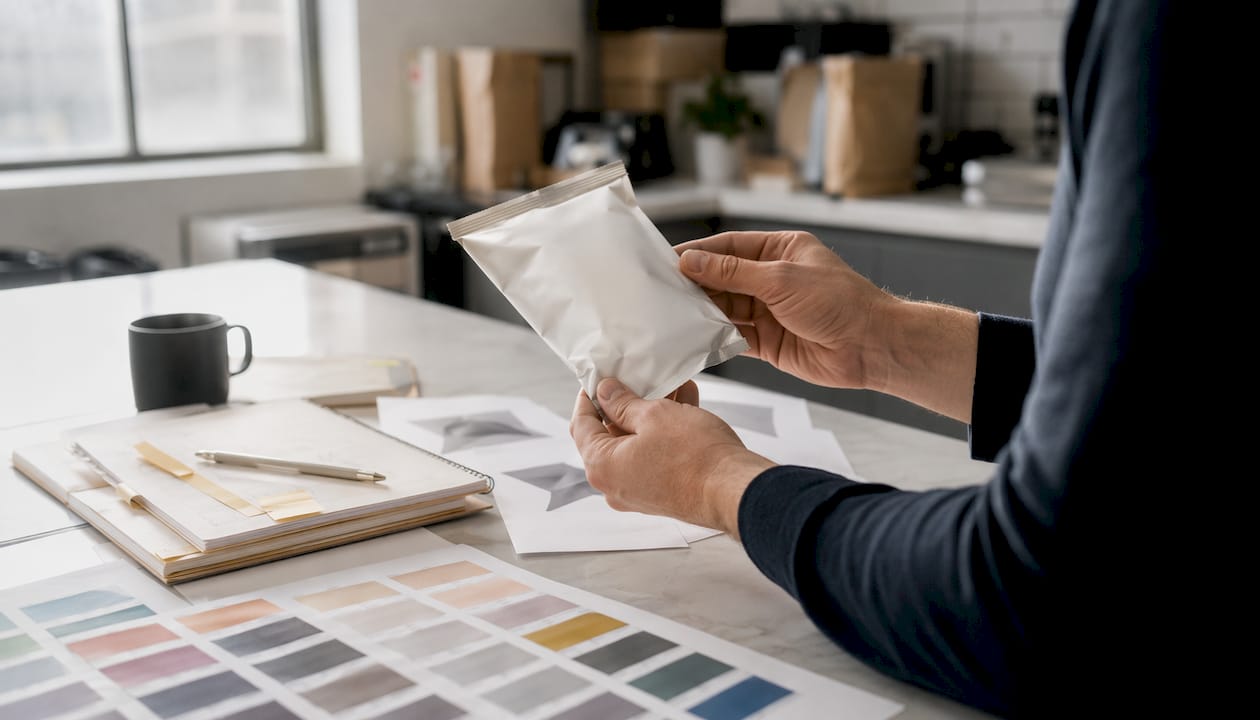
- Vector logo file: AI, EPS, or print-ready PDF
- Color mode: CMYK (not RGB) for print accuracy
- Photos or secondary graphics: 300 DPI minimum at final print size
- Brand color codes: Pantone references where possible, CMYK breakdowns as backup
- Safe zone and bleed requirements: ask your supplier for the dieline; packaging suppliers typically provide dielines and prepress checks as part of the quote process
Pro Tip: Request a printed physical sample for any order using metallic, foil, or matte finishes. Colors shift significantly between a screen preview and the actual film. A $50 sample saves a $2,000 reprint.
What should you budget for MOQs, pricing, and turnaround time?
Pricing for personalized snack gifts varies more than most buyers anticipate, and the variables aren’t always obvious from a supplier’s homepage.
What drives price per unit:
- Snack type (freeze-dried candy costs more to produce than a standard nut mix)
- Packaging format (fully printed pouches cost more than label-applied bags)
- Order volume (price per unit drops meaningfully as quantity increases)
- Customization method (direct digital printing vs. adhesive label application)
- Finishing options (matte laminate, spot UV, metallic film all add cost)
Promotional runs for certain snack types often start with pricing in the $199–$299 range for standard pack counts (typically 48–60 units) at modest quantities. Fully custom printed pouches at higher volumes will run higher, but the per-unit cost drops substantially once you are past the first few hundred units.
Typical MOQ ranges by format:
- Label-applied single-serve bags: generally the lowest minimums, suitable for small runs
- Fully printed flexible pouches: minimums generally start at several hundred units depending on the printer
- Gift boxes with custom covers: some vendors offer free customization above a modest quantity
- Co-packed bulk display kits: minimums vary by co-packer; Space-man’s distributor kits start at defined bundle sizes
Turnaround timeline:
| Stage | Typical timeframe |
|---|---|
| Mockup delivery | typically within a couple of days after artwork submission |
| Proof approval | usually takes a few business days, depending on the buyer |
| Production | typically requires several business days, varying by volume and format |
| Shipping (standard) | generally several business days for domestic deliveries |
| Total (realistic) | 2–4 weeks from artwork submission |
Plan for four weeks minimum if your event has a hard deadline. Rush production is available from some suppliers but adds cost and reduces your revision window.
Budget note: Always ask for a total landed cost quote that includes setup fees, any design or prepress charges, shipping, and applicable taxes. A low per-unit price can look very different once freight is added for a 500-unit order.
Packaging options, customization methods, and sustainability choices
The choice between direct printing and label application isn’t just aesthetic. It affects durability, cost, minimum order size, and how the finished product reads to recipients.
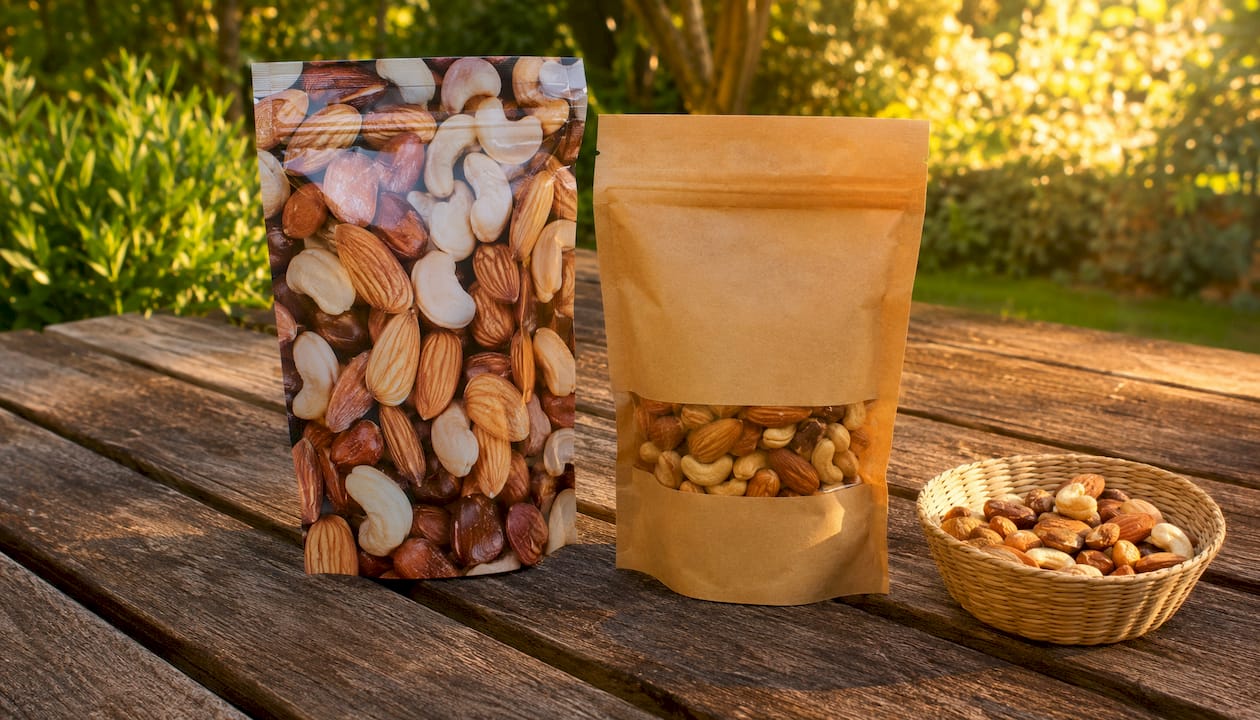
Direct digital printing vs. adhesive labels:
| Factor | Direct digital printing | Adhesive label / sticker |
|---|---|---|
| Visual quality | Full-coverage, retail-grade graphics | Clean but visible label edge |
| Durability | Integrated with film; won’t peel | Can lift in heat or humidity |
| MOQ | Typically higher (several hundred units) | Lower; works for small runs |
| Cost per unit | Higher at low volumes; competitive at scale | Lower upfront |
| Turnaround | Slightly longer | Faster for simple designs |
| Best for | Retail-ready, premium brand impression | Promotional runs, quick-turn events |
Digital printing on flexible packaging supports multiple SKUs in a single production run, which is useful if you’re ordering several flavors or variants under one brand.
Material options:
- High-barrier flexible films: standard for most snack pouches; protects freshness, good print surface
- Mono-material recycle-ready films: sustainable packaging option that doesn’t sacrifice barrier performance; increasingly preferred by corporate buyers
- Compostable films: strong sustainability story but require specific disposal conditions; verify end-of-life claims with your supplier before marketing them as compostable
Sustainability is a real differentiator for corporate buyers. Recycle-ready mono-material films or certified compostable options communicate brand values in a way that a standard multi-layer pouch simply doesn’t. If your recipients are eco-conscious, the packaging material is part of the gift.
Pro Tip: Match your packaging choice to the event environment. Open-top paper bags work for immediate on-site consumption. Resealable, heat-sealed pouches are the right call for anything that needs to survive transport, a swag bag, or a few weeks on someone’s desk.
Food-safety and U.S. labeling requirements you need to verify
Branded snacks aren’t just a marketing exercise. They’re food products, and U.S. labeling requirements apply regardless of whether the snack is a promotional giveaway or a retail product.
Required label elements under U.S. FDA rules:
- Statement of identity (what the product is)
- Net weight declaration
- Ingredient statement (listed in descending order by weight)
- Allergen declaration (per FALCPA: milk, eggs, fish, shellfish, tree nuts, peanuts, wheat, soybeans, sesame)
- Name and address of the manufacturer, packer, or distributor
- Nutrition Facts panel (required for most packaged foods; exemptions apply to very small businesses and certain formats)
Supplier verification checklist:
- Ask for documentation of HACCP or equivalent food-safety management processes
- Confirm that all food-contact packaging materials are FDA-compliant
- Request lot-tracking capability so product can be traced in a recall scenario
- Ask for sample certificates of analysis for the snack product itself
- Confirm that the label layout has been reviewed against FDA requirements, not just designed to look good
For interstate shipments, standard commercial shipping documentation applies. If you’re importing product from a Canadian co-packer like Space-man, you’ll need to account for U.S. Customs entry, FDA Prior Notice for food imports, and applicable duties. Involve your logistics provider or a licensed customs broker for any cross-border order. Space-man’s regulatory guidance covers distribution considerations, but confirm U.S.-specific requirements with your compliance team or a qualified professional.
This article is general information, not legal or regulatory advice. Verify current FDA labeling requirements and import rules with the FDA directly or a qualified food-safety professional for your specific product.
How to prepare logo files and approve proofs without surprises
Most branding problems on finished snack packaging trace back to one of two things: a logo submitted in the wrong format, or a proof approved too quickly on a laptop screen.
File format and spec requirements:
- Vector files (AI, EPS, PDF): required for logos; vectors scale to any size without quality loss, which matters when your logo wraps around a 2-inch pouch gusset
- Raster images (PNG, JPEG, TIFF): acceptable for photos and textures only; minimum 300 DPI at final print size
- Color mode: submit in CMYK, not RGB; RGB colors can shift significantly when converted for print, especially reds and purples
- Pantone references: provide PMS codes if brand color accuracy is critical; CMYK approximations are close but not identical
- Dieline: request the supplier’s dieline file before designing; prepress checks and dieline supply are standard from most packaging suppliers
Proof approval checklist:
- Logo is sharp and correctly scaled at actual pouch dimensions
- Text is legible at final print size (test at arm’s length, not zoomed in on screen)
- Color contrast holds on the chosen film finish (matte absorbs light; glossy reflects it)
- Safe zones and bleed areas are respected; no critical text or logo elements near the edge
- Repeat patterns or background graphics tile correctly without visible seams
- Allergen and ingredient text is readable at the required minimum font size
Pro Tip: For metallic or matte finishes, a screen mockup is not enough. Request a printed physical sample or a high-resolution photoreal mockup rendered on the actual film type. What looks like a rich navy on screen can read as near-black on a matte silver film.
Key Takeaways
The lowest-risk path to professional custom logo snacks is a co-packer that gates production on a signed-off mockup, publishes clear MOQs, and holds verifiable food-safety credentials.
| Point | Details |
|---|---|
| Choose format first | Match snack type and packaging to your event conditions before requesting a quote. |
| Budget a few weeks for a realistic total lead time from artwork submission to delivery for most promotional runs. | |
| Verify food-safety credentials | Ask for HACCP documentation, FDA-compliant materials, and lot-tracking before committing. |
| Approve proofs in writing | Never let production start without a signed-off mockup; request a physical sample for specialty finishes. |
| Space-man’s co-packing services | Space-man offers private-label, co-packing, and packaging services with low-MOQ bundles suited to promotional and event runs. |
What I’ve learned from branded snack packaging projects
The detail that catches buyers off guard most consistently isn’t the price or the lead time. It’s color.
A logo that looks perfect in a brand deck, sharp and confident in its exact hex code, can come off the press looking like a completely different brand. Matte films absorb light and deaden colors. Glossy films punch them up. Metallic films do something else entirely. The gap between a screen preview and a physical pouch is wide enough to derail a whole campaign if you don’t account for it early.
The fix is simple but non-negotiable: request a printed sample before mass production, especially for any order where the packaging is the first thing a recipient sees. For corporate gifting programs or trade show runs where hundreds of units will carry your brand, a sample is not optional. It’s the cheapest insurance you’ll buy.
The other lesson: don’t underestimate how much the packaging material communicates on its own. A recycle-ready mono-material pouch tells a story about your brand before anyone reads the label. A generic multi-layer bag tells a different one. For buyers whose recipients skew eco-conscious, that choice is worth the conversation with your supplier.
Space-man can handle your branded snack order from artwork to delivery
If you’ve read this far, you know what a good co-packing partner looks like. Space-man checks the boxes that matter: private-label manufacturing, co-packing capability, full packaging services, and low-MOQ bundles built for promotional and event runs, not just large retail orders.
Getting started takes three steps. Specify your format and quantity, upload your print-ready artwork, and approve your mockup before anything goes to production. Space-man’s private-label and co-packing services cover the full range from single-serve snack bags to gift box formats, with food-safety processes and production transparency at every stage. If you want to see what a finished product looks like before committing to a full run, ask about sample options when you reach out.
Ready to move? Request a quote directly through Space-man’s services page and have your artwork file and target quantity ready. The faster you submit, the sooner you’re holding a proof in your hands.
Useful sources and references
A short list of the sources used in this guide, with a note on what each one is useful for:
- Space-man: Private-label, co-packing & packaging services — Space-man’s primary services page; use this to request a quote or learn about packaging formats and MOQ bundles.
- Space-man: Custom candy boxes with logo branding guide — Step-by-step customization workflow for branded candy and snack packaging; useful for understanding the ordering process.
- Space-man: Understanding sustainable snack packaging — Covers recyclable and compostable film options and supplier verification steps for sustainability claims.
- ePac Flexibles: Custom snack food packaging — Industry reference for digital printing on flexible packaging; explains low-minimum runs and multi-SKU production.
- PackagingBest: Custom snack packaging bags and pouches — Explains quote inputs (fill weight, pack format, artwork status) and supplier deliverables like dielines.
- MyCustomCandy: Custom branded promotional snacks — Illustrates baseline pricing examples for promotional snack runs across different product types.
- Qstomize: Custom branded snack mix — Example of mockup-gated production with photoreal mockups returned within 24 hours.
- SnackFirst: Mix and match snack gift box — Shows direct-to-recipient shipping options and free customization thresholds for corporate gifting orders.
- Food Insight: Snacking survey — Consumer snacking behavior data; useful background for understanding recipient preferences when selecting snack formats.